How to Make Yourself Irreplaceable by AI Forever

marsbitPublicado a 2026-08-02Actualizado a 2026-08-02

Resumen

This article argues that the primary threat from AI is not job replacement, but remaining trapped in "wage slavery"—financial dependence on employers. The path to becoming irreplaceable is not resisting AI, but becoming an "unemployable" individual who builds their own meaningful enterprise. The author identifies five key elements for this: Agency (acting without permission), Taste (judging what's worthwhile), Persuasion, Persistence, and Iteration. The solution is to stop being a "pawn" in someone else's game. To start, you must fundamentally change your identity and environment, then engage in rapid, real-world trial and error. While both coding and creating media (content) are powerful, content is more crucial. AI can generate assets, but true value lies in subjective, human-driven content that builds trust and narrative. The actionable advice is to carve out 15 minutes to answer foundational questions: 1) Uncover your "raw material"—what you know deeply or solve effortlessly. 2) Define your contrarian perspective—what common beliefs you think are wrong. The intersection of these answers is your direction. Finally, you must launch by publishing your first core idea immediately, using the feedback to iterate and develop the skills needed for a self-directed life and career.

Translation Agency is a translation team under 36Kr, focusing on technology, business, workplace, and life, primarily introducing new technologies, new perspectives, and new trends from abroad.

Editor's Note: Instead of lamenting on social media about jobs being taken over by AI, become an 'unemployable' super-individual and turn the tables outside others' chessboards with your content. The article is from a translation.

Unfortunately, all jobs will probably disappear within the next 5 seconds.

At least, that's what it feels like if you take the alarmists on social media too seriously.

You might even adopt an 'anti-AI' ideology as your new label, shouting 'Screw AI!' to make yourself feel like you're changing the world. But in reality, you haven't made any behavioral changes, expanded your skill set, or adapted to this new world—after all, who would bother changing when you can stick to the status quo and cry about being a poor victim?

AI is not the threat you think it is.

The real threat remains the same as always:

For survival and well-being, you rely on everyone except yourself. Your employer and government have their own survival issues to consider, and when something threatens that, their thinking narrows, and they quickly try to neutralize the threat. It's human nature. You can argue they 'should' care about your well-being, but if you blindly believe they'll take care of you, you're destined to be very, very disappointed.

AI's momentum is too strong to control by complaining.

Venting on social media about how much you hate AI won't stop jobs from being replaced, nor will it halt the evolution of the skills needed for success.

The purpose of this article is to offer you a perspective and a potential solution (one that has existed since ancient times).

I have 4 points to share with you, covering wage slavery, becoming a person of high agency, and why none of this matters if you don't fundamentally change yourself.

At the end of the article, I've also prepared a short exercise with 6 questions that might open the door to a whole new way of life—even if it seems deceptively simple.

1. How to Escape Wage Slavery

Wage slavery is doing meaningless, boring drudgery for someone else—work you didn't voluntarily choose—just to survive.

I'm not against having a job.

I think work is a valuable springboard for gaining practical experience and mastering skills.

But whenever I talk about work in a somewhat 'negative' light, some people inevitably jump in and say, 'You idiot! I actually love my job!'

That's great. But I'm not talking to you (and to some extent, I think you're lying to avoid confronting your potential, and you might not even realize it).

I'm talking to those who understand the psychology of true happiness and can't stand the vision: for over 40 years, one-third of life spent on work they didn't choose, one-third mentally exhausted and unable to do anything valuable, and the remaining third sleeping...
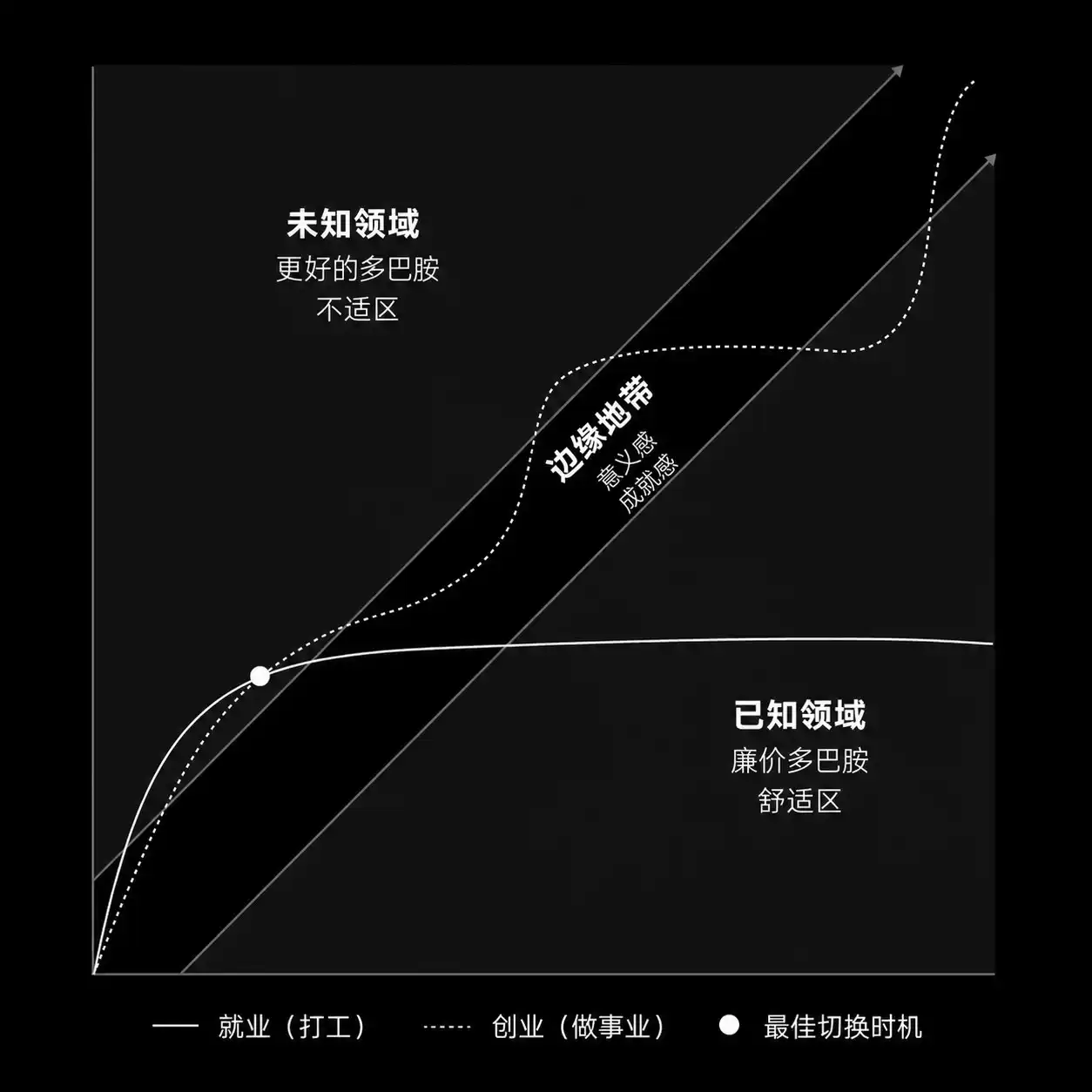
You see, happiness, meaning, and a sense of accomplishment come from testing the limits of your abilities. The research on this is clear. No, I won't cite it. Happiness comes from pursuing a challenge that is just slightly above your current skill level. It can't be so hard it causes anxiety, nor so easy it's boring. Video games exploit this. The tasks you take on are often just the right difficulty because if a level 1 character tackled a level 100 quest, you'd die instantly and hate the game. This is the single biggest driver of entering a flow state. If you can structure your life to increase the probability of triggering this flow, happiness becomes a continuous stream.

The problem with work is that after a few months, you've learned everything you need to know. You just clock in, complete the tasks, clock out. You start getting bored. This goes against your nature. You can feel it. Your attention is no longer immersed in the task; it shifts to: 'What else can I do for fun?' For most people, that 'something else' doesn't involve meaningful goals. It's just opening their phones and letting their brains rot. Very few jobs require you to continuously improve your skills to meet greater challenges.

Climbing the corporate ladder might help, but again, you don't control the difficulty level. You're not working on your own projects. Curiosity, passion, purpose, autonomy, and mastery are destined to be missing—precisely the five key drivers of flow.

What does this have to do with wage slavery?

It can be said that human civilization is built on tribes enslaving other tribes. This dynamic has never disappeared. Instead, it evolved into employment relationships, laws, and culture. Society is essentially a pyramid scheme (Ponzi scheme). There are always more people at the bottom than at the top; mathematically, it's impossible for everyone to reach the top. One boss, many employees, and employees depend on the boss for survival.

Most of us grew up indoctrinated with industrial standards.

Become a specialist. Dive deep into one field. Get a high-paying job so my friends think my son/daughter is successful. And because you did the same, you are blind to most of how the system operates. You mastered only one skill for your job but never tried to understand the system that pays you. You didn't invest time in other areas, so you don't know how to build your own business. All you know is how to be a pawn in someone else's game.

Unknowingly, your ability to think is stifled, even if you were considered 'smart' in your chosen skill. You earn a decent salary but don't feel financially secure, falling into a vicious cycle of stress. Stress narrows your perspective. This makes it even harder to imagine a life where you truly create your own business.

You don't have the capital to do what you want. You don't have time to develop yourself. And you're probably too tired (mentally, not physically) to re-educate yourself because most of your waking life is spent contributing to someone else's vision.

By the way, this is precisely how you survive a massive upheaval: by diving headfirst into your own business.

The problem is, slaves don't know they are slaves.

This goes far beyond wage slavery. To some extent, we are all slaves, often trapped in some ideology and belief system.

Slavery is often associated with coercion, and when we hear the word, we think of physical confinement. But wage slavery is financial confinement. If not working leads to disaster, and you have no skills to create alternative income, then you perfectly fit the definition of a slave—no matter how your 'feelings' deny it.

Worse, if you've fused your identity with your job, you might perceive this as a direct attack. You'll become defensive. You'll want to argue with me. That's fine, but it further proves my point.

You get the idea.

It sucks. It disgusts me just thinking about it.

Now, let's talk about what's possible now and what you can do about it.

2. The Five Elements of Success

If you don't set your own routine, someone will assign you one.

Most people spend the majority of their lives being trained to learn things they don't want to learn, to get a job they don't care about, working for people they'd never want anything to do with in daily life.

While I think AI, technology, and social media have accelerated our awareness that school and a 9-to-5 aren't the only paths, I also believe people are simply tired of the utter emptiness and meaninglessness of the world around them.

For those tired of the conventional path, there are five elements that make you invincible, allowing you to engage in meaningful work even if all jobs are replaced:

  1. Agency — The ability to 'just do it' without permission. To spot opportunities and act decisively when no one asked you to.

  2. Taste — The wisdom, through experience, of what's worth putting out into the world.

  3. Persuasion — The skill of getting people to pay attention to and value what you do, distinct from manipulation.

  4. Persistence — The profound understanding that making mistakes doesn't equal death, and that errors are part of the journey.

  5. Iteration — The process of continuously correcting mistakes and moving toward a goal based on feedback (if something doesn't work, learn the lesson and pivot until it does).

Now everyone is obsessed with becoming a 'high-agency' person.

I get it. It's important. You need the ability to initiate action toward a goal yourself. This is one of the core differences between an entrepreneur and a regular employee. Entrepreneurs are those who bring into the world things no one asked for.

But this is just one piece of the entrepreneurial puzzle.

The five elements above really boil down to two core abilities: problem-solving and the experience to know what to do.

So far, AI is very good at 'asset creation' (content generation), but creating a 'hit' is not the same as ordinary asset creation. Asset creation is a necessary but not sufficient condition for a hit.

Last week, anyone could make a video game, just like anyone could 5 years ago. The technology is available, commoditized, democratized. Do you know how many mobile games are released in a year? Thousands. Do you know how many hits are generated in a year? 0 to 5.

— Strauss Zelnick

Now anyone can build anything, which means the barrier to entry for entrepreneurship (the antidote to wage slavery) is continuously lowering, but that's actually not the important part:
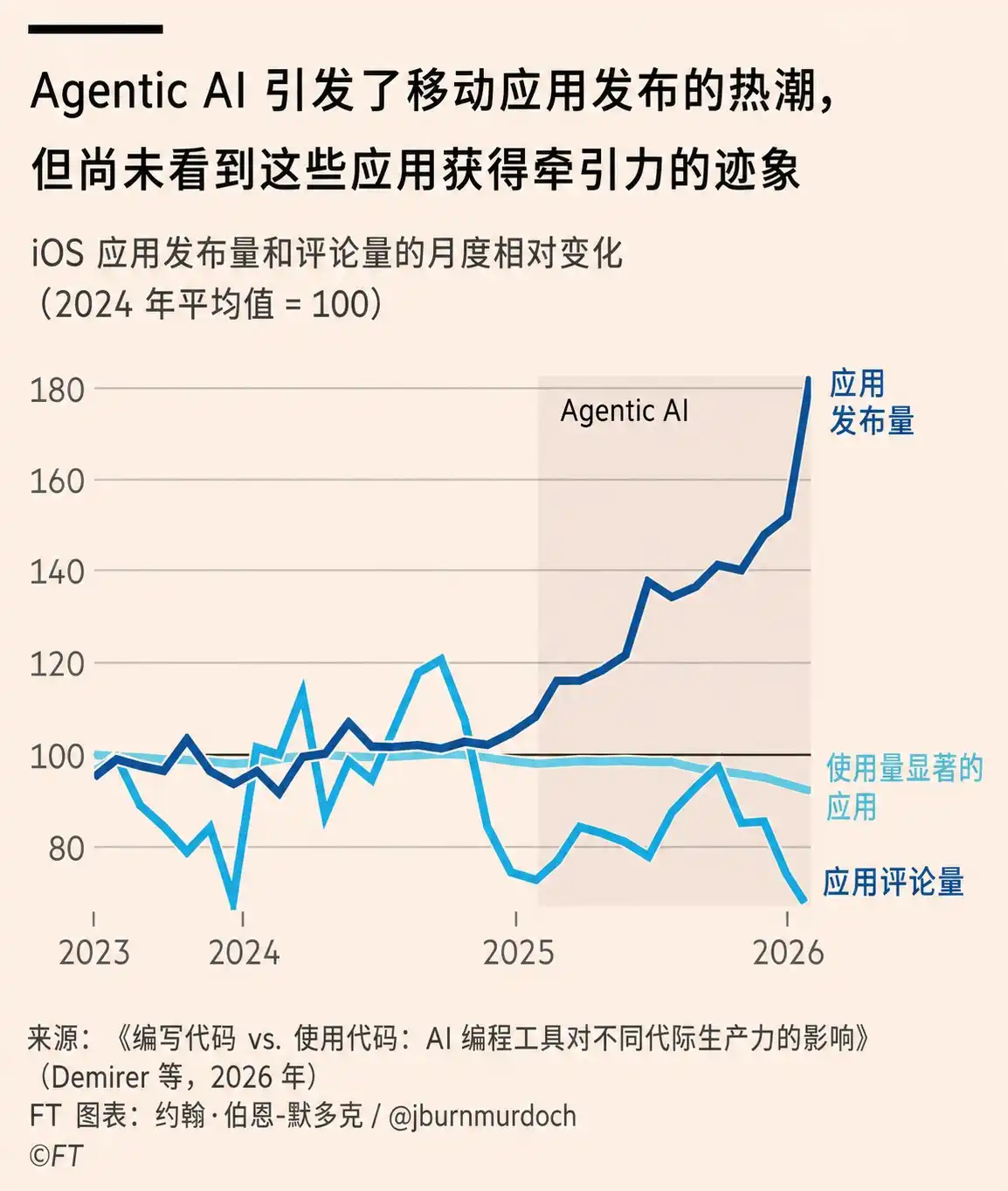
You, right now, can go build an app.

Not the next Notion, but a manageable-scale app or tool focused on something people can genuinely benefit from. Something that doesn't need to be a super-hit to be immensely valuable.

I highly recommend doing this. I think software will become the next 'information product.' What I mean is, building software will become the default choice for creators, soloists (solopreneurs), and other one-person businesses. Information products have been popular for so long because anyone can make them, but of course, that doesn't mean everyone succeeds.

The problem is the picture above (the current state).

You can build anything, but that doesn't mean: (1) it's worth building; (2) people will care; (3) you have the ability to iterate based on feedback and persist until it becomes something truly worth building and that people care about.

If you can truly internalize this sentence, you will thrive.

The second problem is that agency, taste, persuasion, persistence, and iteration are not typical 'high-value skills' you can just learn by watching a few YouTube videos.

Spouting theory and Twitter threads about how to become high-agency won't make you more agential.

The only way to practice them is to start making your own things.

3. The Antidote to Being Employed is to Make Yourself 'Unemployable'

I still remember the day I got my first web design client.

I remember they paid me $300 for an ugly static site I hand-coded. It was a local mattress company that just wanted a webpage where people could see their mattresses.

That's it.

$300.

That was the moment a light bulb went off. I knew that if I could replicate, improve, and continuously iterate the actions I just used to earn that money, I could somehow have more control over my future lifestyle and destiny. It made me 'unemployable.' It planted a deep belief in me: I could never accept going to work again; I would fight for my own survival!

But the number '$300' alone doesn't explain all the precursors to that moment—the identity shift and the initial self-belief that this could work. Nor does it encompass everything I learned in the subsequent 7 years.

I want to give you two things: a catalyst for an identity shift to become truly unwilling and unemployable, not just someone who 'likes the idea'; and an action plan that everyone can execute in their own unique way.

1) Throw yourself into an environment that forces you to grow

The fastest way to change your life is to physically and digitally rip yourself out of your current environment. Change everything overnight. The places you go, the accounts you follow, the information you consume, etc. It's hard, but it absolutely works.

Behavior change = Identity change.

You can try to diet and lose 30 pounds, but if you're not someone who intrinsically values health and enjoys a healthy lifestyle, you'll always feel like you're swimming upstream. Unless you fundamentally change your character, you'll eventually regain all the weight, just like most people.

How do you do it?

First, understanding how you became who you are today helps.

  • You were born into a family and culture with specific values.

  • You were indoctrinated with these values, even if your parents didn't force them on you.

  • You went to a school with specific values, taught by teachers with specific values.

  • You were exposed to a barrage of information that may have subtly nudged your values toward rebellion, laziness, and victimhood.

  • You got a phone, and with the help of social media and our primal 'monkey brain' that simply can't self-regulate, this subtle conditioning process began to amplify exponentially.

Sure, there's more nuance, but you get the core idea.

This isn't necessarily bad; it's somewhat essential.

I've heard many 'authentic' guys say they hate 'copying' or imitating, yet they still walk on two feet and speak English—because that's how you grow up. You must imitate; it's called learning.

But it becomes a problem when your behavior starts blocking the life you truly, deeply desire. The one that whispers, 'You're meant for more.'

To start this re-conditioning, re-creation process, begin with your environment.

You must be hyper-aware of all external stimuli because they are all subtly shaping who you are now.

Here's what you do:

Flip the old switches off overnight.

Wake up tomorrow and, for at least that day, do nothing you normally do.

Set your alarm for a completely different time. Plan every step after you wake up precisely. Eat different food. Talk to different people. Consume different content. Change everything.

As we go deeper, you'll gradually understand which direction to deliberately construct your surroundings.

2) Choose a medium where feedback is as close to reality as possible

The most dangerous way to live is to be completely detached from continuous trial and error.

Being detached from the process of correcting errors means you're detached from challenge, exploration, and the hard-won wisdom that comes from struggle—the very wisdom that brings growth and, subsequently, a sense of accomplishment.

This applies not only to jobs where the challenge plateaus rapidly once you're proficient but also to business and entrepreneurship, even to those who bring an 'employee mindset' into their ventures: always needing someone to tell them what to do or an employee handbook to take confident steps.

I want to ask you a question:

Before the internet, how did people figure things out? Before the flood of 'hand-holding' tutorials and step-by-step guides, how was the first rocket built?

By trying. By facing failure. But they didn't let failure convince them 'it's impossible,' nor did they let it derail them into instant gratification. They adjusted their course based on the information reality fed back to them. Eventually, they found the needle in the haystack.

They were wise.

Because the hallmark of a wise system is its ability to correct its course based on feedback. They had a lighthouse in their minds, and when storms blew them off course, they never gave up.

Whenever I talk about entrepreneurship, this is what I truly mean.

I mean returning to your most natural state. Immersing yourself in creation. Pursuing unknown goals that can only be achieved through failure.

This is the only common trait among most successful people.

For them, failure is never a negative concept; it's an essential, normal part of a good life.

This all sounds fantastic, but in today's world, how do you actually put this into practice?

3) If you want to thrive in the future, learn one of these two skills

Code and media are permissionless leverage. They are the super-leverage behind the new rich. You can create software and media that earn money for you while you sleep.

— Naval

As a novice, an individual, you have no idea how much leverage you have at your fingertips, especially with AI now.

I'm not talking about low-level AI use, like casual ChatGPT chatters or artists furious that AI 'stole' their work.

I'm talking about a higher-order understanding—knowing you can build almost anything because AI plunges you into a torrent of trial and error and rapid feedback. Sure, the initial output may be largely unsatisfactory, but if you have agency, if you know how to iterate, if you're persistent, if you cultivate taste, you can build almost anything, and it only gets easier over time. Then, if you can persuade others, what you build can earn you consistent income while you sleep.

Of course, this was possible before AI. The core issue is that most people don't understand that given a long enough time horizon and possessing these five elements of success, anything is possible. AI just lets you do more, faster, and grants you capabilities you couldn't access before—like software development and a supercharged way to learn and research.

That said, I think Media is more important than Code.

And when we talk about media, we're really talking about Content.

Posts, videos, podcasts, or articles that you publish once and can be seen by thousands, even millions. In my view, this is the most valuable core skill to have, especially in an era where more and more people are trying to rely entirely on AI for all creation.

Because with content, you must have an eye for what's truly 'good.'

You still need the discernment and judgment that AI can't directly give you because you haven't personally embarked on the journey of trial and error. You don't even know what questions to ask.

The value of content is subjective. Everyone who reads any sentence in it will interpret it differently. In other words, there is no single correct path to achieving results.

In contrast, the value of code is relatively objective. As long as it produces the desired outcome, how you write it isn't that important. As we saw earlier, there are more mobile game apps than ever, but their downloads and actual usage are declining.

Why?

Because they lack Distribution. They don't understand media and content. They can't attract people to use their creations, nor can they make people care enough to pay for them.

By the way, I'm not talking about the kind of content that hypes on Instagram, like 'I gave my social media permissions to Claude, and it grew my account by 100k followers overnight.' That content is almost worthless unless you can build genuine trust and loyalty through narrative and authority.

As JK Molina says: Likes don't pay bills.

Truly smart content creators operate on a much larger scale than posting clickbait or rage-bait just for likes and follows.

Also, as you might have guessed, exposing yourself to an environment of people, places, and habit triggers aligned with the life you aspire to is a crucial part of completing the identity shift.

4. How to Start — Take 15 Minutes to Change Your Life Trajectory

You've changed your environment.

You've chosen your medium.

You know media trumps code because the value of content is entirely subjective to the audience, making AI-generated content rapidly homogenized and commoditized as it becomes ubiquitous, thereby opening up massive space for true creative talent to grow wildly—whether they use AI or not, because I'll say it again, AI itself was never the problem.

Now, you need to answer the only truly important question:

What is your life's work?

This is what we're going to build. A lifelong pursuit worth dedicating yourself to, not a cold 'personal brand.'

Peterson, Huberman, Watts—they all have so-called 'personal brands,' but these brands are deeply congruent with their life missions. They know exactly what they want and use social media as a tool to achieve it. Because in the current environment, it's the best technological means for you as an individual, amplified by AI, to make a breakthrough, especially if you're starting from scratch—it's hard to make a dent on TV, radio, or with traditional publishers.

(Sure, Alan Watts didn't deliberately build a 'personal brand' back then, but he effectively formed one, so the point still stands.)

Their personal brand is their lived self.

That's their identity tag.

Most people aspire to this but get stuck quickly. They crave instant dopamine hits, constantly searching online for 'what's the most profitable niche for making 6 figures with content creation,' instead of excavating the immensely valuable experience and stories already accumulated over years within themselves—often dismissing them as worthless because they seem too ordinary to them.

The raw material for your life's work is already buried deep within you, just layered over by years of conditioning to 'specialize,' 'be practical,' and 'stop asking so many questions.' The process of discovery isn't about stuffing you with novel, strange ideas. Instead, it's about revealing the treasure you already possess.

Take this seriously.

Close all browser tabs. Open a blank document. Set a 15-minute timer. Answer the following questions in writing one by one. Do not skip the questions that make you uncomfortable.

Step 1: Mine Your Raw Material

Most of what makes you interesting has been ground out of you through past growth and training. Your curiosity was seen as distraction. Your broad interests were labeled as lack of focus. Because the old system only needed a compliant cog.

The only way your content can resonate is if it originates from genuinely authentic material that is truly yours.

Answer these questions. If an answer doesn't come immediately, skip it and let it simmer in your subconscious:

  • What do you know so well it absolutely couldn't be an accident? What topic have you devoured countless materials on, studying relentlessly for years, even when no one was paying you?

  • What problem have you solved for yourself that you previously blindly assumed everyone else had already solved? What comes effortlessly to you as instinct yet seems to frustrate everyone around you?

  • What 'transgressive' thing were you criticized for as a child that was actually the seed of your early unique taste? What were you obsessed with before someone jumped in to tell you 'it's not practical'?

Now, circle one answer. The one that truly stirs something, creates a ripple inside you. This is your core raw material.

Don't worry about niche, content pillars, or other operational jargon. Focus on the depth of your core idea, because in the end, winning comes down to depth of thought.

Step 2: Establish Your 'Contrarian Thesis'

The world doesn't need another person repackaging common sense and dumping it back out. Your content must have a unique perspective only you can see. And this perspective comes precisely from what you firmly believe the mainstream society has gotten wrong.

Taste isn't about knowing what's good. It's about seeing what's flawed, what's broken, and being unable to let it slide.

Answer these questions:

  • What conventional workplace or life advice, widely accepted as gospel, has actually messed up your life? What deep-seated beliefs did you have to 'uninstall' to get back on track and feel alive again?

  • In your field of expertise, what ideas do you hold that might be laughed at as naive by so-called experts, but you can't be shaken from them?

  • What is the 'emperor's new clothes' in your entire industry that everyone tacitly agrees to ignore?

Examine the answers from Step 1 and Step 2 together. Where they intersect is the direction you should go full speed ahead.

Your answers to these questions are the perfect material for your first post.

The world's top brands are essentially the public, open exploration of one living person's inner world.

Step 3: Publish Your First Core Idea Tomorrow

This is a long article, but not a comprehensive course.

I wish I could list 20 detailed modules here, but I can't. That's what a bootcamp is for.

The final element—use it as your starting point to formally bid farewell to dependence on handouts and step into a new era of financial independence—is to actually do it. And actually doing it starts with publishing your first post.

Literally, you just wrote excellent post material in black and white in the previous step.

Pick one.

Think about how to write the opening line (the hook) to instantly grab attention.

Refine the wording of the body to make it most penetrating and impactful.

Accept that your first version might be terrible—remember, you can't optimize something that doesn't exist.

If you need a little help, here's a small trick/prompt to help you brainstorm and draft a few versions from different angles, giving you a feel for what 'good' content is. These are all based on market-validated methodologies.

Your mission is clear.

Pick one answer from Step 1 and one from Step 2. Fuse them organically into a single, highly distinctive sentence that only you could write. Then publish it tomorrow as your first piece of work. A post, a short video, or a long article. The medium is irrelevant at this stage.

At this point, you'll get real feedback from the real world.

If it doesn't make a splash, great, it means you need to learn. You need to research and find a persuasion strategy to try in your next or next-next post until you master this skill—because mastering a skill is essentially the cumulative process of stacking tactical solutions as you continuously run into new problems.

If you're the type currently thinking, 'I wish this were more practical and actionable,' you're really missing the point. Because I just gave you the universal ultimate underlying formula that can be extrapolated to accomplish anything.

And that complaint that just flashed through your mind is a mental error you failed to catch and correct in time.

Alright, that's it for today. Talk next time.

Translator: boxi.

Criptos en tendencia

Preguntas relacionadas

QAccording to the article, what are the five key elements that make someone 'unstoppable' and able to do meaningful work even if all jobs are replaced?

AThe five key elements are Agency (the ability to act without permission), Taste (knowing what is worth presenting to the world through experience), Persuasion (the skill to get people to care about what you do), Persistence (understanding that mistakes are part of the journey), and Iteration (the process of course-correcting based on feedback).

QWhat two core skills does the author recommend learning to thrive in the future?

AThe author recommends learning either Code or Media (Content). While code is important, the author argues that media (creating content like posts, videos, or articles) is more crucial as it allows for subjective value creation, distribution, and building genuine connection in a world where AI-generated content becomes homogenous.

QWhat is the proposed first practical step to begin the journey of becoming 'unemployable' and building one's own life's work?

AThe first practical step is a 15-minute exercise to answer specific questions that dig into one's 'raw materials' (unique experiences and deep knowledge) and 'contrarian thesis' (strongly held beliefs that go against mainstream advice). The goal is to combine these answers into a core idea and publish it as your first piece of content the next day.

QHow does the author define 'wage slavery' in the context of the article?

AThe author defines 'wage slavery' as being financially trapped in a situation where you have to do boring, meaningless work you didn't choose to do, for someone else, just to survive. It's the state of being dependent on an employer with no alternative skills to create replacement income, making you a slave to the wage.

QWhat does the author suggest is the real threat, as opposed to AI itself?

AThe real threat is not AI, but the individual's continued dependence on others (employers, the government) for survival and well-being. The author argues these entities will act in their own self-interest when threatened. The other core threat is the individual's own failure to fundamentally change their mindset, build agency, and develop the skills necessary to create their own work and income.

Lecturas Relacionadas

Thanks to Dice Rolls, Bitcoin Keys Are Stored Offline, But Not Everyone Will Do It

The article discusses using dice rolls to generate secure Bitcoin wallet seeds, providing entropy independent of potentially flawed hardware random number generators. It explains that each fair dice roll offers about 2.585 bits of entropy, with around 50 rolls needed for a standard 12-word seed phrase and 99+ recommended for higher security. This method gained attention after a vulnerability was revealed in some Coldcard hardware wallets, where a faulty firmware RNG (dating back to 2021) compromised generated keys. The analysis notes that while a dice-generated main seed was safe from this specific flaw, other Coldcard functions (like creating paper wallets, backup keys, or passwords) could still be vulnerable if they used the defective RNG. The piece argues that while dice-based entropy is technically robust, the manual process is error-prone, tedious, and unrealistic for most new users, who might make mistakes in recording or inputting rolls. It concludes that while manual entropy generation should remain an option for advanced users, the long-term goal is to develop reliable, user-friendly hardware and software that securely generates randomness without requiring specialized knowledge. Coldcard users are advised to check their firmware version and replace any secondary secrets (like paper wallet keys) created with vulnerable devices, while also considering multi-signature setups with devices from different manufacturers for added security.

cryptonews.ruHace 4 hora(s)

Thanks to Dice Rolls, Bitcoin Keys Are Stored Offline, But Not Everyone Will Do It

cryptonews.ruHace 4 hora(s)

Trading

Spot

Artículos destacados

Qué es GROK AI

Grok AI: Revolucionando la Tecnología Conversacional en la Era Web3 Introducción En el paisaje de rápida evolución de la inteligencia artificial, Grok AI se destaca como un proyecto notable que une los dominios de la tecnología avanzada y la interacción del usuario. Desarrollado por xAI, una empresa liderada por el renombrado empresario Elon Musk, Grok AI busca redefinir la forma en que interactuamos con la inteligencia artificial. A medida que el movimiento Web3 continúa floreciendo, Grok AI tiene como objetivo aprovechar el poder de la IA conversacional para responder consultas complejas, proporcionando a los usuarios una experiencia que no solo es informativa, sino también entretenida. ¿Qué es Grok AI? Grok AI es un sofisticado chatbot de IA conversacional diseñado para interactuar dinámicamente con los usuarios. A diferencia de muchos sistemas de IA tradicionales, Grok AI abraza una gama más amplia de consultas, incluyendo aquellas que normalmente se consideran inapropiadas o fuera de las respuestas estándar. Los objetivos centrales del proyecto incluyen: Razonamiento Confiable: Grok AI enfatiza el razonamiento de sentido común para proporcionar respuestas lógicas basadas en la comprensión contextual. Supervisión Escalable: La integración de asistencia de herramientas asegura que las interacciones de los usuarios sean monitoreadas y optimizadas para la calidad. Verificación Formal: La seguridad es primordial; Grok AI incorpora métodos de verificación formal para mejorar la confiabilidad de sus resultados. Comprensión de Largo Contexto: El modelo de IA sobresale en retener y recordar un extenso historial de conversaciones, facilitando discusiones significativas y contextualizadas. Robustez Adversarial: Al enfocarse en mejorar sus defensas contra entradas manipuladas o maliciosas, Grok AI busca mantener la integridad de las interacciones de los usuarios. En esencia, Grok AI no es solo un dispositivo de recuperación de información; es un compañero conversacional inmersivo que fomenta un diálogo dinámico. Creador de Grok AI La mente detrás de Grok AI no es otra que Elon Musk, una persona sinónimo de innovación en varios campos, incluyendo la automoción, los viajes espaciales y la tecnología. Bajo el paraguas de xAI, una empresa enfocada en avanzar la tecnología de IA de maneras beneficiosas, la visión de Musk busca remodelar la comprensión de las interacciones de IA. El liderazgo y la ética fundacional están profundamente influenciados por el compromiso de Musk de empujar los límites tecnológicos. Inversores de Grok AI Si bien los detalles específicos sobre los inversores que respaldan a Grok AI son limitados, se reconoce públicamente que xAI, el incubador del proyecto, está fundado y apoyado principalmente por el propio Elon Musk. Las empresas y participaciones anteriores de Musk proporcionan un respaldo robusto, fortaleciendo aún más la credibilidad y el potencial de crecimiento de Grok AI. Sin embargo, hasta ahora, la información sobre fundaciones de inversión adicionales u organizaciones que apoyan a Grok AI no está fácilmente accesible, marcando un área para una posible exploración futura. ¿Cómo Funciona Grok AI? La mecánica operativa de Grok AI es tan innovadora como su marco conceptual. El proyecto integra varias tecnologías de vanguardia que facilitan sus funcionalidades únicas: Infraestructura Robusta: Grok AI está construido utilizando Kubernetes para la orquestación de contenedores, Rust para rendimiento y seguridad, y JAX para computación numérica de alto rendimiento. Este trío asegura que el chatbot opere de manera eficiente, escale efectivamente y sirva a los usuarios de manera oportuna. Acceso a Conocimiento en Tiempo Real: Una de las características distintivas de Grok AI es su capacidad para acceder a datos en tiempo real a través de la plataforma X—anteriormente conocida como Twitter. Esta capacidad otorga a la IA acceso a la información más reciente, permitiéndole proporcionar respuestas y recomendaciones oportunas que otros modelos de IA podrían pasar por alto. Dos Modos de Interacción: Grok AI ofrece a los usuarios una elección entre “Modo Divertido” y “Modo Regular”. El Modo Divertido permite un estilo de interacción más lúdico y humorístico, mientras que el Modo Regular se centra en ofrecer respuestas precisas y exactas. Esta versatilidad asegura una experiencia personalizada que se adapta a diversas preferencias de los usuarios. En esencia, Grok AI une rendimiento con compromiso, creando una experiencia que es tanto enriquecedora como entretenida. Cronología de Grok AI El viaje de Grok AI está marcado por hitos cruciales que reflejan sus etapas de desarrollo y despliegue: Desarrollo Inicial: La fase fundamental de Grok AI tuvo lugar durante aproximadamente dos meses, durante los cuales se realizó el entrenamiento inicial y el ajuste del modelo. Lanzamiento Beta de Grok-2: En un avance significativo, se anunció la beta de Grok-2. Este lanzamiento introdujo dos versiones del chatbot—Grok-2 y Grok-2 mini—cada una equipada con capacidades para chatear, programar y razonar. Acceso Público: Tras su desarrollo beta, Grok AI se volvió disponible para los usuarios de la plataforma X. Aquellos con cuentas verificadas por un número de teléfono y activas durante al menos siete días pueden acceder a una versión limitada, haciendo que la tecnología esté disponible para un público más amplio. Esta cronología encapsula el crecimiento sistemático de Grok AI desde su inicio hasta el compromiso público, enfatizando su compromiso con la mejora continua y la interacción del usuario. Características Clave de Grok AI Grok AI abarca varias características clave que contribuyen a su identidad innovadora: Integración de Conocimiento en Tiempo Real: El acceso a información actual y relevante diferencia a Grok AI de muchos modelos estáticos, permitiendo una experiencia de usuario atractiva y precisa. Estilos de Interacción Versátiles: Al ofrecer modos de interacción distintos, Grok AI se adapta a diversas preferencias de los usuarios, invitando a la creatividad y la personalización en la conversación con la IA. Avanzada Infraestructura Tecnológica: La utilización de Kubernetes, Rust y JAX proporciona al proyecto un marco sólido para asegurar confiabilidad y rendimiento óptimo. Consideración de Discurso Ético: La inclusión de una función generadora de imágenes muestra el espíritu innovador del proyecto. Sin embargo, también plantea consideraciones éticas en torno a los derechos de autor y la representación respetuosa de figuras reconocibles—una discusión en curso dentro de la comunidad de IA. Conclusión Como una entidad pionera en el ámbito de la IA conversacional, Grok AI encapsula el potencial de experiencias transformadoras para los usuarios en la era digital. Desarrollado por xAI y guiado por el enfoque visionario de Elon Musk, Grok AI integra conocimiento en tiempo real con capacidades avanzadas de interacción. Busca empujar los límites de lo que la inteligencia artificial puede lograr mientras mantiene un enfoque en consideraciones éticas y la seguridad del usuario. Grok AI no solo encarna el avance tecnológico, sino que también representa un nuevo paradigma de conversación en el paisaje Web3, prometiendo involucrar a los usuarios con tanto conocimiento hábil como interacción lúdica. A medida que el proyecto continúa evolucionando, se erige como un testimonio de lo que la intersección de la tecnología, la creatividad y la interacción similar a la humana puede lograr.

476 Vistas totalesPublicado en 2024.12.26Actualizado en 2024.12.26

Qué es GROK AI

Qué es ERC AI

Euruka Tech: Una Visión General de $erc ai y sus Ambiciones en Web3 Introducción En el paisaje en rápida evolución de la tecnología blockchain y las aplicaciones descentralizadas, nuevos proyectos emergen con frecuencia, cada uno con objetivos y metodologías únicas. Uno de estos proyectos es Euruka Tech, que opera en el amplio dominio de las criptomonedas y Web3. El enfoque principal de Euruka Tech, particularmente su token $erc ai, es presentar soluciones innovadoras diseñadas para aprovechar las crecientes capacidades de la tecnología descentralizada. Este artículo tiene como objetivo proporcionar una visión general completa de Euruka Tech, una exploración de sus objetivos, funcionalidad, la identidad de su creador, posibles inversores y su importancia dentro del contexto más amplio de Web3. ¿Qué es Euruka Tech, $erc ai? Euruka Tech se caracteriza como un proyecto que aprovecha las herramientas y funcionalidades ofrecidas por el entorno Web3, centrándose en integrar inteligencia artificial dentro de sus operaciones. Aunque los detalles específicos sobre el marco del proyecto son algo elusivos, está diseñado para mejorar la participación del usuario y automatizar procesos en el espacio cripto. El proyecto tiene como objetivo crear un ecosistema descentralizado que no solo facilite transacciones, sino que también incorpore funcionalidades predictivas a través de inteligencia artificial, de ahí la designación de su token, $erc ai. El objetivo es proporcionar una plataforma intuitiva que facilite interacciones más inteligentes y un procesamiento eficiente de transacciones dentro de la creciente esfera de Web3. ¿Quién es el Creador de Euruka Tech, $erc ai? En la actualidad, la información sobre el creador o el equipo fundador detrás de Euruka Tech permanece no especificada y algo opaca. Esta ausencia de datos genera preocupaciones, ya que el conocimiento del trasfondo del equipo es a menudo esencial para establecer credibilidad dentro del sector blockchain. Por lo tanto, hemos categorizado esta información como desconocida hasta que se disponga de detalles concretos en el dominio público. ¿Quiénes son los Inversores de Euruka Tech, $erc ai? De manera similar, la identificación de inversores u organizaciones de respaldo para el proyecto Euruka Tech no se proporciona fácilmente a través de la investigación disponible. Un aspecto que es crucial para los posibles interesados o usuarios que consideren involucrarse con Euruka Tech es la garantía que proviene de asociaciones financieras establecidas o respaldo de firmas de inversión de renombre. Sin divulgaciones sobre afiliaciones de inversión, es difícil sacar conclusiones completas sobre la seguridad financiera o la longevidad del proyecto. De acuerdo con la información encontrada, esta sección también se encuentra en estado de desconocido. ¿Cómo Funciona Euruka Tech, $erc ai? A pesar de la falta de especificaciones técnicas detalladas para Euruka Tech, es esencial considerar sus ambiciones innovadoras. El proyecto busca aprovechar el poder computacional de la inteligencia artificial para automatizar y mejorar la experiencia del usuario dentro del entorno de las criptomonedas. Al integrar IA con tecnología blockchain, Euruka Tech tiene como objetivo proporcionar características como operaciones automatizadas, evaluaciones de riesgo e interfaces de usuario personalizadas. La esencia innovadora de Euruka Tech radica en su objetivo de crear una conexión fluida entre los usuarios y las vastas posibilidades que presentan las redes descentralizadas. A través de la utilización de algoritmos de aprendizaje automático e IA, busca minimizar los desafíos de los usuarios primerizos y optimizar las experiencias transaccionales dentro del marco de Web3. Esta simbiosis entre IA y blockchain subraya la importancia del token $erc ai, que actúa como un puente entre las interfaces de usuario tradicionales y las capacidades avanzadas de las tecnologías descentralizadas. Cronología de Euruka Tech, $erc ai Desafortunadamente, como resultado de la información limitada disponible sobre Euruka Tech, no podemos presentar una cronología detallada de los principales desarrollos o hitos en el viaje del proyecto. Esta cronología, típicamente invaluable para trazar la evolución de un proyecto y entender su trayectoria de crecimiento, no está actualmente disponible. A medida que la información sobre eventos notables, asociaciones o adiciones funcionales se haga evidente, las actualizaciones seguramente mejorarán la visibilidad de Euruka Tech en la esfera cripto. Aclaración sobre Otros Proyectos “Eureka” Es importante señalar que múltiples proyectos y empresas comparten una nomenclatura similar con “Eureka”. La investigación ha identificado iniciativas como un agente de IA de NVIDIA Research, que se centra en enseñar a los robots tareas complejas utilizando métodos generativos, así como Eureka Labs y Eureka AI, que mejoran la experiencia del usuario en educación y análisis de servicio al cliente, respectivamente. Sin embargo, estos proyectos son distintos de Euruka Tech y no deben confundirse con sus objetivos o funcionalidades. Conclusión Euruka Tech, junto con su token $erc ai, representa un jugador prometedor pero actualmente oscuro dentro del paisaje de Web3. Si bien los detalles sobre su creador e inversores permanecen no revelados, la ambición central de combinar inteligencia artificial con tecnología blockchain se presenta como un punto focal de interés. Los enfoques únicos del proyecto para fomentar la participación del usuario a través de la automatización avanzada podrían destacarlo a medida que el ecosistema Web3 progresa. A medida que el mercado cripto continúa evolucionando, los interesados deben mantener un ojo atento a los avances en torno a Euruka Tech, ya que el desarrollo de innovaciones documentadas, asociaciones o una hoja de ruta definida podría presentar oportunidades significativas en el futuro cercano. Tal como está, esperamos más información sustancial que podría revelar el potencial de Euruka Tech y su posición en el competitivo paisaje cripto.

455 Vistas totalesPublicado en 2025.01.02Actualizado en 2025.01.02

Qué es ERC AI

Qué es DUOLINGO AI

DUOLINGO AI: Integrando el Aprendizaje de Idiomas con Web3 e Innovación en IA En una era donde la tecnología redefine la educación, la integración de la inteligencia artificial (IA) y las redes blockchain anuncia una nueva frontera para el aprendizaje de idiomas. Entra DUOLINGO AI y su criptomoneda asociada, $DUOLINGO AI. Este proyecto aspira a fusionar la capacidad educativa de las principales plataformas de aprendizaje de idiomas con los beneficios de la tecnología descentralizada Web3. Este artículo profundiza en los aspectos clave de DUOLINGO AI, explorando sus objetivos, marco tecnológico, desarrollo histórico y potencial futuro, mientras mantiene claridad entre el recurso educativo original y esta iniciativa independiente de criptomoneda. Visión General de DUOLINGO AI En su esencia, DUOLINGO AI busca establecer un entorno descentralizado donde los aprendices puedan ganar recompensas criptográficas por alcanzar hitos educativos en la competencia lingüística. Al aplicar contratos inteligentes, el proyecto tiene como objetivo automatizar los procesos de verificación de habilidades y asignación de tokens, adhiriéndose a los principios de Web3 que enfatizan la transparencia y la propiedad del usuario. El modelo se aparta de los enfoques tradicionales para la adquisición de idiomas al apoyarse en gran medida en una estructura de gobernanza impulsada por la comunidad, permitiendo a los poseedores de tokens sugerir mejoras al contenido del curso y a las distribuciones de recompensas. Algunos de los objetivos notables de DUOLINGO AI incluyen: Aprendizaje Gamificado: El proyecto integra logros en blockchain y tokens no fungibles (NFTs) para representar niveles de competencia lingüística, fomentando la motivación a través de recompensas digitales atractivas. Creación de Contenido Descentralizada: Abre avenidas para que educadores y entusiastas de los idiomas contribuyan con sus cursos, facilitando un modelo de reparto de ingresos que beneficia a todos los contribuyentes. Personalización Impulsada por IA: Al emplear modelos avanzados de aprendizaje automático, DUOLINGO AI personaliza las lecciones para adaptarse al progreso de aprendizaje individual, similar a las características adaptativas que se encuentran en plataformas establecidas. Creadores del Proyecto y Gobernanza A partir de abril de 2025, el equipo detrás de $DUOLINGO AI permanece seudónimo, una práctica frecuente en el paisaje descentralizado de criptomonedas. Esta anonimidad está destinada a promover el crecimiento colectivo y la participación de los interesados en lugar de centrarse en desarrolladores individuales. El contrato inteligente desplegado en la blockchain de Solana anota la dirección de la billetera del desarrollador, lo que significa el compromiso con la transparencia en las transacciones a pesar de que la identidad de los creadores sea desconocida. Según su hoja de ruta, DUOLINGO AI aspira a evolucionar hacia una Organización Autónoma Descentralizada (DAO). Esta estructura de gobernanza permite a los poseedores de tokens votar sobre cuestiones críticas como implementaciones de características y asignaciones del tesoro. Este modelo se alinea con la ética del empoderamiento comunitario que se encuentra en diversas aplicaciones descentralizadas, enfatizando la importancia de la toma de decisiones colectiva. Inversores y Asociaciones Estratégicas Actualmente, no hay inversores institucionales o capitalistas de riesgo identificables públicamente vinculados a $DUOLINGO AI. En cambio, la liquidez del proyecto proviene principalmente de intercambios descentralizados (DEXs), marcando un contraste marcado con las estrategias de financiamiento de las empresas de tecnología educativa tradicionales. Este modelo de base indica un enfoque impulsado por la comunidad, reflejando el compromiso del proyecto con la descentralización. En su libro blanco, DUOLINGO AI menciona la formación de colaboraciones con “plataformas de educación blockchain” no especificadas, destinadas a enriquecer su oferta de cursos. Si bien aún no se han divulgado asociaciones específicas, estos esfuerzos colaborativos sugieren una estrategia para fusionar la innovación blockchain con iniciativas educativas, ampliando el acceso y la participación de los usuarios a través de diversas avenidas de aprendizaje. Arquitectura Tecnológica Integración de IA DUOLINGO AI incorpora dos componentes principales impulsados por IA para mejorar su oferta educativa: Motor de Aprendizaje Adaptativo: Este sofisticado motor aprende de las interacciones de los usuarios, similar a los modelos propietarios de las principales plataformas educativas. Ajusta dinámicamente la dificultad de las lecciones para abordar desafíos específicos de los aprendices, reforzando áreas débiles a través de ejercicios dirigidos. Agentes Conversacionales: Al emplear chatbots impulsados por GPT-4, DUOLINGO AI proporciona una plataforma para que los usuarios participen en conversaciones simuladas, fomentando una experiencia de aprendizaje de idiomas más interactiva y práctica. Infraestructura Blockchain Construido sobre la blockchain de Solana, $DUOLINGO AI utiliza un marco tecnológico integral que incluye: Contratos Inteligentes de Verificación de Habilidades: Esta característica otorga automáticamente tokens a los usuarios que superan con éxito las pruebas de competencia, reforzando la estructura de incentivos para resultados de aprendizaje genuinos. Insignias NFT: Estos tokens digitales significan varios hitos que los aprendices logran, como completar una sección de su curso o dominar habilidades específicas, permitiéndoles intercambiar o mostrar sus logros digitalmente. Gobernanza DAO: Los miembros de la comunidad con tokens pueden participar en la gobernanza votando sobre propuestas clave, facilitando una cultura participativa que fomenta la innovación en las ofertas de cursos y características de la plataforma. Línea de Tiempo Histórica 2022–2023: Conceptualización Los cimientos de DUOLINGO AI comienzan con la creación de un libro blanco, destacando la sinergia entre los avances en IA en el aprendizaje de idiomas y el potencial descentralizado de la tecnología blockchain. 2024: Lanzamiento Beta Un lanzamiento beta limitado introduce ofertas en idiomas populares, recompensando a los primeros usuarios con incentivos en tokens como parte de la estrategia de participación comunitaria del proyecto. 2025: Transición a DAO En abril, se produce un lanzamiento completo de la red principal con la circulación de tokens, lo que provoca discusiones comunitarias sobre posibles expansiones a idiomas asiáticos y otros desarrollos de cursos. Desafíos y Direcciones Futuras Obstáculos Técnicos A pesar de sus ambiciosos objetivos, DUOLINGO AI enfrenta desafíos significativos. La escalabilidad sigue siendo una preocupación constante, particularmente en equilibrar los costos asociados con el procesamiento de IA y mantener una red descentralizada y receptiva. Además, garantizar la creación y moderación de contenido de calidad en medio de una oferta descentralizada plantea complejidades en el mantenimiento de estándares educativos. Oportunidades Estratégicas Mirando hacia adelante, DUOLINGO AI tiene el potencial de aprovechar asociaciones de micro-certificación con instituciones académicas, proporcionando validaciones verificadas en blockchain de habilidades lingüísticas. Además, la expansión entre cadenas podría permitir que el proyecto acceda a bases de usuarios más amplias y a ecosistemas blockchain adicionales, mejorando su interoperabilidad y alcance. Conclusión DUOLINGO AI representa una fusión innovadora de inteligencia artificial y tecnología blockchain, presentando una alternativa centrada en la comunidad a los sistemas tradicionales de aprendizaje de idiomas. Si bien su desarrollo seudónimo y su modelo económico emergente traen ciertos riesgos, el compromiso del proyecto con el aprendizaje gamificado, la educación personalizada y la gobernanza descentralizada ilumina un camino hacia adelante para la tecnología educativa en el ámbito de Web3. A medida que la IA continúa avanzando y el ecosistema blockchain evoluciona, iniciativas como DUOLINGO AI podrían redefinir cómo los usuarios se involucran con la educación lingüística, empoderando comunidades y recompensando la participación a través de mecanismos de aprendizaje innovadores.

496 Vistas totalesPublicado en 2025.04.11Actualizado en 2025.04.11

Qué es DUOLINGO AI

Discusiones

Bienvenido a la comunidad de HTX. Aquí puedes mantenerte informado sobre los últimos desarrollos de la plataforma y acceder a análisis profesionales del mercado. A continuación se presentan las opiniones de los usuarios sobre el precio de AI (AI).

活动图片