Crypto Wallets Targeted In JavaScript Library Exploit—Cybersecurity Firm

bitcoinistPublished on 2025-12-16Last updated on 2025-12-16

Abstract

A critical vulnerability (CVE-2025-55182) in React Server Components (versions 19.0 to 19.2.0) is being actively exploited to inject malicious code into websites and steal cryptocurrency from connected wallets. The flaw, which allows unauthenticated attackers to execute arbitrary code on affected servers, has led to wallet-draining campaigns across multiple crypto sites. Cybersecurity firm Security Alliance (SEAL) warns that attackers are using the exploit to inject scripts that hijack or redirect transactions by altering user interfaces or swapping addresses. Over 50 organizations have reported compromise attempts, with scanning tools and exploit kits rapidly spreading in underground forums. Patched versions (19.0.1, 19.1.2, 19.2.1) are available, and all affected sites are urged to update immediately.

A critical flaw in React Server Components is being used by attackers to inject malicious code into live websites, and that code is siphoning crypto from connected wallets.

Reports note that the vulnerability, tracked as CVE-2025-55182, was published by the React team on December 3 and carries a maximum severity rating.

Cybersecurity firm Security Alliance (SEAL) has confirmed that multiple crypto websites are actively being targeted, and they urge operators to review all React Server Components immediately to prevent wallet-draining attacks.

Security teams say the bug allows an unauthenticated attacker to run code on affected servers, which has been turned into wallet-draining campaigns across several sites.

Image: Shutterstock

A Wide Risk To Sites Using Server Components

SEAL said the flaw affects React Server Components packages in versions 19.0 through 19.2.0, and patched releases such as 19.0.1, 19.1.2, and 19.2.1 were issued after disclosure.

The vulnerability works by exploiting unsafe deserialization in the Flight protocol, letting a single crafted HTTP request execute arbitrary code with the web server’s privileges. Security teams have warned that many sites using default configurations are at risk until they apply the updates.

Attackers Inject Wallet-Draining Scripts Into Compromised Pages

According to industry posts, threat actors are using the exploit to plant scripts that prompt users to connect Web3 wallets and then hijack or redirect transactions.

In some cases the injected code alters the user interface or swaps addresses, so a user believes they are sending funds to one account while the transaction actually pays an attacker. This method can hit users who trust familiar crypto sites and connect wallets without checking every approval.

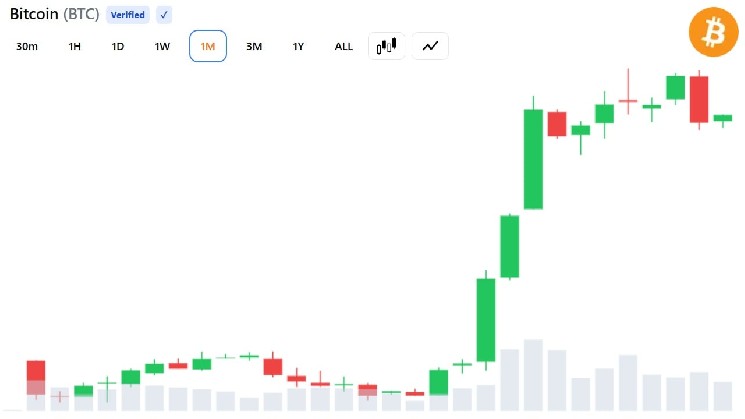
BTCUSD now trading at $89,626. Chart: TradingView

Scanners And Proof-Of-Concepts Flooded Underground Forums

Security researchers report a rush of scanning tools, fake proof-of-concept code, and exploit kits shared in underground forums shortly after the vulnerability was disclosed.

Cloud and threat-intelligence teams have observed multiple groups scanning for vulnerable servers and testing payloads, which has accelerated active exploitation.

Some defenders say that the speed and volume of scanning have made it hard to stop all attempts before patches are applied.

More Than 50 Organizations Reported Compromise Attempts

Based on reports from incident responders, post-exploitation crypto activity has been observed at more than 50 organizations across finance, media, government, and tech.

In several investigations, attackers established footholds and then used those to deliver further malware or to seed front-end code that targets wallet users.

SEAL has emphasized that organizations failing to patch or monitor their servers could experience further attacks, and ongoing monitoring is essential until all systems are verified safe.

Featured image from Unsplash, chart from TradingView

Related Reads

Dalio Warns: AI Boom Shows Signs of a Bubble, Day of Reckoning Will Be the Time of Burst

Ray Dalio, founder of Bridgewater Associates, warns that the current artificial intelligence investment boom shows classic signs of a bubble, which he expects will eventually burst. In a Bloomberg Television interview, he noted that great technological revolutions often lead to capital inflows that create bubbles, making it difficult for investors and companies to calibrate their spending accurately—either overspending to capture market share or underspending and losing their competitive position. This caution comes amid significant rallies in AI-related assets, particularly chipmakers, driven by soaring demand for data centers and high-bandwidth chips, raising debates about overheating valuations. In contrast, Nvidia CEO Jensen Huang recently asserted that investors embracing the AI wave would see "crazy" returns and dismissed concerns over return on investment for data center spending as outdated. Dalio, however, focuses on the risks in the profit realization phase. He argues that bubbles tend to show signs of破裂 when markets transition from investment to the need for tangible returns, describing the burst as a process of converting paper wealth into cash. While acknowledging AI's intrinsic value, he expressed concern over the future profitability of some AI companies, suggesting the market is repeating a familiar pattern. The 76-year-old billionaire, who fully exited Bridgewater in 2025, has a net worth estimated at $21.5 billion according to the Bloomberg Billionaires Index.

marsbit8m ago

Dalio Warns: AI Boom Shows Signs of a Bubble, Day of Reckoning Will Be the Time of Burst

marsbit8m ago

Privacy Coin Crisis of Confidence! ZEC Plunges Over 56% in a Single Day

Zcash (ZEC), a leading privacy-focused cryptocurrency, experienced a severe crash on June 5th, plummeting over 56% in a single day and erasing nearly two months of gains. The flash crash was triggered by the disclosure of a critical zero-knowledge proof vulnerability within Zcash's Orchard privacy pool, which had existed since the pool's launch in May 2022. The flaw theoretically allowed an attacker to forge unlimited ZEC undetectably due to the pool's privacy features. The vulnerability was discovered on May 29th by independent security researcher Taylor Hornby during a proactive audit commissioned by Shielded Labs, utilizing AI-assisted analysis. The Zcash development team responded swiftly, implementing an emergency soft fork to disable Orchard transactions on June 2nd and executing a permanent hard fork fix (NU6.2) on June 3rd. Despite the technical fix, a major crisis of confidence emerged. The core issue is that Orchard's privacy design makes it cryptographically impossible to prove whether the vulnerability was exploited over the past four years, casting permanent doubt on the historical supply integrity of ZEC. While Shielded Labs argues exploitation was unlikely, the inability to provide definitive proof has severely damaged market trust. This sentiment was exacerbated when BitMEX co-founder Arthur Hayes, a prominent ZEC supporter, announced he was selling his entire position. He stated that privacy assets require "perfect security" rather than "probable safety." The combined effect of the disclosure and Hayes's exit ignited widespread panic selling, leading to massive liquidations and significant price decline. Analysts note the event highlights a fundamental tension within privacy coins: the conflict between verifiable supply and cryptographic privacy.

链捕手11m ago

Privacy Coin Crisis of Confidence! ZEC Plunges Over 56% in a Single Day

链捕手11m ago

Trading

Spot
Futures
活动图片