Crypto Giant a16z Sets Up Shop In South Korea In Major Asia Push

bitcoinistPublished on 2025-12-11Last updated on 2025-12-11

Abstract

Crypto venture capital firm Andreessen Horowitz (a16z) has opened its first Asian office in Seoul, South Korea, to expand its regional presence. The office will be led by Sungmo Park, Head of APAC go-to-market, and aims to support portfolio companies and build local partnerships. This move is driven by significant growth in the Asia-Pacific crypto market, which saw $2.36 trillion in on-chain value over the past year. South Korea is a key market, with nearly one in three adults holding crypto assets. The office will focus on go-to-market support, helping founders navigate local markets and access global partners, rather than large-scale investing initially. This expansion reflects increasing competition and activity in Asia's crypto sector.

Crypto venture capital firm Andreessen Horowitz (A16z) has opened its first Asian office in Seoul, South Korea, signaling a deeper push into the region where on-chain activity and user adoption have surged. According to the firm, the new hub will support portfolio companies and help build local partnerships and communities.

A16z Moves Into Seoul

The office will be led by Sungmo Park, who has held roles at Monad and Polygon, and who joins a16z as Head of APAC go-to-market. Reports have disclosed that Anthony Albanese, the fund’s chief operating officer, announced the move and framed it as a way to put teams closer to where users and builders are located.

A16z said Seoul will act as a gateway for interacting with companies across Asia and for giving portfolio firms local support on partnerships, marketing and expansion. Park will focus on regional strategy and on helping founders navigate local markets. This is not described as a small PR outpost; it is positioned as a real operating base for the region.

Based on reports, Asia-Pacific recorded about US$2.36 trillion in on-chain value over the 12 months ending June 2025, an increase of close to 70% from the prior year. That growth helped convince a16z that Asia needs a local presence. Chainalysis and several industry trackers show heavy on-chain flows and deep retail participation across the region.

Why Korea Matters To Crypto

South Korea itself is highlighted as one of the largest national crypto markets. According to a16z and other coverage, nearly one in three adults in South Korea hold crypto assets — a rate that in some measures is higher than local stock ownership. That level of retail use, plus a thriving developer community, made Seoul an attractive choice for the firm.

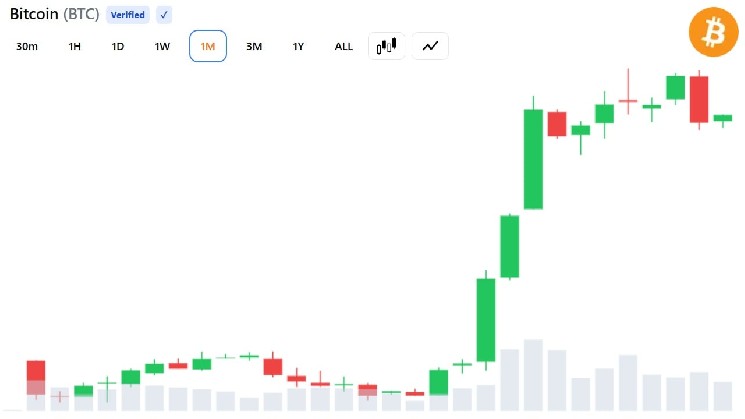
BTCUSD now trading at $90,257. Chart: TradingView

What The Move Could Mean

The entry of a major US venture firm into Seoul may boost interest among local startups seeking international partners and could make capital more accessible for teams in South Korea and nearby markets. Several news outlets describe the office as focused on go-to-market support rather than immediate, large-scale local investing, at least at launch.

Competition For Deals

Reports note that other global funds and crypto firms have been increasing activity in Asia this year. A16z’s decision comes as several markets across the region report rising developer activity and fresh funding rounds. For founders, having an established US investor with a local office may speed introductions to global customers and partners.

Featured image from Unsplash, chart from TradingView

Related Reads

Will the Next Crypto Bull Run Start with On-Chain Trading of SpaceX?

This article presents a scenario-based forecast for the crypto industry from 2026 to 2029, arguing that the next major cycle will be driven not by technological narratives but by legal access to real-world assets. The author predicts that by mid-2026, pre-IPO perpetual contracts for top private companies like SpaceX, OpenAI, and Anthropic on platforms like Hyperliquid will become the primary gateway for accessing quality assets, as most crypto-native tokens fail to capture real value. The much-hyped AI x Crypto intersection largely fails except for prediction markets, which thrive on betting on AI model supremacy. By 2027, public blockchain foundations are forced to choose between catering to retail speculation or building compliant infrastructure for institutions, with many opting for the latter. Growth in stablecoins and tokenized private credit/equity hits a "triple ceiling" due to regulatory and political uncertainty rather than market demand. The pivotal shift is forecast for 2028. A major liquidation event in pre-IPO perpetuals exposes the structural flaw of synthetic markets lacking a real underlying asset anchor. In response, regulatory changes finally allow the public solicitation of private securities resales to verified accredited investors. This creates a legitimate secondary market for real company equity, which then becomes the core asset class of the new bull market, relegating synthetic perps to a niche role. By 2029, the industry becomes "boring" but foundational. Tokens without claims on real cash flows or assets cease trading. Stablecoin growth is steady but politically capped. Crypto infrastructure fades from view as it gets absorbed into traditional finance backends. The article's central thesis is that the key bottleneck for crypto's next phase is legal and regulatory channels for real asset ownership, not technology.

marsbit31m ago

Will the Next Crypto Bull Run Start with On-Chain Trading of SpaceX?

marsbit31m ago

The Value Distribution of Stablecoins

**Summary: The Value Distribution of Stablecoins** The article argues that stablecoins are evolving from mere trading tools into broader channels for dollar access. It divides the stablecoin ecosystem into four layers to analyze how value is distributed: 1. **Issuance Layer:** Mints stablecoins, holds reserve assets, and captures the spread between reserve yield and user costs (e.g., Tether, Circle). This layer currently earns the largest profit margin. 2. **Infrastructure Layer:** Connects stablecoins to the traditional financial system, handling fiat on/off-ramps, banking integration, compliance (KYC/AML), and asset management (e.g., Bridge, BVNK). This is the "unglamorous" but critical work, building the essential bridges between crypto and real-world finance. 3. **Acquiring/Distribution Layer:** Integrates stablecoins into merchant systems, manages payment flows, and provides enterprise financial software (e.g., Stripe, Coinbase). They act as the access point for businesses. 4. **Application Layer:** The end-users and businesses that ultimately use stablecoins for payments, settlements, or as a store of value. They benefit from convenience but have little pricing power. The core thesis is that while the issuance layer currently dominates profits, the often-overlooked **infrastructure layer holds significant long-term potential**. The real challenge and barrier to mass adoption is not the on-chain transfer of stablecoins (which is simple), but the complex "last mile" integration into existing business workflows, banking systems, and regulatory frameworks across different countries. Companies in this layer are currently in a "land grab" phase, investing heavily to build networks, secure bank partnerships, and establish compliance pathways. While their position is currently pressured by the profitable issuers above and distribution platforms below, the article suggests that if stablecoins become a default financial rail for businesses, the infrastructure providers who have done the hard work of integration will ultimately gain strong pricing power and become entrenched, essential players.

marsbit7h ago

The Value Distribution of Stablecoins

marsbit7h ago

The Value Distribution of Stablecoins

The Value Distribution of Stablecoins The article argues that stablecoins are evolving from a mere trading tool into a broad "dollar channel." It analyzes the industry's value chain through four layers: 1. **Issuance Layer (e.g., Tether, Circle):** The top layer that mints stablecoins, holds reserve assets, and captures the thickest interest rate spread. 2. **Infrastructure Layer (e.g., Bridge, BVNK):** Connects stablecoins to the traditional financial system, handling critical but complex "dirty work" like fiat on/off-ramps, banking integration, compliance (KYC/AML), and cross-border settlement. 3. **Acquiring/Distribution Layer (e.g., Stripe, Coinbase):** Embeds stablecoins into merchant systems, manages payment flows, and integrates with enterprise software. 4. **Application Layer:** End-users and businesses that ultimately use stablecoins for payments, settlement, or storing value. The author posits that while the issuance layer currently captures the most profit, the most overlooked and potentially critical layer is infrastructure. The core challenge for stablecoin adoption isn't the on-chain transfer (which is simple), but bridging the gap between blockchain and the real-world financial system. This involves solving practical problems for businesses: fiat conversion, reconciliation, tax handling, and user onboarding. Infrastructure companies are currently in a difficult "land-grab" phase—building networks, securing banking relationships, and achieving compliance country-by-country. They face pressure from both the profitable issuance layer above and distribution platforms below. However, the author suggests this layer is building a crucial moat. Once stablecoins become a default business rail, the infrastructure players who have done the hard work of integration may gain significant, durable value and pricing power.

链捕手7h ago

The Value Distribution of Stablecoins

链捕手7h ago

Trading

Spot
Futures

Hot Articles

How to Buy PUSH

Welcome to HTX.com! We've made purchasing Push Protocol (PUSH) simple and convenient. Follow our step-by-step guide to embark on your crypto journey.Step 1: Create Your HTX AccountUse your email or phone number to sign up for a free account on HTX. Experience a hassle-free registration journey and unlock all features.Get My AccountStep 2: Go to Buy Crypto and Choose Your Payment MethodCredit/Debit Card: Use your Visa or Mastercard to buy Push Protocol (PUSH) instantly.Balance: Use funds from your HTX account balance to trade seamlessly.Third Parties: We've added popular payment methods such as Google Pay and Apple Pay to enhance convenience.P2P: Trade directly with other users on HTX.Over-the-Counter (OTC): We offer tailor-made services and competitive exchange rates for traders.Step 3: Store Your Push Protocol (PUSH)After purchasing your Push Protocol (PUSH), store it in your HTX account. Alternatively, you can send it elsewhere via blockchain transfer or use it to trade other cryptocurrencies.Step 4: Trade Push Protocol (PUSH)Easily trade Push Protocol (PUSH) on HTX's spot market. Simply access your account, select your trading pair, execute your trades, and monitor in real-time. We offer a user-friendly experience for both beginners and seasoned traders.

3.7k Total ViewsPublished 2024.03.29Updated 2026.06.02

How to Buy PUSH

Discussions

Welcome to the HTX Community. Here, you can stay informed about the latest platform developments and gain access to professional market insights. Users' opinions on the price of PUSH (PUSH) are presented below.

活动图片