Circle to acquire Interop Labs team and IP as Axelar remains independent

cointelegraphPublished on 2025-12-15Last updated on 2025-12-15

Abstract

Circle has signed an agreement to acquire the Interop Labs team and its proprietary technology, a core contributor to the Axelar Network. The deal, expected to close in early 2026, will integrate Interop’s technology into Circle’s Arc blockchain and Cross-Chain Transfer Protocol (CCTP) to enhance interoperability and developer tools. The Axelar Network, its foundation, and the AXL token will remain independent and community-governed. Another contributor, Common Prefix, will take over Interop’s development duties. Circle, the issuer of the USDC stablecoin, has been expanding through acquisitions, including Hashnote earlier in 2025. The terms of the deal were not disclosed.

Stablecoin issuer Circle has signed an agreement to acquire the Interop Labs team and its proprietary technology, bringing a core contributor to the Axelar Network into its infrastructure business.

The deal, expected to close in early 2026, covers Interop Labs’ personnel and proprietary intellectual property, while the Axelar Network, its foundation and the AXL token will remain independent and governed by the community.

Interop Labs is the initial developer of the Axelar Network, a decentralized interoperability network that supports crosschain messaging and asset transfers between blockchains. Circle said the team’s technology will be integrated into Circle’s Arc blockchain and Cross-Chain Transfer Protocol (CCTP).

Another Axelar contributor, Common Prefix, will take over Interop Labs’ previous development responsibilities to maintain continuity on the open-source network.

According to Circle, the acquisition is expected to speed up interoperability for assets issued on Arc, enhance developer tools for multichain applications, and support the development of Circle-built products. The terms of the deal were not disclosed.

Circle issues USDC (USDC), the second-largest stablecoin by market capitalization, accounting for roughly 25% of the $310 billion global stablecoin market, according to DefiLlama data.
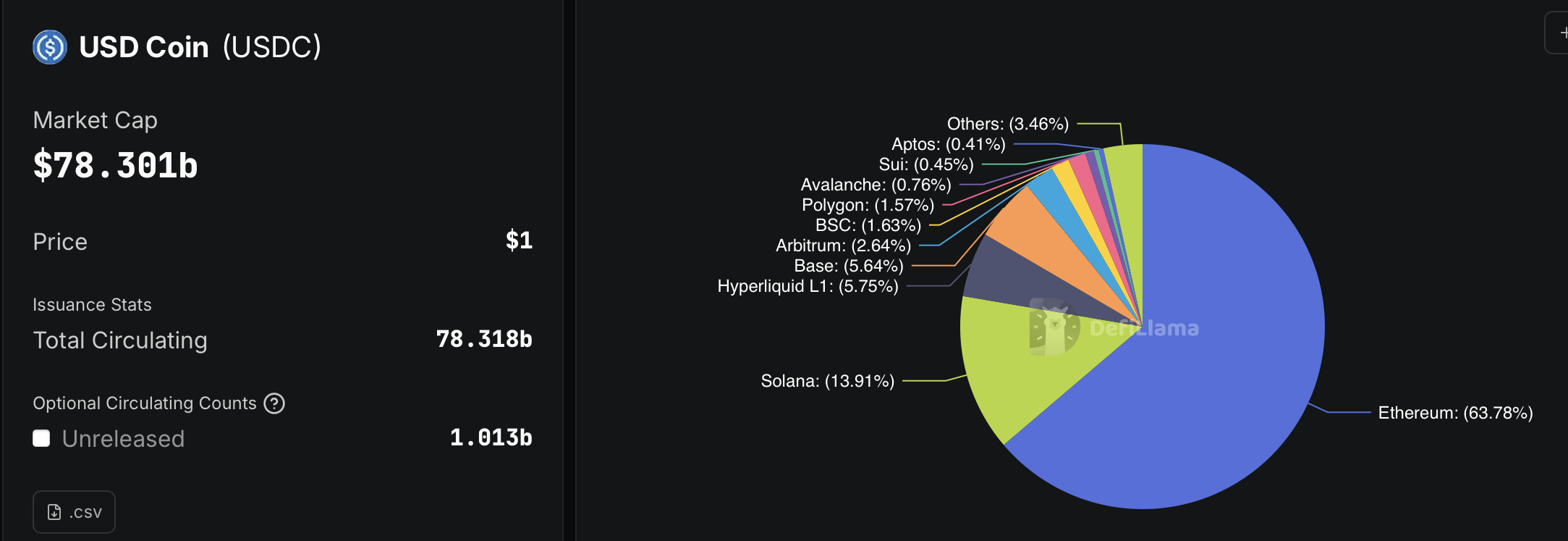
USDC market capitalization and blockchains. Source: DefiLlama

In January, Circle acquired Hashnote, the issuer of the tokenized money market fund US Yield Coin, bringing one of the largest yield-bearing real-world asset products into its stablecoin and infrastructure business.

Related: Paxos, Ripple, Circle and others secure US trust bank approvals

Stablecoin issuers make acquisitions in 2025

Stablecoin issuers have increasingly used acquisitions in 2025 to expand their businesses.

In November, Paxos acquired institutional crypto wallet provider Fordefi in a deal valued at more than $100 million, according to Fortune. Paxos, the issuer of Pax Dollar (USDP) and PayPal’s USD (PYUSD) stablecoin, said the acquisition strengthens its custody and transaction infrastructure for stablecoin issuance, asset tokenization and onchain payments.
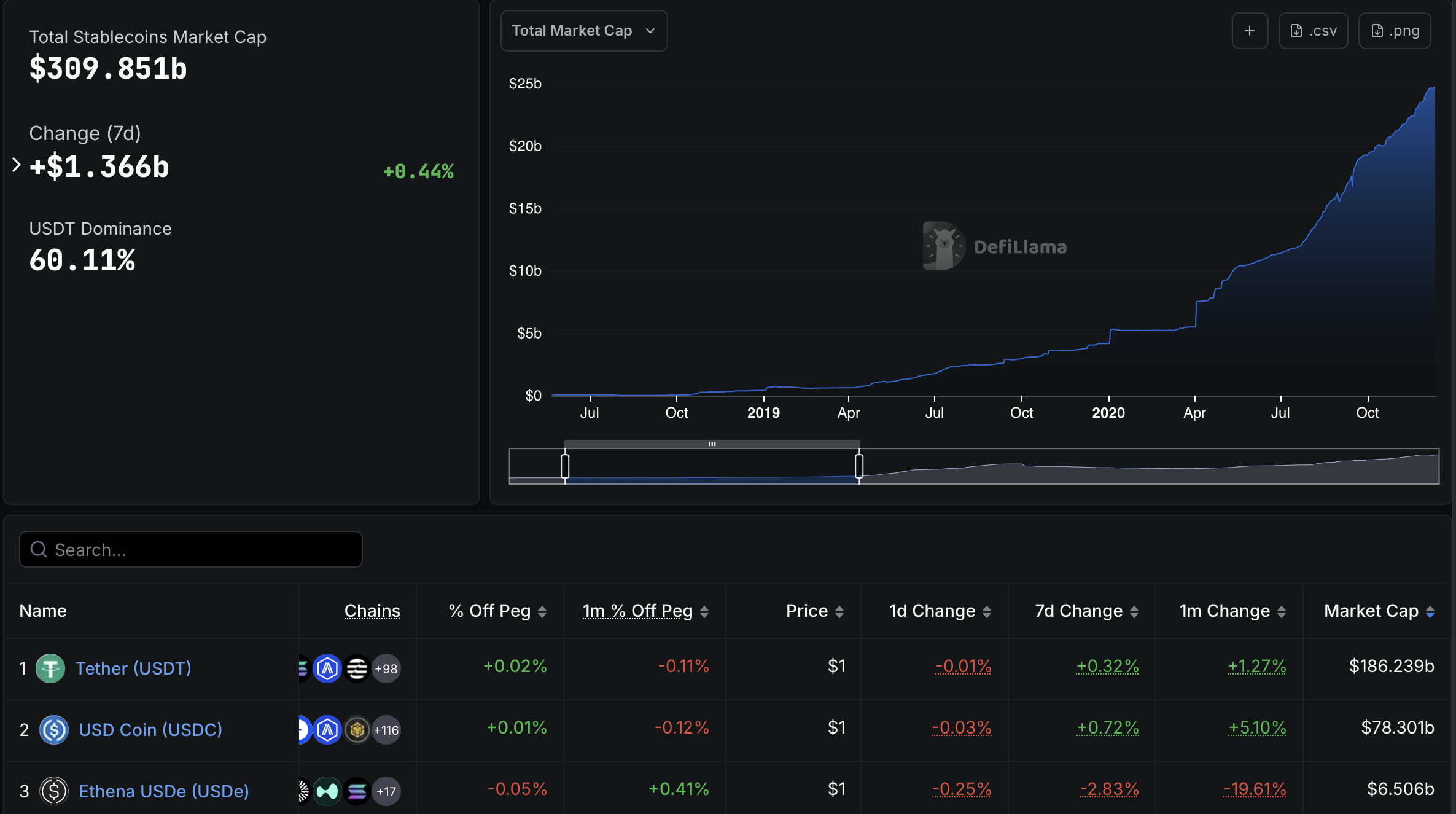
Stablecoin market cap. Source: DefiLlama

Tether, the dominant stablecoin issuer behind the USDt (USDT) token, has used its balance sheet to acquire minority stakes and strategic positions across traditional asset businesses.

In June, it acquired a roughly 32% stake in Canada-listed gold royalty company Elemental Altus Royalties for about $89 million. In November, Tether Investments acquired a minority stake in precious metals company Versamet Royalties, purchasing about 11.8 million common shares through a private agreement with an existing shareholder.

Tether has tried to push beyond finance into sports, submitting a binding all-cash offer on Dec. 12 to acquire Exor’s 65.4% controlling stake in Italy’s Juventus Football Club, a bid that the Agnelli family’s holding company later said its board unanimously rejected.

Magazine: Meet the onchain crypto detectives fighting crime better than the cops

Related Reads

Anthropic's IPO Launch: Commercial Miracle or Valuation Bubble?

Anthropic has confidentially filed for an IPO, led by Morgan Stanley and Goldman Sachs, potentially going public by October. Following its latest $650 billion funding round, its pre-IPO valuation stands at $965 billion, with projections reaching up to $2 trillion at listing, which would make it the highest-valued private company ever. The article, written by Fu Sheng, addresses skepticism that this represents an AI bubble akin to the 2000 dot-com crash. It argues the current situation differs fundamentally. Unlike the internet bubble era, which relied on speculative narratives with little revenue, Anthropic's valuation is backed by unprecedented, measurable financial performance. Key data points include: * **Revenue Growth:** ARR skyrocketed from $10 billion in early 2025 to $470 billion by May 2026, targeting $100 billion by year-end—a growth curve unmatched in business history. * **Profitability:** It achieved operating profitability in Q2 2026 with an estimated $5.6 billion profit. * **Efficiency:** With ~3,000 employees and ~$470 billion ARR, its revenue per employee exceeds $10 million. Products like Claude Code, launched less than a year ago, already generate $25 billion in annualized revenue. * **Enterprise Adoption:** It boasts a strong enterprise client base, with 8 of the Fortune 10 and over 1,000 large firms spending over $1 million annually on Claude. The valuation is framed using a traditional SaaS model (e.g., a 10x Price-to-Sales multiple on $100 billion revenue). The author contends the core question for analysts has shifted from "How big could this be?" to "How much is it earning and will earn next quarter?" The discussion extends beyond Anthropic to a broader paradigm shift: the transition from a "carbon-based" to a "silicon-based" economy. Companies are increasingly prioritizing investment in compute and AI capabilities over human resources, as these directly scale productivity and competitive advantage. Anthropic's IPO is thus positioned not just as a corporate milestone, but as a price anchor for this new economic era.

链捕手1h ago

Anthropic's IPO Launch: Commercial Miracle or Valuation Bubble?

链捕手1h ago

Near Returns to the AI Stage: Transformation into a Public Chain Due to 'Payroll Difficulties,' Agent and Privacy Emerge as New Growth Narratives

NEAR Returns to AI Origins: From Payroll Struggles to Blockchain, Now Focusing on AI Agents and Privacy NEAR Protocol's journey began not with grand blockchain ambitions, but from a practical hurdle: its AI startup founders, including Transformer paper co-author Illia Polosukhin, couldn't efficiently pay international developers in 2017. This led them to pivot and build a high-performance, scalable blockchain. After years navigating various crypto narratives like sharding and cross-chain interoperability, NEAR is now leveraging its AI roots to re-enter the AI arena. A key driver is its "NEAR Intents" layer, which abstracts complex cross-chain transactions. Users simply state their goal (e.g., swap BTC for ETH), and a solver network finds the optimal route. This system has processed over $20B in cross-chain volume, generating significant fee revenue. A major growth area is private transactions via "Confidential Intents/Swaps," which hide trade details until settlement to protect against MEV and front-running. Remarkably, private swaps recently accounted for over 40% of NEAR's transaction volume, highlighting strong demand but also potential regulatory scrutiny. With its AI-founder pedigree, NEAR is positioning itself at the intersection of blockchain, AI agents, and privacy, aiming to become infrastructure for the emerging agent economy while navigating the challenges of its rapid adoption.

marsbit4h ago

Near Returns to the AI Stage: Transformation into a Public Chain Due to 'Payroll Difficulties,' Agent and Privacy Emerge as New Growth Narratives

marsbit4h ago

From Ethereum to AI's 'CROPS': What Exactly is This Set of 'Slow Variables' That Vitalik Repeatedly Emphasizes?

In recent discussions, Vitalik Buterin has frequently emphasized the concept of "CROPS," a framework defining core values for Ethereum's development. CROPS stands for Censorship Resistance, Capture Resistance, Open Source, Privacy, and Security. Initially outlined in the Ethereum Foundation's "EF Mandate," it represents a commitment to user sovereignty, ensuring that the network resists external control, remains open, protects privacy, and prioritizes security. The relevance of CROPS extends beyond Ethereum's foundational principles, becoming crucial in the context of AI integration. As AI agents begin handling wallet operations and automated transactions, the risk increases that users may cede control over their digital assets, privacy, and intentions to centralized AI service providers. A "CROPS AI" would therefore emphasize local execution where possible, privacy-preserving remote model calls (e.g., using zero-knowledge proofs), and transparent, verifiable processes to maintain user agency. Vitalik highlights a significant convergence between "CROPS Ethereum access layer" and "CROPS AI." Both address the same fundamental challenge: how users can access powerful services—be it blockchain data via RPCs or AI models—without exposing sensitive information or relinquishing ultimate control. This intersection points toward a future digital entry point that is more private, secure, and user-controlled. Ultimately, CROPS is not merely an abstract ideal but a practical guidepost. It steers development—from protocol resilience and wallet design to AI agent safety—towards a future where users retain self-sovereignty even as digital systems grow more complex and powerful. In an era of accelerating AI adoption, these "slow variables" of censorship resistance, openness, privacy, and security may define Ethereum's enduring value.

marsbit4h ago

From Ethereum to AI's 'CROPS': What Exactly is This Set of 'Slow Variables' That Vitalik Repeatedly Emphasizes?

marsbit4h ago

Trading

Spot
Futures

Hot Articles

What is STORY

Understanding Story Protocol: Pioneering a New Era in Intellectual Property Management Introduction to Story Protocol In the rapidly evolving world of blockchain technology, Story Protocol emerges as an innovative solution aimed at transforming the landscape of intellectual property (IP) management. Designed to empower creators, Story Protocol is paving the way for a digital ecosystem that promotes transparency, creativity, and legal empowerment. The protocol operates on the principles of web3, introducing a decentralized framework that allows creators to not only protect but also monetize their works efficiently. In an age where content can easily be reproduced and shared, Story Protocol aims to establish a mechanism that respects creators’ rights and fosters a culture of collaboration. What is Story Protocol? At its core, Story Protocol is an advanced blockchain-based IP management tool that strives to revolutionize how intellectual property is created, managed, and licensed. The aim of the project is to disrupt traditional methods by leveraging the decentralized nature of blockchain technology. This offers a global and scalable library of intellectual property assets, allowing creators to engage with their audience in a more direct manner. Creators can easily register their works using the platform, setting customizable guidelines for how their content may be used. This process not only protects their legal rights but also facilitates the monetization of their creations in a manner that is both transparent and efficient. As a result, Story Protocol caters to a diverse range of creators—from writers and artists to musicians and programmers—by fostering an inclusive and accessible environment. Who is the Creator of Story Protocol? The vision for Story Protocol is brought to life by Seung Yoon Lee, known as SY Lee, and Jason Zhao. SY Lee serves as the CEO and co-founder, bringing with him a wealth of experience from his background in journalism and entrepreneurship. His previous ventures, including Byline and Radish Fiction—subsequently sold to Kakao—have positioned him as a pioneering figure in digital content platforms. Co-founder Jason Zhao complements SY Lee's vision with his robust technical expertise. A graduate in Computer Science from Stanford University and a former employee of DeepMind, Jason's experience in advanced technologies empowers Story Protocol's capabilities in the digital ecosystem. Who are the Investors of Story Protocol? Story Protocol has garnered substantial financial backing from a range of reputable investors known for their keen eye for transformative technologies. This vital support reflects confidence in the project’s potential to reshape the IP market. Among the notable investors is A16z Crypto, which led both the seed round and Series B financing, further demonstrating its commitment to the future of digital economies. Other significant investors contributing to the project include: Polychain Capital: A recognized leader in blockchain investment that participated in the Series B round. Hashed Endeavor Samsung Next Foresight Ventures Dao5 Insignia Venture Partners Alliance DAO Mirana Ventures The breadth of this investment network not only provides funding but also adds credibility and strategic insight to the platform, positioning Story Protocol as a leader in its field. How Does Story Protocol Work? Story Protocol offers a comprehensive framework that allows creators to manage their intellectual property seamlessly. The platform is underpinned by several unique and innovative features that distinguish it from traditional IP management systems. Key Features: Programmable IP: This feature allows creators to define the terms of how their IP can be utilized, including guidelines for remixing and collaboration. By establishing clear and programmable parameters, creators can ensure their works are used in ways that align with their vision. Decentralized Ecosystem: The protocol enables creators to operate independently, without the need for intermediaries often found in traditional licensing arrangements. This decentralized approach not only empowers creators but also reduces the friction typically associated with IP management. Transparent Licensing: By simplifying the licensing process, Story Protocol makes it easier for creators to track how their works are being used. This manual transparency is essential for establishing trust and fostering collaboration in a digital landscape where IP rights are often contested. Together, these features create a robust environment that encourages innovation, cooperation, and respect for creators’ rights while simplifying the complexities of intellectual property law in the digital age. Timeline of Story Protocol Understanding the developmental milestones of Story Protocol can provide insights into its strategic growth and vision for the future. Below is a timeline highlighting significant events in the project's history: 2021: Foundation laid for the concept of Story Protocol while formulating its objectives. 2023: The project successfully raised $29.3 million in a seed funding round led by A16z Crypto, marking its official entry into the competitive landscape of blockchain innovations. 2024: Following the success of its initial funding, Story Protocol announced an $80 million Series B financing round at a substantial $2.25 billion valuation, further solidifying its position in the market. This timeline illustrates not only the rapid growth of Story Protocol but also the increasing interest and investment it has attracted from prominent players in the industry. The Future of Story Protocol As the digital content landscape continues to evolve, Story Protocol stands at the forefront of a revolution in IP management. By leveraging blockchain technology for creator empowerment and transparency, the protocol offers a compelling vision for a sustainable intellectual property ecosystem. In a world that demands creativity and innovation, Story Protocol enables creators to maintain ownership and control over their assets, ultimately fostering an environment where creativity can flourish. The extensive backing from seasoned investors further underscores the potential for this platform to redefine how intellectual property operates in the rapidly changing digital economy. In conclusion, Story Protocol is not just a project; it is a movement towards a more equitable and accessible IP landscape. As the digital world expands, Story Protocol promises to lead the charge, ensuring that creators are acknowledged and compensated fairly for their contributions to culture and society. The journey has just begun, and the implications of such an initiative are profound—not only for creators but for the future of digital content itself.

1.8k Total ViewsPublished 2024.04.01Updated 2024.12.03

What is STORY

How to Buy IP

Welcome to HTX.com! We've made purchasing Story (IP) simple and convenient. Follow our step-by-step guide to embark on your crypto journey.Step 1: Create Your HTX AccountUse your email or phone number to sign up for a free account on HTX. Experience a hassle-free registration journey and unlock all features.Get My AccountStep 2: Go to Buy Crypto and Choose Your Payment MethodCredit/Debit Card: Use your Visa or Mastercard to buy Story (IP) instantly.Balance: Use funds from your HTX account balance to trade seamlessly.Third Parties: We've added popular payment methods such as Google Pay and Apple Pay to enhance convenience.P2P: Trade directly with other users on HTX.Over-the-Counter (OTC): We offer tailor-made services and competitive exchange rates for traders.Step 3: Store Your Story (IP)After purchasing your Story (IP), store it in your HTX account. Alternatively, you can send it elsewhere via blockchain transfer or use it to trade other cryptocurrencies.Step 4: Trade Story (IP)Easily trade Story (IP) on HTX's spot market. Simply access your account, select your trading pair, execute your trades, and monitor in real-time. We offer a user-friendly experience for both beginners and seasoned traders.

5.6k Total ViewsPublished 2025.03.26Updated 2026.06.02

How to Buy IP

Discussions

Welcome to the HTX Community. Here, you can stay informed about the latest platform developments and gain access to professional market insights. Users' opinions on the price of IP (IP) are presented below.

活动图片