Cardano Founder Unveils Midnight Rollout Plan As Mainnet Launch Begins

bitcoinistОпубліковано о 2026-03-24Востаннє оновлено о 2026-03-24

Анотація

Cardano founder Charles Hoskinson has announced the start of the federated mainnet phase for Midnight, a privacy-focused blockchain. The launch is being conducted gradually with daily operational checkpoints to ensure network stability. Initially, the mainnet is running in a guarded mode with limited transactions and dApp deployments. Federated node operators, including Google Cloud, Telegram, and MoneyGram, are managing the rollout. The first user-facing feature is DUST generation, accessible via Lace wallet. Hoskinson emphasized Midnight's complex architecture, which integrates zero-knowledge proofs and spans both public and private ledgers. Future upgrades will introduce composable contracts, cross-chain intents, and governance features, though full decentralization is expected to take 6–12 months due to the broad distribution of tokens via a "glacier drop."

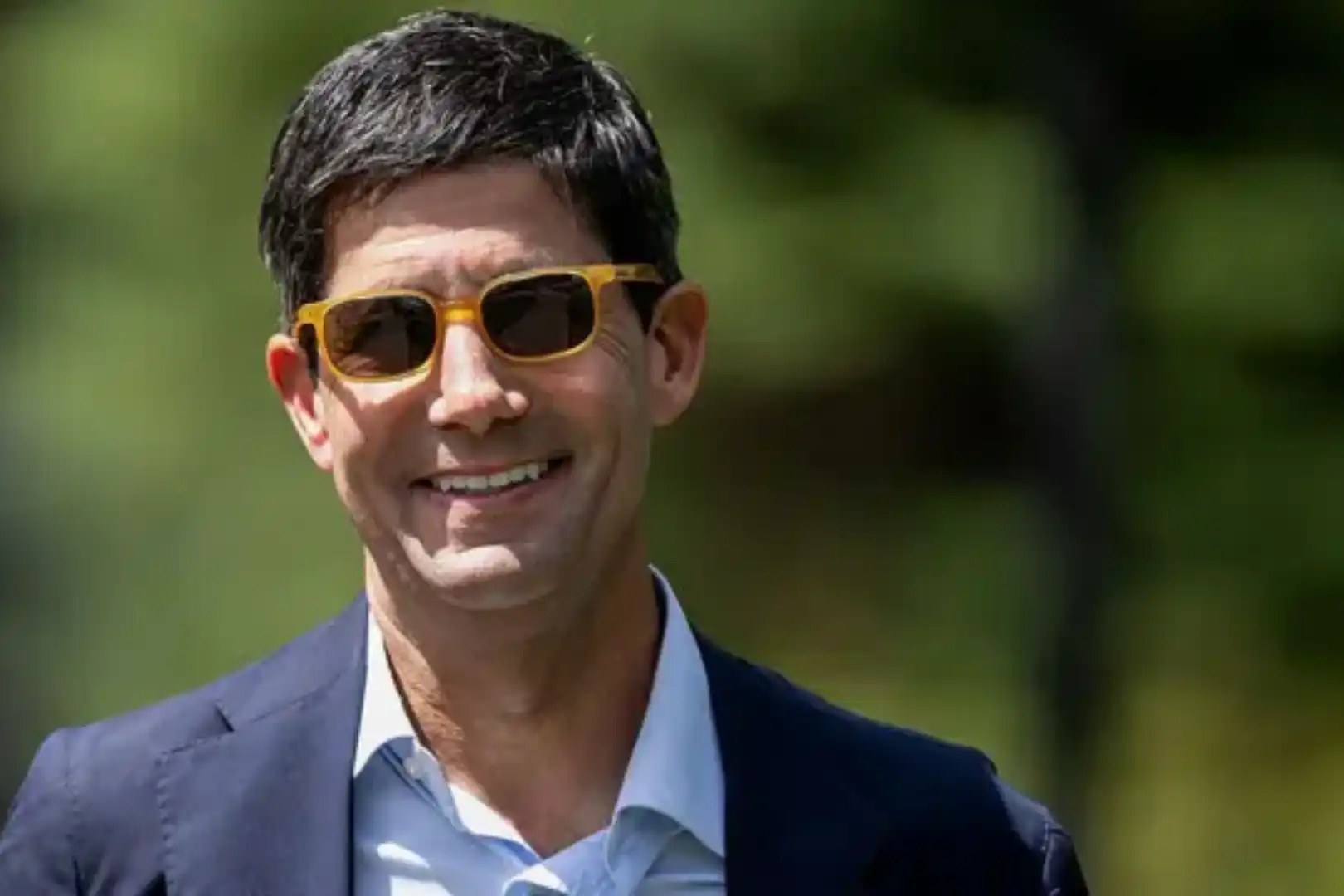
Cardano founder Charles Hoskinson says Midnight has entered its federated mainnet phase, marking the start of a guarded rollout that he described as the first step in turning on one of the most technically ambitious networks in crypto.

In a March 23 livestream, the Cardano founder framed the week as “Midnight Week” and said the network was being activated gradually with daily operational checkpoints. “What’s happening this week is the federated launch and this is basically the mainnet network and it’s turning on step by step,” Hoskinson said. “Every day we have a go no-go meeting and based upon what we’re getting back from the federated mainnet nodes, they tell us a whole bunch of stuff. ... Basically the goal here is to get to a stable network.”

Cardano’s Midnight Launch Week Begins

That first phase is intentionally restrictive. Hoskinson said Midnight is live as a mainnet rather than a testnet, but operating in a guarded mode where transactions and decentralized application deployments are limited until the team is satisfied that consensus, block production, and core cryptographic components are working as intended. The immediate user-facing milestone, he said, is DUST generation, which should become visible through an update to Lace after the earlier Glacier Drop period ended.

The rollout is being handled by federated node operators, or FNOs, rather than an open validator set from day one. Hoskinson said those operators include firms such as Google Cloud, Telegram and MoneyGram, drawing a parallel to Cardano’s Byron era, when a small group of entities initially ran the network before control was broadened over time. Once the network proves stable, Midnight plans to lower its guardrails in stages and begin deploying applications in waves.

“So you go from just dust generation to Lace plus DApps and you can actually start using some of these experiences,” he said. “You’re basically looking for a stable consensus. You’re looking for stable block generation in the mainnet environment. And then as that gets stable, everybody’s happy, you go from guarded to less guarded to less guarded to less guarded.”

Hoskinson argued that Midnight’s launch path is more complicated than Cardano’s because the system spans both Cardano and Midnight, with separate roles for its assets and multiple address formats across public and private ledgers. He also pointed to its layered design, naming consensus components such as Aura, Grandpa and Beefy, while describing Compact as “basically Zcash with smart contracts.”

That framing is central to the pitch. Midnight, in Hoskinson’s telling, is not just another chain launch but a privacy-preserving smart contract system being opened in phases. The first version shipping with the federated mainnet includes zero-knowledge tooling such as Plonk and Halo 2, while later upgrades are expected to bring composable contracts, Nightstream-related infrastructure, capacity exchange, crosschain intents and the Midnight passport system.

The decentralization roadmap comes later. Hoskinson said Midnight is now entering phase two, with phase three set to introduce an incentivized testnet for stake pool operators, allowing them to begin making blocks in parallel with ongoing federated mainnet upgrades. Governance experiments are also expected to begin in that phase, although he cautioned that Midnight’s broad token distribution through its “glacier drop” means the ecosystem needs time to mature before full governance can be safely turned on.

“One of the problems with Midnight, and this is why you need at least 6 to 12 months to stabilize, is that Midnight was distributed with a glacier drop,” he said. “That’s a huge benefit because you get lots of people. The problem is that those people haven’t decided whether they want to be a good-faith member of the Midnight ecosystem community or if they just want to dump their NIGHT or be adversarial.”

Hoskinson also used the livestream to make a much broader claim about Midnight’s long-term role, describing it as infrastructure for privacy, compliance and AI-driven commerce. He said the system’s mix of zero-knowledge proofs, multi-party computation and trusted execution environments could make it a natural framework for autonomous software agents to transact and verify one another.

At press time, Cardano traded at $0.2611.
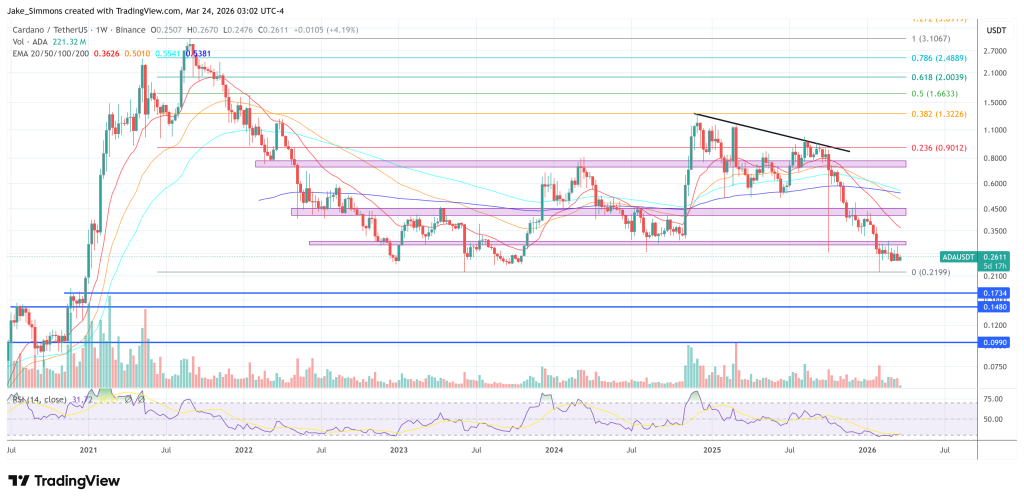
ADA hovers below key resistance, 1-week chart | Source: ADAUSDT on TradingView.com

Пов'язані питання

QWhat is the current phase of Midnight's launch as announced by Charles Hoskinson?

AMidnight has entered its federated mainnet phase, which is the start of a guarded rollout.

QWhich companies are mentioned as federated node operators (FNOs) for the initial launch?

AGoogle Cloud, Telegram, and MoneyGram are mentioned as federated node operators.

QWhat is the first user-facing milestone expected after the Glacier Drop period?

AThe first user-facing milestone is DUST generation, which should become visible through an update to Lace.

QAccording to Hoskinson, why does Midnight need 6 to 12 months to stabilize after launch?

AIt needs time to stabilize because the broad token distribution through the 'glacier drop' means the ecosystem needs to mature before determining if participants will be good-faith members or adversarial.

QWhat broader long-term role did Hoskinson claim for Midnight beyond being a blockchain?

AHe described Midnight as infrastructure for privacy, compliance, and AI-driven commerce, using zero-knowledge proofs, multi-party computation, and trusted execution environments for autonomous software agents.

Пов'язані матеріали

Why Do You Always Lose Money on Polymarket? Because You're Betting on News, While the Pros Read the Rules

Why do you always lose money on Polymarket? Because you bet on news, while the pros study the rules. This article explains how top traders ("che tou") profit by meticulously analyzing market rules, not just predicting events. Polymarket, a prediction market platform, often sees disputes over event outcomes due to ambiguous rule wording. For instance, a market asking "Who will be the leader of Venezuela by the end of 2026?" was misinterpreted by many who bet on Delcy Rodríguez, assuming she held power. However, the rules specified "officially holds" as the formally appointed, sworn-in individual. Since Nicolás Maduro was still recognized as president officially, he won the market—even being in prison. To resolve such disputes, Polymarket uses a decentralized arbitration system via UMA protocol. The process involves: 1. Proposal: Anyone can propose a market outcome by staking 750 USDC, earning 5 USDC if unchallenged. 2. Dispute: A 2-hour window allows challenges with a 750 USDC stake; successful challengers earn 250 USDC. 3. Discussion: A 48-hour period on UMA Discord for evidence and debate. 4. Voting: UMA token holders vote in two 24-hour phases (blind then public). Outcomes require >65% consensus and 5M tokens voted; otherwise, four re-votes occur before Polymarket intervention. 5. Settlement: Results are final and automatic. Unlike traditional courts, Polymarket’s system lacks separation between arbitrators and stakeholders—voters often hold market positions, creating conflicts of interest. This leads to herd mentality in discussions and non-transparent outcomes without explanatory rulings, preventing precedent formation. Thus, success on Polymarket hinges on deep rule interpretation, not just event prediction, exploiting gaps between reality and contractual wording.

marsbit33 хв тому

Why Do You Always Lose Money on Polymarket? Because You're Betting on News, While the Pros Read the Rules

marsbit33 хв тому

DeepSeek Funding: Liang Wenfeng's 'Realist' Pivot

DeepSeek, a leading Chinese AI company, has initiated its first external funding round, aiming to raise at least $300 million at a valuation of no less than $10 billion. This move marks a significant shift from its founder Liang Wenfeng’s previous idealistic stance of rejecting external capital to maintain independence. Despite strong financial backing from its parent company, quantitative trading firm幻方量化 (Huanfang Quant), which provided an estimated $700 million in revenue in 2025 alone, DeepSeek faces mounting challenges. Key issues include a 15-month gap in major model updates, delays in its flagship V4 release, and the loss of several core researchers to competitors offering significantly higher compensation. The company is also undergoing a strategic pivot by migrating its infrastructure from NVIDIA’s CUDA to Huawei’s Ascend platform, a move aligned with China’s push for technological self-reliance amid U.S. export controls. However, DeepSeek lags behind rivals like智谱AI and MiniMax—both now publicly listed—in areas such as product ecosystem, multimodal capabilities, and commercialization. The funding round, though relatively small in scale, is seen as a way to establish a market-validated valuation anchor, making employee stock options more competitive and facilitating talent retention. It also signals DeepSeek’s transition from a pure research-oriented organization to a commercially-driven player in the global AI ecosystem.

marsbit1 год тому

DeepSeek Funding: Liang Wenfeng's 'Realist' Pivot

marsbit1 год тому

Торгівля

Спот
Ф'ючерси

Популярні статті

Як купити ADA

Ласкаво просимо до HTX.com! Ми зробили покупку Cardano (ADA) простою та зручною. Дотримуйтесь нашої покрокової інструкції, щоб розпочати свою криптовалютну подорож.Крок 1: Створіть обліковий запис на HTXВикористовуйте свою електронну пошту або номер телефону, щоб зареєструвати обліковий запис на HTX безплатно. Пройдіть безпроблемну реєстрацію й отримайте доступ до всіх функцій.ЗареєструватисьКрок 2: Перейдіть до розділу Купити крипту і виберіть спосіб оплатиКредитна/дебетова картка: використовуйте вашу картку Visa або Mastercard, щоб миттєво купити Cardano (ADA).Баланс: використовуйте кошти з балансу вашого рахунку HTX для безперешкодної торгівлі.Треті особи: ми додали популярні способи оплати, такі як Google Pay та Apple Pay, щоб підвищити зручність.P2P: Торгуйте безпосередньо з іншими користувачами на HTX.Позабіржова торгівля (OTC): ми пропонуємо індивідуальні послуги та конкурентні обмінні курси для трейдерів.Крок 3: Зберігайте свої Cardano (ADA)Після придбання Cardano (ADA) збережіть його у своєму обліковому записі на HTX. Крім того, ви можете відправити його в інше місце за допомогою блокчейн-переказу або використовувати його для торгівлі іншими криптовалютами.Крок 4: Торгівля Cardano (ADA)Легко торгуйте Cardano (ADA) на спотовому ринку HTX. Просто увійдіть до свого облікового запису, виберіть торгову пару, укладайте угоди та спостерігайте за ними в режимі реального часу. Ми пропонуємо зручний досвід як для початківців, так і для досвідчених трейдерів.

719 переглядів усьогоОпубліковано 2024.12.10Оновлено 2025.03.21

Як купити ADA

Обговорення

Ласкаво просимо до спільноти HTX. Тут ви можете бути в курсі останніх подій розвитку платформи та отримати доступ до професійної ринкової інформації. Нижче представлені думки користувачів щодо ціни ADA (ADA).

活动图片