Anthropic Has Developed the Most Powerful AI Model in History, But Dares Not Release It...

Odaily星球日报Published on 2026-04-08Last updated on 2026-04-08

Abstract

Anthropic has developed its most powerful AI model to date, named Mythos, which boasts over 10 trillion parameters—far surpassing current leading models—and a training cost of $10 billion. Mythos demonstrates exceptional capabilities in software coding, academic reasoning, and cybersecurity, significantly outperforming its predecessor, Claude Opus 4.6, in benchmark tests. In a matter of weeks, Mythos autonomously identified thousands of previously unknown zero-day vulnerabilities across major operating systems, browsers, and critical software. Notable discoveries include a 27-year-old flaw in OpenBSD and a 16-year-old vulnerability in FFmpeg, demonstrating its ability to find and exploit complex security weaknesses with minimal human intervention. Due to its unprecedented power and potential for misuse by malicious actors, Anthropic has refrained from publicly releasing Mythos. Instead, it launched the "Project Glasswing" initiative, partnering with leading tech and financial firms like Amazon, Apple, Google, Microsoft, and JPMorgan. Through this program, select organizations gain early access to Mythos Preview to identify and patch vulnerabilities in critical systems. Anthropic is providing $100 million in usage credits to participants and donating millions to open-source security foundations. While AI like Mythos could lower the barrier for cyber attacks, Anthropic emphasizes its potential to greatly enhance defensive capabilities, helping to build more resilient systems...

Original | Odaily Planet Daily (@OdailyChina)

Author | Azuma (@azuma_eth)
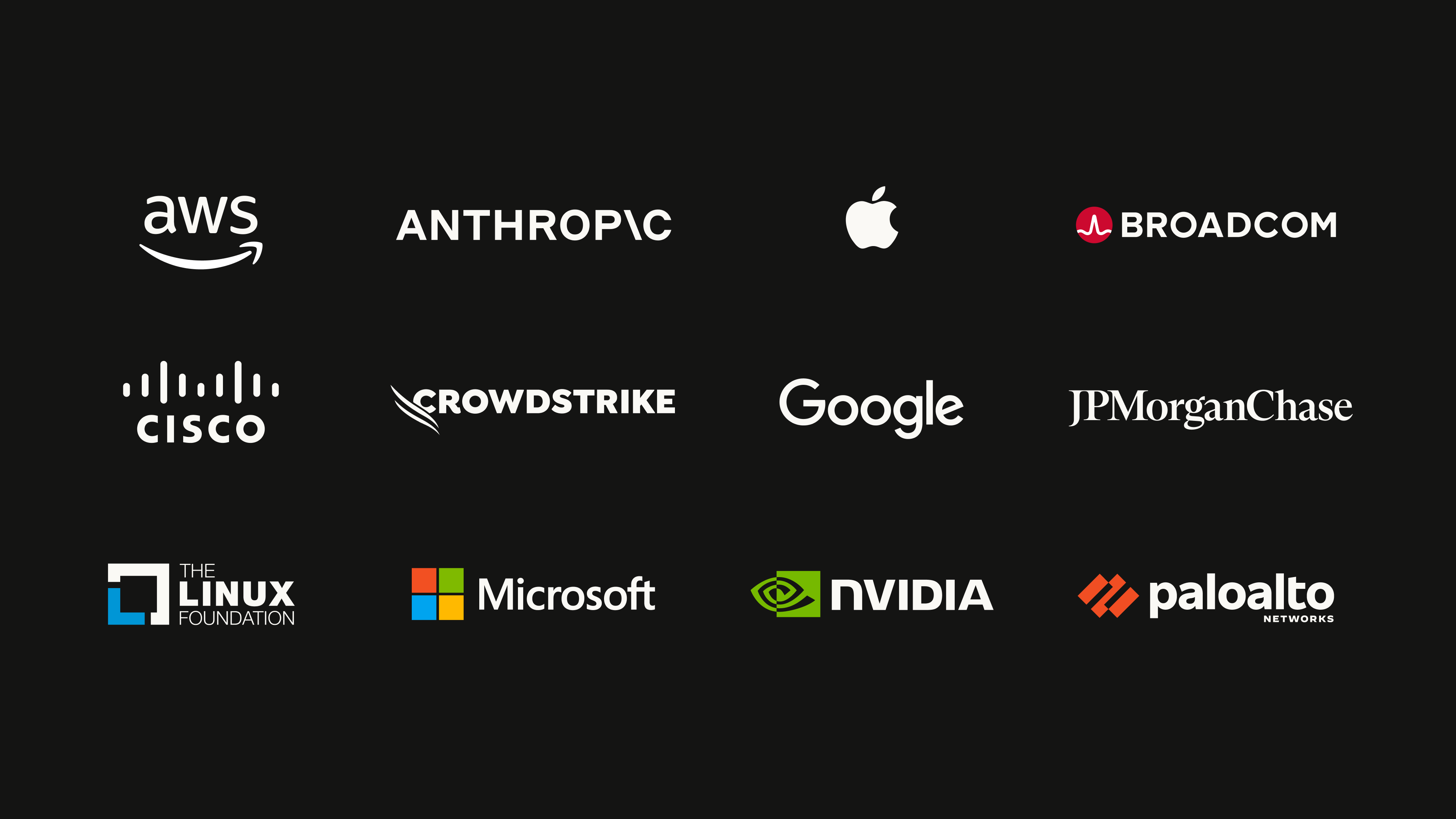
On April 8, Anthropic, the AI development company behind Claude, officially announced the launch of a new initiative called "Project Glasswing." This project will be jointly advanced in collaboration with several industry giants including Amazon, Apple, Broadcom, Cisco, CrowdStrike, Google, JPMorgan Chase, the Linux Foundation, Microsoft, NVIDIA, and Palo Alto Networks.

Anthropic stated that this is an urgent measure aimed at protecting the world's most critical software. The parties will jointly use the Mythos Preview version to discover and fix potential flaws in the systems the world currently relies on.
Mythos is the next-generation AI model currently under development by Anthropic. It is the first model in human history to surpass the ten trillion parameter mark (in contrast, mainstream models on the market currently range from hundreds of billions to one trillion parameters), with a staggering training cost of $10 billion. Compared to Claude's current most powerful model, Opus 4.6, Mythos shows significantly improved scores in tests for software coding, academic reasoning, and cybersecurity.

Rumors about Mythos began circulating in the market last week, with widespread concern being — would Mythos, with its specialized cybersecurity capabilities, affect the current security offense and defense landscape? If maliciously used, could it cause larger-scale security incidents? Odaily also reported on this matter and discussed the potential impact on security offense and defense in the cryptocurrency industry with Yu Xian, founder of the security firm SlowMist (see 《Odaily Interview with Yu Xian: Leak of Anthropic's Nuclear-Grade New Model, How Will It Affect Crypto Security Offense and Defense?》). However, Anthropic had not publicly acknowledged the existence of Mythos at that time, so relevant information remained limited.

On April 8, with the announcement of the "Project Glasswing" plan, Anthropic disclosed more details about Mythos. Based on the actual test cases published by Anthropic, the company has not exaggerated Mythos's capabilities. In fact, its power is such that the company dares not release the model publicly directly, for fear of it being maliciously used by hacker groups. Instead, it plans to first allow major corporations to试用 (try out) through the "Project Glasswing" initiative to identify and patch potential vulnerabilities in advance.

Mythos Shows Its Muscle: Unearthing Thousands of "Zero-Day Vulnerabilities" in Weeks

When discussing Mythos's capabilities, Anthropic直言 (stated bluntly) that the model's birth signifies the arrival of a严峻 (grim) reality — the coding ability of AI models has reached an extremely high level, and in terms of discovering and exploiting software vulnerabilities, they can almost surpass all but the most skilled humans.

According to Anthropic's disclosure, within just a few weeks, Anthropic used Mythos to identify thousands of zero-day vulnerabilities (i.e., defects previously unknown even to the software developers themselves). Many of these are high-risk vulnerabilities, affecting all major operating systems and mainstream browsers, and impacting a range of other critical software.

Anthropic provided several representative examples:

  • Mythos discovered a 27-year-old vulnerability in OpenBSD, a system long renowned for being "extremely secure" and widely used in critical infrastructure like firewalls. This vulnerability allows an attacker to remotely crash the system directly;
  • In the widely used video processing library FFmpeg, Mythos found a 16-year-old vulnerability. The code containing this issue had been triggered over 5 million times by automated tests but remained undetected;
  • Mythos was also able to automatically chain multiple vulnerabilities in the Linux kernel to escalate privileges from a regular user level to full control of the server.

More worryingly, Anthropic stated that most of these vulnerabilities were "autonomously discovered and exploitation paths constructed" by Mythos with almost no human intervention. This perhaps indicates that AI has begun to possess automated offensive and defensive capabilities similar to top-tier hacker teams.

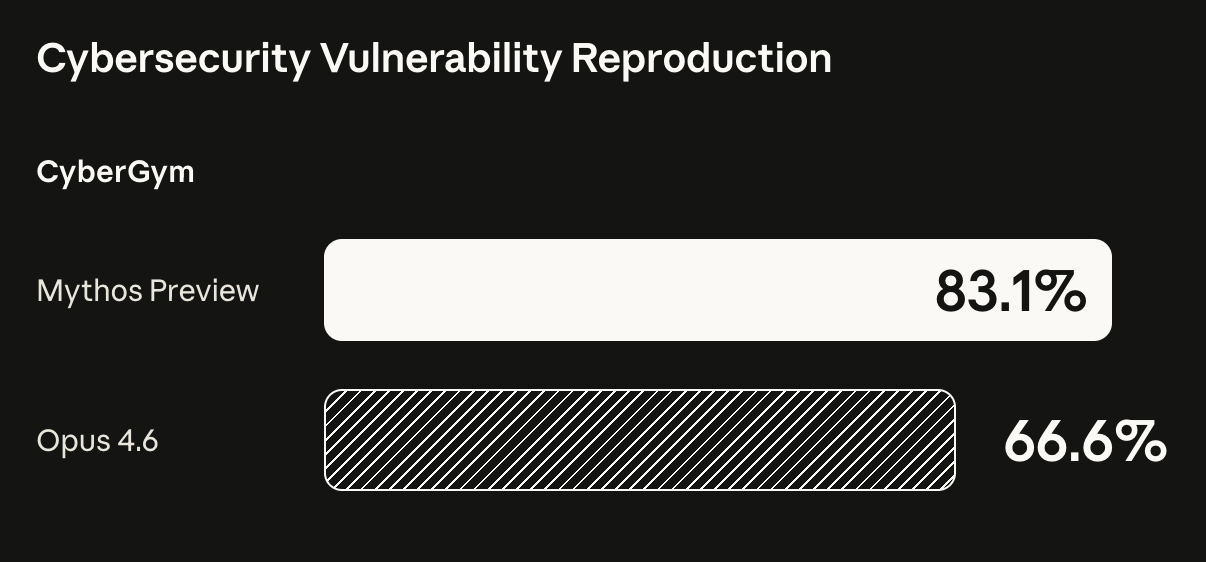
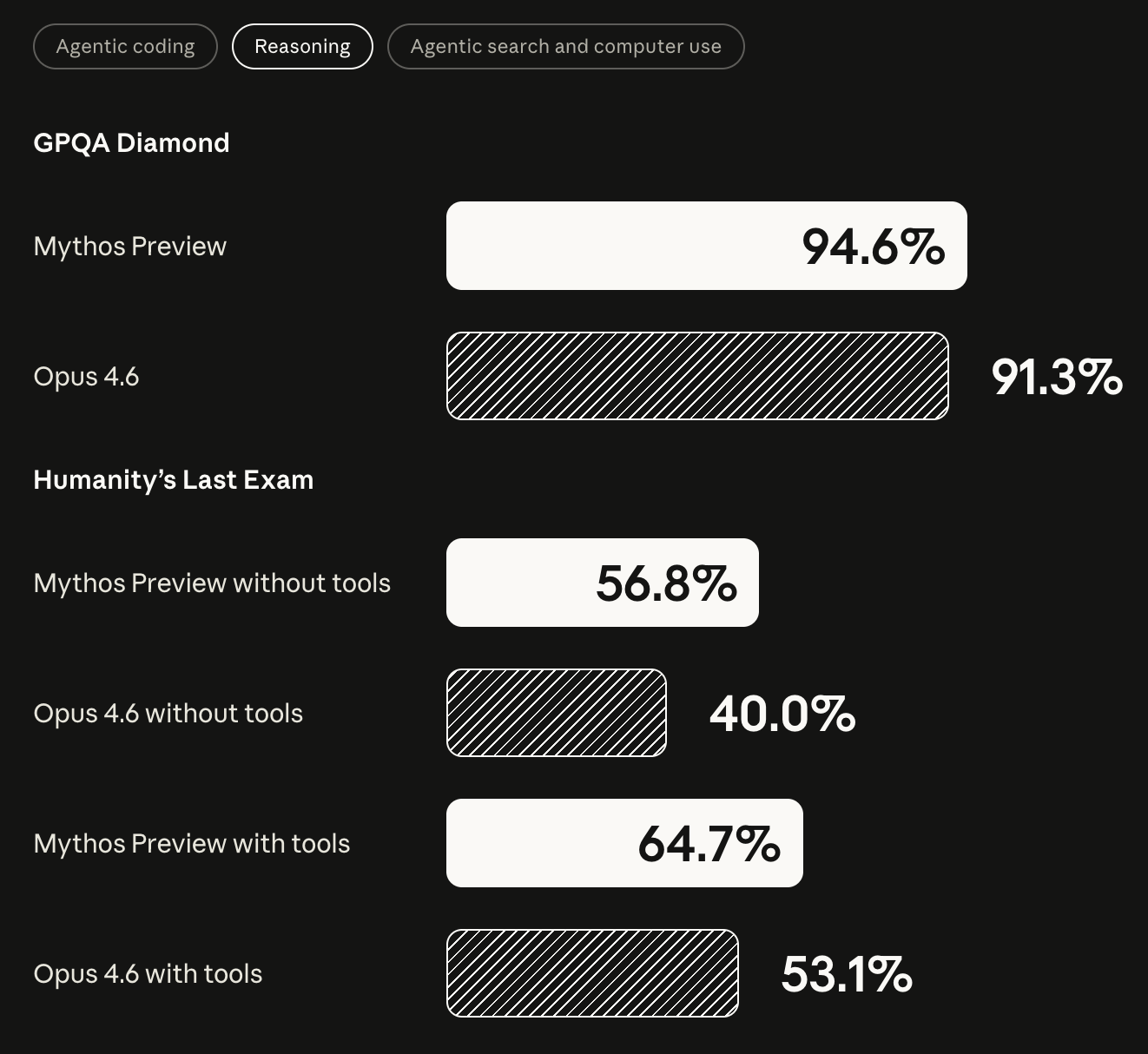
On evaluation benchmarks, Mythos also shows a断层级 (generational leap) evolution compared to Opus 4.6. For example, in cybersecurity vulnerability reproduction tests, Mythos achieved 83.1%, while Opus 4.6 scored 66.6%; it also achieved significant leads in multiple coding and reasoning tests.
Perhaps precisely because Mythos's capabilities are too powerful, Anthropic did not choose to open the model directly but first launched the "Project Glasswing" initiative to allow the entire internet to "fortify" in advance.

Through this initiative, Anthropic will provide early access to the Mythos Preview version to participating parties, for use in discovering and fixing vulnerabilities or weaknesses in their foundational systems — focusing on tasks such as local vulnerability detection, black-box testing of binary programs, endpoint security hardening, and system penetration testing.

Anthropic also承诺 (committed) to provide participating parties with a total of $100 million in model usage credits to support usage throughout the research preview phase. Thereafter, the Mythos Preview version will be available to participants at a price of $25 per million input tokens / $125 per million output tokens (participants can also access the model via Claude API, Amazon Bedrock, Google Cloud Vertex AI, and Microsoft Foundry). In addition to the model usage credits, Anthropic will donate $2.5 million to the Linux Foundation for Alpha-Omega and OpenSSF, and $1.5 million to the Apache Software Foundation, to help open-source software maintainers cope with the evolving security landscape.

Anthropic plans to gradually expand the participation scope of "Project Glasswing" and continue推进 (advancing) it for several months, while sharing experiences as much as possible so that other organizations can apply the relevant insights to their own security construction. Within 90 days, Anthropic will publicly report阶段性成果 (phase results), including fixed vulnerabilities and disclosable security improvements.

Technology Will Only Keep Advancing, But There's No Need for Excessive Worry

AI is irreversibly changing the world we are familiar with, including the field of cybersecurity focused on in this article. As the门槛 (threshold) for discovering and exploiting vulnerabilities is significantly lowered, people inevitably worry: will AI become a sharp blade in the hands of malicious actors, threatening the existing balance of network security? (PS: For cryptocurrency users who need to place real money in wallet systems or on-chain protocols, this concern is particularly strong.)

Addressing this issue, Anthropic believes "there are still reasons for optimism." AI models are dangerous precisely because they have the capability to cause harm in the hands of wrongdoers. But at the same time, AI also holds immeasurable value in discovering and fixing critical software defects and developing newer, safer software.

It is predictable that AI capabilities will continue to evolve rapidly in the coming years. However, as new attack methods emerge, new defense mechanisms will also appear simultaneously. Technological upgrades are inevitable, but this does not mean the risk is必然失控 (necessarily uncontrollable) — as long as the defense system evolves同步 (synchronously), it might even be possible to use AI to build a higher-strength security moat.


Related Questions

QWhat is the name of Anthropic's new AI model and what makes it so powerful?

AThe new AI model is called Mythos. It is the first model in human history to exceed ten trillion parameters (compared to current mainstream models in the hundreds of billions to one trillion range) and was trained at a cost of $10 billion. It demonstrates a massive performance leap over its predecessor, Claude Opus 4.6, particularly in software coding, academic reasoning, and cybersecurity tests.

QWhy is Anthropic hesitant to publicly release the Mythos model immediately?

AAnthropic is hesitant to release Mythos immediately because its capabilities in autonomously discovering and exploiting software vulnerabilities are so advanced that the company fears it could be maliciously used by hackers. To mitigate this risk, they are first launching the 'Project Glasswing' initiative to allow major corporations to use a preview version to find and patch vulnerabilities in critical systems.

QWhat is the goal of Anthropic's 'Project Glasswing' initiative?

AThe goal of 'Project Glasswing' is a critical, urgent effort to protect the world's most crucial software. It involves a coalition of major tech and finance companies (like Amazon, Apple, Google, Microsoft, JPMorgan) who will employ the Mythos Preview version to discover and fix potential flaws in the systems the world relies on before the model is more widely available.

QWhat are some specific examples of vulnerabilities that Mythos was able to discover?

AIn just a few weeks, Mythos identified thousands of zero-day vulnerabilities. Specific examples include: a 27-year-old vulnerability in the 'extremely secure' OpenBSD system that allows remote crashes; a 16-year-old bug in the FFmpeg video processing library that had been triggered over 5 million times in automated tests but never found; and the ability to chain multiple Linux kernel vulnerabilities to escalate from user permissions to full server control.

QAccording to Anthropic, why should we remain optimistic about the rise of such powerful AI models in cybersecurity?

AAnthropic argues for optimism because while AI models like Mythos can be dangerous in the hands of malicious actors, they also possess immense value for discovering and repairing critical software defects and for developing new, more secure software. They believe that as new AI-powered attack methods emerge, new AI-powered defense mechanisms will also be developed, allowing security systems to evolve and potentially build even stronger defenses.

Related Reads

Weekly Editor's Picks (0725-0731)

Weekly Editor's Picks (0725-0731) provides a curated selection of deep analysis, filtering out market noise. Key themes from this week include: **Macro & Policy:** The Federal Reserve's upcoming meeting is marked by high uncertainty, balancing cooling inflation data against persistent price pressures. Meanwhile, the U.S. crypto regulatory Clarity Act faces critical political hurdles, with its 2026 passage probability seen as low. **Investing & Crypto:** Analysis suggests long-term crypto success depends on conviction through volatile cycles, focusing on assets like Bitcoin and core smart contract platforms. A trend noted is the increasing similarity between global equity markets (especially tech) and crypto, driven by narrative and leverage. Several major crypto protocols show strong revenue growth, but this isn't always translating to token price appreciation due to sell pressure and structural factors. **AI & Semiconductors:** Nvidia's rising credit default swap rates signal market concern over AI infrastructure financing risks. The storage sector experienced volatility as markets began pricing in potential 2027 oversupply. Despite a record profitable quarter, SK Hynix's results were deemed "below expectations," reflecting heightened investor demands for future growth visibility. **Markets & DeFi:** TradeXYZ demonstrated remarkable accuracy in pre-market pricing for a major A股 listing. The token ONDO saw gains, linked to its growing role in the on-chain tokenized stock ecosystem. **Ethereum:** Post-Pectra upgrade, a major structural shift is underway as Lido begins migrating millions of ETH to new validator architectures designed for capital efficiency. **Also Highlighted:** Butian's bullish stock market move; OpenAI's Altman promising major advances; Samsung and SK Hynix securing large AI chip deals; Apple reaching a $5T market cap; and ongoing discussions around exchange security following Poolin's bankruptcy case.

marsbit29m ago

Weekly Editor's Picks (0725-0731)

marsbit29m ago

Low Investment Isn't Apple's Immunity Pass

While Meta and Google face investor scrutiny over ballooning AI capital expenditures, Apple's minimal AI investment has paradoxically become a strength. Its market cap recently reclaimed the global top spot, surpassing $5 trillion. The irony is deep: Apple's own AI efforts have lagged, with "Apple Intelligence" delayed and core talent lost, forcing reliance on partners like Google Gemini and Alibaba's Qianwen. Its Q3 FY2026 (Q2 CY) earnings initially seemed stellar. Revenue hit $109.4B (up 16% YoY), with iPhone and Mac sales, growing 22% and 29% respectively, driving most of the growth. However, the stock fell over 8% post-earnings. The primary concern was a weaker Q4 revenue growth forecast of 9-11%, below expectations, due to looming supply chain constraints. Apple is feeling the indirect cost of the AI boom. Soaring memory and chip prices, fueled by massive data center investments from Microsoft, Amazon, and others, are forcing Apple to raise Mac and iPad prices significantly. The upcoming iPhone launch is also expected to see substantial price hikes. Despite avoiding heavy AI infrastructure spending—its capital expenditures are actually down 28%—Apple cannot escape the industry-wide supply and cost pressures. While Apple's operating cash flow remains robust, its substantial R&D spending (up 32% YoY) has yet to yield major AI breakthroughs. As Tim Cook prepares to step down as CEO, Apple faces a challenging transition: balancing its premium hardware success against the strategic and cost pressures of the AI era it has so far cautiously navigated.

marsbit1h ago

Low Investment Isn't Apple's Immunity Pass

marsbit1h ago

PA Graphics Explanation | One Chart to Understand the Major Web3 Events in August 2026

**PANews Crypto Calendar: Key Web3 Events in August 2026** PANews introduces its revamped crypto calendar, featuring comprehensive coverage, flexible filtering, and easy export options. The market in August will be shaped by multiple key events across macroeconomics, regulation, tokenomics, and project developments: * **Macro & Policy:** Key US economic data releases (July Non-Farm Payrolls, CPI), the Federal Reserve meeting minutes, and the Jackson Hole Economic Symposium will be in focus. On the regulatory front, the US Senate plans to release a new draft of the *CLARITY Act*, while the EU's expanded crypto ban against Belarus comes into effect. * **Token Unlocks:** Significant token unlocks are scheduled for assets including ENA, AVAX, CONX, ZRO, and KAITO, which may influence market volatility. * **Project Updates & Shutdowns:** Several services, including Exchange Art, Ctrl Wallet, Zapper, NFTfi, and Summer.fi, are set to cease operations or undergo major adjustments. Users are advised to manage their assets accordingly. * **Corporate Activity:** Q2 earnings reports from companies like SpaceX, Circle, and Nvidia are due. Unitree Robotics will initiate its IPO subscription on the STAR Market, and Moonshot AI plans to begin a Pre-IPO financing round. * **Industry Events:** Major conferences such as Bitcoin Asia 2026 and the 2026 Digital Expo will take place. The overarching market narrative for August will revolve around macroeconomic expectations, regulatory developments, token unlock schedules, and ongoing industry consolidation.

marsbit1h ago

PA Graphics Explanation | One Chart to Understand the Major Web3 Events in August 2026

marsbit1h ago

Wall Street's Most Famous 'Cassandra' Now Has His Sights Set on Nvidia

Michael Burry, the famed "Big Short" investor, has once again captured Wall Street's attention with a series of short positions against major tech and semiconductor stocks, most notably Nvidia. In late June and July, through his "Cassandra Unchained" newsletter, Burry disclosed short bets against Nvidia, Tesla, Applied Materials, Caterpillar, the SOXX semiconductor ETF, and later, Micron Technology. His core thesis revolves around potential distortions in the AI infrastructure boom, specifically questioning whether extended depreciation schedules (e.g., 6 years vs. a realistic 2-3 years for AI chips) by cloud giants like Microsoft and Google artificially inflate profits. He also raises concerns about possible "off-balance-sheet circular financing," where chip demand might be propped up by vendor-backed funding to clients. Nvidia's stock experienced volatility following these disclosures, briefly dipping but largely holding near Burry's reported entry points, leaving his positions roughly flat or slightly underwater as of late July. This move is part of a pattern for Burry, whose track record since his legendary 2008 bet is mixed. He has faced notable losses, such as on Tesla in 2021, while scoring on broader market turns like the 2020 pandemic crash. His methodology focuses intensely on free cash flow and scrutinizing original financial documents to spot overvaluation and structural risks, but it often struggles with timing the market. The article contrasts Burry's stance with other prominent investors. Steve Eisman, another "Big Short" figure, is not shorting Nvidia, citing strong fundamentals but expressing nervousness about sustainability. Jim Chanos agrees with the broad "accounting mismatch" concern—comparing it to the dot-com bubble—but targets financial leverage in private equity firms rather than the chip stocks themselves. While Nvidia's short interest remains relatively low at 1.3-1.4% of float, the massive stock size means absolute short losses have been significant, exceeding $5 billion earlier this year. The piece concludes that for ordinary investors, the key takeaway is not replicating specific short bets but learning from the critical frameworks these investors use: questioning rosy accounting, identifying structural vulnerabilities, and maintaining skepticism during market euphoria, even if pinpointing the exact catalyst for a downturn remains elusive.

marsbit1h ago

Wall Street's Most Famous 'Cassandra' Now Has His Sights Set on Nvidia

marsbit1h ago

Trading

Spot
活动图片




