AI Leads to Layoffs? Research Shows AI Is More Expensive Than the People It Replaces

marsbitPublished on 2026-06-09Last updated on 2026-06-09

Abstract

Title: AI Layoffs? Research Shows AI is More Expensive Than the Workers It Replaces. This year, nearly 50,000 employees have been laid off due to AI, with companies initially believing AI could replace human jobs. However, recent findings indicate that the actual operational costs of AI often exceed the expense of the human labor it was meant to replace. Examples include Uber exhausting its annual AI budget in just four months, Microsoft cutting Claude Code licenses due to high costs, and an Anthropic employee incurring $150,000 in API usage in a single month. A CloudZero survey reveals that 45% of enterprises spend over $100,000 monthly on AI, yet only 8% of S&P 500 companies report any AI-related revenue, and half struggle to measure ROI. Analyst Scott Galloway predicts a shift toward cheaper Chinese AI models, which are 10 to 30 times more affordable than American counterparts. Data shows Chinese models' usage among developers surged from 1% in 2024 to over 60% by mid-2026, with 80% of U.S. AI startups adopting them. This trend may prompt regulatory responses, such as potential restrictions from the Trump administration.

Authors: Scott Galloway / Ed Elson / Mia Silverio

Translation: TechFlow

TechFlow Introduction: Nearly 50,000 people have been laid off this year due to AI, but more and more companies are finding that the cost of using AI is higher than human labor. Uber burned through its entire 2026 AI budget in four months, Microsoft is cutting Claude Code licenses in multiple departments, and an Anthropic employee used up $150,000 in API credits in a single month. Scott Galloway believes companies will ultimately turn to Chinese large language models that are 10-30 times cheaper, which will force Trump to impose restrictions.

Is AI More Expensive Than the People It Replaces?

Nearly 50,000 employees have been laid off this year, citing AI as the reason. This figure nearly equals the total for all of 2025. For companies adopting AI, the logic is simple: AI can do the jobs people do.

But in recent weeks, this logic has hit a wall. More and more companies are discovering that the actual cost of using AI is higher than the human labor it is intended to replace.
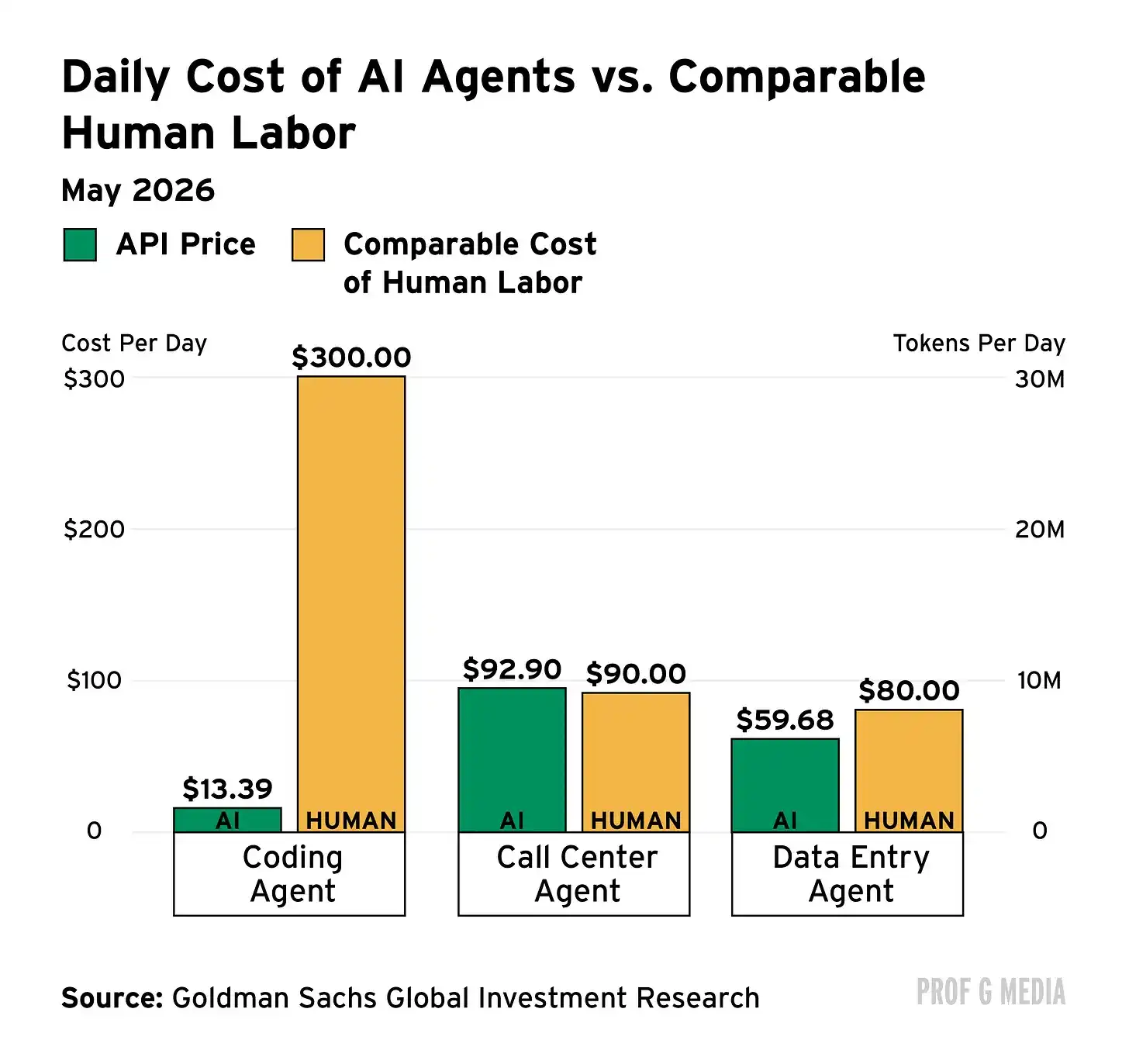
Figure: The AI Cost Shock for Businesses – AI spending and cost feedback from companies like Uber, Microsoft, Nvidia, Meta

Uber burned through its entire 2026 AI budget in just four months. The COO said it's becoming increasingly difficult to justify AI expenditures internally. Microsoft is cutting Claude Code licenses in multiple departments for one simple reason: cost.

A Nvidia executive stated that compute costs now "far exceed employee costs." Meta, Pinterest, and Spotify all cited rising inference costs as a drag on margins in their Q1 earnings reports.

How big are corporate AI budgets? A survey by cloud cost management company CloudZero shows that in 2025, 45% of businesses spent over $100,000 per month on AI, up from only 20% the previous year.

An even more extreme case within Anthropic: one employee spent $150,000 on Claude Code in a single month. For that to be financially justifiable, this engineer would need to do the work of 11 average engineers.

In the current market, the performative value of the word "efficiency" has been consistently rewarded, to the point where companies don't even need to actually calculate efficiency. 79% of S&P 500 companies mentioned AI in their recent earnings calls, but only 8% disclosed any AI-related revenue.
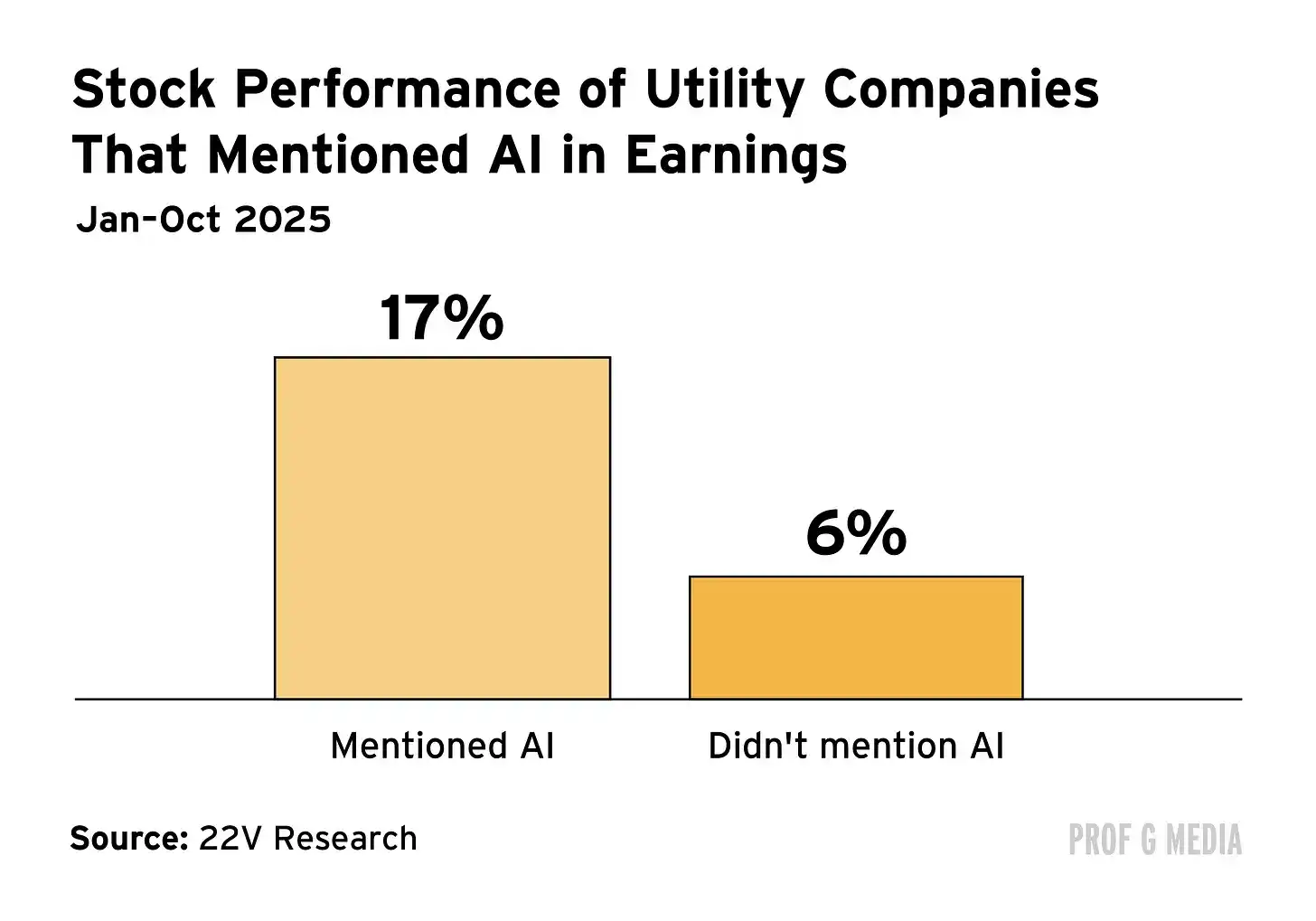
Figure: S&P 500 Companies' AI Rhetoric vs. Actual Revenue Disclosure

The same CloudZero report also found that only half</strong of the surveyed companies expressed confidence in their ability to assess the return on their AI investments. Match Group CEO Spencer Rascoff said AI costs the company $5 to $10 million annually. When asked about ROI, he said, "I think we benefit from it, but it's hard to feel."

Chinese Large Models Will Be the Biggest Winners

Scott Galloway's judgment is: companies will ultimately turn to the cheapest models, which are Chinese large language models. Chinese models are 10 to 30 times cheaper than American models.

Data is already validating this trend: the share of Chinese models in developer usage surged from about 1% in 2024 to over 60% in May of this year, and 80% of US AI startups are using Chinese open-source AI models.
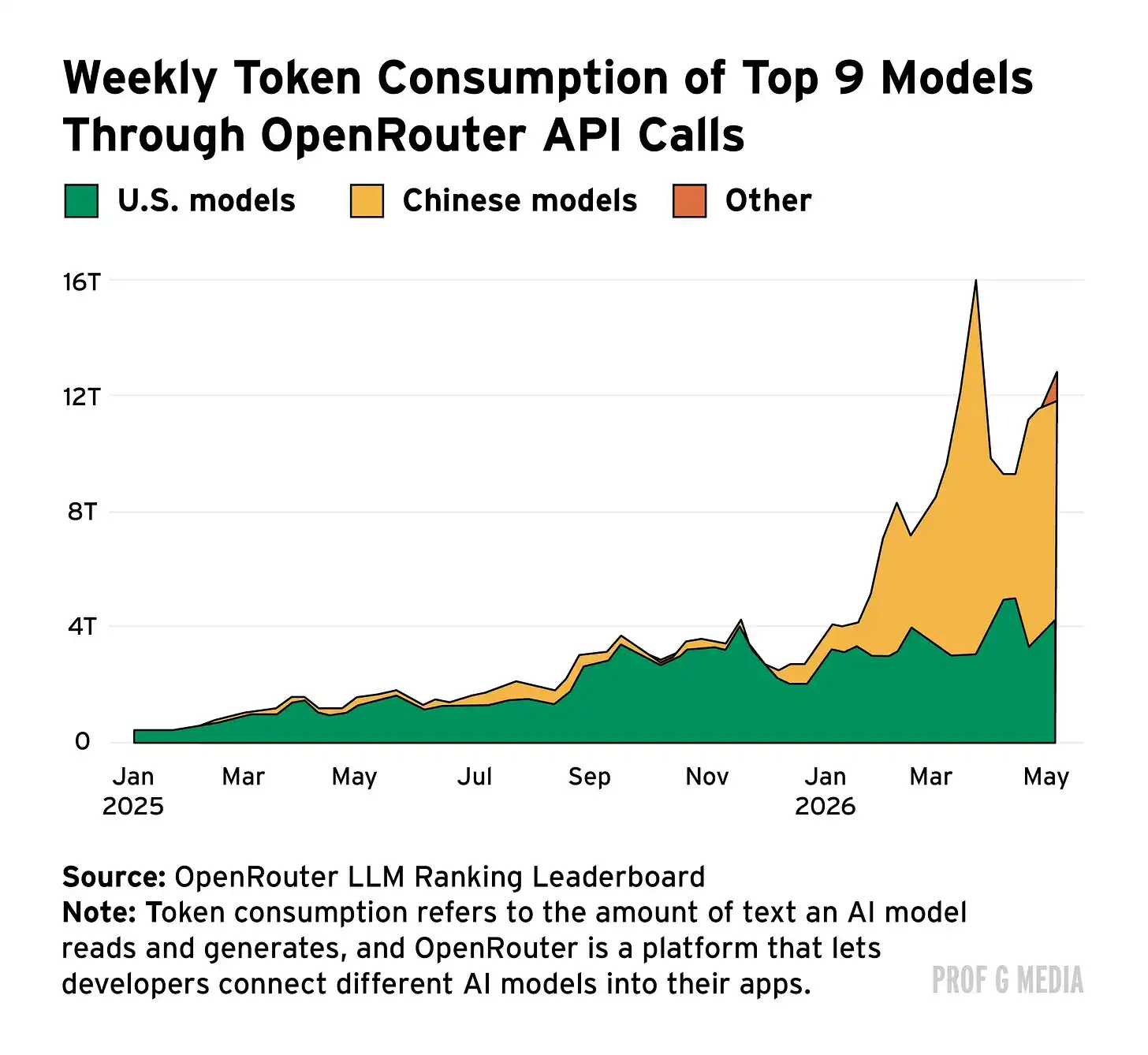
Figure: Changes in Share of Chinese Large Models in Developer Usage & Usage by US AI Startups


Trending Cryptos

Related Questions

QWhat is the main finding about AI's cost compared to human labor based on the article?

AThe article finds that an increasing number of companies are discovering that the actual operational cost of AI is higher than the cost of the human labor it is intended to replace.

QWhich companies are mentioned as facing significant AI cost challenges?

AUber, Microsoft, Nvidia, Meta, Pinterest, Spotify, and Anthropic are mentioned as companies facing high AI costs or budgetary issues.

QAccording to the article, what percentage of S&P 500 companies disclosed AI-related revenue in their recent earnings calls?

AOnly 8% of S&P 500 companies disclosed any AI-related revenue in their recent earnings calls, despite 79% mentioning AI.

QWhat does Scott Galloway predict will be the solution for companies struggling with high AI costs?

AScott Galloway predicts that companies will eventually turn to cheaper Chinese large language models, which are 10 to 30 times less expensive than American models.

QWhat dramatic increase in usage of Chinese AI models is highlighted in the data presented?

AThe data shows that the share of Chinese models among developers soared from about 1% in 2024 to over 60% by May of the article's year, with 80% of U.S. AI startups using Chinese open-source AI models.

Related Reads

Why Zhang Yiming Spends 50% of His Time on Seed?

Why does Zhang Yiming devote 50% of his time to Seed, ByteDance's core AI research team, while the company’s high-profile AI products like Doubao appear less dominant in the current market? An analysis reveals that ByteDance, historically a leader in defining trends (e.g., TikTok, Toutiao), has not set major AI industry agendas in the first half of the year, instead following competitors in areas like Agent and productivity tools. ByteDance’s strategy diverges from peers like Tencent and Alibaba, who are integrating AI into holistic productivity systems. While Doubao is highly successful—with 382 million MAU and leading revenue—its very success may create inertia, focusing iterations on improving the AI assistant rather than pioneering disruptive new entry points like Agent-native desktops. Zhang Yiming’s deep investment in Seed, a team of 300+ top researchers from firms like Google DeepMind, signals a long-term bet on foundational model capabilities as the ultimate competitive moat, reminiscent of ByteDance's past wins through superior underlying tech (e.g., recommendation algorithms). However, in the fast-evolving AI era, superior foundational models risk being outpaced by rapid shifts in product-level interaction paradigms and user habits. Zhang is essentially applying his principle of "delayed gratification" to corporate strategy, gambling that Seed’s breakthroughs will eventually make it the indispensable infrastructure for all AI applications, regardless of which product leads the user interface. The core question remains: is the AI era a race for the best product or the most powerful underlying infrastructure? The answer will define ByteDance’s future position.

marsbit3m ago

Why Zhang Yiming Spends 50% of His Time on Seed?

marsbit3m ago

From 'Speculative Asset' to 'The Next Generation Financial Infrastructure', Crypto is Growing a New TradFi World

From "Speculative Asset" to "Next-Generation Financial Infrastructure": Crypto Is Evolving into a New TradFi World Looking back, the crypto industry has long focused on identifying the "next asset to pump." However, starting around 2026, several developments across different sectors began converging. Stablecoin market cap approached $300 billion, entering a global payments adoption phase. DTCC initiated its first live tokenized asset conversions, while prediction markets expanded into regulated exchanges and brokerages. Simultaneously, AI Agents began using stablecoins autonomously for payments. These seemingly disparate trends share a common thread: the issuance, custody, trading, payment, and settlement capabilities built by the crypto industry over the past decade are now opening to broader financial activities and machine-driven economies. This suggests crypto is maturing beyond a purely speculative market, building a foundational infrastructure layer beneath it. This simultaneous progress occurs because the core components of a new financial system—stablecoins as programmable money APIs, RWA tokenization for traditional assets, prediction markets for price discovery on future events, and AI Agents as new economic actors—have developed independently and are now beginning to interconnect. These elements form the building blocks of a next-generation financial infrastructure. This emerging infrastructure features multi-layered capabilities: 1) Asset issuance and tokenization for a wider range of assets. 2) 24/7 programmable payments and settlement, simplifying global transfers. 3) Continuous trading and price discovery, providing real-time market signals for both humans and software. 4) Advanced identity, permissions, and authorization systems suitable for institutions and AI. 5) Growing connections to real-world legal and regulatory frameworks, providing greater clarity for traditional participants. This shift is reflected in changing funding sources, with more revenue now coming from real-world business flows, an expanding set of participants (including corporate systems and autonomous agents), and more nuanced regulatory discussions focused on rules and boundaries rather than outright prohibition. However, significant challenges remain. Technical confirmation is not legal finality; liability and governance for AI-driven payments are unclear; fragmentation across networks persists; privacy solutions for institutions are needed; and the system currently lacks mature frameworks for credit, insurance, and complex risk management found in traditional finance. In conclusion, 2026 marks a pivotal point where several previously independent pieces of the crypto puzzle started to connect. While far from complete, it signifies crypto's crucial step towards becoming a low-friction, global execution layer for real assets, traditional institutions, and intelligent software, built beneath its vibrant speculative markets.

marsbit53m ago

From 'Speculative Asset' to 'The Next Generation Financial Infrastructure', Crypto is Growing a New TradFi World

marsbit53m ago

Supporters of Bitcoin BIP-110 Update Have Prepared a 'Last Resort' Plan If the Proposal Is Not Adopted: It Could Radically Change BTC's Value

Supporters of the BIP-110 update for Bitcoin have prepared a contingency plan in case the proposal is not adopted, a move that could radically alter BTC's value. Developer Chris Guida has adapted a proof-of-work code originally created by Luke Dashjr in 2017 for the current version of Bitcoin Knots. This adaptation is described as a last-resort measure to be activated if miners do not signal readiness for BIP-110. The proposal itself is a soft fork aimed at temporarily limiting the storage of arbitrary data in Bitcoin transactions. It introduces stricter limits on new transaction outputs, OP_RETURN fields, and witness data, with rules designed to expire after approximately one year. Guida stated this option needs to remain open if miners were to "conspire to betray Bitcoin." Should the contingency code be used, it could change Bitcoin's current mining algorithm. This change would likely prevent existing ASIC miners from generating blocks on the new chain, leading to a large-scale reorganization of the Bitcoin mining network. Luke Dashjr, another Bitcoin Knots developer, contributed to the code and expressed hope it would not be needed, but sees its existence as useful for a potential crisis. A supporter known as Mechanic argued that the mere possibility of a proof-of-work change could act as a deterrent, emphasizing that Bitcoin's rules should be set by participants and node operators, not miners. While miner signals are tracked for BIP-110 activation, data from the proposal's official tracking page indicates support remains limited.

cryptonews.ru4h ago

Supporters of Bitcoin BIP-110 Update Have Prepared a 'Last Resort' Plan If the Proposal Is Not Adopted: It Could Radically Change BTC's Value

cryptonews.ru4h ago

Why Did Bitcoin's Price Remain Stable and Not Fall Despite the Recent Major Hack? Here's the Secret

The article discusses why Bitcoin's price remained stable despite a recent $100 million hack targeting individual cold wallets, citing insights from experts on "The Wolf of All Streets" channel. Analysts attribute this resilience to significant institutional shifts in the crypto market. Key points include: 1. **Market Maturation:** The crypto market has transitioned from being dominated by individual retail holders to institutional investors. Most new capital now enters via regulated channels like spot ETFs and custodial services (e.g., Coinbase, Anchorage), making vulnerabilities in individual cold wallets less impactful. 2. **Institutional Dominance:** Control over price dynamics has shifted from miners and crypto exchanges to Wall Street and institutional capital. These large players operate with long-term strategies, viewing price corrections as buying opportunities rather than reasons for panic. 3. **Increased Resilience:** Institutional involvement has reduced market sensitivity to negative news. Sellers are largely exhausted, and remaining holders are steadfast. Major financial institutions (e.g., Morgan Stanley, Wells Fargo) are incorporating crypto assets into portfolios, with research teams recommending allocations of 1–6% to Bitcoin. 4. **Risk Perception:** Bitcoin's integration into traditional financial indices has lowered perceived risk among professionals and institutions, further stabilizing its price against isolated security breaches.

cryptonews.ru5h ago

Why Did Bitcoin's Price Remain Stable and Not Fall Despite the Recent Major Hack? Here's the Secret

cryptonews.ru5h ago

Trading

Spot

Hot Articles

How to Buy PEOPLE

Welcome to HTX.com! We've made purchasing ConstitutionDAO (PEOPLE) simple and convenient. Follow our step-by-step guide to embark on your crypto journey.Step 1: Create Your HTX AccountUse your email or phone number to sign up for a free account on HTX. Experience a hassle-free registration journey and unlock all features.Get My AccountStep 2: Go to Buy Crypto and Choose Your Payment MethodCredit/Debit Card: Use your Visa or Mastercard to buy ConstitutionDAO (PEOPLE) instantly.Balance: Use funds from your HTX account balance to trade seamlessly.Third Parties: We've added popular payment methods such as Google Pay and Apple Pay to enhance convenience.P2P: Trade directly with other users on HTX.Over-the-Counter (OTC): We offer tailor-made services and competitive exchange rates for traders.Step 3: Store Your ConstitutionDAO (PEOPLE)After purchasing your ConstitutionDAO (PEOPLE), store it in your HTX account. Alternatively, you can send it elsewhere via blockchain transfer or use it to trade other cryptocurrencies.Step 4: Trade ConstitutionDAO (PEOPLE)Easily trade ConstitutionDAO (PEOPLE) on HTX's spot market. Simply access your account, select your trading pair, execute your trades, and monitor in real-time. We offer a user-friendly experience for both beginners and seasoned traders.

7.9k Total ViewsPublished 2024.03.29Updated 2026.06.02

How to Buy PEOPLE

Discussions

Welcome to the HTX Community. Here, you can stay informed about the latest platform developments and gain access to professional market insights. Users' opinions on the price of PEOPLE (PEOPLE) are presented below.

活动图片