After a 97% Plunge, World Raises $65 Million OTC in Deep Bear Market, Brewing a 'Big Move'?

marsbitPublished on 2026-03-31Last updated on 2026-03-31

Abstract

World Foundation announced on March 28 that it completed a $65 million OTC sale of WLD tokens at an average price of $0.2719. The transaction involved four counterparties, with $25 million of the tokens subject to a 6-month lock-up. Proceeds will support core operations, R&D, Orb hardware production, and ecosystem growth. WLD’s price has fallen over 97% from its all-time high of around $11.8 in March 2024, currently trading near $0.27. The decline reflects broader market conditions, regulatory scrutiny on biometric data, and ongoing token unlocks. Approximately 532 million WLD tokens (worth ~$1.48 million) are unlocked daily, creating consistent selling pressure. Amid the bear market, World published a research paper highlighting its privacy-preserving human identity verification system, combining iris-scanning Orb hardware with SMPC and ZKP technologies. The project aims to establish a Proof-of-Human (PoH) infrastructure critical for distinguishing humans from AI in the digital age. On April 17, World will host the "Lift Off" global event in San Francisco featuring Sam Altman and CEO Alex Blania, expected to showcase World ID advancements and potential OpenAI integration.

Original Author: Ma He, Foresight News

On March 28, the World Foundation announced the completion of an OTC sale of WLD tokens totaling $65 million, with an average transaction price of $0.2719. The deal involved four counterparties, with the first settlement completed on March 20, 2026. Among these, $25 million worth of WLD tokens are subject to a 6-month lock-up period. The official statement indicated that the proceeds will be directly used for the project's core operations, R&D investments, Orb hardware manufacturing, and ecosystem development. All settlements were executed through the multi-signature address 0xE797 of World Assets.

In the current deep bear market environment, completing a token transaction of tens of millions of dollars is quite rare. The last major token sale by the World Foundation dates back to May 2025, when its subsidiary World Assets sold $135 million worth of WLD tokens to early supporters a16z and Bain Capital Crypto at market prices.
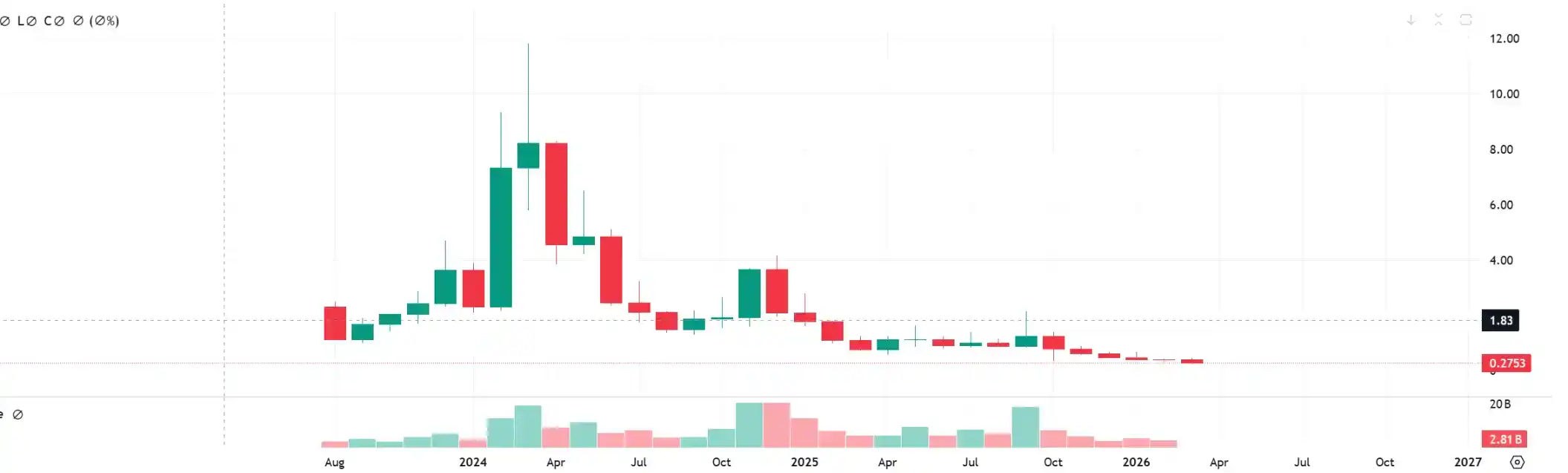
Looking back at WLD's complete price trajectory in this cycle, it serves as a textbook case from frenzy to reality. In July 2023, Worldcoin (now renamed World) officially launched WLD. Backed by Sam Altman's personal endorsement, the AI boom, and the unique narrative of "Proof of Human Uniqueness," it quickly became a market focus.

In March 2024, driven by the Bitcoin halving cycle and resonance with AI concepts, the price of WLD surged within a single month, reaching an all-time high of approximately $11.8. Its market capitalization once approached $10 billion. That year, global users showed unprecedented enthusiasm for registering World IDs through Orb iris scanning, and the project was regarded as the top contender for Web3 identity infrastructure.

However, after the peak, it soon fell into silence. In the second half of 2024, with the overall crypto market correction, strict scrutiny from regulatory bodies like the EU on biometric data, and the emergence of the project's own large-scale unlocking pressure, the price of WLD began to plummet.

Throughout 2025, the price of WLD fluctuated repeatedly in the range of $0.5 to $1.5. Although the adoption rate of iris scanning steadily advanced, it fell far short of early expectations, and user growth significantly decoupled from narrative hype. Entering 2026, WLD continued to bottom out, recently touching a new low of $0.2433 and currently hovering around $0.27, representing a cumulative drop of over 97% from its ATH.

In this cycle, the price movement of WLD resembles the trilogy of most altcoins: concept-driven → supply pressure → real-world test. Early premiums were mainly driven by the Altman IP and the AI trend, while later stages were suppressed by continuous unlocking and macro tightening.

Interestingly, just before announcing the large OTC sale, on March 25, World's official website published a research report titled "Private Proof of Human: Critical Infrastructure for Humanity in a World with Advanced AI." The article directly addresses the core pain point of the AI agent era: how to establish a reliable and privacy-preserving "Proof of Human" infrastructure in a digital world flooded by machines.

The paper elaborates on the technical solution combining Orb iris scanning hardware with Secure Multi-Party Computation (SMPC) and Zero-Knowledge Proofs (ZKP). This approach can efficiently verify human uniqueness while completely avoiding the leakage of personal biometric data, offering more foresight and security compared to traditional facial recognition or passport verification. This solution is positioned as the future foundation of internet trust, effectively countering deepfakes and AI bot attacks.

On March 26, Marc Andreessen, co-founder of a16z, shared this paper on platform X with a brief yet weighty comment: Time to prove human.
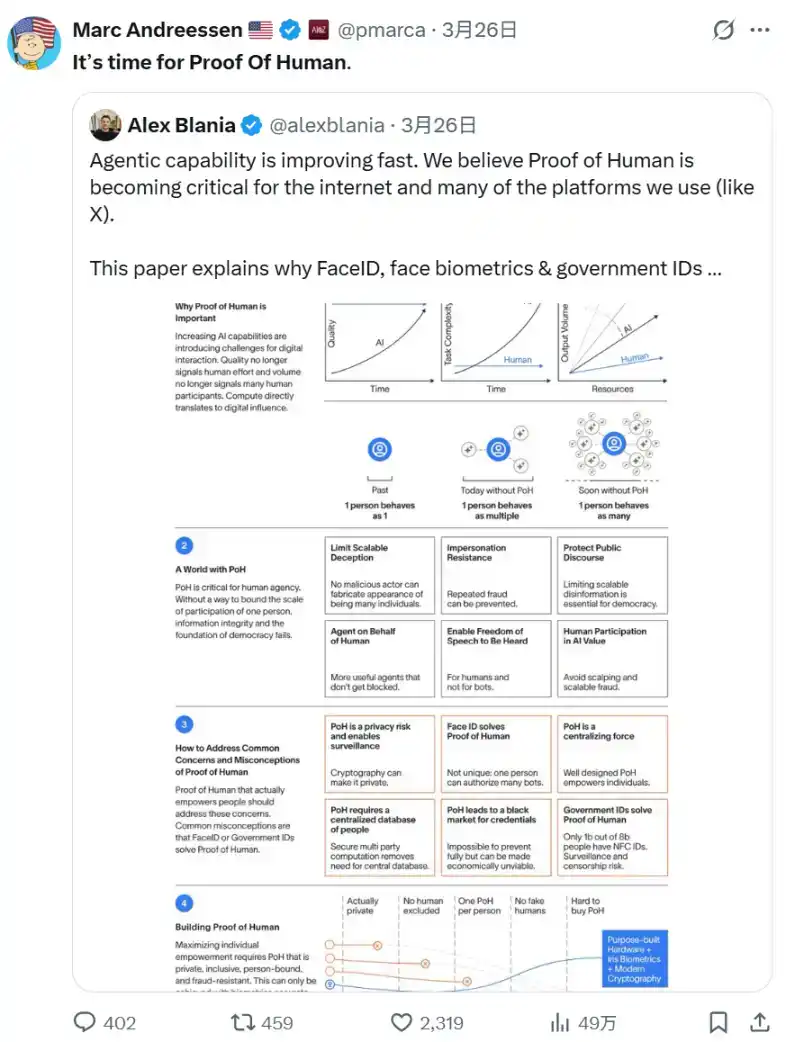
In the current era where AI is reshaping productivity, PoH will become a necessity to distinguish humans from machines and rebuild the trust layer of the digital economy.

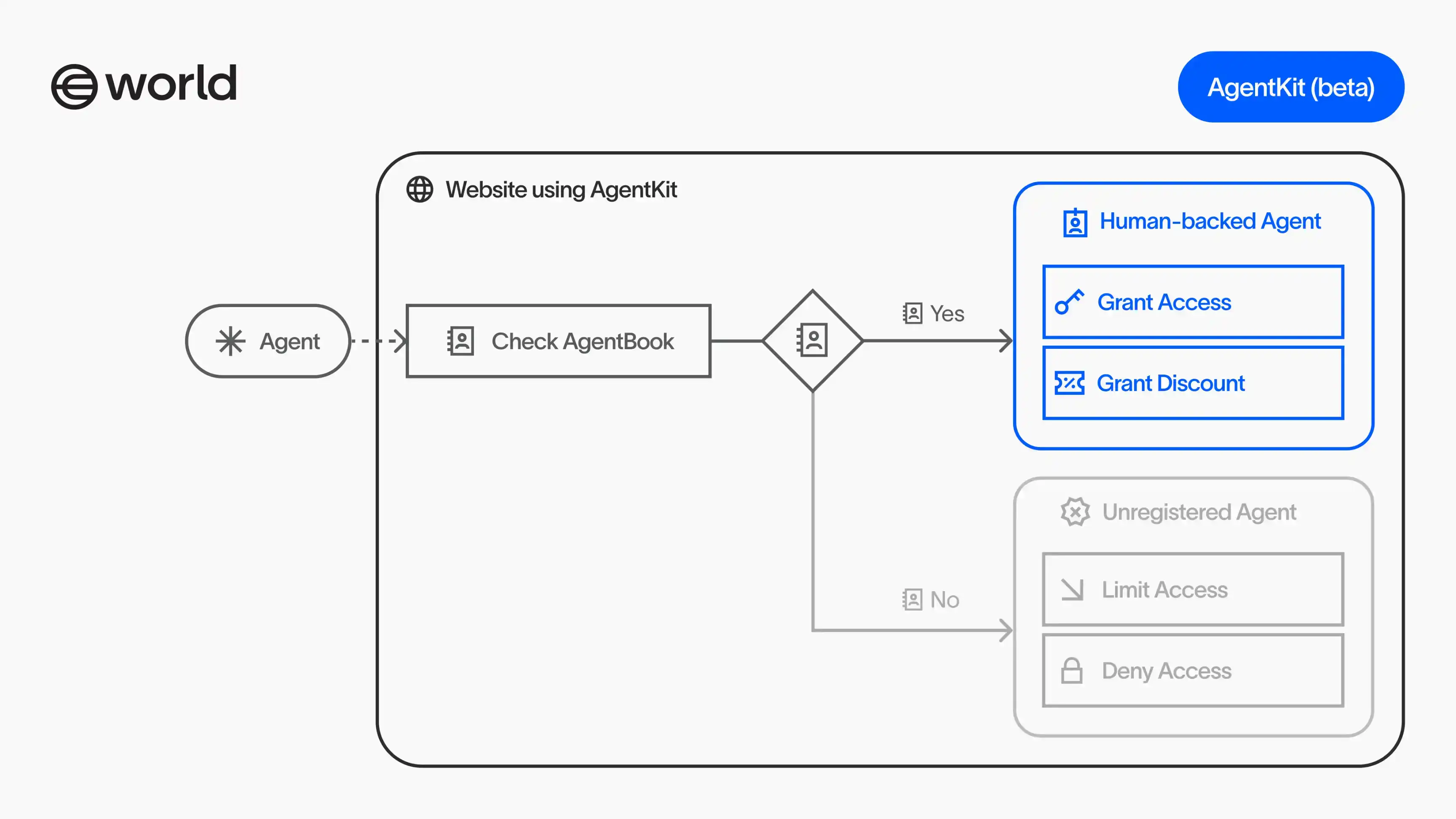
On March 17, World launched AgentKit. Its working principle involves Agents completing registration via World ID proof, linking a wallet to an anonymous human identity. The agent signs a standard identity verification challenge at a protected endpoint, and the agent's signature is matched with its associated human identity. Access is granted upon a successful match. The official application scenarios state that AgentKit agents can also be used for privacy protection, ticketing systems, access frequency limiting, and preventing Sybil attacks.
On April 17, World will host the "Lift Off" World ID global launch event in San Francisco, with Sam Altman personally attending and co-hosting alongside World CEO Alex.
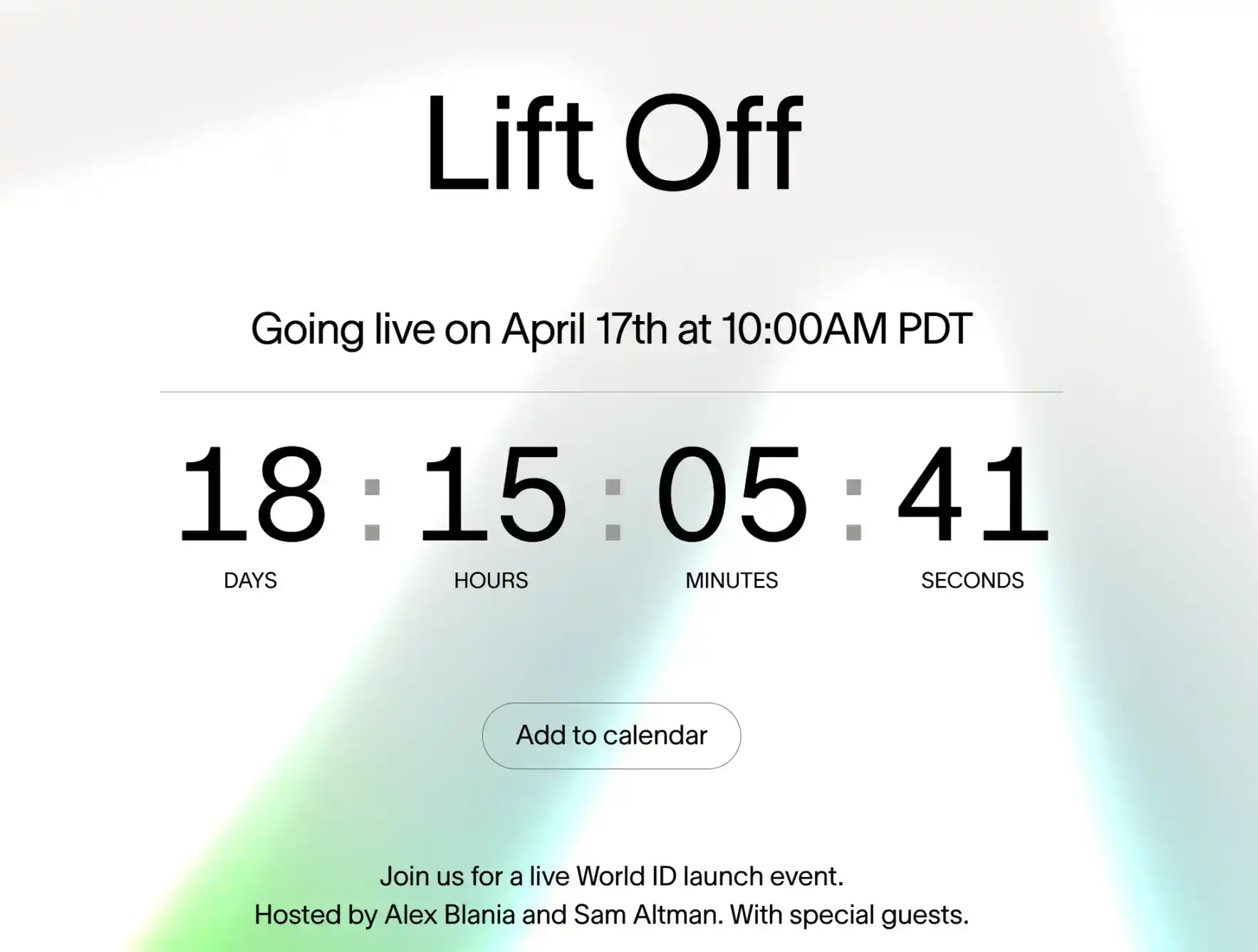
The event will focus on the latest developments of World ID, Orb hardware iterations, and application scenarios for human verification in the AI era. Altman's presence itself symbolizes top-tier influence and confidence and may signal potential synergy between OpenAI and World—AI agents need authentic human identity endorsement, and World ID恰好 provides a decentralized solution.

Currently, WLD's market capitalization is $1.346 billion, with an FDV of $2.758 billion. The proportion of unlocked tokens is 48.80%.
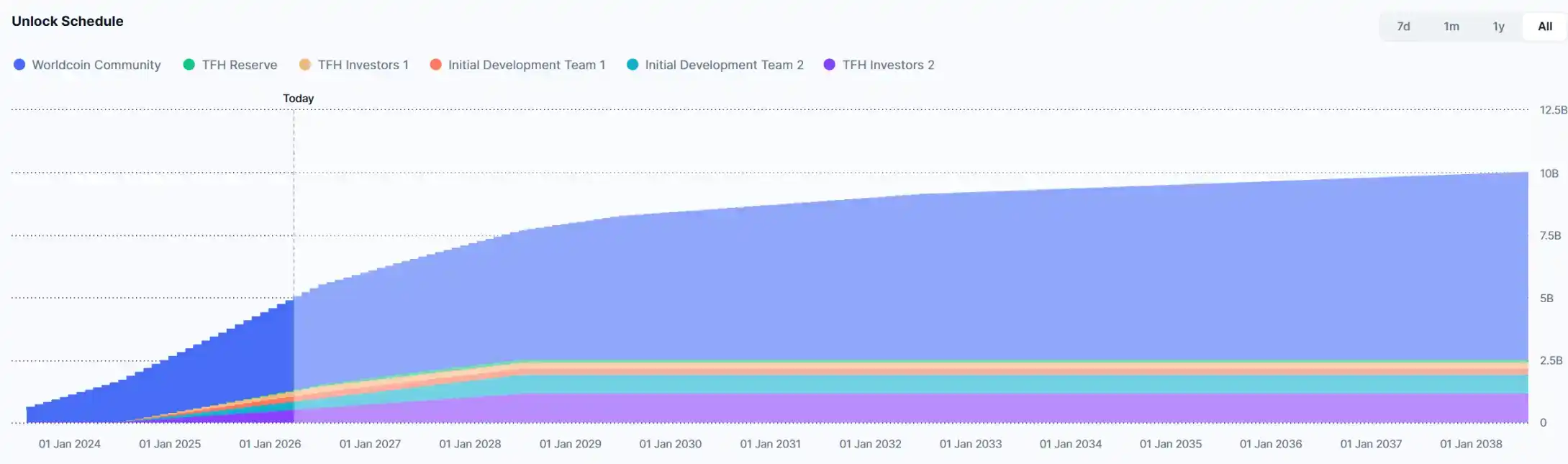
Additionally, WLD continues to unlock 0.05% of the maximum supply daily, approximately 5.32 million tokens, valued at about $1.479 million. Calculated at this rate, the value of tokens unlocked monthly is approximately $44.369 million, which is expected to continue exerting significant selling pressure on the market.

Trending Cryptos

Related Questions

QWhat was the total amount of WLD tokens sold in the recent OTC transaction and at what average price?

AThe World Foundation completed an OTC sale of WLD tokens totaling $65 million at an average price of $0.2719 per token.

QWhat are the primary uses of the funds raised from the OTC sale, as stated by the official announcement?

AAccording to the announcement, the funds will be used for the project's core operations, research and development, Orb hardware manufacturing, and ecosystem development.

QWhat is the significance of the research paper titled 'Private Proof of Human: Critical Infrastructure for Humanity in a World with Advanced AI' published by World?

AThe research paper details a technical solution using Orb iris scanning hardware combined with Secure Multi-Party Computation (SMPC) and Zero-Knowledge Proofs (ZKP) to verify human uniqueness while preventing the leakage of personal biometric data. It is positioned as a foundational trust infrastructure for the future internet to combat deepfakes and AI bot attacks.

QWhat major event is World hosting on April 17th in San Francisco, and who are the key figures expected to attend?

AWorld is hosting the 'Lift Off' World ID global launch event in San Francisco on April 17th. Sam Altman and World CEO Alex are expected to attend and co-host the event.

QWhat is the current fully diluted valuation (FDV) of WLD and what percentage of the total token supply has been unlocked?

AThe current fully diluted valuation (FDV) of WLD is $2.758 billion, and 48.80% of the total token supply has been unlocked.

Related Reads

Playnance’s $GCOIN Lists on KoinBX Amid Rapid Growth in India

Playnance's native token, $GCOIN, has been listed on the cryptocurrency exchange KoinBX as of June 18. This move aims to enhance accessibility for its rapidly growing community, particularly in India, where the blockchain-powered Web3 iGaming ecosystem has gained significant traction. Over 130 partners in Playnance's "Be the Boss" program have built communities engaging thousands of active players in the region. The "Be the Boss" model allows participants to create and manage their own gaming communities, earning rewards tied to community activity. CEO Pini Peter noted India's high engagement, with community leaders successfully building player networks. One partner, Dr. Nicolas, reported earning over $57,000 through the program in recent months, highlighting both the financial rewards and the opportunity to grow an engaged community. $GCOIN serves as the ecosystem's core utility token, incentivizing participation and aligning the interests of players and community leaders ("Bosses"). The listing on KoinBX is part of Playnance's strategy to expand globally, increasing the token's utility and accessibility by combining community ownership, gamified engagement, and blockchain-based incentives. Founded in 2020, Playnance is a Web3 iGaming infrastructure company focused on creating live, non-custodial, on-chain products to onboard mainstream users. It currently processes approximately one million transactions daily, aiming to simplify the user experience while maintaining full on-chain transparency.

TheNewsCrypto33m ago

Playnance’s $GCOIN Lists on KoinBX Amid Rapid Growth in India

TheNewsCrypto33m ago

STRC Hits Historic Low, Saylor's Perpetual Motion Machine Grinds to a Halt

STRC, the perpetual preferred stock issued by MicroStrategy to fund its Bitcoin purchases, hit a historic low of $85.32, a 17% discount to its $100 par value. Designed as a "digital credit engine" to trade stably near par and enable continuous share issuance for buying Bitcoin, its plunge signals a breakdown in this model. Three key factors drove the decline: 1. Bitcoin's price fell over 50% from its peak, trading around $63,000 amid hawkish Fed signals. 2. MicroStrategy's cash reserves were depleted after a $1.5 billion convertible note repayment, slashing the dividend coverage for STRC's 11.5% yield to ~7 months. The company then sold 32 BTC to cover dividends—Michael Saylor's first Bitcoin sale since 2022—damaging the "never sell" narrative. 3. A competing Bitcoin-backed preferred stock, Strive's SATA, offers a higher yield (~13%) and daily dividends, drawing investors away from STRC. The drop triggers a negative cycle: STRC below par halts ATM share issuances, cutting off a key funding source for Bitcoin buys and potentially forcing more BTC sales for dividends, further eroding confidence. While Saylor argues the model is mathematically sound—needing only 2.3% annual Bitcoin growth to sustain itself—the market is testing the resilience of the leveraged Bitcoin treasury strategy in a bear market. The STRC price now reflects rising skepticism about this financial machinery's durability during downturns.

marsbit54m ago

STRC Hits Historic Low, Saylor's Perpetual Motion Machine Grinds to a Halt

marsbit54m ago

A Guide to Grayscale’s ‘Bottom Fishing’: Using Cash Flow to Assess Cryptocurrency Value

**Title:** Grayscale's Guide to Bottom-Fishing: Valuing Cryptoassets Using Cash Flows **Summary:** This report by Grayscale Research presents a fundamental valuation framework for cryptocurrency assets, moving beyond pure speculation to analyze those with underlying cash flows. It distinguishes between "commodity-like" assets (e.g., Bitcoin) and "cash-flow" assets, primarily within DeFi. Using the leading decentralized lending protocol Aave as a case study, the analysis applies traditional financial methodologies like Discounted Cash Flow (DCF) and Price-to-Earnings (P/E) multiples. Key findings indicate that AAVE tokens are currently undervalued. Despite recent challenges, the protocol's strong revenue growth, ~50% net profit margin, and diversified treasury support a fundamental valuation range of $80-$100 per token (compared to a ~$75 market price at the time of writing). In a base-case scenario driven by stablecoin adoption and regulatory clarity, the fair value could rise to around $175 within a year. The report emphasizes that protocol success does not automatically translate to token value. It critically examines the "value capture" mechanisms—such as buybacks, burns, and staking rewards—that channel protocol profits to token holders. Furthermore, it addresses the legal and governance complexities of Decentralized Autonomous Organizations (DAOs), noting their difference from traditional corporate equity but highlighting how robust, transparent governance can align protocol economics with holder interests. The conclusion is that the crypto market is maturing, with capital increasingly flowing towards projects with demonstrable fundamentals, real adoption, and disciplined capital allocation, creating opportunities for value-based investors.

marsbit2h ago

A Guide to Grayscale’s ‘Bottom Fishing’: Using Cash Flow to Assess Cryptocurrency Value

marsbit2h ago

After semiconductors lead the gains, are funds buying into AI orders or a macroeconomic rebound?

After US-Iran talks led to a temporary ceasefire and framework for reopening the strategic Strait of Hormuz, U.S. stocks rose on June 18, with the Nasdaq gaining 1.9%. The semiconductor and AI hardware sectors outperformed. This rally stemmed primarily from reduced geopolitical risk, which lowered oil prices and inflation expectations, easing discount rate pressure on high-valuation growth stocks like tech. The key question is not whether tech rebounded, but the nature of the rebound. The market appears to be selectively repricing AI infrastructure plays rather than broadly chasing AI narratives. Gains were concentrated in chips, optical interconnects, memory, and domestic manufacturing—segments tied to tangible data center build-outs and capital expenditure. Intel's ~10% surge, fueled by a Trump statement about potential Apple collaboration, exemplifies this mixed dynamic. It reflects policy catalysts and domestic manufacturing sentiment more than confirmed fundamentals. Meanwhile, strong earnings from companies like Astera Labs (revenue up 93% YoY) provided concrete evidence of AI-driven demand in hardware. In essence, the rally represents a risk-premium recalibration. Lower Middle East tensions opened a valuation repair window, and capital flowed first into AI infrastructure segments with visible near-term revenue streams. The sustainability of this move hinges on upcoming Q2 earnings, specifically continued strength in cloud provider capex, AI server orders, and hardware company guidance. Policy hopes alone are insufficient; the cycle needs validation from orders and financials.

marsbit2h ago

After semiconductors lead the gains, are funds buying into AI orders or a macroeconomic rebound?

marsbit2h ago

Trading

Spot
Futures

Hot Articles

How to Buy MOVE

Welcome to HTX.com! We've made purchasing Movement (MOVE) simple and convenient. Follow our step-by-step guide to embark on your crypto journey.Step 1: Create Your HTX AccountUse your email or phone number to sign up for a free account on HTX. Experience a hassle-free registration journey and unlock all features.Get My AccountStep 2: Go to Buy Crypto and Choose Your Payment MethodCredit/Debit Card: Use your Visa or Mastercard to buy Movement (MOVE) instantly.Balance: Use funds from your HTX account balance to trade seamlessly.Third Parties: We've added popular payment methods such as Google Pay and Apple Pay to enhance convenience.P2P: Trade directly with other users on HTX.Over-the-Counter (OTC): We offer tailor-made services and competitive exchange rates for traders.Step 3: Store Your Movement (MOVE)After purchasing your Movement (MOVE), store it in your HTX account. Alternatively, you can send it elsewhere via blockchain transfer or use it to trade other cryptocurrencies.Step 4: Trade Movement (MOVE)Easily trade Movement (MOVE) on HTX's spot market. Simply access your account, select your trading pair, execute your trades, and monitor in real-time. We offer a user-friendly experience for both beginners and seasoned traders.

4.5k Total ViewsPublished 2024.12.10Updated 2026.06.02

How to Buy MOVE

Discussions

Welcome to the HTX Community. Here, you can stay informed about the latest platform developments and gain access to professional market insights. Users' opinions on the price of MOVE (MOVE) are presented below.

活动图片