Aevo Co-founder's Long Post Criticizes the Industry: I Wasted 8 Years of My Life in Crypto

marsbitPublished on 2025-12-08Last updated on 2025-12-08

Abstract

In a widely circulated article, Aevo co-founder and CTO Ken Chan reflects on his eight years in the crypto industry with deep disillusionment, describing it as a "waste" of his life. Initially drawn by libertarian ideals and the vision of decentralized financial systems like Bitcoin enabling private, borderless wealth, Chan now believes the space has devolved into the "largest casino in human history"—a massive, speculative gambling arena masked as innovation. He argues that despite idealistic rhetoric, the industry's incentives have prioritized speculation over substantive progress. New Layer 1 chains, DEXs, and meme platforms often serve as zero-sum gambling mechanisms rather than tools for genuine financial improvement. Chan admits to profiting from the system but expresses disgust at his role in fostering an ecosystem where high-market-cap tokens with no real users thrive, contradicting sustainable economic principles. He warns that the normalization of financial nihilism and get-rich-quick mentalities poses long-term risks to social mobility and value creation. While he still believes in crypto’s original vision, Chan concludes that the industry has lost its way, and he now prioritizes being "right" over chasing profits.

Editor's Note: This weekend, an article by Ken Chan(@kenchangh), Co-founder and CTO of Aevo, went viral on the internet. The title of the article is "I Wasted 8 Years of My Life in Crypto".

Ken Chan's attitude in the article is extremely negative. He believes the industry has lost its idealism and turned into the largest super casino in human history with the most participants, and he feels disgusted for having contributed to this casino. Although we do not agree with Ken Chan's views, and many practitioners have refuted them after the article went viral, objectively speaking, his statements do reveal deep-seated issues in the current industry, such as loss of faith and collapse of values.

The following is the original content of Ken Chan's article, compiled by Odaily Planet Daily.
The Initial Motivation

When I was a teenager, I was already a very politically motivated person. Among all the books that made me more radical, the ones that influenced me the most were actually the works of Ayn Rand (such as "The Fountainhead" and "Atlas Shrugged"). In 2016, I was an aspiring libertarian and even donated to Gary Johnson. Besides my strong Randian beliefs, I also loved computer programming, so cryptocurrency was a natural fit for me. The spirit of cypherpunk attracted me. The idea of Bitcoin as a private wealth bank fascinated me—being able to carry a billion dollars in my mind across borders has always been an incredibly powerful concept to me.

However, over time, I felt I lost my initial purpose in the crypto industry. After diving into this field full-time, the enticing early promises about the transformative power of cryptocurrency gradually faded. I became disillusioned with the target users and who we were truly serving. I completely misunderstood who the real users of cryptocurrency were and mistook propaganda for reality. Cryptocurrency claimed to decentralize the financial system, and I bought into it completely, but in reality, it is just a super system for speculation and gambling, a mirror of the real economy.

Reality hit me like a truck. I wasn't building a new financial system at all; I was building a casino, a casino that doesn't call itself a casino, but it is the largest, 24/7, most participatory casino ever created by our generation. Part of me hoped I could at least be proud of spending my entire twenties building this casino, but another part of me felt I completely wasted my twenties. I wasted my life on this—but at least, I made a lot of money from it.

Watch What They Do, Not What They Say

Cryptocurrency is a confusing thing. On one hand, you hear proponents say they want to completely replace the existing financial system with on-chain systems. I can still imagine that world—your bank account holds only USDC or Bitcoin, and you can send a billion dollars to anyone in the world in seconds. This vision is still powerful, and I still agree with it.

But the incentives have completely distorted the direction of reality. In practice, all market participants are happy to throw money into funding the next so-called "Layer 1" (Aptos, Sui, Sei, ICP, etc.). The only winner of the 2020 Layer 1 war was Solana, which fueled a strong speculative drive to compete for the fourth spot (after Bitcoin, Ethereum, Solana, ??), supporting a market cap of hundreds of billions of dollars.

But did this really move us closer to the ideal new financial system? Despite VCs writing 5,000-word essays trying to convince you, the answer is no. This didn't create a new system; in fact, it burned through the funds of everyone (both retail and VCs), making everyone in the new system poorer.

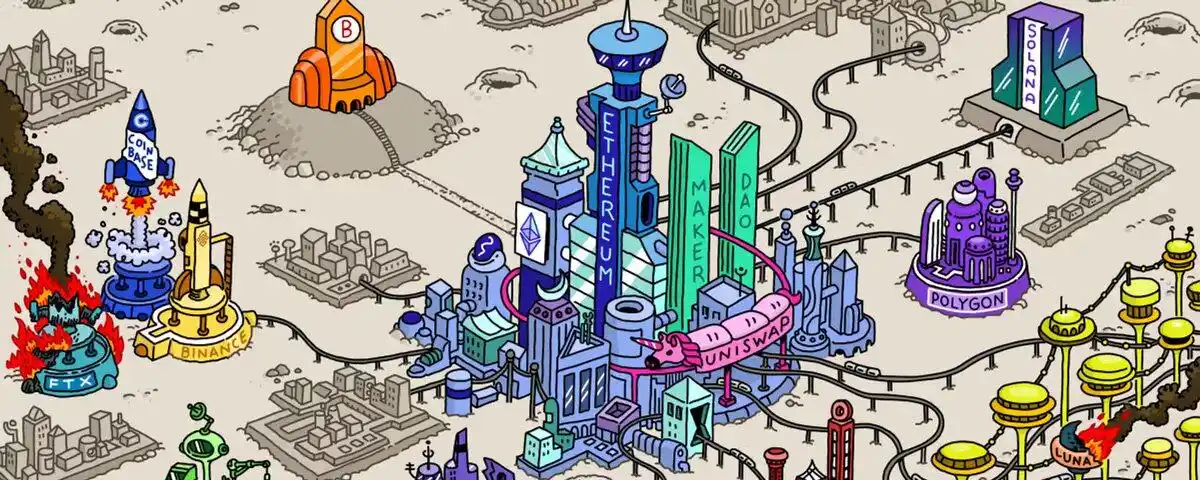
I'm not just targeting Layer 1s. I could cite countless similar examples: spot DEXs, perpetual futures DEXs, prediction markets, meme platforms, etc. The fierce competition in these tracks does not substantially lead to a better financial system. Contrary to what VCs say, we don't need to build casinos on Mars.

The Gamblification of Economic Models

If I said I had no financial motivation when I first joined the crypto industry, I would be lying. As a reader, you might think it's a bit hypocritical for me to decide to leave the industry after making enough money. Yes, maybe I am hypocritical, but maybe I'm just disgusted with myself for contributing to this quagmire of financialization and gamblification.

Normalizing zero-sum behavior of "quickly making money off each other" is not a way to create long-term wealth. It seems like it is, but it's not. Eight years in crypto have completely destroyed my ability to recognize sustainable business models. Here, you don't need a successful business or product to make money. This industry has a long list of tokens with high market caps and zero users—this completely defies the logic of how the real world operates. If you want to bring value to customers, not just gambling + entertainment (which is what casinos do), these zero-sum business models simply don't work.

Conclusion

I used to think "financial nihilism" was a cute and harmless concept. I thought it was okay to keep pushing zero-sum games onto the next generation. I have no doubt that Bitcoin will eventually reach $1 million one day, but that has nothing to do with the financial games the industry is creating.

This industry mindset is extremely toxic, and I believe it will lead to a long-term collapse of social mobility for the younger generation. You can already see it happening, and we must have the courage to resist these meaningless games.

CMS Holdings once famously said: "Are you here to make money? Or are you here to prove you're right?"

This time, I choose to prove I'm right.

Related Questions

QWhat is the main criticism of the crypto industry according to Ken Chan?

AKen Chan criticizes the crypto industry for losing its original idealistic vision of creating a decentralized financial system and instead becoming the largest, most participatory global casino focused on speculation and gambling, which he finds morally repugnant.

QHow did Ken Chan's initial political and philosophical beliefs influence his entry into crypto?

AAs a libertarian influenced by Ayn Rand's works like 'The Fountainhead' and 'Atlas Shrugged,' Ken Chan was drawn to cryptocurrency's promise of private wealth storage and borderless value transfer, aligning with his ideals of individual freedom and anti-establishment principles.

QWhat does Ken Chan mean by 'look at what they do, not what they say' in the context of crypto?

AHe means that despite the industry's rhetoric about building a new financial system, the actual incentives and actions—such as pouring money into speculative Layer 1 projects like Aptos or Sui—reveal a focus on zero-sum gambling and wealth extraction rather than genuine innovation or user value.

QWhy does Ken Chan feel he wasted his time in the crypto industry despite making money?

AHe feels he wasted his time because he realized he was contributing to a harmful, gambling-driven ecosystem that prioritizes short-term speculation over sustainable value creation, which contradicts his original goal of building a meaningful decentralized financial system.

QWhat societal concern does Ken Chan raise about the impact of crypto on younger generations?

AHe warns that the normalization of zero-sum, gambling-like behavior in crypto could lead to a long-term collapse in social mobility for younger generations, as it encourages financial nihilism and distracts from productive economic activities.

Related Reads

Altcoin: The ETF Boom Explodes – XRP, SOL, LTC, HBAR, DOGE, LINK, and the Emergence of New Opportunities

While the spotlight has been on Solana (SOL) ETFs, which have attracted approximately $682 million in inflows, XRP ETFs have quietly surpassed them with $874 million, despite launching later. Simultaneously, a new wave of altcoin ETFs for LTC, HBAR, DOGE, and LINK has entered the market, each recording modest but stable inflows since their debut. Seven separate Solana ETFs have generated $618.62 million in net inflows, holding $915.08 million in assets under management, representing about 1.15% of Solana's market cap. In contrast, four XRP ETFs have attracted $874.28 million, with Canary's XRPC leading at $357 million. The newly launched altcoin ETFs for LINK, HBAR, LTC, and DOGE have collectively seen $133.46 million in net inflows. Grayscale's GLNK attracted $40.90 million, Canary's LTCC (Litecoin) drew $7.67 million, and its HBR (HBAR) ETF recorded $82.04 million. Two DOGE ETFs brought in $2.85 million. This expansion signals a new market phase of diverse choices and intense competition. However, these new altcoin ETFs remain far behind the established Bitcoin and Ethereum ETFs in terms of total capital. Amid this ETF boom, Bitcoin Hyper (HYPER) is emerging as a potential altcoin outside the traditional ETF scope. It's a Bitcoin Layer-2 project built on the Solana Virtual Machine (SVM), combining Solana's speed with Bitcoin's security. Having raised nearly $29 million in its presale, it offers a fixed supply of 21 billion tokens and 40% staking APY, positioning itself to unlock Bitcoin's potential in DeFi.

bitcoinist27m ago

Altcoin: The ETF Boom Explodes – XRP, SOL, LTC, HBAR, DOGE, LINK, and the Emergence of New Opportunities

bitcoinist27m ago

Polymarket Revival: The Mainstreaming of Crypto Prediction Markets and Future Prospects

Polymarket, a crypto-based prediction market platform, has made a significant comeback in 2025 by re-entering the U.S. market through regulatory-compliant means, including the acquisition of regulated trading and清算 entities. This resurgence is further supported by institutional capital investment and integration with mainstream platforms like the MetaMask wallet, allowing users to trade directly without leaving their wallets. Mainstream financial data platforms have also begun displaying prediction market data, increasing market visibility. Once viewed primarily as a gambling or speculative platform, Polymarket is increasingly recognized as a mechanism for information pricing in financial markets. Widespread participation from both retail and institutional users has made its probability assessments of future events more representative and liquid. Prediction market data is now being incorporated by traditional financial media and data platforms, highlighting its growing potential. However, challenges remain. Prediction markets are not always accurate, with studies showing limited predictive reliability in certain contexts. Questions about platform neutrality and business models have emerged, such as the employment of internal market makers, which could undermine trust. Information asymmetry and insider risks are inherent, potentially disadvantaging ordinary users when some participants access information early. Regulatory, tax, and disclosure requirements also present ongoing uncertainties. The revival and transformation of Polymarket signify a broader shift of prediction markets from niche experiments toward mainstream financial infrastructure. By converting public expectations into tradable probabilities, these markets may complement traditional analysis and polling, providing real-time, decentralized signals in areas like macroeconomics, policy, technology, and geopolitics. As traditional financial institutions invest in compliance and structured products, DeFi is evolving beyond an alternative asset pool to resemble traditional financial infrastructure. Prediction market applications are expanding beyond crypto to potentially include stocks, macroeconomic indicators, sports events, and tech product launches, tightening the link between crypto and the real world. If platforms like Polymarket continue on a path of compliance, stable operation, and integration with mainstream financial services, they could become next-generation market infrastructures—event-driven financial tools alongside stocks, bonds, and options. Key factors for development include platform neutrality, prediction accuracy, regulatory environment, participant diversity, and the maturity of related financial products. In summary, Polymarket’s comeback represents a move of prediction markets from the fringe into the core of financial systems, reflecting deeper changes in how information is priced and how financial infrastructure is rebuilt. This shift brings not only new trading methods but also potential changes in how investors perceive and engage with future events and asset valuation.

cointelegraph_中文1h ago

Polymarket Revival: The Mainstreaming of Crypto Prediction Markets and Future Prospects

cointelegraph_中文1h ago

Trading

Spot
Futures
活动图片