a16z Partner: Three Paths for Crypto Projects to Find PMF

marsbitPublished on 2026-06-09Last updated on 2026-06-09

Abstract

Author: Jason Rosenthal. Compiler: Shenchao TechFlow. Finding Product-Market Fit (PMF) is the most critical variable for a company's survival. In the crypto space, misaligned growth hacking and airdrops often mask the absence of true PMF. However, leading teams are now finding PMF faster. Here are three proven paths for crypto projects to achieve PMF: 1. **Co-build with Anchor Clients:** Partner with the most sophisticated potential clients in your field and develop the product based on their specific needs. Their adoption serves as the strongest validation, more valuable than media coverage or TVL metrics. This approach is shaping current product roadmaps, as seen in collaborations between crypto startups and traditional finance. 2. **Position Ahead of an Exponential Curve:** Identify and position yourself ahead of a major emerging trend before the market fully realizes it. The most evident current curve is the rise of AI Agents as autonomous economic actors. Projects like AgentCash by Merit Systems, which enables AI Agents to pay for API access with crypto, are building foundational payment rails for the impending Agent economy. 3. **Be Your Own First and Best Customer:** The most enduring infrastructure companies don't wait for external validation. They first build and prove their technology by using it to power their own applications at scale before offering it to others. Matter Labs exemplifies this by anchoring its ZKsync technology in a concrete application, Car...

Author: Jason Rosenthal

Compiled by: Deep Tide TechFlow

Deep Tide Guide: a16z Crypto operating partner Jason Rosenthal outlines three current paths for crypto projects to find Product-Market Fit: collaborating with top-tier clients to build, positioning on the exponential growth curve of AI Agents, and becoming your own first user. The article uses case studies from LayerZero, AgentCash, ZKsync, etc., offering direct reference value for teams pivoting or still searching for PMF.

Product-Market Fit (PMF) is the most critical variable determining a company's survival. Find it, and you have a chance. Fail to find it, and nothing else can save you.

@jasonrosenthal tweeted:

Finding and achieving Product-Market Fit is the most powerful and important thing for any early-stage startup. I've spent a significant part of my career on this, across multiple companies. Here are 5 strategies for finding PMF in Web3.

Throwing more money at the problem just extends the runway to a bad ending. Growth hacking and continuous airdrops disconnected from a real strategy are less a path to PMF and more a way to mask the fact that you haven't found it yet. Some of crypto's most powerful weapons (tokens and network effects) can even mislead projects about their PMF.

The good news is that top teams are now finding PMF faster. Killer applications like stablecoins have been proven, and traditional finance and broader consumer groups are accelerating their entry.

Here are three models that are working. If your project is pre-PMF or pivoting, pay close attention.

1. Partner with Top Clients, Build to Their Specifications

Identify the most sophisticated potential clients in your field and build the product together with them. Their needs are your product spec sheet.

This is slower than building a generic product and iterating publicly. But if your first client handles trillions in daily transaction volume, their adoption is more valuable than any press coverage, TVL numbers, or retail attention. The essential definition of PMF is your product resonating broadly with customers, and these flagship clients are the best indicator.

Judging by the high-profile partnership announcements and product launches between crypto startups and traditional finance firms, product roadmaps are now being written by institutional clients. Blockchains are beginning to host global financial infrastructure.

2. Identify an Exponential Growth Curve and Position Ahead of It
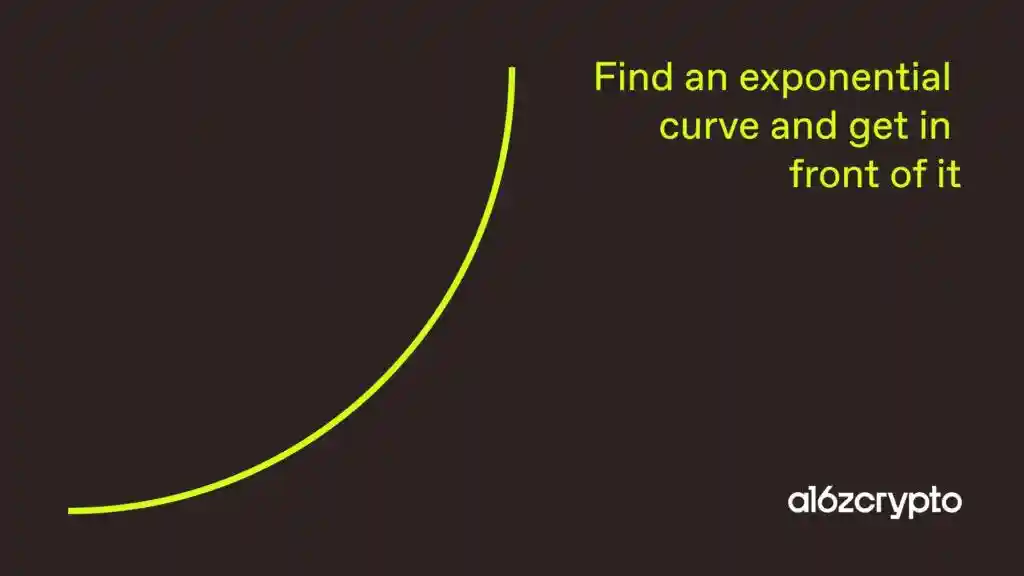
PMF sometimes comes from serving an existing market better. Other times it comes from seeing where a market is going before it fully realizes it itself, and positioning early enough.

The most obvious current curve: AI Agents are becoming economic actors. They autonomously call APIs, deploy capital, and execute transactions at machine speed. The assumption of "human-in-the-loop" is collapsing faster than most expected.

Take Agent commercialization. Samuel Ragsdale and Ryan Sproule at Merit Systems saw this early and are building AgentCash on the x402 protocol. AgentCash enables AI Agents to pay for API access using cryptocurrency, an infrastructure that allows Agents to conduct programmatic transactions without human-managed billing.

Payment is the key link that turns Agents from "assistants" into "participants." Whoever builds these payment rails now will own a foundational layer when the Agent economy arrives.

3. Be Your Own First (and Best) Customer
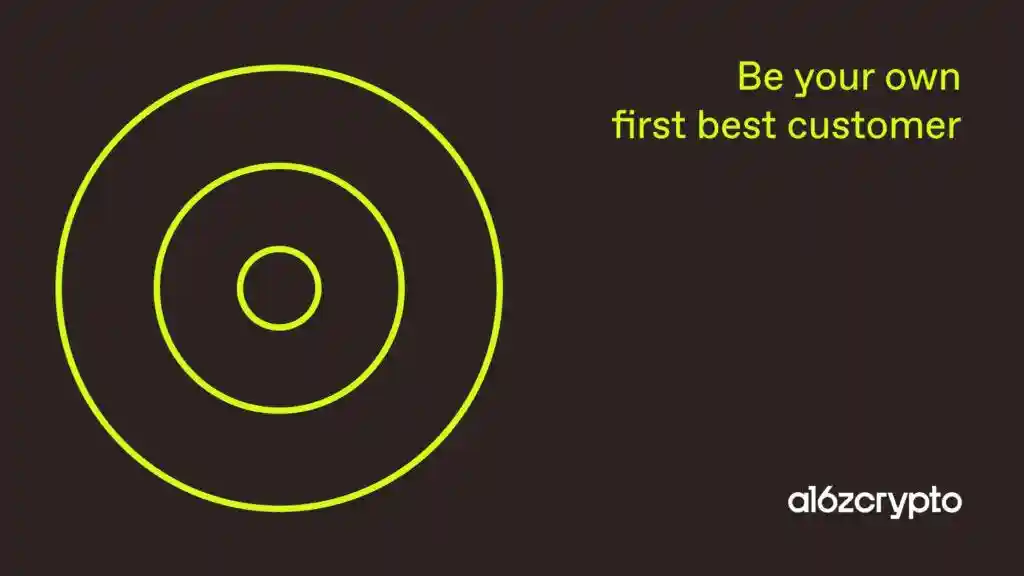
The most enduring infrastructure companies don't wait for external developers to validate their technology. They build applications on their own rails first, proving capability through live operation, and then invite others to use it.

Amazon executed this playbook masterfully. AWS wasn't sold to startups from day one. Amazon first built the infrastructure needed for its own e-commerce business, proving it at massive scale, before gradually opening it to others.

Matter Labs' Alex Gluchowski is running the same playbook.

Instead of pitching Prividium as an abstract enterprise product, he anchored it to a specific application: tokenized deposits. The result is Cari Network. U.S. regional banks like Huntington Bancshares, First Horizon, M&T Bank, KeyCorp, Old National Bancorp can now transfer customer deposits across banks in real-time on a blockchain rail, while the funds never leave the regulated banking system. ZKsync didn't just build the rail; it found the killer application on it.

Three models, one underlying logic: The fastest path to PMF isn't fumbling in the dark, but choosing the right battlefield and fighting with conviction before everyone else jumps in.

Co-build with the client whose validation compounds. Position ahead of the curve before consensus forms. Be your own first and best customer.

Pick the model that fits your product, and execute.

Related Questions

QAccording to the article, what are the three proven paths for crypto projects to achieve Product-Market Fit (PMF)?

AThe three paths are: 1. Co-build products with top-tier clients based on their specific needs. 2. Position ahead of an exponential growth curve, such as the AI Agent economy. 3. Be your own first and best customer by building applications on your own infrastructure to prove its capabilities.

QHow does the article illustrate the strategy of 'binding top clients to build products'?

AThe article illustrates this by noting that current product roadmaps are being written by institutional clients. It suggests finding sophisticated potential clients and co-building products with them, using their demands as the product specification. This is considered more valuable than generic metrics like media coverage or TVL data.

QWhat example is given in the article for finding an exponential growth curve and positioning ahead of it?

AThe example given is the rise of AI Agents becoming economic actors. Specifically, the article mentions the project AgentCash, built on the x402 protocol by Merit Systems, which enables AI Agents to pay for API access with cryptocurrency, thus laying foundational payment rails for the upcoming Agent economy.

QWhat analogy does the article use to explain the strategy of 'being your own first customer'?

AThe article uses the analogy of Amazon Web Services (AWS). It states that AWS was not initially sold to startups; Amazon first built the infrastructure for its own e-commerce business, proved it at scale, and then gradually opened it to others.

QHow is Matter Labs' Alex Gluchowski applying the 'be your own first customer' strategy according to the article?

AInstead of selling Prividium as an abstract enterprise product, Alex Gluchowski anchored it to a specific application: tokenized deposits. This resulted in the Cari Network, which allows US regional banks to transfer customer deposits in real-time on a blockchain, with funds remaining within the regulated banking system. This demonstrates ZKsync finding a killer application on its own rails.

Related Reads

Why Zhang Yiming Spends 50% of His Time on Seed?

Why does Zhang Yiming devote 50% of his time to Seed, ByteDance's core AI research team, while the company’s high-profile AI products like Doubao appear less dominant in the current market? An analysis reveals that ByteDance, historically a leader in defining trends (e.g., TikTok, Toutiao), has not set major AI industry agendas in the first half of the year, instead following competitors in areas like Agent and productivity tools. ByteDance’s strategy diverges from peers like Tencent and Alibaba, who are integrating AI into holistic productivity systems. While Doubao is highly successful—with 382 million MAU and leading revenue—its very success may create inertia, focusing iterations on improving the AI assistant rather than pioneering disruptive new entry points like Agent-native desktops. Zhang Yiming’s deep investment in Seed, a team of 300+ top researchers from firms like Google DeepMind, signals a long-term bet on foundational model capabilities as the ultimate competitive moat, reminiscent of ByteDance's past wins through superior underlying tech (e.g., recommendation algorithms). However, in the fast-evolving AI era, superior foundational models risk being outpaced by rapid shifts in product-level interaction paradigms and user habits. Zhang is essentially applying his principle of "delayed gratification" to corporate strategy, gambling that Seed’s breakthroughs will eventually make it the indispensable infrastructure for all AI applications, regardless of which product leads the user interface. The core question remains: is the AI era a race for the best product or the most powerful underlying infrastructure? The answer will define ByteDance’s future position.

marsbit3m ago

Why Zhang Yiming Spends 50% of His Time on Seed?

marsbit3m ago

From 'Speculative Asset' to 'The Next Generation Financial Infrastructure', Crypto is Growing a New TradFi World

From "Speculative Asset" to "Next-Generation Financial Infrastructure": Crypto Is Evolving into a New TradFi World Looking back, the crypto industry has long focused on identifying the "next asset to pump." However, starting around 2026, several developments across different sectors began converging. Stablecoin market cap approached $300 billion, entering a global payments adoption phase. DTCC initiated its first live tokenized asset conversions, while prediction markets expanded into regulated exchanges and brokerages. Simultaneously, AI Agents began using stablecoins autonomously for payments. These seemingly disparate trends share a common thread: the issuance, custody, trading, payment, and settlement capabilities built by the crypto industry over the past decade are now opening to broader financial activities and machine-driven economies. This suggests crypto is maturing beyond a purely speculative market, building a foundational infrastructure layer beneath it. This simultaneous progress occurs because the core components of a new financial system—stablecoins as programmable money APIs, RWA tokenization for traditional assets, prediction markets for price discovery on future events, and AI Agents as new economic actors—have developed independently and are now beginning to interconnect. These elements form the building blocks of a next-generation financial infrastructure. This emerging infrastructure features multi-layered capabilities: 1) Asset issuance and tokenization for a wider range of assets. 2) 24/7 programmable payments and settlement, simplifying global transfers. 3) Continuous trading and price discovery, providing real-time market signals for both humans and software. 4) Advanced identity, permissions, and authorization systems suitable for institutions and AI. 5) Growing connections to real-world legal and regulatory frameworks, providing greater clarity for traditional participants. This shift is reflected in changing funding sources, with more revenue now coming from real-world business flows, an expanding set of participants (including corporate systems and autonomous agents), and more nuanced regulatory discussions focused on rules and boundaries rather than outright prohibition. However, significant challenges remain. Technical confirmation is not legal finality; liability and governance for AI-driven payments are unclear; fragmentation across networks persists; privacy solutions for institutions are needed; and the system currently lacks mature frameworks for credit, insurance, and complex risk management found in traditional finance. In conclusion, 2026 marks a pivotal point where several previously independent pieces of the crypto puzzle started to connect. While far from complete, it signifies crypto's crucial step towards becoming a low-friction, global execution layer for real assets, traditional institutions, and intelligent software, built beneath its vibrant speculative markets.

marsbit53m ago

From 'Speculative Asset' to 'The Next Generation Financial Infrastructure', Crypto is Growing a New TradFi World

marsbit53m ago

Supporters of Bitcoin BIP-110 Update Have Prepared a 'Last Resort' Plan If the Proposal Is Not Adopted: It Could Radically Change BTC's Value

Supporters of the BIP-110 update for Bitcoin have prepared a contingency plan in case the proposal is not adopted, a move that could radically alter BTC's value. Developer Chris Guida has adapted a proof-of-work code originally created by Luke Dashjr in 2017 for the current version of Bitcoin Knots. This adaptation is described as a last-resort measure to be activated if miners do not signal readiness for BIP-110. The proposal itself is a soft fork aimed at temporarily limiting the storage of arbitrary data in Bitcoin transactions. It introduces stricter limits on new transaction outputs, OP_RETURN fields, and witness data, with rules designed to expire after approximately one year. Guida stated this option needs to remain open if miners were to "conspire to betray Bitcoin." Should the contingency code be used, it could change Bitcoin's current mining algorithm. This change would likely prevent existing ASIC miners from generating blocks on the new chain, leading to a large-scale reorganization of the Bitcoin mining network. Luke Dashjr, another Bitcoin Knots developer, contributed to the code and expressed hope it would not be needed, but sees its existence as useful for a potential crisis. A supporter known as Mechanic argued that the mere possibility of a proof-of-work change could act as a deterrent, emphasizing that Bitcoin's rules should be set by participants and node operators, not miners. While miner signals are tracked for BIP-110 activation, data from the proposal's official tracking page indicates support remains limited.

cryptonews.ru4h ago

Supporters of Bitcoin BIP-110 Update Have Prepared a 'Last Resort' Plan If the Proposal Is Not Adopted: It Could Radically Change BTC's Value

cryptonews.ru4h ago

Why Did Bitcoin's Price Remain Stable and Not Fall Despite the Recent Major Hack? Here's the Secret

The article discusses why Bitcoin's price remained stable despite a recent $100 million hack targeting individual cold wallets, citing insights from experts on "The Wolf of All Streets" channel. Analysts attribute this resilience to significant institutional shifts in the crypto market. Key points include: 1. **Market Maturation:** The crypto market has transitioned from being dominated by individual retail holders to institutional investors. Most new capital now enters via regulated channels like spot ETFs and custodial services (e.g., Coinbase, Anchorage), making vulnerabilities in individual cold wallets less impactful. 2. **Institutional Dominance:** Control over price dynamics has shifted from miners and crypto exchanges to Wall Street and institutional capital. These large players operate with long-term strategies, viewing price corrections as buying opportunities rather than reasons for panic. 3. **Increased Resilience:** Institutional involvement has reduced market sensitivity to negative news. Sellers are largely exhausted, and remaining holders are steadfast. Major financial institutions (e.g., Morgan Stanley, Wells Fargo) are incorporating crypto assets into portfolios, with research teams recommending allocations of 1–6% to Bitcoin. 4. **Risk Perception:** Bitcoin's integration into traditional financial indices has lowered perceived risk among professionals and institutions, further stabilizing its price against isolated security breaches.

cryptonews.ru5h ago

Why Did Bitcoin's Price Remain Stable and Not Fall Despite the Recent Major Hack? Here's the Secret

cryptonews.ru5h ago

Trading

Spot
活动图片