a16z Crypto Fund Shrinks by 55% but Still Raising Capital; As Paradigm Shifts to AI, Who Will Guard Web3?

marsbitPublished on 2026-03-05Last updated on 2026-03-05

Abstract

a16z crypto, the blockchain-focused arm of Andreessen Horowitz, is raising its fifth fund targeting approximately $2 billion, according to Fortune. This is significantly less than its 2022 fund of $4.5 billion. Led by Chris Dixon, a16z crypto remains fully committed to blockchain investments, even as the market has cooled from recent highs and some major players are diversifying. In contrast, other prominent crypto VCs are shifting focus. Paradigm is reportedly raising a new fund that will include AI and robotics, and Multicoin Capital's co-founder has left to explore other tech sectors. Despite this industry divergence, a16z continues to invest based on Dixon's "read, write, own" philosophy, which posits blockchain as the foundation for a decentralized internet. While some of its high-profile bets, like the decentralized social media project Farcaster, have struggled, a16z maintains that the current "financial era" of crypto is a necessary foundational phase. The firm has recently invested in projects like Bitcoin staking protocol Babylon, prediction market tool Kairos, and Solana staking protocol Jito.

Author: Fortune

Compiled by: Deep Tide TechFlow

Deep Tide Intro: The biggest player in crypto VC is launching a new fundraising round at a time when Bitcoin has halved from its recent high. The scale has shrunk to less than half of the 2022 fund. More notably, the industry ecosystem is diverging: Paradigm is pivoting to AI and robotics, Multicoin's founder has departed, while a16z remains 100% committed to blockchain—the outcome of this bet will define who calls the shots in the next crypto cycle.

Full Text Below:

The biggest player in crypto venture capital is back on the fundraising circuit. According to multiple anonymous sources who spoke to Fortune, Andreessen Horowitz's blockchain division, a16z crypto, is currently raising its fifth fund, targeting approximately $2 billion, with plans to complete the raise by the first half of 2026.

a16z crypto, led by veteran investor and entrepreneur Chris Dixon, launched its first $300 million fund in 2018, the year after the blockchain boom pushed Bitcoin to $20,000. Each subsequent fund has been larger than the last, culminating in the $4.5 billion mega-fund in 2022—which is still actively investing. Although the latest fund is less than half that size, one source indicated that a16z crypto plans to shorten the fundraising cycle to capitalize on rapidly changing crypto trends. Previous funds were spaced one to two years apart. (a16z crypto CMO Kim Milosevich declined to comment.)

This venture giant's fifth foray into digital assets comes at a time of sluggish crypto market performance, despite recent rebounds. Bitcoin has fallen nearly 50% since hitting an all-time high in October, and shares of publicly traded crypto companies have also declined significantly. Nevertheless, the industry is enjoying the most lenient regulatory environment in Washington in its 17-year history.

Read, write, own

When a16z launched its first crypto fund, digital assets were still novel to traditional investors. But the venture capital firm and Dixon brought institutional capital into the space, prompting other major players to follow, including Paradigm and Haun Ventures, founded by a former a16z crypto general partner. Fortune reported last year that Haun is raising $1 billion through two new funds.

a16z crypto has backed several winners, including crypto financial services firm Anchorage, prediction market platform Kalshi, and decentralized exchange Uniswap. However, other digital asset investors have questioned Dixon's philosophy—summarized in his 2024 book, *Read Write Own*. Dixon has been a proponent of the "Web3" narrative, arguing that blockchain can create decentralized versions of internet applications and underlying infrastructure, from social media platforms to lending protocols.

Yet many of these projects have since faded, including a16z-backed Farcaster—a project building a decentralized Twitter—which decided to return the full $180 million it raised to investors earlier this year after selling its infrastructure to another company.

Meanwhile, the crypto industry has largely shifted toward purely financial projects centered around stablecoins and tokenization, or offering blockchain-wrapped versions of other financial assets. Even staunch crypto investors are pivoting. Multicoin Capital co-founder Kyle Samani left the firm in February, stating he would focus on other areas of technology. According to a recent Wall Street Journal report, crypto VC Paradigm, founded by Sequoia and Coinbase alumni, is raising up to $1.5 billion for a new fund that will focus not only on crypto but also on AI and robotics. A Paradigm spokesperson declined to comment.

According to a source familiar with the matter who spoke to Fortune, a16z crypto's fifth fund will be 100% focused on blockchain investments.

Dixon recently acknowledged on X that blockchain has entered its "financial era" but refuted claims that the "read write own" philosophy has failed. "Finance isn't outside the larger narrative; it's part of it," Dixon wrote. "It's the foundation and proving ground for everything else."

During the fundraising period, a16z crypto continues to make investments. Recent examples include: Babylon, a decentralized protocol that helps users use Bitcoin positions as collateral; Kairos, a cross-platform integration tool for prediction markets; and a $50 million investment in Solana staking protocol Jito.


Related Questions

QWhat is the target size of a16z crypto's fifth fund and how does it compare to their 2022 fund?

AThe target size for a16z crypto's fifth fund is approximately $2 billion, which is less than half of their 2022 fund, which was a $4.5 billion mega-fund.

QAccording to the article, what is the current focus of the broader crypto industry, and how does it differ from a16z's 'Web3' philosophy?

AThe broader crypto industry has largely shifted towards purely financial projects centered around stablecoins and tokenization, or offering blockchain-wrapped versions of other financial assets. This differs from a16z's 'Web3' philosophy, as championed by Chris Dixon, which advocates for using blockchain to create decentralized versions of internet applications and underlying infrastructure.

QWhich other major crypto VC firms are mentioned as shifting their investment focus away from being crypto-exclusive?

AThe article mentions that Paradigm is raising a new fund that will focus not only on crypto but also on AI and robotics. It also notes that Multicoin Capital's co-founder left to focus on other sectors in technology.

QWhat reason did Chris Dixon give for the crypto industry's current 'financial era' in relation to his broader 'read, write, own' philosophy?

AChris Dixon argued that finance is not separate from the broader narrative but is a part of it. He stated, 'Finance is not outside the broader narrative; it is part of it. It is the foundation and proving ground for everything else.'

QName one recent investment made by a16z crypto that is mentioned in the article.

AOne recent investment mentioned is a $50 million investment in Jito, a Solana staking protocol. Other recent investments include the decentralized protocol Babylon and the cross-platform prediction market integrator Kairos.

Related Reads

Breaking: Google Earth Urgently Pulls Back Nano Banana 2 Image Generation Feature!

Google Earth's newly launched "Create image" feature, powered by the Nano Banana 2 AI image generation model, was abruptly withdrawn shortly after its release due to being "played" by users. The feature allowed users to generate and overlay AI-created visuals directly onto real-world satellite and 3D maps in Google Earth. The tool enabled creative applications like historical recreations (e.g., visualizing ancient Pompeii), generating informational graphics for landmarks, and envisioning architectural projects or futuristic cityscapes on real terrain. It operated under "geospatial grounding," meaning the AI respected the underlying geography, topography, and perspective of the chosen map view. The model also integrated with Gemini to retrieve relevant factual information. However, upon release, users quickly tested its limits. A prominent example involved reimagining Philadelphia's historic Independence Hall as a post-apocalyptic ruin overrun by "happy" zombies, evil clowns, and giant alien mechs. This highlighted both the feature's playful potential and its risks regarding the generation of inappropriate or misleading content on realistic maps, leading to its swift temporary removal. Google stated it would re-release the feature after implementing "enhanced guardrails." Analysts note this move strategically leverages Google's vast proprietary geospatial data, positioning its AI not just for artistic generation but for spatially accurate world visualization—a unique advantage in the competitive AI image generation landscape.

marsbit11m ago

Breaking: Google Earth Urgently Pulls Back Nano Banana 2 Image Generation Feature!

marsbit11m ago

Altman Admits: Overestimated AI Snatching Jobs! Huang Renxun: The Unemployment Narrative Is Completely Backwards

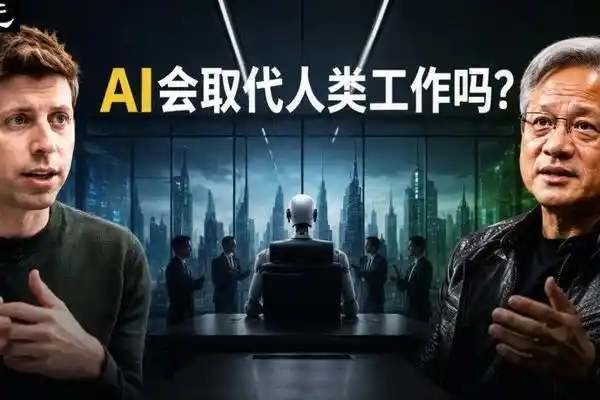
Sam Altman has revised his earlier predictions about AI rapidly replacing jobs, admitting he overestimated the speed at which AI would eliminate entry-level white-collar roles. Speaking on the "Invest Like the Best" podcast, he stated that people do not truly want an AI CEO, as accountability and human connection remain critical. He found that individuals prefer interacting with people who can be held responsible for decisions. Similarly, NVIDIA's Jensen Huang argued that the narrative of AI destroying jobs is misguided. He distinguishes between tasks and jobs, noting that while AI can automate specific tasks, entire jobs—encompassing communication, judgment, coordination, and accountability—are not eliminated. He cited examples like radiologists and software engineers, where demand for these roles has increased as AI handles repetitive tasks, allowing for business expansion and the creation of more positions. Data from a University of Maryland and LinkUp study supports this, showing that U.S. job postings for new graduates have actually risen, countering the fear of vanishing entry-level roles. However, a significant shift is occurring: the traditional entry-level tasks that help newcomers gain experience are being automated, making initial career access more challenging. The key insight is that as AI takes over standardized tasks, the enduring value of human work shifts toward areas of responsibility, trust-building, and final decision-making—aspects that AI cannot replicate. The real "moat" for professionals lies in these irreplaceable human elements.

marsbit17m ago

Altman Admits: Overestimated AI Snatching Jobs! Huang Renxun: The Unemployment Narrative Is Completely Backwards

marsbit17m ago

Weekly Editor's Picks (0725-0731)

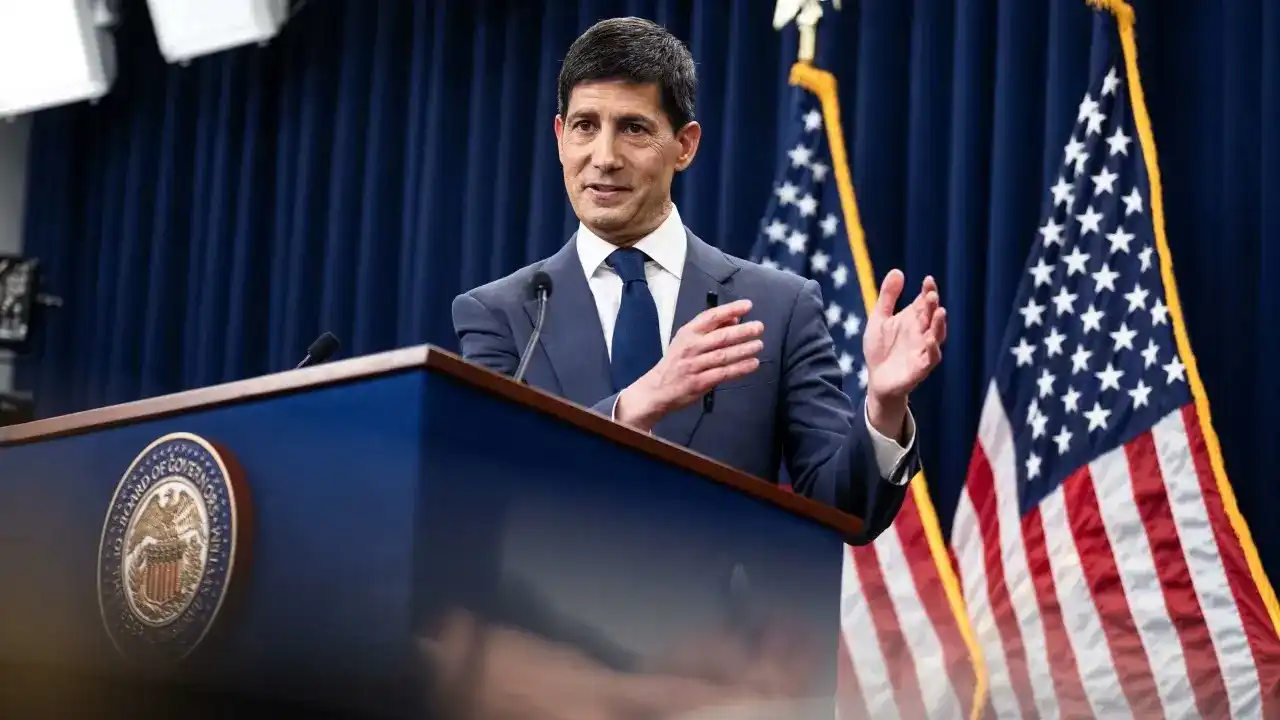
Weekly Editor's Picks (0725-0731) provides a curated selection of deep analysis, filtering out market noise. Key themes from this week include: **Macro & Policy:** The Federal Reserve's upcoming meeting is marked by high uncertainty, balancing cooling inflation data against persistent price pressures. Meanwhile, the U.S. crypto regulatory Clarity Act faces critical political hurdles, with its 2026 passage probability seen as low. **Investing & Crypto:** Analysis suggests long-term crypto success depends on conviction through volatile cycles, focusing on assets like Bitcoin and core smart contract platforms. A trend noted is the increasing similarity between global equity markets (especially tech) and crypto, driven by narrative and leverage. Several major crypto protocols show strong revenue growth, but this isn't always translating to token price appreciation due to sell pressure and structural factors. **AI & Semiconductors:** Nvidia's rising credit default swap rates signal market concern over AI infrastructure financing risks. The storage sector experienced volatility as markets began pricing in potential 2027 oversupply. Despite a record profitable quarter, SK Hynix's results were deemed "below expectations," reflecting heightened investor demands for future growth visibility. **Markets & DeFi:** TradeXYZ demonstrated remarkable accuracy in pre-market pricing for a major A股 listing. The token ONDO saw gains, linked to its growing role in the on-chain tokenized stock ecosystem. **Ethereum:** Post-Pectra upgrade, a major structural shift is underway as Lido begins migrating millions of ETH to new validator architectures designed for capital efficiency. **Also Highlighted:** Butian's bullish stock market move; OpenAI's Altman promising major advances; Samsung and SK Hynix securing large AI chip deals; Apple reaching a $5T market cap; and ongoing discussions around exchange security following Poolin's bankruptcy case.

marsbit51m ago

Weekly Editor's Picks (0725-0731)

marsbit51m ago

Low Investment Isn't Apple's Immunity Pass

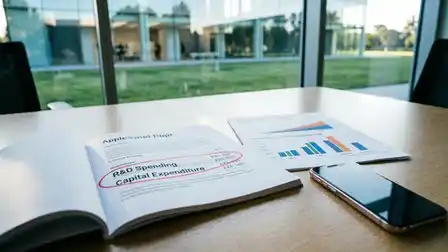
While Meta and Google face investor scrutiny over ballooning AI capital expenditures, Apple's minimal AI investment has paradoxically become a strength. Its market cap recently reclaimed the global top spot, surpassing $5 trillion. The irony is deep: Apple's own AI efforts have lagged, with "Apple Intelligence" delayed and core talent lost, forcing reliance on partners like Google Gemini and Alibaba's Qianwen. Its Q3 FY2026 (Q2 CY) earnings initially seemed stellar. Revenue hit $109.4B (up 16% YoY), with iPhone and Mac sales, growing 22% and 29% respectively, driving most of the growth. However, the stock fell over 8% post-earnings. The primary concern was a weaker Q4 revenue growth forecast of 9-11%, below expectations, due to looming supply chain constraints. Apple is feeling the indirect cost of the AI boom. Soaring memory and chip prices, fueled by massive data center investments from Microsoft, Amazon, and others, are forcing Apple to raise Mac and iPad prices significantly. The upcoming iPhone launch is also expected to see substantial price hikes. Despite avoiding heavy AI infrastructure spending—its capital expenditures are actually down 28%—Apple cannot escape the industry-wide supply and cost pressures. While Apple's operating cash flow remains robust, its substantial R&D spending (up 32% YoY) has yet to yield major AI breakthroughs. As Tim Cook prepares to step down as CEO, Apple faces a challenging transition: balancing its premium hardware success against the strategic and cost pressures of the AI era it has so far cautiously navigated.

marsbit1h ago

Low Investment Isn't Apple's Immunity Pass

marsbit1h ago

Trading

Spot
活动图片