A 10-Year-Old's Unintentional Act Yields a 700,000x Return After 30 Years: The Man Behind the ai.com Domain

marsbitPublished on 2026-02-11Last updated on 2026-02-11

Abstract

A 10-year-old Malaysian boy, Arsyan Ismail, registered the domain ai.com in 1993 for just $100 simply because "AI" were his initials. Thirty years later, that childhood act yielded an extraordinary return when he sold the domain for a staggering $70 million to Kris, the billionaire founder of Crypto.com. This sale represents a 700,000x return on the original investment, a gain that vastly outperforms traditional investments like the S&P 500 or Apple stock over the same period. The transaction highlights the immense value of premium domain names, particularly those that are short, memorable, and represent major technological trends. The domain ai.com is considered the "crown jewel" for the artificial intelligence sector due to its extreme brevity (only two letters), immense branding potential, and direct connection to the world's hottest tech field. The buyer, known for acquiring premium domains like Crypto.com, is speculated to have major plans in the AI space. This deal stands as a landmark in domain investment history, joining other high-profile sales like Voice.com ($30M) and NFT.com ($15M). It is a story of incredible foresight, three decades of patience, and the perfect alignment of a unique digital asset with a global technological revolution.

Author: Domain Circle

Recently, news of a sky-high domain name transaction has taken the world by storm—ai.com was sold for an astonishing $70 million, drawing intense attention from both the tech and investment communities.

What's shocking is not just the price itself, but the 30-year wait and the staggering 700,000-fold return behind this investment. Top global media outlets have been vying to cover this legendary domain name deal.

The Buyer's Identity: A Crypto Tycoon's Passion for "Premium Domains"

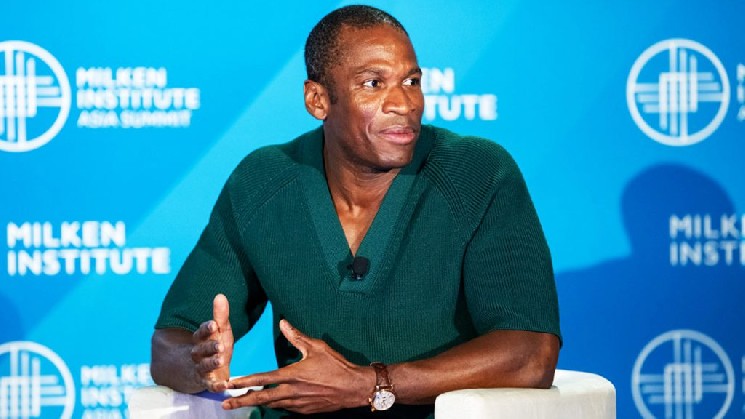
The buyer's identity has long been revealed—Kris, the founder of the globally renowned crypto trading platform Crypto.com. This deep-pocketed entrepreneur has always had a soft spot for premium domain names, having previously shelled out big money to acquire ultra-high-value domains like Crypto.com.

Now, at a time when artificial intelligence has become the focal point of global technology, Kris has struck again, securing the "crown jewel domain" of the AI field. This move not only showcases his business acumen but also hints at potential major developments for Crypto.com in the AI arena.
The Mysterious Seller Emerges: A Malaysian's 30-Year Patience

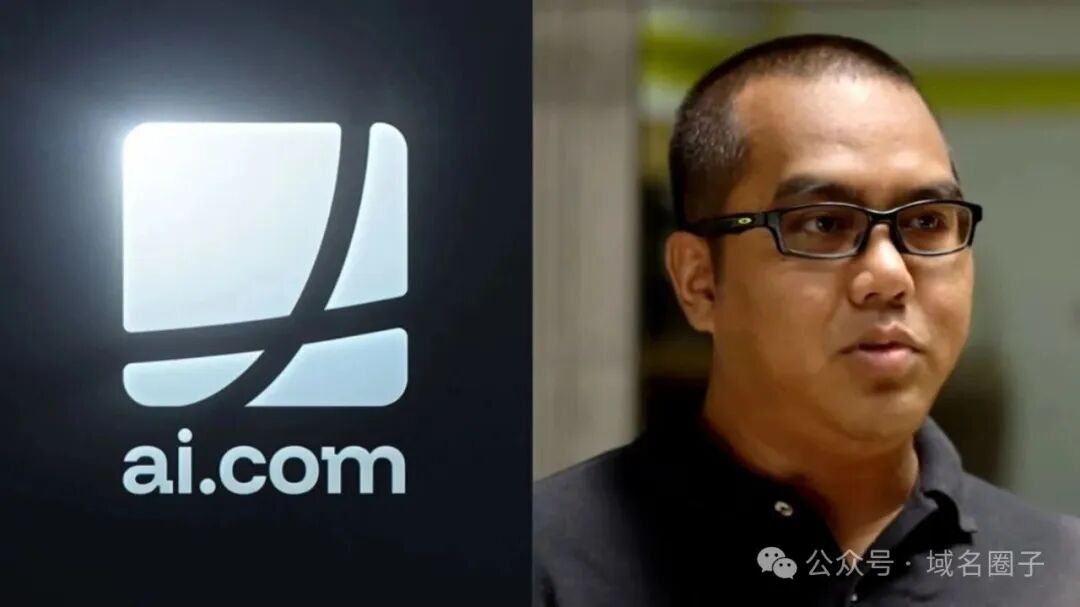
While the buyer's identity was public knowledge, the seller remained a mystery. Until recently, rumors from overseas finally unveiled this enigmatic figure.

According to reports, the seller is a Malaysian named Arsyan Ismail. Incredibly, he registered this domain in 1993 when he was just 10 years old, at a cost of only $100. His reason for buying it was simple and pure—"AI" happened to be his initials.

From a child's unintentional act to becoming a multimillionaire 30 years later, this story is itself filled with legendary色彩.

A 700,000x Return: A Miracle in Domain Investment History

From $100 to $70 million, this investment achieved a 700,000-fold return, with an annualized rate of return that is jaw-dropping.

Let's put this into perspective: if that $100 had been invested in the S&P 500 index, it would be worth about $2,000 today; if invested in Apple stock, it would be worth about $150,000 today. The return on ai.com far surpasses all these traditional investment channels.

Could this be the most successful single personal investment in history? In terms of return multiples, it is undoubtedly an insurmountable milestone in the field of domain name investment.

Why Is ai.com So Valuable?

1. Extremely Short: Only two letters, and a top-tier combination at that.

2. Significant Meaning: AI (Artificial Intelligence) is currently the hottest tech field globally.

3. Brand Potential: Such a domain can directly become a company brand, requiring no additional explanation.

4. Scarcity: There are only 676 two-letter .com domains in total, and they have long been snapped up.

In today's era, as the AI wave sweeps the globe, the value of ai.com is self-evident. It is not just a URL; it is a symbol of an era.

Domain Investment: An Underestimated Asset Class?

This transaction has once again sparked interest in domain name investment. Looking back at history, many high-priced domain transactions are impressive:

  • Voice.com: $30 million (2019)

  • 360.com: $17 million (2015)

  • NFT.com: $15 million (2022)

  • Meta.com: Allegedly in the tens of millions of dollars (2021)

Compared to many volatile investments, premium domain names offer scarcity, practicality, and brand value, making them a choice for some savvy long-term investors.

Epilogue: The Perfect Combination of Opportunity and Vision

Arsyan Ismail's story is thought-provoking: an unintentional act by a 10-year-old child, coupled with 30 years of patience, ultimately yielded an astonishing return. There's an element of luck involved, but more importantly, it reflects confidence and patience in the long-term value of digital assets.

And as the AI wave approaches, Kris's acquisition of this domain for $70 million同样 demonstrates his keen business sense. In this era of intense AI competition, a top-tier domain name could mean a huge advantage in brand recognition.

This transaction is destined to become a classic case in investment history—it tells not just a tale of wealth, but a story about vision, patience, and seizing the opportunities of the times.


Related Questions

QWho is the buyer of the ai.com domain for $70 million?

AThe buyer is Kris, the founder of the global cryptocurrency trading platform Crypto.com.

QHow much did the original owner pay for ai.com in 1993 and what was the return on investment?

AThe original owner, Arsyan Ismail from Malaysia, paid $100 for the domain in 1993, resulting in a 70,000-fold return on investment when it sold for $70 million.

QWhy is the ai.com domain considered so valuable?

AThe ai.com domain is valuable because it is extremely short (only two letters), represents the highly relevant field of artificial intelligence, has immense brand potential, and is highly scarce as one of only 676 two-letter .com domains.

QWhat makes the story of the ai.com sale particularly remarkable?

AThe story is remarkable because the original owner registered the domain at age 10 as an unintentional act using his initials, then held it for 30 years before it achieved an extraordinary return, far exceeding traditional investment options.

QHow does the return on ai.com compare to traditional investments like the S&P 500 or Apple stock?

AWhile $100 invested in the S&P 500 would be worth about $2,000 today, and in Apple stock about $150,000, the ai.com domain achieved a $70 million return, vastly outperforming these traditional investments.

Related Reads

Has the 'Digital Gold' Narrative for BTC Failed?

**Title: Has the "Digital Gold" Narrative for Bitcoin Failed?** The article argues that Bitcoin's "digital gold" narrative remains valid despite a recent sharp price decline (from a peak near $126k in Oct 2025 to briefly under $61k in Feb 2026). It presents a long-term investment framework based on three core points: **1. Viewing Bitcoin as an Asset:** Bitcoin is presented as a superior potential store of value compared to gold. Key arguments are its absolute scarcity (21 million cap), superior portability, and transparent auditability via its public ledger. While acknowledging its current use in early, volatile stages (~3-4% global adoption), the author draws parallels to the early, disruptive phases of the internet and e-commerce. **2. Understanding the Recent Downturn:** The current ~50% correction is framed as a predictable, consensus-driven cycle following its post-halving peak (the 2024 halving preceded the Oct 2025 high). A crucial factor is a historic "changing of hands": the influx of new institutional buyers via ETFs allowed early, low-cost holders (miners, OG believers) to take profits. The author notes that while severe, Bitcoin's historical drawdowns (e.g., 93% in 2011, 77% in 2021-22) have been progressively smaller, suggesting maturing holder structure and decreasing volatility over time. **3. The Long-Term Perspective:** The long-term thesis hinges on Bitcoin capturing a portion of gold's market value. With Bitcoin's market cap at ~$1.4 trillion (at $70k) versus gold's ~$20 trillion, significant upside potential exists if the "digital gold" narrative is partially realized. However, the author strongly cautions that short-term risks remain, the bottom is unpredictable, and high volatility is inherent. The real risk is not Bitcoin failing but poor personal position management (over-leverage, wrong capital) and a lack of deep understanding, which can force investors out during severe downturns. The conclusion uses Amazon's 95% crash post-2000 dot-com bubble and subsequent 42x recovery as an analogy. The ultimate question is not if Bitcoin's price will rise, but if an investor's strategy and conviction can withstand the volatility to see the long-term play out. The recent divergence (gold up, Bitcoin down) is posed not as a narrative failure, but as potential evidence of this ongoing, painful transition from a speculative asset to a mainstream allocation.

marsbit7h ago

Has the 'Digital Gold' Narrative for BTC Failed?

marsbit7h ago

Has BTC's 'Digital Gold' Narrative Failed?

The article discusses Bitcoin's "digital gold" narrative, its recent price drop, and long-term outlook through the perspective of "Jason". It argues the narrative is not a failure but that Bitcoin represents a superior, new asset class due to its fixed supply (21 million), portability, and auditability. The piece compares its current ~3-4% global adoption rate to early internet/e-commerce, suggesting significant growth potential. Regarding the 2025-2026 price decline (from ~$126k to briefly under $61k), the author views it as a predictable, consensus-driven sell-off within Bitcoin's ~4-year cycle post-halving, exacerbated by a major "handover" from early, low-cost holders to new institutional buyers via ETFs. A key observation is that historical peak-to-trough drawdowns have lessened over time (e.g., 93% in 2011 to ~50% in 2026), indicating maturing volatility as holder structure changes. For the long term, the author uses a simple framework: Bitcoin's total market cap (~$1.4T at $70k) is only about 7% of gold's (~$20T). Even capturing 30-50% of gold's value would imply substantial upside. However, the article strongly cautions against viewing this as investment advice, emphasizing extreme volatility and the critical importance of risk management, position sizing, and deep fundamental understanding to survive severe drawdowns. It concludes by drawing a parallel to Amazon's 95% crash in 2000 and subsequent 42x recovery, stressing that the key is surviving market cycles to realize long-term potential.

链捕手7h ago

Has BTC's 'Digital Gold' Narrative Failed?

链捕手7h ago

From Code to Cognition: A Ten-Thousand-Word Guide to the Evolution of the Robot Brain

"From Code to Cognition: The Evolution of Robot Brains" The journey of robotic intelligence has shifted dramatically from manually coded systems to AI-driven brains. For decades, robots relied on layered software stacks—perception, state estimation, planning, control—each handcrafted. While predictable, they lacked adaptability. The 2010s saw deep learning revolutionize perception (e.g., object detection) and control (via reinforcement learning), but learned skills remained narrow. The arrival of Large Language Models (LLMs) marked a turning point. LLMs acted as high-level planners, interpreting natural language instructions and generating sequences of actions for traditional robotic systems to execute. However, true integration came with Visual-Language-Action (VLA) models, which fused vision, language, and motion prediction into a single network. Pioneered by models like RT-2 and open-source projects like OpenVLA, VLAs enable robots to reason and act directly from visual input and commands. The most advanced humanoid robots now employ a "dual-brain" architecture: a slow-thinking, large VLA (System 2) for reasoning and planning, and a fast-reacting, small network (System 1) for high-frequency motion control, sometimes with an even lower-level System 0 for balance. This split balances cognition with the physics of real-time movement. Computation is split between onboard hardware (e.g., NVIDIA Jetson) for safety-critical control loops and cloud/edge servers for non-critical tasks like learning and interfaces. A crucial driver is the open-source ecosystem—models like GR00T and OpenVLA allow startups to build upon pre-trained brains and fine-tune them with their own data, accelerating development. Despite progress, current systems struggle with recovery from errors, sample inefficiency, and long-horizon tasks. This has spurred the rise of **World Models**—neural networks that predict the consequences of actions. By simulating possible futures before acting (like NVIDIA Cosmos or Meta V-JEPA), robots can plan, recover, and generalize better. This represents the next frontier: shifting intelligence from learned reactions to an internal model of physics and cause-and-effect. The field is rapidly evolving. While not yet at its "ChatGPT moment," the convergence of cheaper hardware, scalable simulation, and world models points toward robots that are increasingly capable, adaptive, and useful. The question is shifting from "what can robots do?" to "what *should* they do?"

marsbit7h ago

From Code to Cognition: A Ten-Thousand-Word Guide to the Evolution of the Robot Brain

marsbit7h ago

Trading

Spot
Futures

Hot Articles

How to Buy T

Welcome to HTX.com! We've made purchasing Threshold Network Token (T) simple and convenient. Follow our step-by-step guide to embark on your crypto journey.Step 1: Create Your HTX AccountUse your email or phone number to sign up for a free account on HTX. Experience a hassle-free registration journey and unlock all features.Get My AccountStep 2: Go to Buy Crypto and Choose Your Payment MethodCredit/Debit Card: Use your Visa or Mastercard to buy Threshold Network Token (T) instantly.Balance: Use funds from your HTX account balance to trade seamlessly.Third Parties: We've added popular payment methods such as Google Pay and Apple Pay to enhance convenience.P2P: Trade directly with other users on HTX.Over-the-Counter (OTC): We offer tailor-made services and competitive exchange rates for traders.Step 3: Store Your Threshold Network Token (T)After purchasing your Threshold Network Token (T), store it in your HTX account. Alternatively, you can send it elsewhere via blockchain transfer or use it to trade other cryptocurrencies.Step 4: Trade Threshold Network Token (T)Easily trade Threshold Network Token (T) on HTX's spot market. Simply access your account, select your trading pair, execute your trades, and monitor in real-time. We offer a user-friendly experience for both beginners and seasoned traders.

11.9k Total ViewsPublished 2024.03.29Updated 2026.06.02

How to Buy T

Discussions

Welcome to the HTX Community. Here, you can stay informed about the latest platform developments and gain access to professional market insights. Users' opinions on the price of T (T) are presented below.

活动图片