Google Officially Declares War

链捕手Опубліковано о 2026-05-21Востаннє оновлено о 2026-05-21

Анотація

Google Declares War with AI-First I/O 2026 At its 2026 I/O developer conference, Google launched an aggressive, multi-pronged offensive, embedding AI across its ecosystem and challenging rivals on performance and price. The event showcased three major releases: Gemini 3.5 Flash, the video-centric Gemini Omni Flash, and the system-level AI assistant Spark. Gemini 3.5 Flash, despite being a smaller "Flash" model, outperforms its Pro counterpart in key benchmarks like mathematical reasoning (GSM8K) and coding (SWE-bench). Google attributes this to "extreme knowledge distillation" from a larger teacher model and a novel, highly granular MoE (Mixture of Experts) architecture with 256 experts, achieving sub-65ms response times. The native multi-modal model, Gemini Omni Flash, offers real-time video understanding with 120ms latency, enabling applications like preventing a cup from overfilling. The new Spark assistant gains deep Android system integration, allowing it to automate complex multi-app workflows based on voice commands. Complementing these, Google unveiled lightweight AI glasses featuring Micro-OLED displays and on-device Gemini chips for instant, offline translation and scene analysis. CEO Sundar Pichai announced Gemini has reached 900 million monthly active users, leveraged through integration into Chrome, Android, and Workspace. Google also slashed prices dramatically: the Gemini 3.5 Flash API is priced at a fraction of competitor rates. This price war is enabled ...

The 2026 Google I/O developer conference left only one impression: arrogance.

Not only did they cram AI agents seamlessly into all core traffic portals like search, browsers, phones, and smart glasses like force-feeding a duck, but they also threw out three killer bombs in a row: Gemini 3.5 Flash, the video model Omni, and the brand-new AI assistant Spark.

After flexing its muscles, Sundar Pichai even boasted by announcing that Gemini's monthly active users had surpassed 900 million, and simultaneously announced a significant price reduction.

The message couldn't be clearer:I'm stronger and cheaper than you.

If that's not a declaration of war, what is?
01

Undoubtedly, the most dazzling highlight of the conference was the debut of Gemini 3.5 Flash.

Normally, "Pro" represents the core strength, while "Flash" represents lightweight and speed.

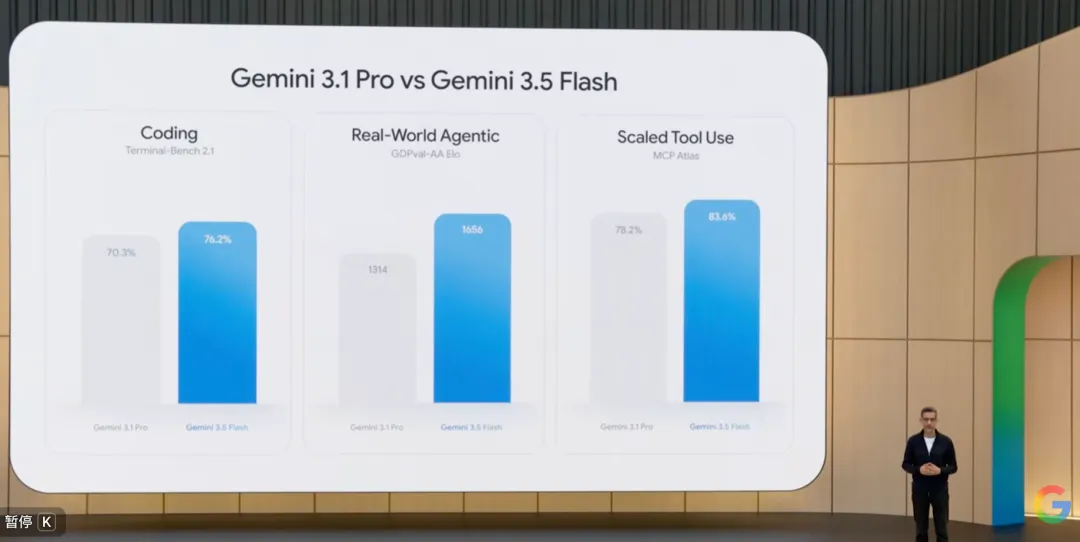
In terms of model parameters, 3.5 Flash is indeed smaller than 3.1 Pro, yet its performance surpassed the latter in almost all reasoning and coding benchmarks:

In the GSM8K test for complex mathematical reasoning, 3.5 Flash scored 95.8%, surpassing 3.1 Pro's 93.2%; in the full version of the SWE-bench for code generation capability, 3.5 Flash achieved a solve rate of 38.4%, far exceeding 3.1 Pro's 32.1%......

Why?
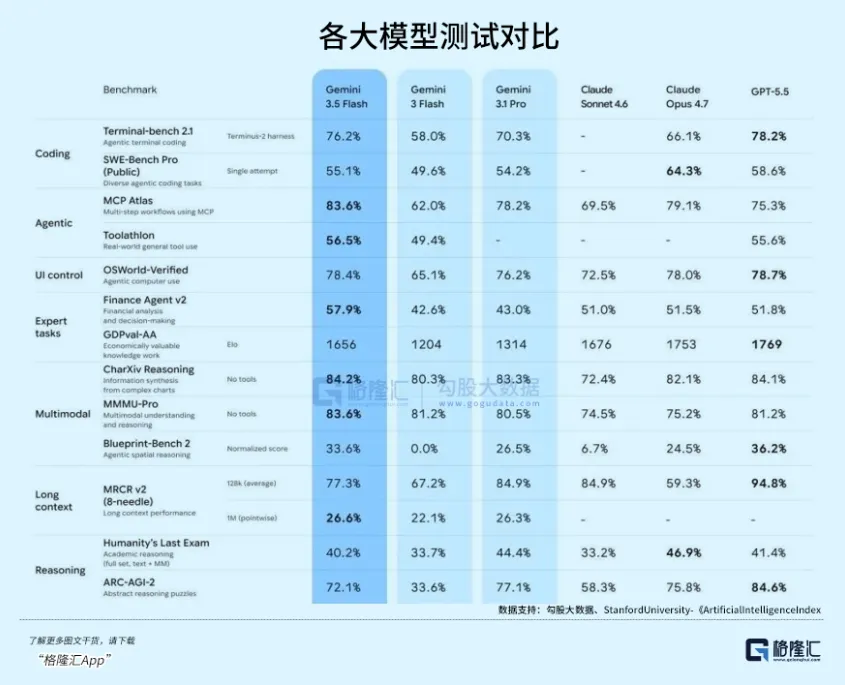
According to the "Gemini 3.5 Technical Report" released by DeepMind, there are two key core technologies.

Extreme Knowledge Distillation: Google did not simply rely on brute-force compute to train Flash this time. Instead, it used a never-before-disclosed "Gemini 3.5 Ultra" as a teacher model for dimensional reduction distillation of Flash.

According to a tweet analysis by Jeff Dean, Chief Scientist at DeepMind, the proportion of fine-tuning on high-quality reasoning chain datasets for 3.5 Flash increased by 400% compared to the previous generation.

This means it inherited the "logical brain" of a super-large model, rather than a memorized "knowledge base."

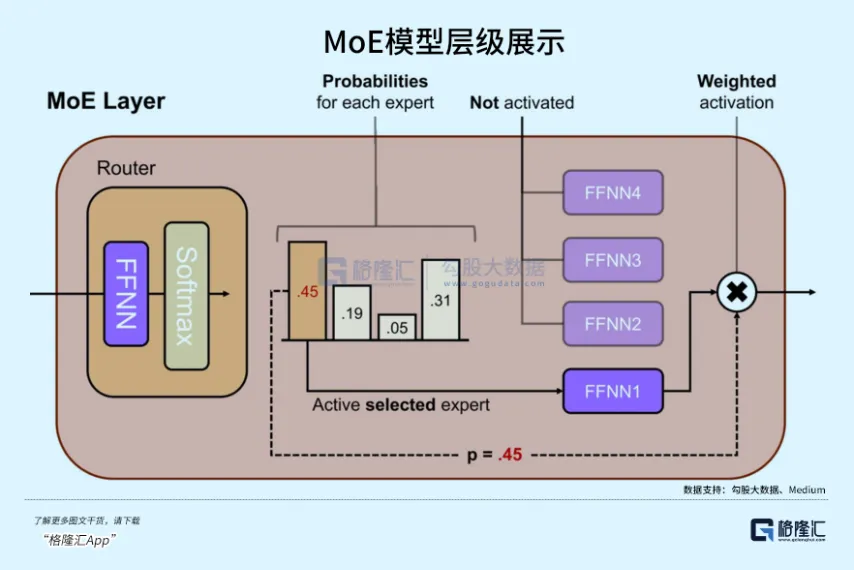
A Novel MoE Architecture (Mixture of Experts): Inside 3.5 Flash, Google employed more fine-grained expert networks.

Traditional MoE might only have 8 or 16 experts, activating only 1-2 per task, sufficient for supporting trillion-parameter scale models.

However, according to an analysis from a16z's 2026 AI Infrastructure Investment Memo, 3.5 Flash employs 256 micro-experts, activating the most efficient 4 of them during each inference.

This is why it can cover an extremely vast multimodal feature space while maintaining an extremely low number of activated parameters.

In the TTFT (Time to First Token) metric, 3.5 Flash has reached below 65 milliseconds.

A human blink takes 100-150 milliseconds.

In short, when it operates as an agent, from a human physiological perspective, there is virtually no perceptible delay.

For developers requiring frequent tool calls, multi-round reflection, and extremely low latency, this is the perfect super-agent foundation.

Only with such extreme engineering optimization can "device-side deployment" dominance be established in a fiercely competitive environment.
First, the native multimodal Gemini Omni Flash.

Omni means all-around, targeting the earlier GPT-4o. Just from the name, you can feel the intensity of the rivalry.

At least in terms of performance, Gemini Omni Flash is far more deserving of the "o" character than GPT-4o.

Early models like Sora or Gemini 1.5 were essentially patchwork, converting speech to text and then text to vision.

But this released Omni features true native end-to-end multimodal alignment. It natively understands temporal coherence and physical laws within videos, and latency dropped from the industry average of 400-600 milliseconds to 120 milliseconds.

An example from the keynote: a user wearing a camera pours water; as the cup nearly fills, Omni can say "Stop stop stop!" 0.5 seconds before the water overflows.

This kind of real-time inference about the physical state of the real world seems simple but is profoundly significant:AI has officially evolved from a chatbot on a screen into a real-world auxiliary tool.

Although still in its early stages.

Second, the intelligent assistant Spark.

According to a The Verge interview with an Android engineering VP, Spark has been granted native API control at the system layer of Android 17.

In short, the complex workflows that previously required you to open many apps can now be handled without lifting a finger. Just tell Spark what you need, and it can handle everything for you—even sending messages in your tone, sorting emails, summarizing schedules, tracking webpage updates, identifying hidden charges on bills, batch-processing documents, and so on......

In other words, with an AI assistant in the future, we might hardly need apps anymore; any complex operation is simplified into a single command.

Third, smart glasses.

Why glasses again?

At least in Google's view, seamless access to vision and hearing is the ultimate host for multimodal large models.

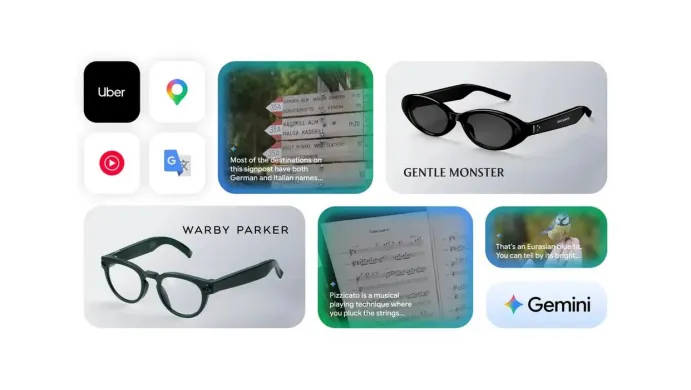
These glasses appear without any fancy aesthetics, focusing entirely on utility:

4-gram Micro-OLED full-color waveguide lenses with a light transmittance as high as 85%;

Equipped with a self-developed lightweight Gemini edge-side chip, local inference latency ≤12ms, capable of real-time translation, image recognition, and scene analysis without an internet connection;

Natively integrated with the Spark agent, syncing with phone and cloud data to deliver personalized services like schedule reminders, real-time translation, and environmental alerts.

In short, it's about bypassing the phone screen and embedding the agent into the human first-person perspective through glasses.
There's simply too much content. Google seems to have dumped all its trump cards at once, proclaiming a truth to the market:

An algorithm without an entry point is nothing.

The era of chasing model parameters and benchmark scores is over. Pure model providers no longer have a moat. The future is a four-dimensional space battle of "device + cloud + ecosystem + hardware."

Cramming AI into its suite is reshaping the entire internet's traffic distribution logic: from "users actively search/click" to "AI agents actively distributing services."

For the vast majority of developers and small-to-medium enterprises, this is excellent news because the underlying compute and models become extremely cheap, allowing everyone to focus on application-layer innovation.

But other competitors right now probably just want to curse out loud.

02

When Sundar Pichai casually announced on stage that "Gemini's monthly active users have officially surpassed 900 million," it caused quite a stir in the audience.

900 million—more than all the MAUs of its US competitors combined.

How was this achieved?

The answer is simple and brutal: Forced integration.

Google doesn't need to spend on advertising for user acquisition like independent AI companies. It just needs to add an icon next to Chrome's address bar, integrate a shortcut in the bottom navigation bar of 3 billion Android phones, push a full update within Google Workspace......

The customer acquisition cost is basically zero.

More crucially, in the coming period, the gaze of 900 million active users as they look at products with smart glasses, the logical adjustments made when using Spark to handle tasks, and the interactions with the Omni visual model will generate a massive amount of high-quality, multimodal real-world feedback data, all of which will become nourishment for Gemini 4.

This forms an extremely robust barrier:The better the model -> the more people use it -> the more data generated -> the better the model becomes.

To rapidly strengthen this loop, Google directly declared a price war on all competitors: The AI Ultra subscription was slashed from $249.99/month to $99.9/month.

The input price for 1 million tokens for 3.5 Flash was driven down to $0.02, and the output price for 1 million tokens is $0.08.

What kind of magical price is this?

For comparison, the industry average prices for similar-tier models are $0.15-0.2 and $0.6-1, respectively.

Sundar Pichai calculated: top customers process about 1 trillion tokens per day. Shifting 80% of the workload to Gemini 3.5 Flash for a year can save over $1 billion.

Why dare to sell AI at cabbage prices?

The biggest reliance is: vertically integrated computing infrastructure.

Including giants like OpenAI, Anthropic, despite their apparent success, are essentially "compute tenants," needing to buy computing power from Microsoft, Amazon, who in turn pay Jensen Huang (Nvidia).

Google has its own TPUs, coupled with the incredibly efficient sparse activation of 3.5 Flash's MoE architecture, compressing compute costs to the extreme.

It can leverage its heavy-asset advantage to deliver a dimensional blow to pure algorithm companies.
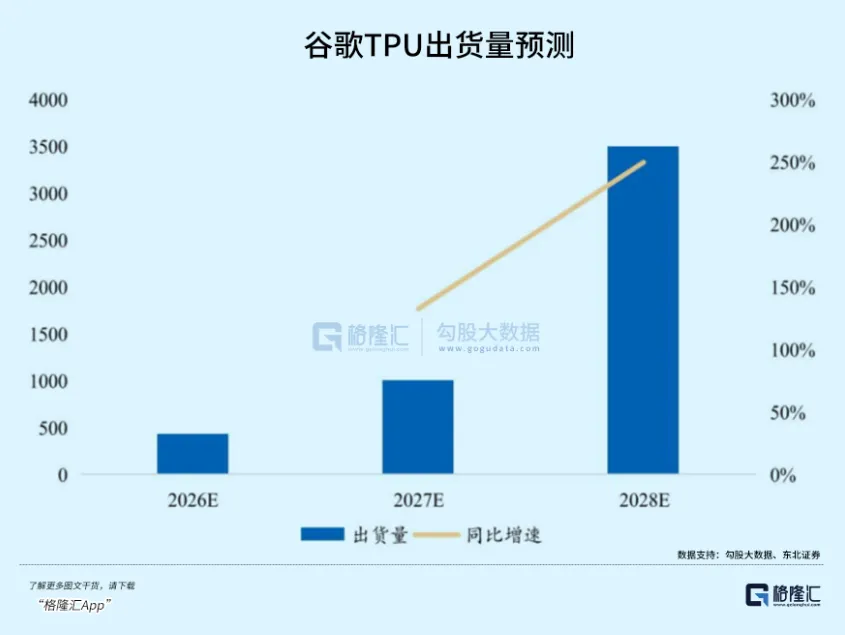
The logic is clear.

Foundation models are rapidly becoming commoditized. Like water and electricity, have you ever seen a water utility company making obscene profits?

Google isn't afraid of the model itself not being profitable, because it can make money back through search ads, cloud services, and fees from the Android ecosystem.

But for pure model API sellers like OpenAI, Anthropic, Cohere, Mistral, this is not feasible.

Investors probably want to press Sam Altman's head and ask:"Google's API price is only one-tenth of yours, and its performance is better. Tell me, how does your business model work?"

Competitive landscapes across multiple industries will thus enter an accelerated reshuffling period.

AI vendors, needless to say, must quickly find cheaper compute sources or venture into chipmaking themselves.

Next is Apple, still developing behind closed doors.

The combination of smart glasses + the Omni video model + Spark's native system-level control undoubtedly already threatens the iPhone.

According to Macquarie's "Consumer Electronics Trend Forecast Report": Within the next three years, the proportion of time spent on screenless interaction based on vision/voice is expected to jump from the current 8% to 35%.

If users get accustomed to using glasses and voice for daily work and entertainment, screen time will inevitably be significantly reduced.

If Apple cannot counter with sufficiently impressive wearable devices (Vision Pro is too heavy and expensive, destined to be a toy for a minority), its monopoly on mobile internet entry points will face an unprecedented challenge.
This is not an iteration; it's a revolution.

Google, with its three blades—technology, traffic, and price—has issued a declaration of war to all its rivals.

Is there anyone still laughing at its corporate bureaucracy now?

Пов'язані питання

QWhat are the core technological advancements behind Gemini 3.5 Flash that allow it to outperform Pro models despite being smaller?

AGemini 3.5 Flash leverages two key technologies: 1) Extreme Knowledge Distillation: It uses a powerful, undisclosed 'Gemini 3.5 Ultra' model as a teacher to distill high-quality logical reasoning capabilities, with a 400% increase in fine-tuning on high-quality logic-chain data. 2) A novel fine-grained MoE (Mixture of Experts) architecture with 256 experts, activating only the most efficient 4 per task, allowing it to cover a vast multimodal feature space while maintaining low activation parameters.

QHow does Google's new AI strategy, as presented at I/O 2026, fundamentally shift the competitive landscape for AI companies like OpenAI?

AGoogle's strategy moves beyond pure model competition into a 'Device + Cloud + Ecosystem + Hardware' four-dimensional war. By deeply integrating AI (like Spark) into its massive user base via Chrome, Android, and Workspace, it achieves near-zero user acquisition costs and massive data collection. This, combined with aggressive price cuts on APIs enabled by its vertically integrated TPU infrastructure, challenges pure-play AI API companies. Their business model is threatened as Google can offer superior performance at a fraction of the cost and subsidize its AI through other revenue streams like ads.

QWhat are the three major product announcements from Google I/O 2026 that signify a direct challenge to competitors?

AThe three major announcements are: 1) Gemini Omni Flash: A native end-to-end multimodal video model with significantly reduced latency (120ms) capable of real-time physical world inference. 2) Spark: A native AI assistant built into Android 17 with deep system-level API access to automate complex app workflows. 3) AI Smart Glasses: A lightweight, locally-capable device integrating Micro-OLED displays and Gemini for seamless, screen-less, first-person AI interaction.

QAccording to the article, what is the significant implication of Gemini's monthly active users reaching 9 billion?

AReaching 9 billion MAUs (more than all US competitors combined) creates a powerful and difficult-to-break flywheel effect: A better model attracts more users, which generates more high-quality, multimodal real-world interaction data, which in turn is used to train even better models. This massive user base and the data it generates form a significant competitive moat for Google.

QWhy is the launch of Google's AI smart glasses considered a potential threat to Apple's iPhone?

AThe smart glasses represent a move towards screen-less, voice/vision-based interaction. Industry reports predict such interactions could rise from 8% to 35% of total usage time in three years. If users adopt glasses and AI assistants like Spark for daily tasks, screen time on devices like the iPhone would be significantly compressed. This challenges Apple's core mobile interface dominance unless it can counter with compelling wearable devices of its own.

Пов'язані матеріали

Who Defines AI Hardware in 2026?

"Who is Defining AI Hardware in 2026?" This article discusses a pivotal shift in the AI hardware industry in 2026, moving from conceptual demonstrations to widespread, cloud-integrated adoption. Key developments include the release of a national standard (the "Artificial Intelligence Terminal Intelligence Grading") by Chinese authorities, which classifies device intelligence from L1 to L4 based on capabilities like perception and cognition. Most current products are at L1 or L2, with L3 representing a significant leap requiring complex intent understanding and proactive service. Simultaneously, tech giants like Alibaba Cloud are accelerating this transition. At its summit, Alibaba Cloud showcased AI hardware applications and launched initiatives like the "Qianwen Smart Hardware X Tmall Cooperation Plan," offering technical support, traffic, and marketing resources. Its powerful Qwen model series, including the newly released Qwen3.7-Max, provides the essential cloud-based "brain" for advanced hardware, enabling sophisticated multimodal interactions and agent-like capabilities. The industry consensus is that "end-cloud collaboration" is now essential. Examples like the Ecovacs "Bajie"管家 robot and Yyanjiwei's "Shen Mou" cameras demonstrate this model: simple tasks and sensing happen on the device, while complex reasoning and memory are handled in the cloud. This approach lowers development barriers and directly boosts commercial metrics like user engagement and conversion rates. Looking ahead, the market's future lies in L4 "collaborative" intelligence, where multiple devices form a seamless, personalized ecosystem around the user. This shift will transform business models from one-time hardware sales to ongoing service subscriptions. The article concludes that national standards provide the destination, end-cloud collaboration offers the path, and cloud providers' standardized capabilities are making that path more accessible for widespread AI hardware adoption.

marsbit7 хв тому

Who Defines AI Hardware in 2026?

marsbit7 хв тому

21Shares Report: HYPE's P/S Ratio Only Half That of CME, Bull Market Target Price $70

21Shares Research Report: HYPE's P/S Ratio Half of CME's, Bullish Target $70 A recent report from 21Shares highlights Hyperliquid's evolution from a crypto derivatives DEX into a 24/7 "everything exchange" for perpetual contracts across various asset classes. The platform gained prominence during a February geopolitical incident when it provided real-time price discovery for WTI crude oil while traditional markets like CME were closed. Non-digital assets now account for approximately 35% of its volume, with traditional commodities and indices featuring among its top-traded assets. Hyperliquid's business model is rapidly diversifying, significantly reducing its dependence on crypto market cycles. Its cumulative trading volume and revenue are approaching levels comparable to CME Group's crypto derivatives segment. A key feature is its Assistance Fund, which directs 97%-99% of protocol fees to automated HYPE token buybacks, creating a deflationary mechanism with an implied buyback yield significantly higher than CME's traditional share repurchase program. Despite strong fundamentals, HYPE currently trades at a Price-to-Revenue (P/R) ratio of ~10x, roughly half of CME's ~17x. The report outlines valuation scenarios: a bullish case targets $62-$70 based on annualized revenue reaching $12-$15B and applying CME's P/R multiple. A bear case considers $15-$19 if growth slows. Key risks include platform centralization during crises, regulatory uncertainty for on-chain commodities, dependence on geopolitical volatility for non-crypto volume, and the need for sustained high trading volume to offset token unlocks. The analysis concludes that HYPE is increasingly being valued as a legitimate exchange business rather than a speculative crypto asset.

marsbit9 хв тому

21Shares Report: HYPE's P/S Ratio Only Half That of CME, Bull Market Target Price $70

marsbit9 хв тому

Financial Changes under the New SEC Rules: Opportunities and Regulatory Red Lines Behind "Tokenized Stocks"

The article discusses the emergence of "Tokenized Stocks" following the U.S. SEC's proposed "innovation exemption" framework, which could allow some assets to be traded on blockchain. It clarifies key misconceptions for investors, particularly those in China. Firstly, it emphasizes that most "tokenized stocks" currently offered by third-party crypto platforms are synthetic assets, not actual equity. Purchasers do not gain shareholder rights like dividends or voting; instead, they hold a derivative contract dependent on the issuing platform's credit and its ability to track the underlying stock's price. The article examines the risks of 24/7 trading, a major selling point. It notes the absence of circuit breakers, which could lead to sudden, unrecoverable losses during off-hours market shocks. It also warns of liquidity traps and high volatility due to the market's currently small size. It reveals that the primary drivers are institutional players like BlackRock and JPMorgan, who are focused on using blockchain for efficiency gains in areas like treasury settlements (T+0), not retail speculation. For Chinese readers, it strongly cautions that platforms offering "easy" access to U.S. stocks via tokens with RMB likely violate strict domestic regulations on cross-border securities and virtual currencies, offering no legal protection. The conclusion offers practical advice: use legal channels like QDII for long-term investment, be wary of high-return promises, monitor evolving regulations like the U.S. CLARITY Act, and prioritize compliance and risk management over chasing innovation. The SEC's move is framed as a strategic experiment in financial tech leadership, but for individual investors, understanding the risks and regulatory boundaries is paramount.

链捕手23 хв тому

Financial Changes under the New SEC Rules: Opportunities and Regulatory Red Lines Behind "Tokenized Stocks"

链捕手23 хв тому

Trump Halts AI Executive Order, Regulatory Efforts Succumb to Competitive Anxiety

In a last-minute reversal, former President Donald Trump halted the signing of a long-anticipated executive order on artificial intelligence. The order had sought to establish a voluntary, pre-release safety testing framework for advanced AI models developed by leading companies like OpenAI, Google, Anthropic, and xAI. Under the proposed plan, companies would have shared their most powerful models with the U.S. government 90 days before public release for national security and cybersecurity risk assessments. Trump refused to approve the order, stating he did not want anything to "slow down our leadership," emphasizing America's lead over China in AI and the technology's role in job creation. This decision highlights the core tension in U.S. AI policy: balancing the management of systemic risks posed by frontier models—such as exposing financial system vulnerabilities—against fears that any regulation could stifle innovation and undermine competitive advantage. The move came despite significant public support for AI safety testing and followed internal administration debates. Some officials, alarmed by the capabilities of models like Anthropic's Mythos in uncovering critical security flaws, had advocated for stronger oversight. However, the industry and many within Trump's circle opposed even this voluntary framework, arguing it would hamper American innovation. The incident underscores how AI policy is increasingly intersecting with national security, economic strategy, and political governance.

marsbit55 хв тому

Trump Halts AI Executive Order, Regulatory Efforts Succumb to Competitive Anxiety

marsbit55 хв тому

Торгівля

Спот
Ф'ючерси

Популярні статті

Як купити WAR

Ласкаво просимо до HTX.com! Ми зробили покупку WAR (WAR) простою та зручною. Дотримуйтесь нашої покрокової інструкції, щоб розпочати свою криптовалютну подорож.Крок 1: Створіть обліковий запис на HTXВикористовуйте свою електронну пошту або номер телефону, щоб зареєструвати обліковий запис на HTX безплатно. Пройдіть безпроблемну реєстрацію й отримайте доступ до всіх функцій.ЗареєструватисьКрок 2: Перейдіть до розділу Купити крипту і виберіть спосіб оплатиКредитна/дебетова картка: використовуйте вашу картку Visa або Mastercard, щоб миттєво купити WAR (WAR).Баланс: використовуйте кошти з балансу вашого рахунку HTX для безперешкодної торгівлі.Треті особи: ми додали популярні способи оплати, такі як Google Pay та Apple Pay, щоб підвищити зручність.P2P: Торгуйте безпосередньо з іншими користувачами на HTX.Позабіржова торгівля (OTC): ми пропонуємо індивідуальні послуги та конкурентні обмінні курси для трейдерів.Крок 3: Зберігайте свої WAR (WAR)Після придбання WAR (WAR) збережіть його у своєму обліковому записі на HTX. Крім того, ви можете відправити його в інше місце за допомогою блокчейн-переказу або використовувати його для торгівлі іншими криптовалютами.Крок 4: Торгівля WAR (WAR)Легко торгуйте WAR (WAR) на спотовому ринку HTX. Просто увійдіть до свого облікового запису, виберіть торгову пару, укладайте угоди та спостерігайте за ними в режимі реального часу. Ми пропонуємо зручний досвід як для початківців, так і для досвідчених трейдерів.

202 переглядів усьогоОпубліковано 2024.12.11Оновлено 2026.04.28

Як купити WAR

Обговорення

Ласкаво просимо до спільноти HTX. Тут ви можете бути в курсі останніх подій розвитку платформи та отримати доступ до професійної ринкової інформації. Нижче представлені думки користувачів щодо ціни WAR (WAR).

活动图片