Do Robots Also Need Encrypted Wallets? Stablecoin Giant Tether Bets on German Company NEURA Robotics

marsbitPublicado a 2026-06-16Actualizado a 2026-06-16

Resumen

Do Robots Need Crypto Wallets? Stablecoin Giant Tether Bets on German Firm NEURA Robotics German robotics company NEURA Robotics has secured up to $1.4 billion in what is claimed to be the largest-ever funding round in the full-stack robotics industry, valuing the company at $7 billion. The Series C round attracted major investors like Tether, Qualcomm, Amazon, NVIDIA, Bosch, and the European Investment Bank. NEURA, founded in 2019, initially focused on AI-powered collaborative robots (cobots) for industrial automation, later expanding to autonomous mobile robots, service robots, and humanoid robots. Its core strategy is evolving from a hardware manufacturer to the operator of "Neuraverse," a platform designed to enable different robots to share learned experiences and data, creating network effects. A key, crypto-focused aspect of this investment is Tether's involvement. Tether plans to integrate its open-source Wallet Development Kit (WDK) into NEURA's robot platforms. This would embed self-custody wallet functionality, allowing robots to autonomously handle payments and settlements for tasks under pre-set rules—envisioning use cases in logistics or Robotics-as-a-Service (RaaS) models. This move could position stablecoins and crypto wallets as potential "machine payment infrastructure." Additionally, the partnership will see Tether's QVAC (QuantumVerse Automatic Computer) edge-AI framework tested and deployed within Neuraverse. This aims to enable low-latency, offline-c...

Author: Zen, PANews

Over the past few years, discussions around humanoid robots and embodied intelligence have shifted focus toward whether robots can create actual value. From factory handling, warehouse sorting to collaborative service scenarios, robots are increasingly entering real-world environments.

Compared to locomotion capabilities themselves, the industry is more concerned with when robots can be deployed at scale and consistently handle jobs in the real world. And if robots truly start undertaking real-world labor, will they also need their own payment and settlement capabilities? After German robotics company NEURA Robotics completed its latest funding round, this question has been pushed to the forefront again.

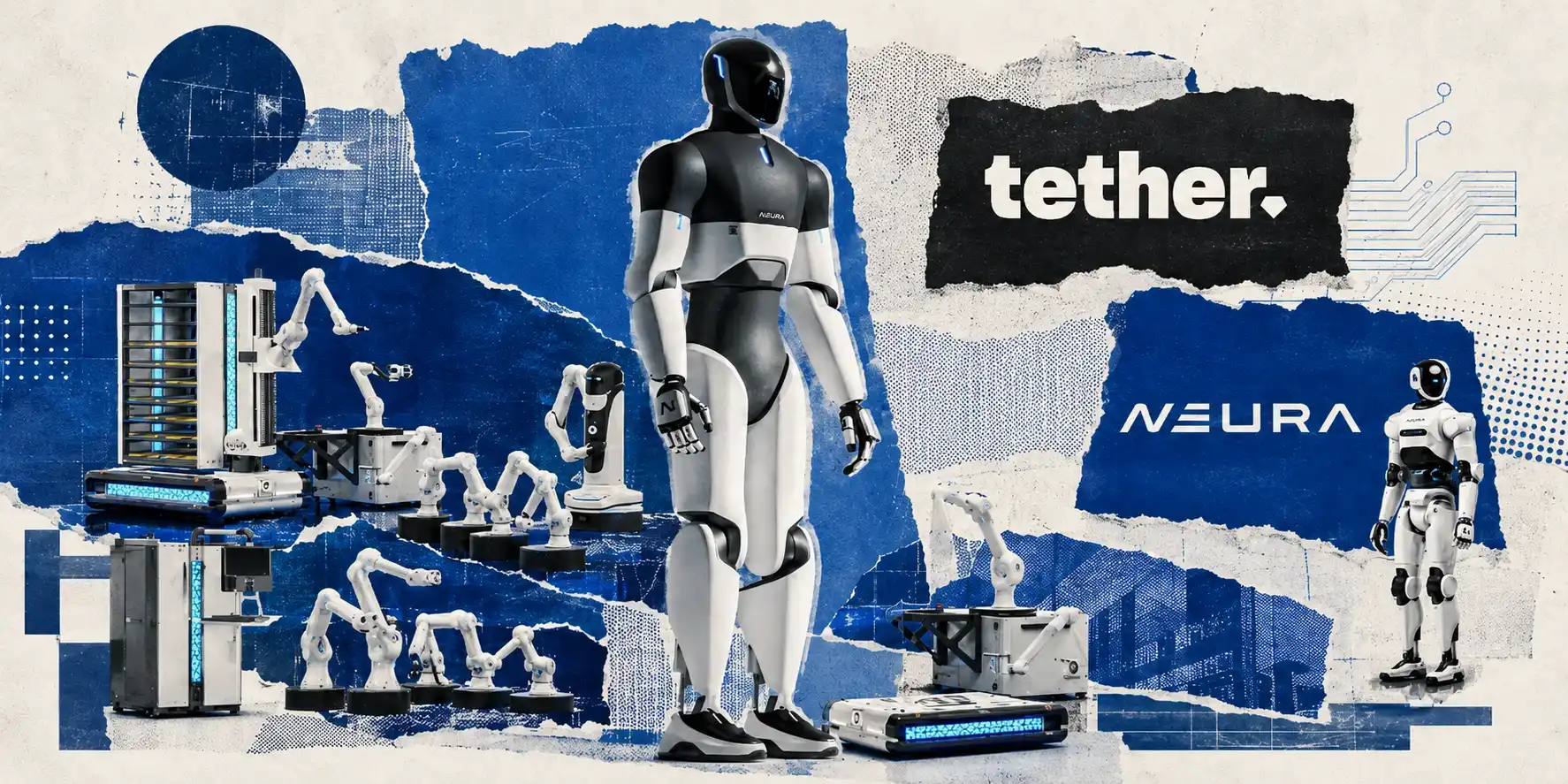
On June 10th, NEURA Robotics announced the completion of a Series C funding round of up to $14 billion, with Tether participating as a major investor. Other investors include Qualcomm Technologies, Amazon, NVIDIA, Bosch, Schaeffler, the European Investment Bank, and others.

Just looking at this financing, touted as the "largest in the history" of the full-stack robotics industry, is enough to make NEURA one of the most watched robotics companies in Europe and globally. However, a point easily overlooked in this round of funding, yet actually worth noting, is that Tether is also attempting to embed self-custody wallets, stablecoin payments, and edge AI into robot systems.

The "Largest" Funding Round in German Corporate History

NEURA Robotics was founded in 2019 and is headquartered in Baden-Württemberg, Germany. Looking at its development path, the company did not initially enter the market with humanoid robots, but rather gradually expanded along the industrial automation route most familiar to European manufacturing, then continuously layered AI capabilities onto the robot system.

According to reports by the German business media Handelsblatt, NEURA completed the largest funding round for a German company to date, bringing its valuation to $7 billion. For comparison, Unitree's IPO valuation was around 42 billion RMB, making their current valuations roughly equivalent.

When founding NEURA, founder David Reger believed that although traditional industrial robots were already widely used in manufacturing, they were essentially "blind" machines. They could repeat preset actions but lacked the ability to understand their environment and safely collaborate with humans. Therefore, NEURA did not directly chase the humanoid robot concept early on but first launched collaborative robot (Cobot) products, hoping to give robots the ability to perceive their surroundings and autonomously respond to changes through vision, sensor fusion, and AI software.
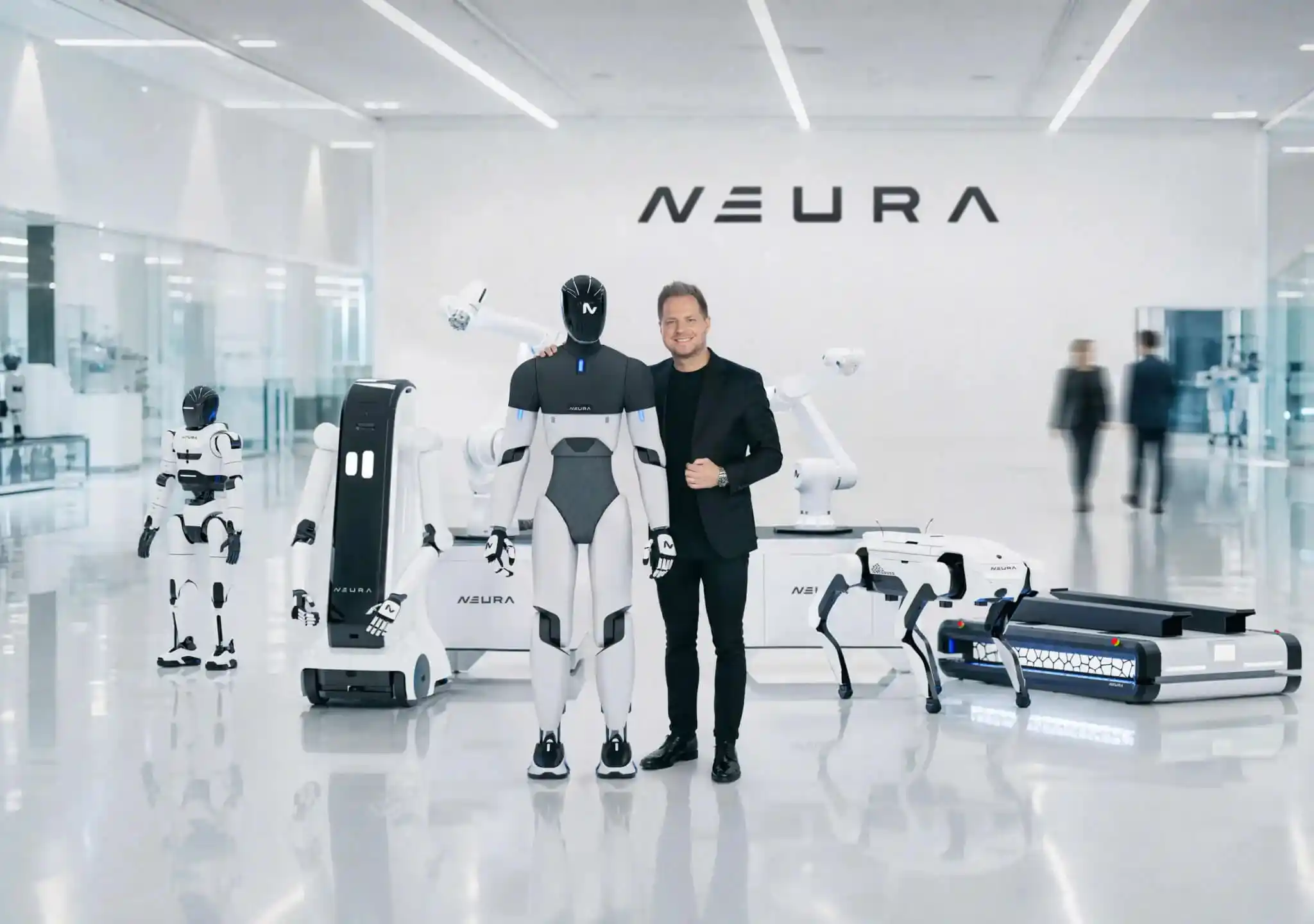
NEURA Founder David Reger

Around 2021, the company launched the MAiRA (Multi-Sensing Intelligent Robotic Assistant) collaborative robot product line, representing the first systematic implementation of its "Cognitive Robotics" philosophy.

Compared to traditional collaborative robots, MAiRA integrates vision systems, force feedback, safety perception, and AI software into the robot body, enabling it to recognize personnel, objects, and the work environment, and work alongside humans without complex fencing or isolation. For European manufacturing customers, this solution is easier to implement than fully replacing human labor and aligns better with the practical needs of industrial automation upgrades.

Building the Network Underlying Platform for Silicon-Based Lifeforms

After establishing its collaborative robot portfolio, NEURA began expanding into broader robot forms. The company successively launched Autonomous Mobile Robots (AMR), service robots, and mobile manipulator robots, aiming to extend cognitive capabilities from fixed workstations to warehousing/logistics, medical/nursing, and service scenarios. At this stage, NEURA's strategic focus shifted from single robot products to robot ecosystem building.

As generative AI and embodied intelligence gained more attention, humanoid robots also gradually became a significant part of its product roadmap. NEURA launched the humanoid robot project 4NE-1 (pronounced "for anyone") in 2022, hoping to enter broader scenarios like manufacturing, logistics, services, and homes with a general-purpose robot form. Last year, the third-generation 4NE-1 product debuted at the 2025 German automation exhibition; at this year's Consumer Electronics Show (CES), NEURA introduced the 4NE1 Mini and a quadruped robot.

NEURA believes that the key to future competition is not just mechanical structure, but who can accumulate more real-world data and enable different robots to share learning outcomes. This thinking ultimately evolved into the Neuraverse platform, and NEURA shifted its strategy from robot manufacturer to robot platform operator.
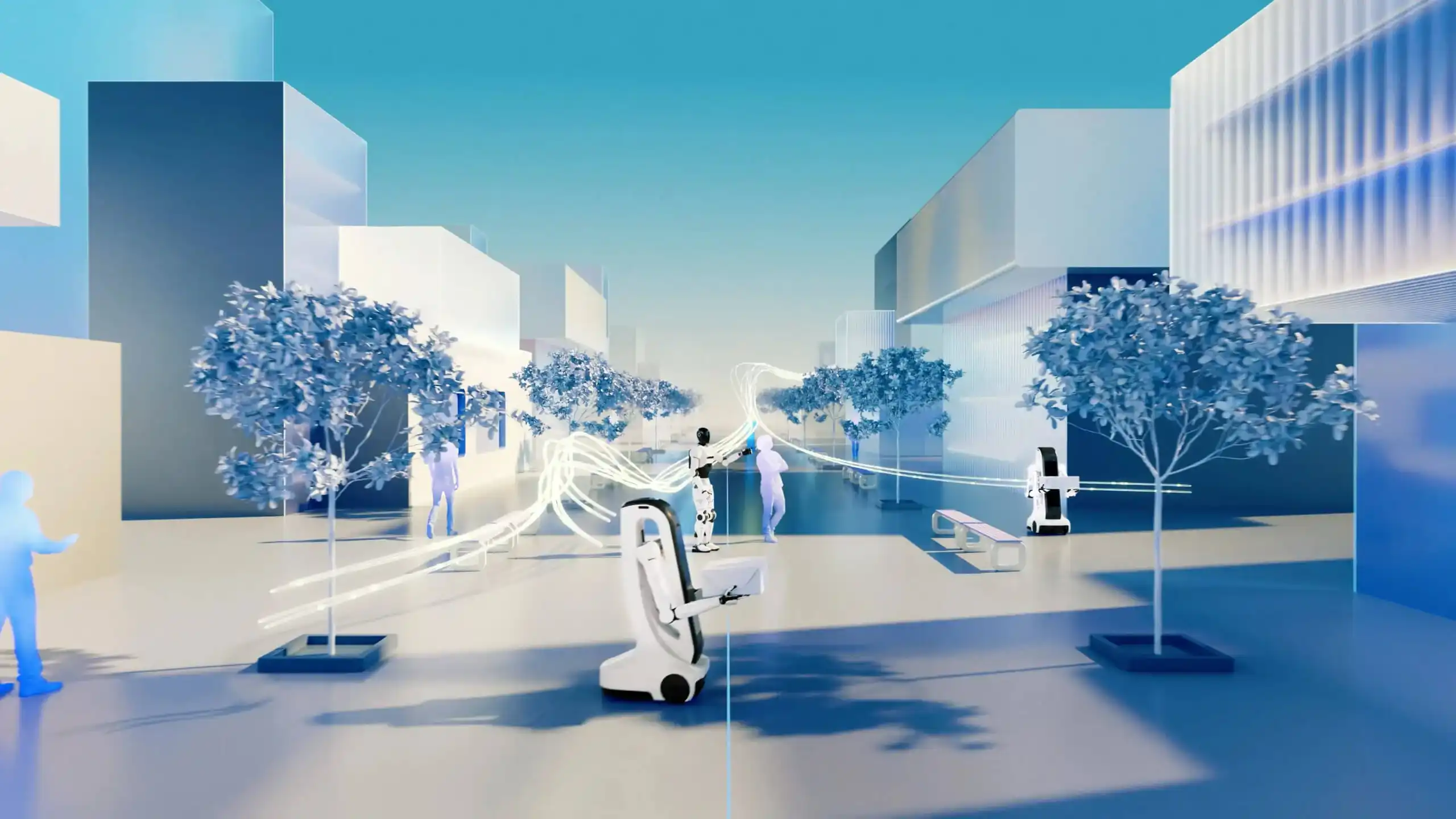
According to NEURA's vision, Neuraverse allows different robots, sensors, AI models, developers, and enterprise clients to connect to the same ecosystem. This enables experience gained by robots in different scenarios to be continuously accumulated and reused, forming network effects similar to the mobile internet app ecosystem. NEURA subsequently began using the term "Physical AI" more frequently to describe its technological direction, though its core narrative still revolves around robots perceiving, understanding, and autonomously deciding in their environment, learning tasks, and continuously evolving.

Tether's Ambition: Robots Could Become a New Foothold for the Crypto Industry

Prior to this funding round, NEURA's story belonged solely to the robotics and AI industry. But with Tether's entry, NEURA gained an angle unique to the crypto industry, also completing the settlement layer for its network.
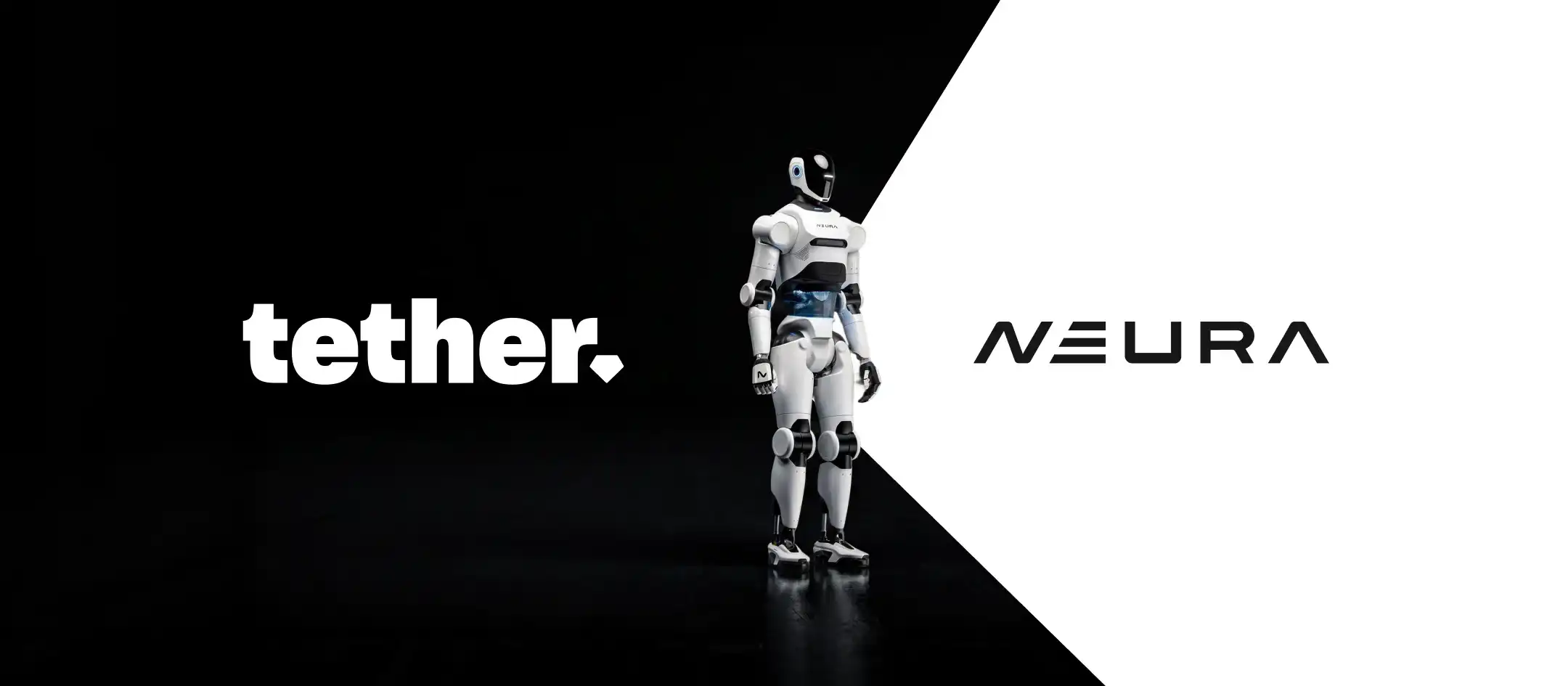
According to Tether, NEURA's robot platform is expected to integrate Tether's open-source Wallet Development Kit (WDK), embedding self-custody wallet functionality into the robot system. The idea is not to allow robots complete autonomous control over funds, but to enable robot systems to handle receiving, paying, and settling within preset rules.

In practical scenarios, such a design could apply to industrial and logistics fields. For example, after a warehouse robot completes a handling task, the system could automatically trigger settlement; a service robot could receive payment based on task volume, duration, or distance after completing cleaning, delivery, or inspection tasks; robots from different companies, charging equipment, warehousing systems, and dispatch systems might also settle small amounts through programmable payment rails.

This capability has particular imaginative potential under the Robot-as-a-Service (RaaS) model. Companies might not necessarily purchase the robot itself but pay based on usage. If every task, every hour worked, every device call can be automatically logged and settled, robots become not just production tools creating value, but also a settlement node within a company's automated financial system.

This is precisely the part Tether finds compelling and why the crypto industry should pay attention. In the past, stablecoins primarily served exchange transfers, on-chain transactions, cross-border payments, and dollar liquidity needs. However, if a large number of machines begin entering real-world production processes in the future, crypto payments, on-chain settlement, and self-custody wallets gain a new narrative interface, potentially extending stablecoins and self-custody wallets from "human financial tools" to "machine payment infrastructure."

Furthermore, the collaboration between the two parties is not limited to the WDK wallet tool; it also includes testing, optimizing, and deploying Tether's QVAC (QuantumVerse Automatic Computer) edge-first AI runtime framework within the Neuraverse ecosystem.

For robots, local execution means lower latency, stronger operational resilience, and reduced dependence on a few major cloud computing service providers. In industrial scenarios, equipment downtime costs, execution precision, and data control capabilities are all critical, making such an edge computing architecture beneficial for improving system reliability. According to Tether's vision, true autonomy requires instant response, and QVAC's goal is precisely to keep intelligence at the terminal side, enabling local execution in scenarios where millisecond-level decision-making is crucial.

From this perspective, Tether is attempting to enter two foundational layers of the robotics era: first, the financial layer, enabling machines to use wallets and stablecoins for settlement; second, the intelligence layer, allowing machines to run AI capabilities at the edge, rather than relying entirely on remote cloud.

This aligns with Tether's trend in recent years of continuously expanding its boundaries. It is no longer just a USDT issuer but is extending its reach toward AI, energy, data, and other infrastructure directions. And NEURA's financing provides Tether with a testing ground to place stablecoins, self-custody wallets, and edge AI into real-world machine networks.


Preguntas relacionadas

QWhat is the significance of Tether's investment in NEURA Robotics, and what specific technology is Tether looking to integrate into NEURA's platform?

ATether's investment in NEURA Robotics is significant as it represents a strategic move to embed crypto and AI infrastructure into real-world robotics. Specifically, Tether plans to integrate its open-source Wallet Development Kit (WDK) for self-custody wallets and stablecoin payments into NEURA's robot systems. It also intends to test and deploy its QVAC (QuantumVerse Automatic Computer) edge AI framework within the Neuraverse ecosystem.

QAccording to the article, why did NEURA Robotics initially focus on collaborative robots (Cobots) rather than humanoid robots?

ANEURA Robotics initially focused on collaborative robots (Cobots) because its founder, David Reger, believed traditional industrial robots were 'blind' machines lacking environmental understanding and safe human collaboration. Starting with Cobots allowed NEURA to first equip robots with perception, sensor fusion, and AI software for understanding their surroundings, which was more aligned with the practical needs of European manufacturing for automation upgrades.

QWhat is the 'Neuraverse' platform, and what strategic shift does it represent for NEURA Robotics?

AThe 'Neuraverse' platform is an ecosystem designed by NEURA to allow different robots, sensors, AI models, developers, and enterprise clients to connect and share data and learning experiences. It represents a strategic shift for NEURA from being a robot manufacturer to becoming a robot platform operator, aiming to create network effects similar to those in the mobile internet by enabling continuous accumulation and reuse of real-world robot data across various scenarios.

QHow does the article describe the potential practical application of crypto wallets and stablecoins in robotics?

AThe article describes that integrating crypto wallets and stablecoins into robotics could enable automated micro-transactions and settlements in practical scenarios. For example, a warehouse robot could automatically trigger a payment after completing a搬运 task, or a service robot could receive payment based on completed tasks, duration, or distance. In a Robot-as-a-Service (RaaS) model, this would allow robots to function not only as productivity tools but also as automated settlement nodes within a company's financial system.

QWhat are the stated benefits of running AI on the edge, as mentioned in the context of Tether's QVAC framework for robots?

AThe stated benefits of running AI on the edge, as per Tether's QVAC framework, include lower latency, greater operational resilience, and reduced dependency on a few large cloud computing providers. For industrial robots, this edge computing architecture is crucial for minimizing downtime costs, ensuring execution precision, maintaining data control, and enabling millisecond-level decision-making critical for true autonomous operation.

Lecturas Relacionadas

Pricing OpenAI Pre-IPO: A New, Life-or-Death Business on Hyperliquid Lasting Half a Year

Pricing OpenAI Pre-IPO: Hyperliquid's High-Stakes, Six-Month Business Venture The article analyzes the nascent market for pre-IPO perpetual contracts on the Hyperliquid blockchain, exemplified by two contrasting teams: Trade.xyz and Ventuals. Trade.xyz, an anonymous team, successfully built the largest pre-market on Hyperliquid. Its strategy focused on near-term events, like the SpaceX IPO. By listing a SpaceX contract with a known launch date and price, the market had a tangible "anchor" (the eventual Nasdaq opening price) to converge upon, which kept speculation in check. This approach fueled significant growth. In stark contrast, Ventuals, backed by Paradigm, failed despite holding coveted contracts for OpenAI and Anthropic. Its critical flaw was its pricing mechanism for these companies, which have no imminent IPO. Ventuals' oracle price was half-derived from infrequent private market transactions and half from its own contract's moving average. This created a self-reinforcing loop where buying pressure artificially inflated the price, disconnecting it from real supply and demand. The market became illiquid and structurally skewed. Ventuals shut down nine months after launch, reportedly through an acquisition. Its final settlement prices—OpenAI at ~$1,341 and Anthropic at ~$1,618—were thus partially products of its flawed model. Ironically, some company employees and late-stage VCs reportedly used these prices for valuation reference, highlighting the desperate demand for price discovery in opaque private markets. The failure of Ventuals exposes the core challenge of this business: price for illiquid, non-public assets requires a robust, self-correcting market, which is absent without a definitive public listing event. Nevertheless, demand is driving major players like Coinbase and traditional finance (e.g., Citi) to enter the space, aiming to provide 24/7 trading for coveted private company shares. The venture's ultimate viability, however, hinges on solving the fundamental pricing problem Ventuals could not.

marsbitHace 4 min(s)

Pricing OpenAI Pre-IPO: A New, Life-or-Death Business on Hyperliquid Lasting Half a Year

marsbitHace 4 min(s)

M&A Deals in the Crypto Market Are Unusually Active

Title: M&A Activity in Crypto Market Becomes Unusually Active A rare signal is emerging in the crypto primary market: mergers and acquisitions (M&A) are nearing half of all financing deals. According to RootData, this month, M&A cases in the crypto industry reached 10, while financing rounds numbered only 14, meaning M&A accounts for approximately 42% of primary market transactions—the highest level in history. This does not signal a sudden industry boom. Instead, the rapid rise in M&A share primarily reflects the continued downturn in the financing market. Since November 2024, monthly crypto M&A deals have remained between 10-20, while financing deals have plummeted from around 100 to about 50, possibly hitting a new low this month. For project teams, this means the traditional path of relying on narratives, token expectations, and ecosystem subsidies to maintain valuations is narrowing. For leading companies, it presents a rare window to acquire teams, licenses, technology, liquidity, and market access at lower prices, with less competition and stronger bargaining power. Key active buyers include Coinbase, Kraken, Ripple, MoonPay, Polymarket, Kaiko, Sol Strategies, GSR, Keyrock, Jupiter, Paxos, and Ondo Finance. Their M&A logic is consistent: acquiring key capabilities at lower costs during the industry downturn. This is driven by more attractive valuations, reduced time and trial-and-error costs, the acquisition of licenses and compliance resources, and the integration of industry upstream and downstream segments. Current M&A focuses are concentrated in four areas: trading infrastructure (e.g., Coinbase acquiring Deribit, Kraken acquiring NinjaTrader), payments and stablecoins (e.g., MoonPay, Ripple expanding payment networks), compliance licenses, and asset issuance/distribution (e.g., acquisitions related to RWA and token issuance platforms like Coinbase's purchases of Liquifi and Echo). The rise in M&A is altering the primary market's exit logic. It provides an alternative path to the token-dependent model, encouraging teams to build tangible products, revenue, and strategic value that can be integrated. This could inject confidence into the market, showing that asset buyers and exit possibilities still exist, albeit with a stricter focus on real utility. However, this trend also indicates the crypto industry is becoming more centralized. As asset issuance, trading, market-making, custody, payments, and data gradually consolidate in the hands of a few major players, the industry's initial emphasis on openness and anti-monopoly is being reshaped by commercial realities. Coupled with rising compliance barriers, this signals the end of the low-barrier era for crypto entrepreneurship.

链捕手Hace 37 min(s)

M&A Deals in the Crypto Market Are Unusually Active

链捕手Hace 37 min(s)

M&A Deals Are Exceptionally Active in the Crypto Market

Mergers and acquisitions (M&A) activity in the cryptocurrency primary market has reached a historic high, accounting for approximately 42% of total deals in the current month, nearly matching the number of financing rounds. This shift does not signal a new boom cycle but rather reflects a severe contraction in the venture capital funding environment. As financing dwindles, established industry giants—including major exchanges, payment firms, and infrastructure providers—are seizing the opportunity to acquire strategic assets at lower valuations. Key drivers behind the surge in M&A include depressed project valuations, the need to quickly acquire talent and technology to capture short market windows, the pursuit of crucial regulatory licenses, and the strategic expansion into adjacent business verticals such as derivatives, payments, stablecoins, and real-world asset (RWA) issuance. Major acquisitions, like Coinbase's purchase of Deribit and Kraken's acquisition of NinjaTrader, exemplify the push to expand into high-margin areas like derivatives and multi-asset trading. This trend is reshaping the industry's exit landscape, offering an alternative to token-based exits and incentivizing startups to build tangible products and revenue streams with inherent strategic value for acquisition. However, it also points toward increasing centralization, as critical functions—trading, custody, payments, compliance—become concentrated within a few large, well-capitalized platforms, potentially raising barriers to entry for new ventures.

marsbitHace 38 min(s)

M&A Deals Are Exceptionally Active in the Crypto Market

marsbitHace 38 min(s)

Trading

Spot
Futuros
活动图片