The Sense of Contrast: The Core Element That Makes Web3 Narratives Stand Out?

比推Published on 2025-12-29Last updated on 2025-12-29

Abstract

The article "The Sense of Contrast: The Core Element That Makes Web3 Narratives Stand Out?" argues that the key to compelling Web3 storytelling is not necessarily creativity, but the effective use of contrast. Many Web3 creators produce content that is too straightforward—listing features, data, and benefits—which fails to engage the audience. The brain is activated by unexpected changes, not linear information. Contrast, defined as a shift or transformation (e.g., from "before" to "after," or from "expectation" to "reality"), creates memorable moments and makes content relatable. The author provides an example: instead of stating "Solana is fast and cheap," a narrative with contrast would describe the personal experience of a transaction completing almost instantly. This approach often requires admitting past mistakes or uncertainties, which feels uncomfortable but builds authenticity and connection with the audience. To incorporate contrast, creators should ask what changed in their story and include elements like a former false assumption, a moment of hesitation, or an unexpected outcome. In the noisy Web3 space, contrast helps content stand out through genuine transformation rather than loud promotion.

Author:Noir

Compiled by: Deep Tide TechFlow

Original title: Today in Web3 Narratives, Everyone Loves the Sense of Contrast


Most Web3 content creators think they are not good at storytelling because they feel they "lack creativity."

But friend, that is usually not the real issue.

In fact, the real problem is:

—Your content lacks contrast.

Hey, either the content:

sounds the same,

feels flat,

or has no variation.

And when nothing changes, there is no story to tell.

What is Contrast?
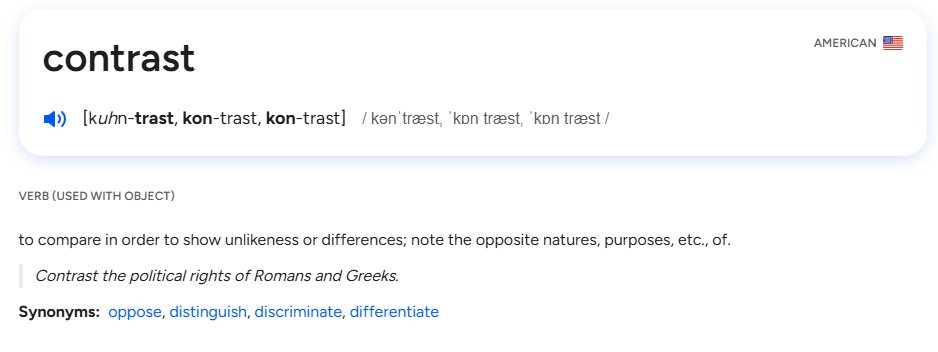
Contrast actually refers to something being different from what came before.

Yes, it's that simple.

It doesn't require:

flowery language,

surprising plot twists,

or background music.

Essentially, contrast is a transformation, such as:

from "before" to "after"

from "expectation" to "reality"

from "belief" to "realization"

Without this transformation, your content is just information.

Yes, maybe it's useful, but memorable? Hmm... unlikely.

Why does a lack of contrast make content weak?

The Web3 world is full of:

features, data, promises, roadmaps......

But most content is presented too straightforwardly:

"This is what it does."

"These are its benefits."

"This is why you should care about it."

However, the brain isn't interested in this linear information.

It wakes up when something unexpected happens.

Why Content Loses Appeal Without Contrast

The Web3 world is flooded with:

features, data, promises, roadmaps......

But most content is presented too directly:

"This is its function."

"Why it's good."

"Why you need to care about it."

However, the brain isn't activated by this straight-line information.

It only wakes up when something unexpected occurs.

A Simple Example of "Contrast"

(You must have seen it countless times)

Expression without contrast:

Solana's transactions are fast and cheap.

Your brain responds: Okay... so what?

Expression with contrast:

I clicked send, switched pages, and then realized the transaction was already completed.

The same idea, but with a completely different impact.

The second expression creates a "moment." Got it?

Why Does "Contrast" Feel Uncomfortable?

(And why this matters)

Contrast often requires you to admit:

You were wrong, you were confused, you underestimated something.

That's why most people avoid it.

But this discomfort is precisely what makes content feel authentic.

People don't like flawless things.

They connect more easily with resonance and vulnerability.

When someone thinks: "Wait... I've felt that way too."

Congratulations, you've succeeded.

How to Add "Contrast" to Your Content?

Before publishing, ask yourself one question:

"What changed here?"

If you can't answer, try adding:

  • A mistaken assumption you once had

  • A moment of hesitation

  • An unexpected result

  • A "small decision" you almost didn't make

It really doesn't require a dramatic plot.

You just need a little relatable change.

Weirdo's Summary

Don't get me wrong, creativity does play an important role in storytelling.

But not everyone is naturally creative. This article is specifically for those who truly want to learn storytelling techniques.

Its core lies in: being sincere enough to show "transformation."

In the complex and noisy world of Web3,

"Contrast" is the way to stand out without having to shout.

Remember to follow me, or else you'll...


Twitter:https://twitter.com/BitpushNewsCN

BitPush TG Group:https://t.me/BitPushCommunity

BitPush TG Subscription: https://t.me/bitpush

Original link:https://www.bitpush.news/articles/7598938

Related Questions

QWhat is the core element that the article suggests makes Web3 narratives stand out?

AThe article suggests that 'contrast' is the core element that makes Web3 narratives stand out.

QAccording to the article, what is the simple definition of 'contrast' in storytelling?

AThe article defines 'contrast' simply as something that is different from what came before it, representing a shift or transformation.

QWhy does the lack of contrast make content uninteresting, as explained in the article?

AThe lack of contrast makes content uninteresting because the human mind is not engaged by straightforward, linear information; it is awakened when something unexpected happens.

QWhat is an example the article gives to demonstrate a narrative with contrast about Solana?

AThe article contrasts a flat statement ('Solana's transactions are fast and cheap') with a narrative that creates a 'moment': 'I clicked send, switched pages, and then realized the transaction was already complete.'

QWhy is the discomfort of admitting being wrong or confused important for creating effective content?

AThis discomfort is important because it makes the content feel authentic and relatable, allowing people to connect with vulnerability and shared experiences rather than perfection.

Related Reads

TRON Industry Weekly Report: Macro Stability, Crypto Market Enters 'Long Liquidation' Phase, Detailed Analysis of the One-Stop Cross-Chain Liquidity Routing and Asset Exchange Infrastructure LI.FI

TRON Industry Weekly Report: Macro Stability and Crypto Market Enters "Long Liquidation" Phase, with Deep Dive into LI.FI — A One-Stop Cross-Chain Liquidity Routing and Asset Swap Infrastructure Last week, the U.S. macroeconomic environment was characterized by subdued inflation data and recalibrated expectations for interest rate cuts. While inflation continued to decline modestly, sticky services and wage components suggest a slow and uneven path downward. The Fed is likely to maintain a wait-and-see approach, focusing on the pace rather than the fact of future cuts. The cryptocurrency market weakened significantly after repeated failures to break through key resistance levels. Bitcoin faced concentrated selling pressure and fell back into its previous consolidation range. The decline was accompanied by amplified volume, indicating active position reduction rather than a shallow pullback. Altcoins, especially meme coins and high-beta sectors, fell more sharply, reflecting rapidly cooling risk appetite. Key sector highlights included Aztec, a zk-based programmable privacy L2 on Ethereum, which raised $159.3M led by a16z and Paradigm. It enables private smart contracts via a hybrid execution model. Asgard, a Solana-based credit layer protocol, raised $2.2M to improve DeFi capital efficiency using on-chain credit and structured prime brokerage-like accounts. The report details LI.FI, a cross-chain liquidity aggregation infrastructure that raised $52M led by Multicoin and CoinFund. It provides a unified API and Diamond proxy smart contract system to route assets across 30+ blockchains, abstracting away the complexity of integrating multiple bridges and DEXs. Regulatory developments included U.S. draft legislation on digital asset market clarity, EU MiCA enforcement in France, relaxed crypto rules in Kazakhstan, and new anti-money laundering and tax reporting rules in Thailand and Nigeria.

marsbit4m ago

TRON Industry Weekly Report: Macro Stability, Crypto Market Enters 'Long Liquidation' Phase, Detailed Analysis of the One-Stop Cross-Chain Liquidity Routing and Asset Exchange Infrastructure LI.FI

marsbit4m ago

Web3 Social: Still Dominated by the Chinese

In a span of two days, two major decentralized social protocols, Lens Protocol and Farcaster, changed ownership. Lens was taken over by Mask Network, led by Chinese founder Suji Yan, while Farcaster was acquired by Neynar, one of its clients. Combined, these protocols had raised over $200 million, with Farcaster valued at $1 billion last year. This follows the earlier acquisition of Steem by Tron’s Justin Sun in 2020, meaning two out of three prominent decentralized social protocols are now been taken over by Chinese-led teams. The author suggests that Western founders often approach decentralized social with idealism—emphasizing user-owned data and censorship resistance—while Chinese acquirers tend to view it as a business opportunity. Both Lens and Farcaster have seen declining engagement, making them attractive targets for pragmatic operators focused on usability rather than ideology. However, past acquisitions like Steem—which led to a community fork—highlight the risks of centralized control over “decentralized” protocols. Mask Network has framed its role as “stewardship” rather than outright ownership, but the very idea of a “decentralized” protocol being acquired raises questions about how much these platforms are truly user-governed. Ultimately, the piece questions whether these acquisitions will lead to a more practical and widely adopted social web or simply repeat past conflicts between idealism and commercial reality.

marsbit10m ago

Web3 Social: Still Dominated by the Chinese

marsbit10m ago

Vanguard Group Enters with $700 Million, Has MSTR Hit Bottom?

Vanguard Group, the world's largest asset manager, has invested over $700 million in MicroStrategy (MSTR) through its index funds, signaling a significant institutional entry point. This comes amid a steep decline in MSTR's stock, which had fallen nearly 200% from its highs, and widespread negative sentiment questioning the company's high-leverage strategy and financing capabilities. Despite the prevailing fear, several major players are taking contrarian positions. Beyond Vanguard's passive index fund purchases, the Louisiana State Employees’ Retirement System (LASERS) made a small but symbolic allocation. Furthermore, active managers like Jane Street Group and Capital International Investors substantially increased their holdings and call option positions in Q4 2025. The article posits that MSTR has evolved beyond a simple role as a leveraged Bitcoin proxy. It now acts as a crucial intermediary layer that absorbs and transmits Bitcoin's volatility. Due to its high liquidity and mature options market, selling pressure during a downturn is often directed at MSTR stock rather than Bitcoin spot markets, potentially cushioning BTC's price drops. The conclusion is that a market bottom is not defined by a specific price but by the moment when major institutions begin to act against extreme pessimism. The actions of these investors are ultimately a bet on the long-term trajectory of Bitcoin itself.

marsbit39m ago

Vanguard Group Enters with $700 Million, Has MSTR Hit Bottom?

marsbit39m ago

Trading

Spot
Futures

Hot Articles

Come comprare CORE

Benvenuto in HTX.com! Abbiamo reso l'acquisto di CORE (CORE) semplice e conveniente. Segui la nostra guida passo passo per intraprendere il tuo viaggio nel mondo delle criptovalute.Step 1: Crea il tuo Account HTXUsa la tua email o numero di telefono per registrarti il tuo account gratuito su HTX. Vivi un'esperienza facile e sblocca tutte le funzionalità,Crea il mio accountStep 2: Vai in Acquista crypto e seleziona il tuo metodo di pagamentoCarta di credito/debito: utilizza la tua Visa o Mastercard per acquistare immediatamente CORECORE.Bilancio: Usa i fondi dal bilancio del tuo account HTX per fare trading senza problemi.Terze parti: abbiamo aggiunto metodi di pagamento molto utilizzati come Google Pay e Apple Pay per maggiore comodità.P2P: Fai trading direttamente con altri utenti HTX.Over-the-Counter (OTC): Offriamo servizi su misura e tassi di cambio competitivi per i trader.Step 3: Conserva CORE (CORE)Dopo aver acquistato CORE (CORE), conserva nel tuo account HTX. In alternativa, puoi inviare tramite trasferimento blockchain o scambiare per altre criptovalute.Step 4: Scambia CORE (CORE)Scambia facilmente CORE (CORE) nel mercato spot di HTX. Accedi al tuo account, seleziona la tua coppia di trading, esegui le tue operazioni e monitora in tempo reale. Offriamo un'esperienza user-friendly sia per chi ha appena iniziato che per i trader più esperti.

85 Total ViewsPublished 2024.12.13Updated 2025.03.21

Discussions

Welcome to the HTX Community. Here, you can stay informed about the latest platform developments and gain access to professional market insights. Users' opinions on the price of CORE (CORE) are presented below.

活动图片