Author: Ejaaz, Limitless
Compiled and edited by: BitpushNews
Recently, xAI has faced significant criticism. However, even though Musk has repeatedly proven over decades that those who are extremely skeptical of him are profoundly mistaken, I believe people are still underestimating him.
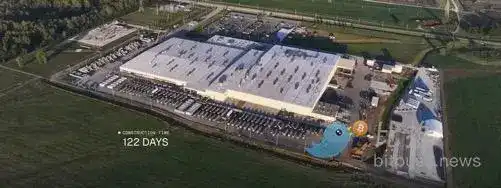
Let's not forget, we're talking about a startup that's only two years old. Yet, they built a breakthrough data center in 122 days (a process that typically takes 4 years), are rolling out their product to 600 million monthly active X users, and possess something no other AI lab has—a physical vessel (yes, humanoid robots).
I will analyze why the upcoming Grok 5 from xAI will not only catch up to competitors but is poised to achieve comprehensive superiority.
Here are a few reasons why xAI might dominate the competition......
Musk's Energy Megagrid
Entering 2026, as xAI rapidly expands its data center scale, it holds a structural computing power advantage. It is estimated that its currently operational computing capacity is roughly equivalent to 500,000 GPUs, surpassing top competitors.
Furthermore, through the efforts of the "Colossus One" and "Colossus Two" data centers, his goal is to have 900,000 GPUs online by Q2 of this year and is pushing for over 1 million GPUs in the short term.
How the F*** do you compete with that scale? It's not just about capex or even the hardware itself—it's about how they are achieving it differently.
For example, the power grids in Tennessee and Memphis couldn't fully support his data center, so he airlifted gas turbines to make up the shortfall. He chose to completely bypass the entire state's grid—just to get it done faster.
His thinking about the entire power architecture is also different; he has already deployed up to 250 MWh of Tesla Megapack battery packs at related facilities to ensure model training when power demand surges and the grid can't support it.
Elon's advantage in physically "moving mountains and filling seas" to realize his vision is evident; this is building a massive computing power advantage for xAI relative to its competitors.
If the formula "more compute = better models" still holds true (and it currently does), then the rumored Grok 5 with 7 trillion parameters will be an absolute beast upon release (a jump of over 2x from the Grok 4 model with 3 trillion parameters).
You must understand that the regulatory burden, talent acquisition, and operational logistics required for this scale are unprecedented. xAI currently seems far ahead in the AI infrastructure scaling race, with a strategy of "execute first, ask questions later."
Unless other labs follow suit, xAI's models will continue to lead.

How do you compete with this?
Elon is basically playing Civilization in the real world, and he's ranked #1 in AI.
The man airlifted power plants from abroad to power his GPUs.
He scaled a data center to 300 MW in less than 4 months, a feat that should have taken 4 years.
Okay, for those who want the actual details:
"Macrohard isn't just a bad pun—the word is literally painted on the roof of the Colossus 2 data center, clearly visible from satellite images. It's classic Musk trolling: using the name to mock the software giants built from the ground up leveraging AI, namely Microsoft.
X: The Victor in the Social Media Siege Warfare
So, I think I've made xAI's compute advantage clear, but top models need more than just GPUs—they need massive amounts of data.
And not just any data; more and more AI labs are realizing that real-time data is the key to unlocking personalized AI that deeply comprehends your desires and goals and helps you achieve them.
Google's latest "Personal Intelligence" product perhaps most clearly indicates that this will ultimately be the direction models take, but xAI possesses a unique advantage that competitors like Google do not have......
None of its competitors have a social media platform capable of feeding it over 100 million posts daily, mapping the global cultural pulse in real-time. The torrent of data from the X platform also allows the team to deeply understand virality and human behavior at scale—perhaps better than any other dataset in the world.
Other models will just tell you what happened, while Grok will tell you what happened *and* how people feel about what happened—and faster than anyone else. It's hard to argue against X's data moat.
But it's not just data; X has an incredible distribution channel, with 250 million daily active users and 600 million monthly active users on X and the Grok app. Every user sees an "Ask Grok" button next to every post on the platform.
It's not hard to foresee xAI integrating multiple services in the same app in the future, such as real-time prediction markets, shopping, banking, and dating—all powered by Grok.
Today, most model lab valuations are based on GPUs, smart benchmarks, and reputation. xAI has all that, plus the opportunity to break into multiple different internet monopolies—don't forget their stated goal is to become the "everything app".
Today, the X platform's algorithm is powered by Grok—it analyzes every post for recommendations. Tomorrow, it will provide personal intelligence for every single user.
Clearly, Grok is far more than a standard large language model, and its valuation should reflect that.
Physical AI Advantage

By now, it should come as no surprise that robotics will play a huge role in driving the world forward over the next five years. The technology is finally smart enough.
From physical labor in factories to "last-mile" delivery, fast-food chains, and even elite-level surgeons—all will be assisted, or even fully replaced, by robots.
Progress once confined to viral videos is moving out of labs, with autonomous vehicle fleets starting to appear and surprisingly capable humanoid robots nearing market readiness. Yet, after all this development, only one company comes to mind when combining these two—Tesla.
A car that drives better than a human is no longer fantasy; the latest v14.2.2.3 update is technically already a better driver than you. Once regulations catch up—you'll see autonomous Teslas ferrying people around. Similarly, the vision of personal humanoid robots is becoming reality; Elon has stated Optimus will start shipping to the public by the end of next year.
So, what does all this have to do with xAI?
Grok needs diverse data sources to understand the world around it, and that data will come from Tesla's robots.
Driving these robots requires a multimodal brain, which in Tesla's case, will be Grok.
This symbiotic relationship between the two companies gives xAI a nearly unfair advantage over competitors. I think Google is the only company that can compete on this level, thanks to Waymo, but they are still behind.
Today, Grok is already integrated into Tesla vehicles—with the latest update, you can even ask Grok to command FSD to take you to your destination... while playing you music... and teaching you Roman history.
The grand chess game Musk is playing must be acknowledged. He isn't just trying to build a large language model; he is trying to build the entire ecosystem in which AI lives and operates.
Even as I write this, I admit it all sounds fantastic, yet ambitious... which leads to the final part of this article...
Yes, There Are Risks
Of course, risks are everywhere. Perhaps the ceiling for one person's energy is running five companies simultaneously, and the sixth is the breaking point... but Musk has made naysayers eat their words too many times before, and this past track record deserves a bit more patience.
After all, what he has achieved is extraordinary.
Nonetheless, in my view, there are three main risks:
- The King of Controversy: Look, Elon is a regular headline maker. The man is currently engaged in a $130 billion lawsuit with OpenAI, is under investigation by EU and Indian regulators, and his relationship with President Trump is often... quite complicated.
- Execution Risk: xAI burns about $1 billion per month—that's a huge bill. Elon is also just one person, running (at least) 5 other companies simultaneously.
- The Scaling Law: xAI is betting everything on the "more compute = better models" formula, but if a superior model training architecture is discovered, this formula could be overturned. (Andrej Karpathy has stated multiple times he doesn't believe LLMs are the final form.)
That's all I have for now. In the end, I believe the current skepticism about xAI's ability to push the boundaries of intelligence perhaps overlooks the fact that it is reconstructing the rules of competition at a staggering speed. What this company is assembling is not just algorithms and computing power, but a磅礴 ambition (tremendous ambition) to break the constraints of the physical world.
Perhaps we should all temporarily set aside our preconceptions and watch this ongoing AI revolution, driven by infrastructure reconstruction. Because true disruption often starts from an underestimated corner.