Bloomberg interviewed Anthropic CEO Dario Amodei and uncovered a very interesting detail: as the CEO of a company valued at nearly a trillion dollars, he has only one direct report.
That is his Chief of Staff, Avital Balwit. All other company executives (CFO, CCO, etc.) do not report to him, but instead report to his sister, President Daniela Amodei. Daniela handles the daily operations and is accountable to the board.
Why It's Unusual
The prevailing trend in the tech industry now is "flattening," where CEOs directly manage an increasing number of people. Jensen Huang manages 60 people and holds no one-on-one meetings, with the logic being "if the CEO directly manages 60 people, you can eliminate 7 layers of management." Sam Altman manages about 6.
Dario manages only 1, going completely against this trend.
Why He Does It This Way
Dario's background is as an academic researcher (Ph.D. in biophysics from Princeton, previously a researcher at Google and OpenAI), not a professional manager.
He believes the CEO's greatest value lies in "zooming out" activities: strategic direction, research judgment, organizational culture, and contemplating the impact of AI on human civilization. These tasks require large blocks of uninterrupted time. Daily management ("zooming in") fragments time, preventing deep thinking on big-picture issues. Therefore, he completely separates these two functions, focusing solely on the former and handing the latter entirely to Daniela.
His exact words are: "If you have a bunch of things to deal with tomorrow, it's very hard to focus on the strategic big picture."
Where He Spends His Time
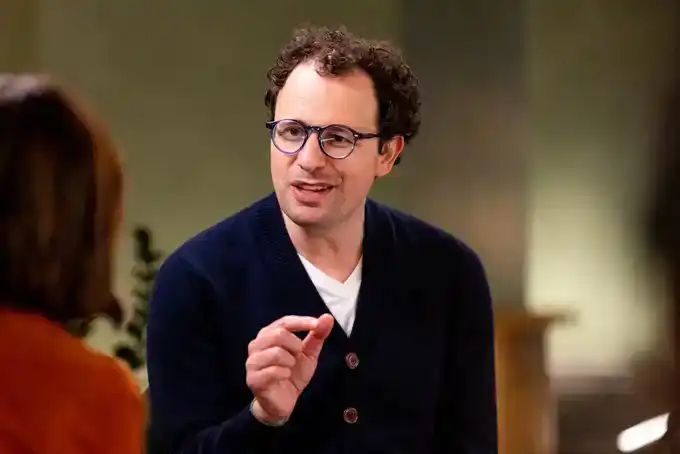
He spends roughly half his time on cultural development. Specifically, he holds a bi-weekly all-hands meeting called the "Dario Vision Quest," where he writes a long memo and speaks for an hour.
His biggest worry is: as the company rapidly expands from a few hundred to 2,500 people, with many new hires coming from large tech companies, if Anthropic's culture isn't proactively instilled, these employees will default to replicating the practices of their former companies, diluting the company culture.
He spends the remaining time on research direction, strategy, and writing long-form public articles. He dedicates significant time to thinking about what AI means for human civilization and outputs his thoughts through these long public articles.
The Logic Behind the Sibling Division of Labor
This arrangement is not arbitrary but based on their complementary backgrounds. Dario comes purely from a research background, having served as VP of Research at OpenAI; Daniela comes from an operational background, having been an early employee at Stripe and leading safety and policy teams at OpenAI, being more adept at managing "people." They each do what they excel at.
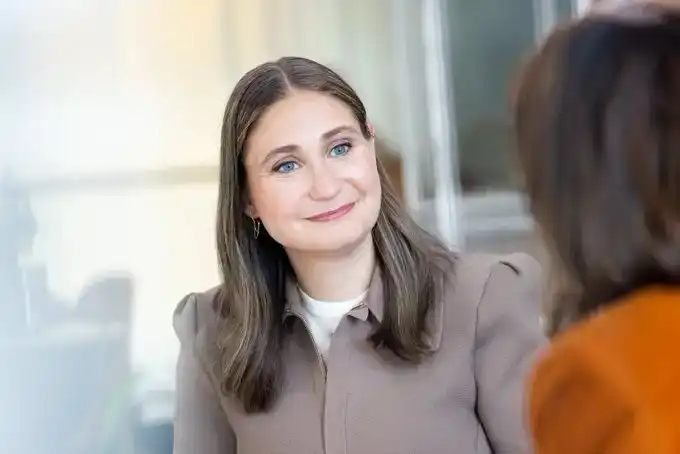
Another notable detail: All seven of Anthropic's co-founders are still with the company.
In tech startups, it's common for co-founders to leave over time; having all seven remain is indeed rare. The Amodei siblings point to this as proof of the company's cultural cohesion.
A Harvard Professor's Explanation: What Kind of Company Needs What Kind of Management Span
Harvard Business School professor Raffaella Sadun provides a framework. She compares a company to a problem-solving machine: lower-level employees handle routine problems, while harder, newer problems move up the hierarchy.
If a company mostly faces known types of problems, the CEO can manage many people because those underneath can handle things themselves. The leaders of various divisions at Nvidia know what they need to do, so Jensen Huang can manage 60 people and the operation still runs smoothly.
But if a company constantly faces entirely new, high-risk problems without ready-made answers, the CEO needs a narrower span of control to reserve time for the matters that truly require his judgment. Anthropic is such a case: where are the safety boundaries, should they cooperate with the military, how to choose the technological path for the next-generation model—these are all novel questions.
Her conclusion is: "The manager's time is the scarcest resource."
The essence of organizational structure is to protect this scarce resource.
Full Translation:
Anthropic CEO Dario Amodei Has Only One Direct Report
Bloomberg · June 10, 2026
Key Takeaways
· Anthropic PBC CEO Dario Amodei has only one direct report, Chief of Staff Avital Balwit, which is extremely rare in the tech industry.
· The company's executive team reports to Anthropic President Daniela Amodei, who handles daily operations and is accountable to the board, allowing Dario to focus on strategic thinking and research direction.
· Dario spends a significant amount of time discussing Anthropic's culture with employees. Maintaining the company culture is his and Daniela's top priority amid rapid growth.
Despite Dario Amodei's immense influence at Anthropic PBC, the co-founder and chief executive officer has just one direct subordinate at the artificial intelligence company.
This is uncommon in the tech industry. Many tech leaders today are flattening hierarchies and broadening their spans of control. OpenAI CEO Sam Altman has about six direct reports, while Nvidia CEO Jensen Huang says 60 people report directly to him.
Anthropic is experimenting with a different leadership model: a CEO who leaves almost all his time for strategic thinking, organizational culture, and input on research direction and strategy, rather than managing senior executives. The company's executive team instead reports to Dario's sister, Anthropic President Daniela Amodei, who oversees most daily operations and is accountable to the Anthropic board. The only person Dario directly manages is his chief of staff, Avital Balwit.
"It is incredibly freeing," Dario said in an interview with Emily Chang for Bloomberg's "The Circuit" program. "It allows me to do all the things I should be doing much more easily than I ever did before."
For Dario, a first-time founder and a Princeton Ph.D. in biophysics whose early career was spent in a research lab, that often means spending a lot of time thinking about artificial intelligence and its implications for humanity. He does this via companywide "Vision Quest" meetings—where he reflects on a broad range of topics—and long public essays.
"It's a matter of focus and context in many ways. If you have a bunch of things you have to deal with tomorrow, it's very hard to focus on the strategic big picture," he said. "And so separating these two things can often be very useful so you can do both well."
Before co-founding Anthropic, Dario was a vice president of research at OpenAI, leaving over disagreements with the ChatGPT maker's leadership to start Anthropic in 2021. Prior to that, he was a senior research scientist at Google.
Daniela has more experience managing people at tech startups, having been an early employee at Stripe and also leading safety and policy teams at OpenAI.
Anthropic, valued at close to $1 trillion in its latest funding round, is working toward a public listing ahead of rival OpenAI.
The company brought on veteran tech executives in 2024, including Chief Financial Officer Krishna Rao, and in 2025 hired Chief Commercial Officer Paul Smith to support rapid expansion. They work alongside all seven of Anthropic's co-founders, whom the Amodei siblings have long cited as evidence of a cohesive culture.
Dario estimates he spends "maybe half" his time talking to employees about "Anthropic culture and how culture works," and said maintaining the company's culture is perhaps his and Daniela's "No. 1 priority."
"When you're growing this fast, you hire a lot of people from big tech companies. And if you don't tell them how Anthropic works, they will naturally replicate the only thing they know, which is how their previous companies work," he said.
Harvard Business School economist and management professor Raffaella Sadun says that how many people a CEO directly manages, beyond personal preference or leadership style, also reflects the nature of the organization's work. A company can be thought of as a problem-solving machine, she says, with lower-level staff handling routine matters and tougher issues and exceptions moving up the chain.
That suggests a CEO can have a wider span of control when other leaders in the organization are seasoned experts who can independently handle their areas of responsibility; but when a company faces a steady stream of novel problems and high-stakes decisions that require more senior judgment—like Anthropic—a narrower span might be necessary.
In either case, the organization must be thoughtfully constructed. "The manager's time is the scarcest resource," Sadun said. Ideally, a company's architecture is designed to protect that resource.