Kyle Samani Is Back: This Time, We're Outperforming CEX in Efficiency!

marsbitPubblicato 2026-03-12Pubblicato ultima volta 2026-03-12

Introduzione

Kyle Samani, former co-founder of Multicoin Capital, has returned to advocate for PropAMM, a breakthrough in market microstructure innovation on Solana. He argues that PropAMM could surpass traditional centralized exchanges (CEXs) in efficiency by hosting market maker algorithms directly on the blockchain, eliminating latency from bidirectional communication between exchanges and market makers. In CEXs, market makers co-locate servers and constantly exchange data with the exchange, leading to delays. In contrast, PropAMM runs algorithms on the same physical hardware as the Solana blockchain, allowing price updates to occur almost instantaneously within the same silicon chip. This reduces latency significantly compared to traditional systems. Currently, PropAMM already offers narrower spreads for SOL-USDC spot trading than major CEXs. Samani expects it to dominate on-chain trading this year, including spots, perpetuals, and prediction markets. Challenges remain in ensuring best execution for takers due to private algorithms and non-deterministic routing, but solutions from aggregators like Jupiter and dFlow are anticipated. Upcoming Solana upgrades—such as higher compute limits, reduced slot times, and lower network latency—will further enhance PropAMM performance, solidifying its advantage over CEXs.

Source:Kyle Samani

Compiled | Odaily Planet Daily (@OdailyChina); Translator | Azuma (@azuma_eth)

Editor's Note: The man who knows best how to promote Solana, former co-founder of Multicoin Capital Kyle Samani, who had loudly exited the crypto world not long ago, is back!

Last night, Kyle Samani posted a long Thread on his personal X account. In the post, Kyle Samani once again demonstrated his highly persuasive "promotion" (not derogatory here) rhetoric, using "efficiency"—a weak point in the decentralized narrative—as a breakthrough. He detailed how the PropAMM currently being promoted in the Solana ecosystem will catch up with or even surpass traditional centralized models in efficiency, arguing that PropAMM is one of the most important innovations in market microstructure in recent years, or even decades.

  • Related articles: 《The Man Who Knows Best How to Promote SOL Exits the Crypto World》; 《Is There More to Kyle Samani's Exit?》.

Below is the original content by Kyle Samani, compiled by Odaily Planet Daily.

PropAMM is one of the most important innovations in market microstructure in recent years, and perhaps even one of the most significant in decades.

To help everyone understand this conclusion, let's first look at how market makers (MM) quote prices on traditional centralized exchanges (CEX).

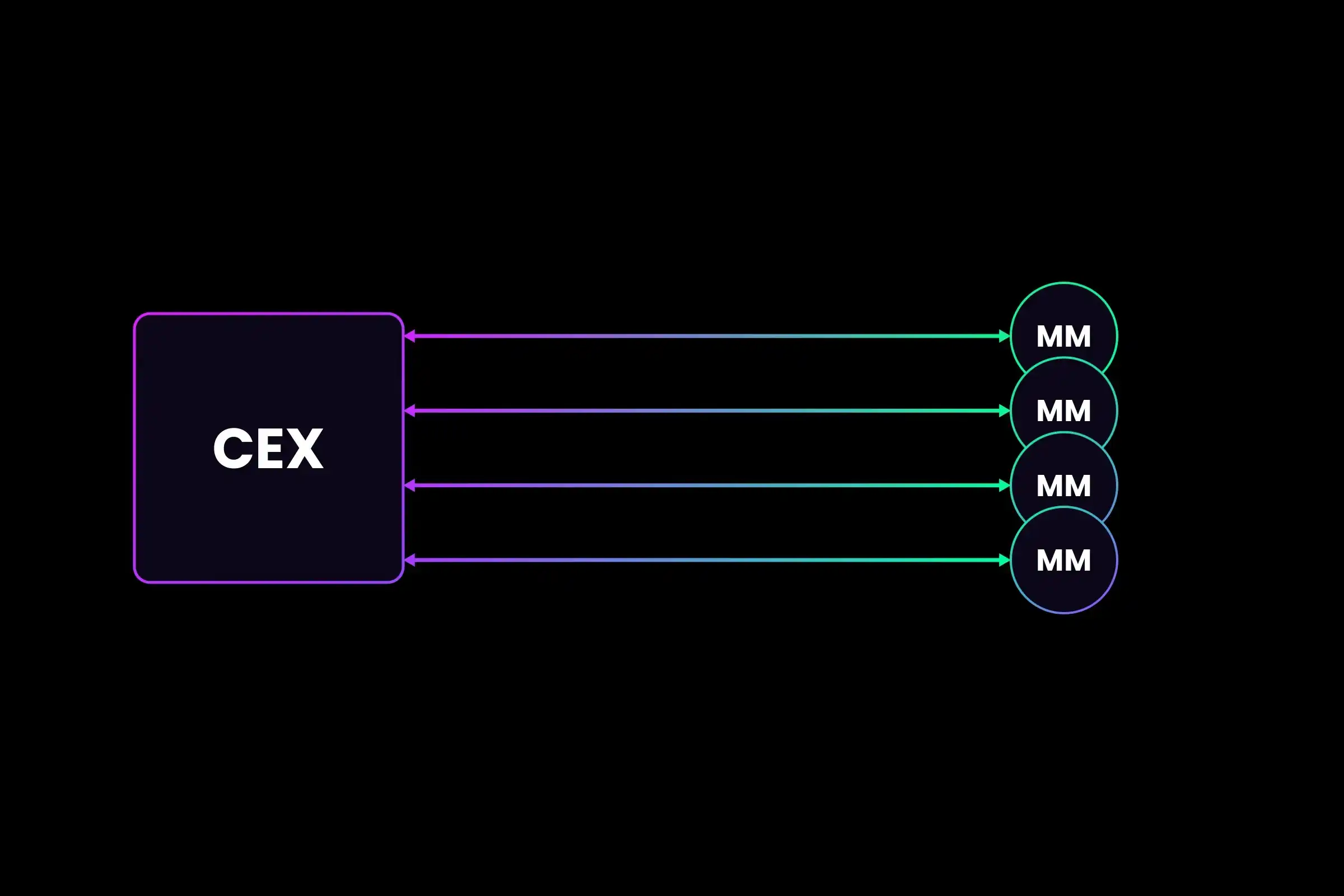
Market makers typically physically co-locate with the exchange. Each market maker runs an algorithm on a server and connects to another server running the exchange's system via a network cable of uniform length (e.g., 50 meters).

A massive stream of data is constantly sent back and forth between market makers and the exchange. Every time a market maker sends an order to the exchange—whether it's a limit order, cancellation, or market order—the exchange must broadcast this information to all other market makers; then, other market makers resend their own orders based on the new information; this cycle repeats indefinitely.

Here is a simple diagram.
Now let's look at how propAMM works on the Solana mainnet.

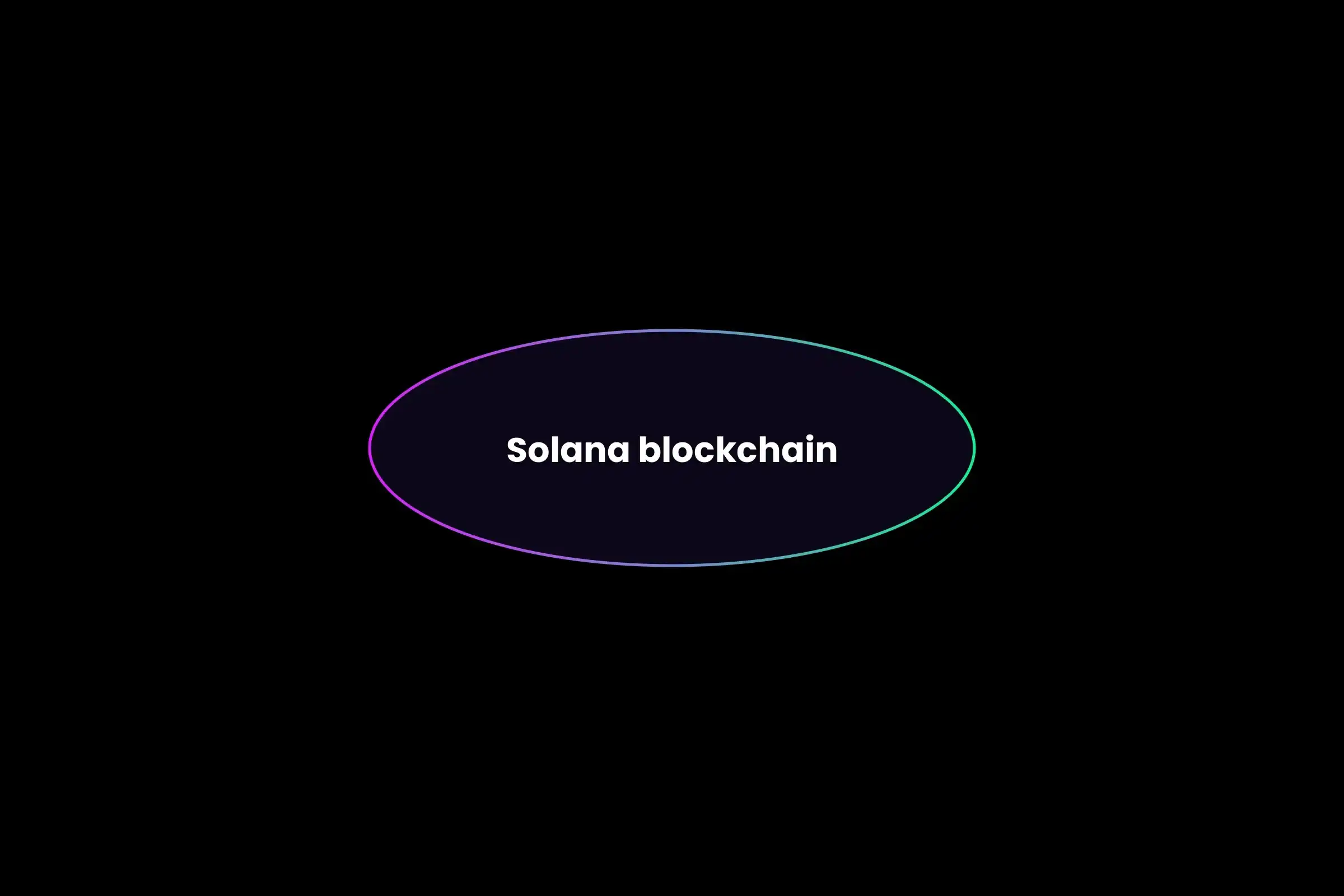
The beauty of propAMM on Solana is that the blockchain itself directly "hosts" the market maker algorithms. This means the system no longer needs to send billions of messages back and forth between market makers and the exchange; the market-making algorithms will run directly on the same physical machine as the exchange.

The new diagram is as follows. (Yes, only the Solana blockchain is needed!)
There has long been a common view in the cryptocurrency industry that decentralized systems must be slower (have higher latency) than centralized systems because they require communication between global nodes.

But if you think about it differently, on-chain hosted algorithms may actually have lower latency than traditional centralized exchanges in finance.

Why is that? The reason is that the latency required for propAMM to update prices only involves electrons moving within the same physical piece of silicon. For example, if the last market order causes a change in the SOL-USD price, this information is immediately visible to all propAMMs and used to price the next market order. Everything happens within the same piece of silicon; no bidirectional communication between servers is needed.

It's worth noting that propAMM does require frequent oracle updates, but this is not a problem and does not change the overall fact I described above.

The most critical point remains: when the exchange—in this case, the Solana blockchain—directly hosts the propAMM algorithms, the market makers' pricing changes in real-time within the same physical piece of silicon.

propAMM has already become the dominant mechanism for SOL-USDC spot quotes on Solana, with narrower spreads than all major CEXs. I expect this market structure to become the dominant model for on-chain trading this year, including spot, perpetual contracts (perps), and even prediction markets.

The biggest challenge for propAMM is that there is currently no way to ensure that the taker always gets the best execution, because:

  • All propAMM algorithms are not public (which is reasonable, as traditional market-making algorithms are also proprietary);
  • When routing trades between multiple propAMMs, the result is non-deterministic.

However, this problem can be solved. I expect all relevant aggregator teams to launch solutions this year, such as Jupiter and dFlow for spot, and Phoenix for contracts.

Current propAMM is still not fully optimized and is subject to various limitations of the Solana blockchain itself. This year, Solana will roll out a series of major upgrades that will significantly improve propAMM's performance, including:

  1. Higher CU (compute unit) limits per transaction and larger transaction sizes;
  2. Higher CU limits per block;
  3. Alpenglow: reducing slot time from 400ms to 100–150ms;
  4. DoubleZero: reducing global network latency;
  5. Application-controlled execution;
  6. Multiple concurrent leaders.

If propAMM on the Solana mainnet can already offer narrower quotes than all CEXs without these upgrades, imagine how powerful they will become as these upgrades are gradually implemented.


Domande pertinenti

QWhat is PropAMM and why does Kyle Samani consider it a major innovation in market microstructure?

APropAMM is a mechanism on Solana where market-making algorithms are hosted directly on the blockchain, eliminating the need for constant bidirectional communication between market makers and exchanges. Kyle Samani considers it one of the most important innovations in market microstructure in recent years, or even decades, because it significantly improves efficiency by running algorithms on the same physical hardware as the exchange, reducing latency and narrowing spreads compared to traditional CEXs.

QHow does PropAMM on Solana achieve lower latency compared to traditional centralized exchanges (CEXs)?

APropAMM achieves lower latency by hosting market-making algorithms directly on the Solana blockchain, which runs on the same physical hardware. This means price updates and order processing occur within the same silicon chip, eliminating the delay caused by network communication between separate servers in traditional CEX setups. Electronic movements within the chip are faster than inter-server data transfers.

QWhat current evidence does Kyle Samani provide to show PropAMM's effectiveness on Solana?

AKyle Samani points out that PropAMM has become the dominant mechanism for SOL-USDC spot quotes on Solana, with narrower spreads than all major centralized exchanges (CEXs). This demonstrates its superior performance in market efficiency and execution quality compared to traditional systems.

QWhat are the main challenges facing PropAMM, and how does Samani expect them to be addressed?

AThe main challenges are ensuring best execution for takers, as PropAMM algorithms are not public and routing between multiple PropAMMs is non-deterministic. Samani expects solutions to be developed by aggregator teams like Jupiter and dFlow for spot trading, and Phoenix for perpetual contracts, within the year to optimize routing and execution.

QWhat upcoming Solana upgrades does Samani mention that will further enhance PropAMM performance?

ASamani mentions several Solana upgrades: higher CU (Compute Unit) limits per transaction and larger transaction sizes, higher CU limits per block, Alpenglow (reducing slot time from 400ms to 100-150ms), DoubleZero (reducing global network latency), application-controlled execution, and multiple concurrent leaders. These will collectively boost PropAMM efficiency and performance.

Letture associate

Buy BTC or MSTR? Analyzing the Capital Flywheel of MicroStrategy

MicroStrategy's mNAV (market cap to Bitcoin holdings ratio) has compressed to near parity, sparking debate about whether the premium will re-expand. The core argument centers on the company's ATM equity issuance strategy. Critics view it as shareholder dilution, while supporters see it as rational Bitcoin accumulation. However, both miss the deeper strategic shift: MicroStrategy is building a layered capital structure that operates differently across mNAV regimes. At ~1x mNAV (current phase), equity issuance is used to buy Bitcoin directly, justified by long-term undervaluation. In high mNAV regimes (3-4x+), equity becomes a tool to repay debt from preferred securities, not just acquire Bitcoin. The introduction of preferred stock attracts yield-seeking investors, creating a continuous funding source for Bitcoin purchases but also dividend obligations. The ATM acts as a proactive de-leveraging tool, building equity ahead of future payment needs. mNAV expansion may return not only from Bitcoin price appreciation but also from the market valuing MicroStrategy as a scalable Bitcoin capital markets platform. The company is evolving from a Bitcoin treasury into a financial engine with distinct investor segments: yield investors in preferred securities and growth investors in equity. This could form a self-reinforcing "capital flywheel": preferred demand funds Bitcoin buys, equity demand values platform growth, and Bitcoin appreciation strengthens the balance sheet. The discussion may shift from *if* mNAV premium returns to *how large* this financial platform can become.

marsbit13 min fa

Buy BTC or MSTR? Analyzing the Capital Flywheel of MicroStrategy

marsbit13 min fa

U.S. Crypto Regulatory 'Civil War' Ceasefire: A Turning Point in the Decade-Long Power Struggle Between SEC and CFTC

For over a decade, the U.S. cryptocurrency industry has operated under regulatory uncertainty, with two key questions unresolved: what exactly are crypto assets, and which agency should regulate them? The Securities and Exchange Commission (SEC) and the Commodity Futures Trading Commission (CFTC) have long held overlapping and conflicting claims over crypto oversight, creating a "regulatory fog" that hindered innovation and pushed businesses to more predictable jurisdictions. Recently, signs of change have emerged. The SEC introduced a new classification framework in November 2025, categorizing digital assets into four types—digital commodities, digital collectibles, digital tools, and tokenized securities—acknowledging that not all crypto assets are securities. More significantly, the SEC and CFTC signed a Memorandum of Understanding (MOU) to enhance coordination in areas like crypto regulation, investor protection, and federal policy. Although non-binding, the MOU signals a move toward resolving jurisdictional conflicts and creating an "adaptive regulatory framework" tailored to digital assets. This shift is partly a response to global competition, as other financial centers develop clearer crypto regulations. Additionally, the growing integration of crypto with traditional finance—through stablecoins and real-world asset tokenization—demands a more structured regulatory approach. If successful, these efforts may lead to a unified federal framework, ending long-standing ambiguities and positioning the U.S. to better compete in the evolving digital financial landscape.

marsbit26 min fa

U.S. Crypto Regulatory 'Civil War' Ceasefire: A Turning Point in the Decade-Long Power Struggle Between SEC and CFTC

marsbit26 min fa

Matrixport Research: After Five Consecutive Months of Bitcoin Decline, Conditions for a Market Rebound Are Gradually Forming

Matrixport Research: Conditions for a Market Rebound Gradually Forming After Bitcoin's Consecutive Five-Month Decline Amid low trading volumes and weak market sentiment, with many investors shifting focus to traditional assets like gold and oil, underlying market conditions are quietly improving. Bitcoin has declined for five consecutive months—a historically rare occurrence—which has often preceded阶段性反弹 (stage-wise rebounds) in the past. Similarly, the total market cap of altcoins has fallen to a range that has historically triggered multiple rebound initiations. Although the overall altcoin model has not yet turned bullish, the number of altcoins reclaiming their 30-day moving average and showing improved momentum through quantitative screening has significantly increased. With stablecoin funds flowing back into the market, overall liquidity conditions are also improving, pointing to a potential market inflection window. From a historical perspective, Bitcoin often experiences阶段性反弹 (stage-wise rebounds) after three consecutive months of decline in a bear market. A sustained decline of four to six months with little recovery is relatively rare. The market is currently in such an extreme sequence, increasing the probability of a short-term counter-trend recovery. Simultaneously, the valuation of the altcoin sector has entered a range where周期性反弹 (cyclical rebounds) have historically been more likely. When the total altcoin market cap deviates approximately 30% from its 90-day moving average, the market is often in a bottom-building phase, followed by sustained recovery in Bitcoin and altcoins. Although trading volume remains low, the price structure of some altcoins has begun to improve, and Bitcoin is potentially building a阶段性底部 (stage-wise bottom) near $66,000. If prices hold the current support zone and gradually break through key resistance levels, the recovery process is expected to continue. Despite the overall weak performance of altcoins this cycle, some structural changes are emerging. More altcoins are reclaiming their 30-day moving average and beginning to outperform Bitcoin—often an early signal of improved market momentum. The number of altcoins selected through quantitative momentum screening has also increased significantly, with some tokens simultaneously exhibiting improved momentum and fundamental catalysts. More importantly, the market funding environment is changing. The previous dynamic dominated by liquidations and capital outflows is gradually shifting towards capital回流 (inflows). The re-expansion of stablecoin liquidity is a key signal; in the past month, Circle's USDC alone recorded approximately $8 billion in net inflows, indicating that capital is re-entering the crypto market. As liquidity gradually improves, the probability of capital being reallocated to Bitcoin and Ethereum is also rising, which will provide support for a broader market. Overall, while crypto market sentiment remains subdued, multiple key conditions are gradually forming. After a historically rare streak of monthly declines, Bitcoin appears to be building a potential bottom; stablecoin funds are回流 (flowing back), improving market liquidity. Simultaneously, the altcoin market breadth is expanding, with more tokens reclaiming their 30-day momentum threshold. Although the altcoin model has not yet officially turned bullish, trading setups meeting screening conditions have risen to their highest level in months. If Bitcoin confirms a trend breakout above key points, the probability of a broader阶段性反弹 (stage-wise rebound) will further increase.

Matrixport1 h fa

Matrixport Research: After Five Consecutive Months of Bitcoin Decline, Conditions for a Market Rebound Are Gradually Forming

Matrixport1 h fa

Trading

Spot
Futures
活动图片