Historical Bottom Signal Reappears? Messari Valued at $300 Million Sells for $10 Million

marsbit2026-06-17 tarihinde yayınlandı2026-06-17 tarihinde güncellendi

Özet

Messari, a major crypto data and research platform once valued at $300 million, was sold to rival Blockworks for just over $10 million in June 2026. This sale marks a broader, quiet contraction in the crypto industry. Data platforms like DappRadar and Parsec have shut down, media outlets like CoinDesk have been sold at steep discounts, and companies across the sector are laying off staff or pivoting to AI, which is disrupting traditional research and data business models. Venture capital investment in crypto has plummeted, with funding in Q1 2026 at its lowest since 2020, as capital and talent shift aggressively toward AI. Prominent crypto investors are leaving the space, and many funds are struggling. However, these extreme pessimism signals may historically indicate a market bottom. Bitcoin is down nearly 50% from its 2026 high, the Crypto Fear & Greed Index has been in "extreme fear" for months, and long-term Bitcoin holders control a near-record 80% of the supply. Similar combinations of deeply negative signals—including low VC activity and distressed asset sales—preceded major bull markets in 2018, 2020, and 2022. While Messari's downfall symbolizes a tough period, it also aligns with patterns seen at cycle lows.

Author: BibiNews

Messari was once the data platform in the crypto industry closest to Bloomberg, with a peak valuation of $300 million USD.

Its founder, Ryan Selkis, was one of the first to expose Mt. Gox's insolvency, establishing his reputation with this feat before founding Messari with the goal of consolidating the crypto world's data, research, and disclosures into a professional platform. It covers over 40,000 crypto assets, and its annual Mainnet conference in New York is one of the industry's most important summits.

In September 2022, the crypto arm of hedge fund giant Brevan Howard led its Series B funding round, with Point72 and Coinbase Ventures participating, valuing the company at approximately $300 million.

On June 12, 2026, Messari was acquired by competitor Blockworks for a price just over ten million dollars.

This is not the situation of just one company. When primary market valuations and the tokens in your wallet are both shrinking significantly, has the collective repricing of the entire crypto industry finally hit bottom?

Collective Contraction of Crypto Companies

In July 2024, Messari founder Selkis resigned as CEO following a series of controversial statements, with co-founder Eric Turner taking over. In March 2026, Turner also left, CTO Diran Li took the helm, and the company underwent significant layoffs, pivoting towards AI and announcing it would become an AI-first company.

But for Messari, AI is not just a pivot direction; it's also a reason for its decline. Messari's core product was selling research reports and data curation. An industry report that once took an analyst a week to write can now be completed in a few hours with AI tools. When research costs approach zero, the business of selling research reports becomes hard to monetize. This is not a cyclical difficulty but a structural threat.

Ultimately, Messari's data platform and API were merged into Blockworks, ending an eight-year entrepreneurial journey.

But Messari is not an isolated case.

From 2025 to 2026, a quieter, deeper change is underway: those companies that don't issue tokens and rely on selling products and services are also struggling to survive.

Data platforms are shutting down. DappRadar, after seven years of operation, tracking over 18,000 decentralized applications across 93 blockchains with 500,000 monthly active users, announced its closure in November 2025, citing "financial unsustainability." On-chain analytics platform Parsec, operational for five years, shut down in February 2026. CoinGecko is currently in talks for an outright sale and has hired investment bank Moelis as an advisor.

Media outlets are being sold for cheap or laying off staff. CoinDesk, the benchmark for crypto media, once rumored to be worth $300 million, cut 45% of its editorial team in August 2023 and was acquired by Bullish for approximately $75 million in November of the same year. Bankless, one of the most influential brands in crypto podcasts with over 1,300 episodes and a $35 million VC fund, quietly laid off most of its team in May of this year.

Blockworks, which acquired Messari, itself shut down its entire news department in October 2025, shifting all resources to its data business. Its founder stated bluntly: users increasingly use data as their primary source of information, not news.

On-chain data company Dune laid off 25% of its staff in May 2026.

VCs Have Stopped Investing

Since 2017, over 800 crypto-focused investment funds have been established globally. Today, only about half remain operational. In 2025, 63% of crypto hedge funds were unprofitable.

New funds are also unable to raise money. In Q1 2026, only 8 new crypto VC funds were established, the lowest number since Q3 2020, with fundraising volume at just 12% of the peak in 2022. From October 2025 to April 2026, monthly crypto VC investment plummeted from $3.85 billion to $660 million, a drop of over 80% in six months.

Where has the money gone? To AI. In 2025, VC funding in the AI sector reached $192.7 billion, surpassing half of the global VC total for the first time. A partner at Robot Ventures, a crypto fund founded by the Compound founder, made a direct statement: "AI is sucking out the oxygen; both talent and LPs' attention are being diverted. Many who should have been doing crypto startups are now starting AI companies."

People are leaving too. Kyle Samani, co-founder of Multicoin Capital, managing $5.9 billion in assets and one of Solana's earliest and most steadfast institutional investors, announced his departure in February of this year to focus on AI and robotics.
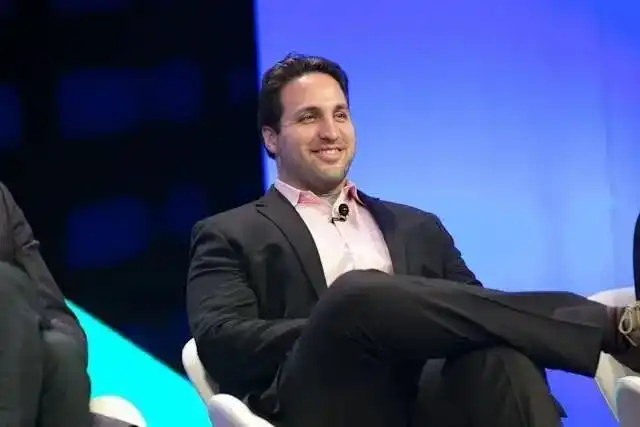
He wrote in a later-deleted tweet: "Crypto isn't as interesting as many people (including myself) once thought." Even Paradigm, once one of the purest crypto VCs, has begun expanding its investment scope to include AI and robotics.

Those crypto VC funds from 2020 to 2022 invested heavily during periods of high valuations and have yet to return capital to their LPs. LPs are not re-upping, funds cannot raise new capital, startups cannot secure financing, products fail to materialize, leading to closures or fire sales. This is a complete transmission chain currently playing out the final steps in the crypto primary market.

A partner at Dragonfly Capital used a term to describe the current environment: the great extinction.

Perhaps, This is a Good Signal

Bitcoin has fallen from its high of $126,000 last October to around $65,000 currently, a drop of nearly 48%. Altcoin bubbles are rapidly clearing. Starknet, once valued at $8 billion, saw its market cap drop to $200 million, a 95% decline. Scroll, Wormhole, Magic Eden have all fallen over 95%. Over 70% of tokens issued between 2021 and 2022 are either worthless today or have fallen below one-tenth of their peak value.

The Crypto Fear & Greed Index dropped to as low as 5 in February this year, 11 in March, and 13 in early June, remaining in the "Extreme Fear" zone for over 50 consecutive days.

Historically, this index has only fallen below 10 three times: December 2018, the March 2020 Covid crash, and November 2022 FTX collapse. Each time, Bitcoin subsequently surged over 500% within three years, with the most extreme being the 2018 case which saw a 2050% increase.

Another quieter signal comes from on-chain data: Bitcoin long-term holders currently control nearly 80% of the circulating supply. Although this proportion has been on a slow upward trend long-term, it has remained at elevated levels and continued to rise during the nearly 50% price correction from the $126,000 high, forming a clear divergence from price action. This means the remaining market mainly consists of long-term holders unwilling to sell.

Historically, when this proportion approaches or exceeds 75-80% accompanied by a deep price adjustment, it often corresponds to a bear market bottom area.

Looking at the primary market. The last time crypto VC deal count was this low was in 2020, just before DeFi Summer. The last time new fund formation was this low was also in 2020.

And Dragonfly Capital, which used the term "great extinction," raised a $650 million new crypto fund against the trend in February this year, exceeding its target by 30%. Its managing partner said: "Morale is low, fear is extreme, the gloom of the bear market has descended." But his action was to keep investing. The last time Dragonfly raised funds during peak market panic was in 2022; that fund invested in Polymarket and Ethena, becoming its best-performing fund historically.

Blockworks, which acquired Messari, just completed a funding round at a $192 million valuation on April 29, stating its purpose clearly: to consolidate the crypto data industry. It is not expanding its business but acquiring peers on the cheap.

Token prices halved, the fear index drops to single digits, long-term holder proportion nears extreme levels, VC deal count returns to five-year lows, infrastructure companies collectively shut down or sell for cheap. Viewed individually, each of these signals is pessimistic. But when they appear simultaneously, it has only happened three times in history, each followed by a new major cycle.

A fall from $300 million to $10 million looks like the end of an era. But every true bottom never looks like an opportunity.

İlgili Sorular

QWhat were the main factors that led to Messari's decline and eventual acquisition for a fraction of its peak valuation?

AMessari's decline was driven by a combination of internal turmoil, a failed strategic pivot, and a structural threat to its core business. The company faced leadership instability, with its founder and his successor both resigning within two years. Its attempt to pivot to AI was undermined by the very technology it adopted, as AI tools drastically reduced the cost and value of the research reports Messari sold. This created a 'structural threat' to its primary revenue model. Ultimately, these factors led to its acquisition by competitor Blockworks for approximately $10 million, a sharp drop from its $300 million valuation in 2022.

QHow does the article describe the current state of the broader crypto infrastructure and media sector?

AThe article describes a sector undergoing a severe and widespread contraction. Data platforms like DappRadar and Parsec have shut down, while others like CoinGecko are seeking buyers. Media companies are being sold at deep discounts (e.g., CoinDesk) or conducting major layoffs (e.g., Bankless, Blockworks' own news division). Even data leader Dune has downsized. This signifies a 'quiet, deeper change' where companies not issuing tokens but selling services are also failing, indicating the downturn extends beyond market cycles to affect core industry infrastructure.

QWhat key indicators does the article cite to suggest the crypto market might be at or near a historical bottom?

AThe article cites several concurrent indicators reminiscent of past market bottoms: 1) Bitcoin's ~48% price drop from its recent high. 2) The Crypto Fear & Greed Index lingering in 'Extreme Fear' territory for over 50 days, a level historically followed by major rallies. 3) Bitcoin's Long-Term Holder supply approaching 80%, a level associated with bear market capitulation where weak hands have sold. 4) Crypto VC investment activity plummeting to levels last seen in 2020, just before the DeFi Summer bull run. The simultaneous occurrence of these signals has historically preceded new major cycles.

QAccording to the article, what impact has the rise of AI had on the crypto venture capital and startup landscape?

AThe rise of AI has significantly diverted capital, talent, and attention away from the crypto sector. In 2025, AI attracted over half of all global VC funding. This has made it difficult for crypto funds to raise new capital, with the number of new crypto VC funds hitting a multi-year low. Prominent crypto investors like Kyle Samani of Multicoin Capital are leaving the space for AI and robotics. A VC partner quoted in the article states that 'AI sucked away the oxygen,' capturing the focus of both Limited Partners (LPs) and entrepreneurs who might have otherwise built crypto companies.

QWhat contradictory actions by industry players does the article highlight as potential contrarian bullish signals?

AThe article highlights actions that contradict the prevailing pessimism, suggesting some players see opportunity. First, Dragonfly Capital raised a $650 million crypto fund *exceeding* its target during this period of low morale, just as it did successfully in 2022. Second, the acquirer of Messari, Blockworks, itself recently raised funding with the explicit goal of consolidating the struggling crypto data industry by buying distressed competitors at low prices. These moves indicate that certain experienced investors and firms are actively deploying capital to build or acquire assets when prices are depressed, a classic bottom-signaling behavior.

İlgili Okumalar

The 'Chip' Challenge and Breakthroughs in China's Optical Industry Chain

China's Photonics Industry: Bottlenecks and Breakthroughs In the global AI race, computing chips dominate the narrative, but the underlying bottleneck increasingly defining the scale of AI clusters is light—or more specifically, optical connectivity. Optical modules, which translate electrical signals to light and vice versa, are crucial for connecting thousands of GPUs in AI data centers, preventing data congestion and ensuring efficient model training. High-speed modules (800G, 1.6T) are now standard, with performance hinging on advanced DSP (Digital Signal Processor) chips. This is where a critical dependency lies. Two US giants—Marvell and Broadcom—collectively dominate over 90% of the high-end DSP chip market. Chinese optical module leaders like Zhongji Innolight and Eoptolink rely on these chips to manufacture modules for overseas AI customers, primarily in North America. While this creates a supply chain vulnerability, complete decoupling is difficult. Marvell derives over half its revenue from Greater China, and the US firms depend on Chinese partners for chip packaging and optical components. The risk from laser chips (e.g., from Lumentum), another key component, is considered more manageable due to multiple global suppliers and faster progress in domestic alternatives from companies like YOFC and Accelink. To mitigate risks, China's industry is pursuing a multi-pronged strategy: diversifying supply chains and locking in long-term orders; fostering a domestic market ecosystem to adopt homegrown DSPs from firms like Huawei HiSilicon and CETC; accelerating R&D in high-speed DSPs and advanced packaging; and investing in next-gen technologies like silicon photonics and Co-Packaged Optics (CPO) to reduce reliance on discrete DSPs. The ultimate solution lies not in short-term博弈 but in persistent advancement of domestic high-end chip R&D and manufacturing. While challenges remain in performance, certification, and ecosystem building, China's vast domestic market and manufacturing base provide a crucial buffer, buying time for the industry to achieve greater technological independence.

marsbit14 dk önce

The 'Chip' Challenge and Breakthroughs in China's Optical Industry Chain

marsbit14 dk önce

Behind SpaceX's $2 Trillion Market Cap: Why Does Musk Always Have the Next Move Planned?

On June 12th, SpaceX debuted on the Nasdaq, reaching a valuation that briefly touched $2 trillion. This marked the culmination of a 24-year journey from its founding in 2002, driven by Elon Musk's frustration at the high cost of buying rockets. The company's path was defined by early failures, with its first three Falcon 1 launches ending in explosions before a successful 2008 flight opened the era of commercial spaceflight. Key to its model was a fixed-price NASA contract, incentivizing cost reduction. SpaceX mastered rocket reusability, first achieving a Falcon 9 landing in 2015, which drastically cut launch costs. This enabled its profitable Starlink satellite internet constellation, envisioned years before reusability was proven, to create an internal market for frequent launches. Similarly, the next-generation Starship rocket was in development long before its first flight, with its business case evolving from Mars colonization to supporting the emerging concept of in-orbit data centers for AI—a story now central to its valuation. The company's recent IPO, a reversal of its long-standing "no IPO" stance, is funding this ambitious "space-based compute" vision. While major tech players like Google, Blue Origin, and others are investing heavily, significant technical and cost hurdles remain. Ultimately, SpaceX's history is one of creating its own demand: first with Starlink and now with space-based AI compute, betting that its next rocket will enable its next giant market.

marsbit17 dk önce

Behind SpaceX's $2 Trillion Market Cap: Why Does Musk Always Have the Next Move Planned?

marsbit17 dk önce

When Crypto Meets the World Cup: CoinW and Modrić's Art of "Navigating Cycles"

When Encryption Meets the World Cup: CoinW and Modrić's "Transcending Cycles" Philosophy In the context of the 2026 FIFA World Cup and its massive global audience, the crypto exchange CoinW announced football legend Luka Modrić as its global brand ambassador. This move is framed not merely as a marketing tactic, but as a strategic experiment in user profile migration. It targets mature, financially stable football fans—particularly in Europe, Southeast Asia, and Latin America—who traditionally have low crypto awareness but value trusted, time-tested authority figures like Modrić. The article draws parallels between Modrić's enduring, disciplined career—marked by consistency and success at the highest level over two decades—and CoinW's own development path. Founded in 2017 during a volatile industry period, CoinW focused on building robust infrastructure and risk management. It weathered the 2022 industry crisis without major security incidents, subsequently earning recognition like "Europe's Most Trusted Exchange" and growing to over 20 million registered users. This "long-termism" is translated into user-centric products. CoinW Academy lowers the initial knowledge barrier. Its integrated ecosystem (CoinW, GemW, DeriW, PropW) and the recent launch of a TradFi section—offering perpetual contracts on traditional assets like stocks, gold, and oil—aim to create a unified platform for diverse assets. For the World Cup, CoinW launched the "We Are The Game" campaign, collaborating with Alchemy Pay to offer zero-fee deposits and local payment options, aiming to transform spectators into participants and lower entry barriers. Ultimately, CoinW's sports partnerships and product strategy are presented as a concerted effort to build trust and accessibility for the "silent majority" still outside crypto—shifting the industry narrative toward inclusivity and long-term value.

Foresight News23 dk önce

When Crypto Meets the World Cup: CoinW and Modrić's Art of "Navigating Cycles"

Foresight News23 dk önce

A Panoramic View of the Solana Privacy Ecosystem: The Complete Privacy Stack from Computation to AI

**Solana Privacy Ecosystem: A Comprehensive Overview from Computation to AI** Solana's privacy ecosystem, while nascent, is rapidly evolving to address key challenges across multiple layers. Key figures like Helius CEO Mert acknowledge that Solana has lagged in privacy but highlight its unique potential for scalable, composable privacy protocols, potentially leveraging technologies like ZK compression without persistent rollups. The foundational layer is **Private Compute**, addressed by providers like Arcium and Magic Block. Arcium utilizes Multi-Party Computation (MPC) networks to process encrypted data off-chain with final settlement on Solana, supporting use cases like confidential payments (via its C-SPL token standard) and encrypted data analysis. Magic Block employs Trusted Execution Environments (TEEs) to create private, ephemeral rollups, offering confidentiality, scalability, and composability. Both enable private order books, dark pools, and DeFi rails. Building on this infrastructure are applications for **Private Transfers and Balances**. Umbra, built on Arcium, offers encrypted token accounts with amount, balance, and sender-receiver linkage privacy, plus compliance features. Privacy Cash uses Tornado-style shielded pools for SOL, while Hush provides private staking and trading with integrated swaps via Jupiter. To eliminate **On-Chain Trails** from everyday activities like trading, protocols like encifherio and VanishTrade are emerging. encifherio privately routes swaps through Jupiter by encrypting transaction details within TEEs. VanishTrade routes trades through shielded liquidity pools. Darklake offers a ZK-native "blind slippage" AMM and private perpetuals to hide trading intent and prevent front-running. More advanced applications include **Private Prediction Markets**. Platforms like Melee Markets use Arcium's MPC to encrypt order books, allowing participants to place hidden bets without revealing their market position until settlement. Finally, the ecosystem is expanding into **Private AI**. Loyal leverages both Magic Block and Arcium to create a decentralized protocol where user-AI interactions, queries, and preferences are encrypted on-chain, giving users ownership and control over their data while enabling private transactions and yield generation. In summary, Solana's privacy stack is developing from core compute and transfer privacy towards sophisticated applications in DeFi, prediction markets, and AI, aiming for a future where Fully Homomorphic Encryption (FHE) and Zero-Knowledge (ZK) proofs combine for a complete privacy solution.

marsbit24 dk önce

A Panoramic View of the Solana Privacy Ecosystem: The Complete Privacy Stack from Computation to AI

marsbit24 dk önce

İşlemler

Spot
Futures
活动图片