Abu Dhabi Steps Up Crypto Regulation: Tether, Circle Secure Major Approvals

bitcoinist2025-12-10 tarihinde yayınlandı2025-12-10 tarihinde güncellendi

Özet

Tether and Circle, the issuers of the world's two largest stablecoins, have secured significant regulatory approvals in Abu Dhabi. Tether’s USDT has been recognized as an Accepted Fiat-Referenced Token (ARFT) by the Abu Dhabi Global Market (ADGM), expanding its presence to include several additional blockchains like Aptos, Celo, and TON. This allows authorized entities in ADGM to conduct regulated activities involving USDT. Separately, Circle received a Financial Services Permission (FSP) license, enabling it to operate as a Money Services Provider. These approvals reinforce Abu Dhabi’s ambition to become a global hub for compliant digital finance. The news comes amid a period of renewed growth in the stablecoin market cap after a brief decline in late 2025.

Tether and Circle, issuers of the two largest stablecoins in the world, have just received major regulatory greenlights in UAE’s Abu Dhabi.

Tether’s Stablecoin Recognized As ARFT, While Circle Obtains FSP License

Major developments related to the cryptocurrency sector have occurred in the United Arab Emirates (UAE) this week, with Tether and Circle both winning approvals in Abu Dhabi Global Market (ADGM), the international financial center and free economic zone of Abu Dhabi, UAE’s capital.

First, as Tether has announced in a press release, USDT issued on a number of blockchains has been recognized as an Accepted Fiat-Referenced Token (ARFT) in ADGM. USDT already received approval from ADGM last year, but the previous recognition only included the Ethereum, Solana, and Avalanche versions. With the new regulatory nod, USDT available on Aptos, Celo, Cosmos, Kaia, Near, Polkadot, Tezos, TON, and TRON has also entered the market.

“By extending recognition to USD₮ on several major blockchains, ADGM further strengthens Abu Dhabi’s position as a global hub for compliant digital finance,” said Tether CEO Paolo Ardoino.

USDT being considered as an ARFT means that authorized persons licensed by ADGM’s Financial Services Regulatory Authority (FSRA) can offer regulated activities involving the stablecoin on nearly all its native blockchains. “Introducing USD₮ within ADGM’s regulated digital asset framework reinforces the role of stablecoins as essential components of today’s financial landscape,” noted Ardoino.

Meanwhile, Circle, the issuer of USDC, has also advanced in the region with a new license from the FSRA, according to an announcement. The license, called the Financial Services Permission (FSP), allows the company to operate as a Money Services Provider in ADGM.

Arvind Ramamurthy, ADGM Chief Market Development Officer, said:

Circle’s regulated presence in ADGM reinforces our ambition to build a trusted, institutional-grade digital asset ecosystem in Abu Dhabi, one that enhances market confidence, supports real-world use cases, and cements the UAE’s role as a leading hub for regulated digital finance.

The greenlight from ADGM follows the recognition of Circle’s USD and EUR stablecoins by the Dubai Financial Services Authority (DFSA) in February of this year. The move made USDC and EURC the first stablecoins to be approved in the Dubai International Financial Centre (DIFC).

The new FSP license means “Circle is positioned to expand regulated payment and settlement use cases in the UAE for businesses, developers, and financial institutions,” the statement noted.

Stablecoins have witnessed rapid growth throughout 2025, setting multiple records. The near-constant growth in these tokens, however, saw a break in October, as the combined market cap of this side of the cryptocurrency sector reversed course.
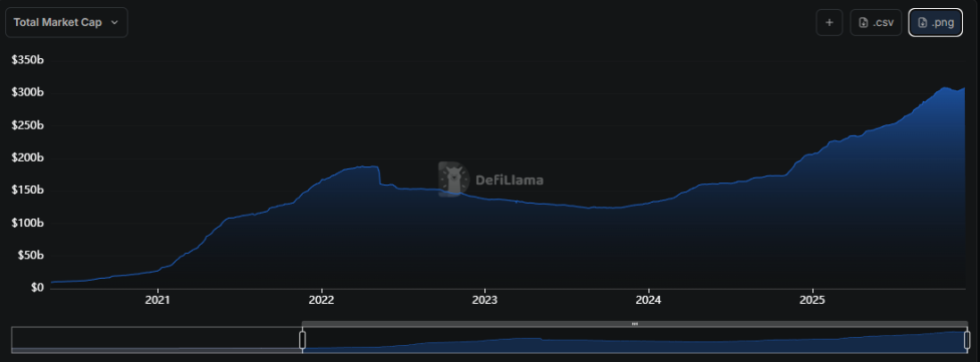
The trend in the market cap of the stablecoins | Source: DefiLlama

As the above chart from DefiLlama shows, the stablecoin market cap declined to a low in mid-November. Since this bottom, though, capital inflows have returned for these fiat-tied assets, with the market cap once again nearing in on a new record.

Bitcoin Price

At the time of writing, Bitcoin is floating around $90,100, up almost 4% in the last seven days.

Looks like the price of the coin has moved sideways over the last few days | Source: BTCUSDT on TradingView


İlgili Okumalar

Raising $400 Million in Funding, Shenzhen's Embodied AI Unicorn is Heading for an IPO

LimX Dynamics, a leading Chinese humanoid robotics company based in Shenzhen, has raised nearly $4 billion in total funding following a $2 billion Pre-IPO round. This latest round, backed by prominent global investors including IDG Capital, Lens Technology, GGG Group, and Redstone VC, values the company at approximately 150 billion yuan. Founded in 2022 by Southern University of Science and Technology professor Zhang Wei, the company has developed a full-stack, self-developed "brain system" for humanoid robots. Its three-layer technical architecture (System 0 for locomotion, System 1 for specific skills, and System 2 for cognitive reasoning) powers a diverse product matrix, including the LimX Luna for commercial service and the LimX Oli R&D platform. Often compared to its American counterpart Figure, LimX Dynamics differentiates itself by focusing on "serving people, not processes" and prioritizing commercial service scenarios over factory applications first. The company has secured thousands of pre-orders, with over half coming from overseas markets, and has begun initial deliveries. With a distinctly global investor base and strategy, LimX Dynamics aims to leverage China's manufacturing advantages for worldwide competition. Having completed its shareholding reform in March 2026, the company is now steadily advancing its IPO plans, positioning itself as a key contender in the intensifying race to go public within the humanoid robotics sector.

marsbit38 dk önce

Raising $400 Million in Funding, Shenzhen's Embodied AI Unicorn is Heading for an IPO

marsbit38 dk önce

Grayscale: The Three Evolutionary Stages of Stock Tokenization and a Rundown of Core Beneficiary Public Blockchains

Grayscale research outlines three evolutionary phases for the tokenization of equities, each benefiting different blockchain infrastructures. The first phase is the third-party "wrapper model," where a Special Purpose Vehicle (SPV) holds the underlying stock and tokenized shares represent claims on that entity. This model, accounting for over 70% of the current tokenized stock market cap, allows for DeFi integration and is prevalent on public blockchains like Ethereum, Solana, and BNB Chain. The second phase is the "entitlement model," exemplified by an upcoming pilot from the Depository Trust & Clearing Corporation (DTCC) on the Canton Network. This approach involves placing existing, regulated securities onto a blockchain for transfer within the post-trade infrastructure, without creating a new security. The third and most transformative phase is issuer-led native issuance, where companies directly issue securities on-chain. While offering the greatest long-term potential, this model requires further regulatory clarity and is seen as favoring open-architecture blockchains like Ethereum and Solana, as well as hybrid networks like Avalanche. The report concludes that all three models will likely coexist. The blockchains poised to benefit most from tokenization growth are identified as Ethereum, Solana, BNB Chain, Avalanche, and Canton Network.

链捕手55 dk önce

Grayscale: The Three Evolutionary Stages of Stock Tokenization and a Rundown of Core Beneficiary Public Blockchains

链捕手55 dk önce

İşlemler

Spot
活动图片