Business owner faces up to 280 years over $24M crypto Ponzi scheme

cointelegraphPublished on 2026-08-25Last updated on 2026-08-25

Abstract

A Las Vegas business owner, Brent Kovar, faces a potential maximum sentence of 280 years in prison after being convicted by a federal jury for orchestrating a $24 million cryptocurrency Ponzi scheme. Kovar, who operated Profit Connect from late 2017 to July 2021, falsely claimed the company used AI and a supercomputer for crypto mining and transaction verification. He promised investors annual returns of 15% to 30% and a money-back guarantee, asserting the company held massive crypto reserves. Prosecutors revealed the business was unprofitable, held no such reserves, and used new investor funds to pay earlier investors, cover operational costs, and for personal expenses like a house purchase. Kovar was found guilty on multiple counts of wire fraud, mail fraud, and money laundering. His sentencing is scheduled for November 30.

A business owner in Las Vegas faces a statutory maximum sentence of 280 years in prison after a federal jury convicted him of running a $24 million crypto Ponzi scheme that defrauded at least 400 investors.

The US Justice Department said Monday that Brent Kovar was found guilty of 11 counts of wire fraud, two counts of mail fraud and two counts of money laundering following a nine-day trial.

Kovar owned Profit Connect from late 2017 to July 2021. The company purportedly used artificial intelligence software on a supercomputer to mine crypto and verify other crypto transactions.

Kovar falsely presented the company as profitable and promised fixed annual returns ranging from 15% to 30%, along with a 100% money-back guarantee. He also claimed that Profit Connect held hundreds of millions of dollars in crypto reserves.

Prosecutors said the company was not profitable and held no such reserves. It also had no legitimate means to deliver the promised returns or money-back guarantee.

Instead, Kovar used investor money to operate Profit Connect, buy gifts for employees, purchase a house for himself and repay earlier investors while presenting the payments as proceeds from crypto activities.

Kovar is scheduled to be sentenced on Nov. 30. The 280-year figure represents the combined statutory maximum, while a federal judge will determine his sentence.

Related: DOJ moves to dismiss charges against alleged $722M BitClub fraudster: Report

Related Questions

QWhat was Brent Kovar convicted of by a federal jury?

ABrent Kovar was convicted of 11 counts of wire fraud, two counts of mail fraud, and two counts of money laundering.

QWhat was the name of the company Kovar owned and what did it purportedly do?

AKovar owned Profit Connect, a company that purportedly used artificial intelligence software on a supercomputer to mine crypto and verify other crypto transactions.

QWhat false promises did Kovar make to investors of Profit Connect?

AKovar falsely promised investors fixed annual returns ranging from 15% to 30%, along with a 100% money-back guarantee, and claimed the company held hundreds of millions of dollars in crypto reserves.

QHow did Kovar actually use the investor money according to prosecutors?

AProsecutors said Kovar used investor money to operate Profit Connect, buy gifts for employees, purchase a house for himself, and repay earlier investors while presenting the payments as proceeds from crypto activities.

QWhat is the statutory maximum prison sentence Kovar faces and when is his sentencing scheduled?

AKovar faces a statutory maximum sentence of 280 years in prison. His sentencing is scheduled for November 30.

Related Reads

U.S. 'Operation Economic Outcast' Targets Iran's Crypto Sector, Over $100 Million in Oil-Related Payments Allegedly Facilitated via Cryptocurrency

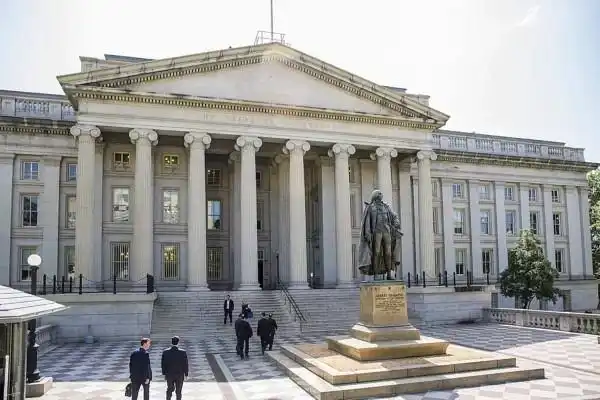
U.S. Treasury Launches "Operation Economic Outcast," Sanctions Iran's Crypto Sector On August 24, the U.S. Treasury Department initiated "Operation Economic Outcast," a government-wide economic campaign against Iran. As part of this, the Office of Foreign Assets Control (OFAC) issued a sectoral sanctions determination targeting digital assets under Executive Order 13902, significantly expanding its authority. The Treasury stated that Iran is increasingly using cryptocurrency as a "tool of choice" to evade sanctions and support transactions linked to the Islamic Revolutionary Guard Corps (IRGC). Concurrently, OFAC sanctioned Ukrainian-Emirati broker Ivan Obukhov and his company, Foscom FZE. The Treasury alleges that since 2023, Obukhov has processed over $100 million in cryptocurrency payments to facilitate oil sales on behalf of the IRGC-Quds Force. Nearly 60 other entities, individuals, and vessels involved in nuclear procurement, cyber operations, and oil revenue networks were also sanctioned. This move marks an escalation from prior actions against specific exchanges, now establishing a broad basis to sanction any foreign entity deemed to operate in or support Iran's digital asset sector. Treasury Secretary Scott Bessent warned that any entity engaging economically with the Iranian regime will face the full reach of U.S. power, calling the operation an "economic D-Day" aimed at isolating Tehran.

marsbit21m ago

U.S. 'Operation Economic Outcast' Targets Iran's Crypto Sector, Over $100 Million in Oil-Related Payments Allegedly Facilitated via Cryptocurrency

marsbit21m ago

Is Your Account Still Blocked? Rosfinmonitoring Gets Direct Access to SBP and 'Mir'

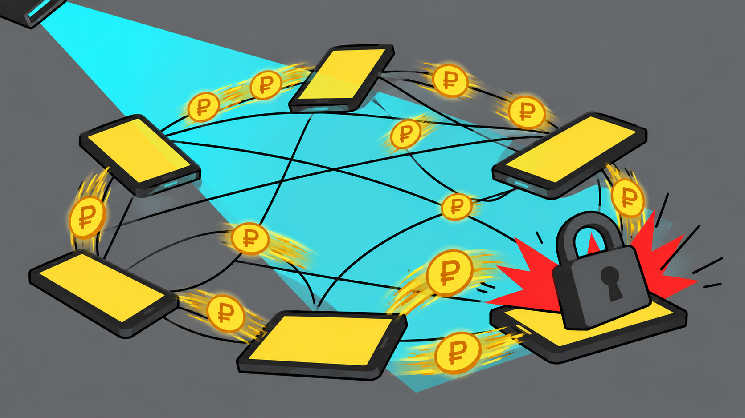
Starting September 1, 2026, Russia's Federal Law No. 461-FZ grants Rosfinmonitoring (the Federal Financial Monitoring Service) direct access to transaction data from the National Payment Card System (NSPK), the operator of the Mir payment card system and the Faster Payments System (SBP). This allows the agency to bypass individual banks when reconstructing transaction trails for anti-money laundering (AML) purposes. The data, provided free of charge and without requiring customer consent or court orders, includes information on operations via SBP, the unified QR-code, and Mir cards, with no minimum transaction threshold. Customers will not be notified when their data is shared. The law does not introduce new taxes, automatic account freezes, or new enforcement powers. If suspicious activity is identified under existing AML laws, existing procedures with banks and law enforcement will apply. The agreement's specific terms between Rosfinmonitoring and NSPK, including the scope and historical depth of accessible data, are not public. The change centralizes access to a vast volume of domestic payments, potentially speeding up financial investigations. However, it also creates a single point of concentration for sensitive data and reduces transparency for cardholders, as customers are not informed about data requests. Observers note a global trend of expanding supervisory powers, with differences in the Russian model being the non-public agreement and the lack of customer notification.

cryptonews.ru24m ago

Is Your Account Still Blocked? Rosfinmonitoring Gets Direct Access to SBP and 'Mir'

cryptonews.ru24m ago

Trading

Spot
活动图片