On January 16, 2026, Canan Technology announced that it had received a notice from the Nasdaq exchange on January 14. The notice indicated that Canan's stock price had been below $1 for the past 30 consecutive trading days, resulting in a warning. According to Nasdaq listing rules, if Canan cannot bring its stock price back to $1 or above within 180 days (by July 13, 2026), it may face delisting.
Canan Technology stated that, if necessary, the company will implement a reverse stock split to meet the requirement. A reverse stock split is an operation that reduces the total number of outstanding shares by consolidating existing shares, thereby increasing the price per share. The author contacted Canan Technology regarding the warning, but had not received a response by the time of publication.
This is the second delisting warning Canan has received in the past year. The first was in May 2025, after which the stock price rose above $1 due to an increase in Bitcoin's price, temporarily averting the crisis. However, the overall downturn in the cryptocurrency market in recent months has caused Canan's stock price to fall nearly 30% over the past 30 trading days.
On December 13, 2025, Bitcoin treasury company Kindly MD received a warning for the same reason, while BNB treasury company Windtree Therapeutics was delisted in August 2025. Unlike cryptocurrency treasury companies, as one of the leading players in the Bitcoin mining machine manufacturing sector, Canan's current situation is somewhat lamentable.
Canan Technology went public on the Nasdaq in November 2019, becoming the world's first pure blockchain concept company to complete an IPO. After listing, Canan's stock price remained below its IPO price for over a year. However, with the arrival of the cryptocurrency bull market, its stock price began to recover steadily from the end of 2020, reaching a historical high of nearly $40 in March 2021, with a market capitalization exceeding $5 billion.
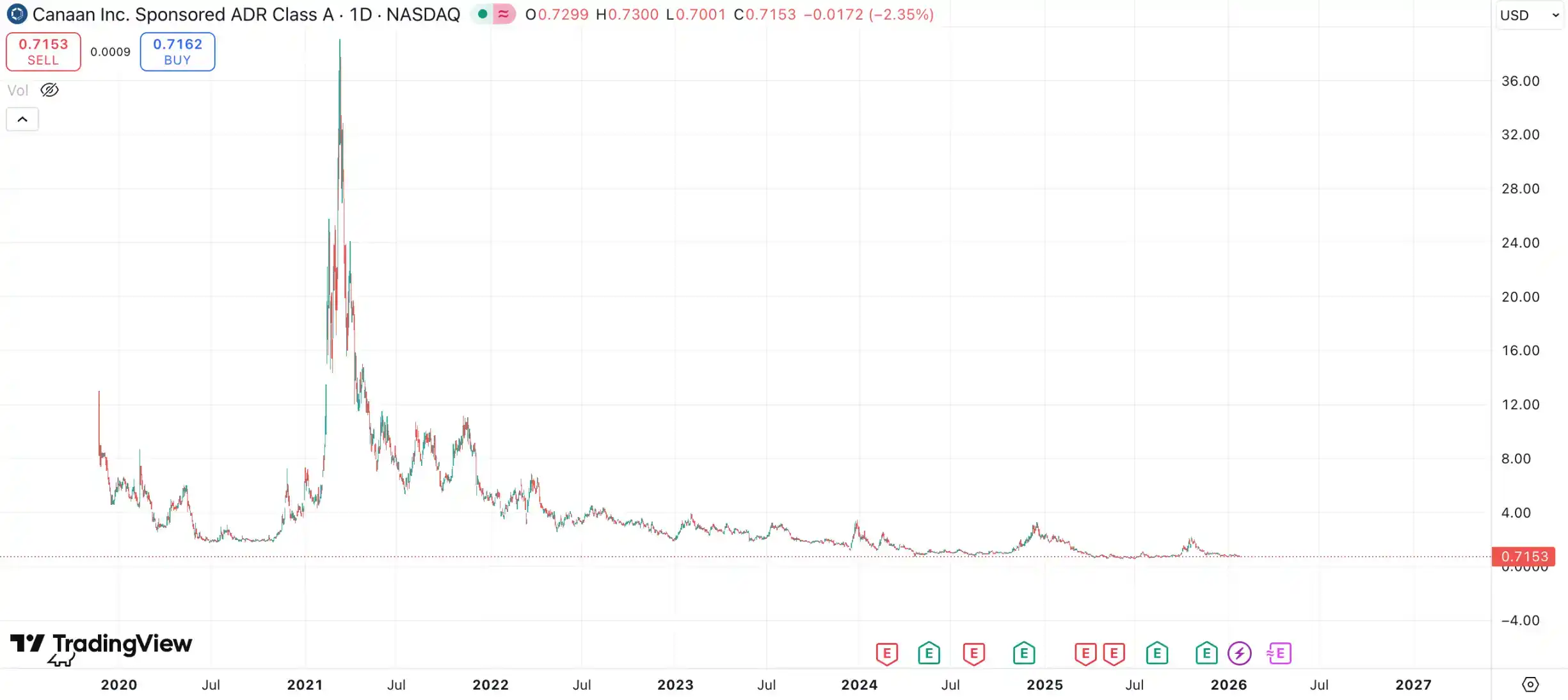
The good times did not last long. With the issuance of China's mining ban and the bear market that persisted throughout 2022, Canan's stock price continued to decline, returning to pre-bull market levels. In the current cycle, although Bitcoin's price reached new highs, even nearly double its 2021 peak at one point, Canan's stock price did not rise but instead fell, dropping below $1 for the first time in April 2024.
Aside from objective market conditions, the industry and Canan itself are also contributing factors to its poor performance in the capital markets.
In the Bitcoin mining machine market, Bitmain is the absolute leader. Canan consistently held the second position until 2021, when MicroBT rapidly rose to prominence with higher power efficiency, pushing Canan to third place. According to a report released by Intel Market Research in December 2025, MicroBT holds a market share of 15% to 20%, while Canan holds 10% to 15%.
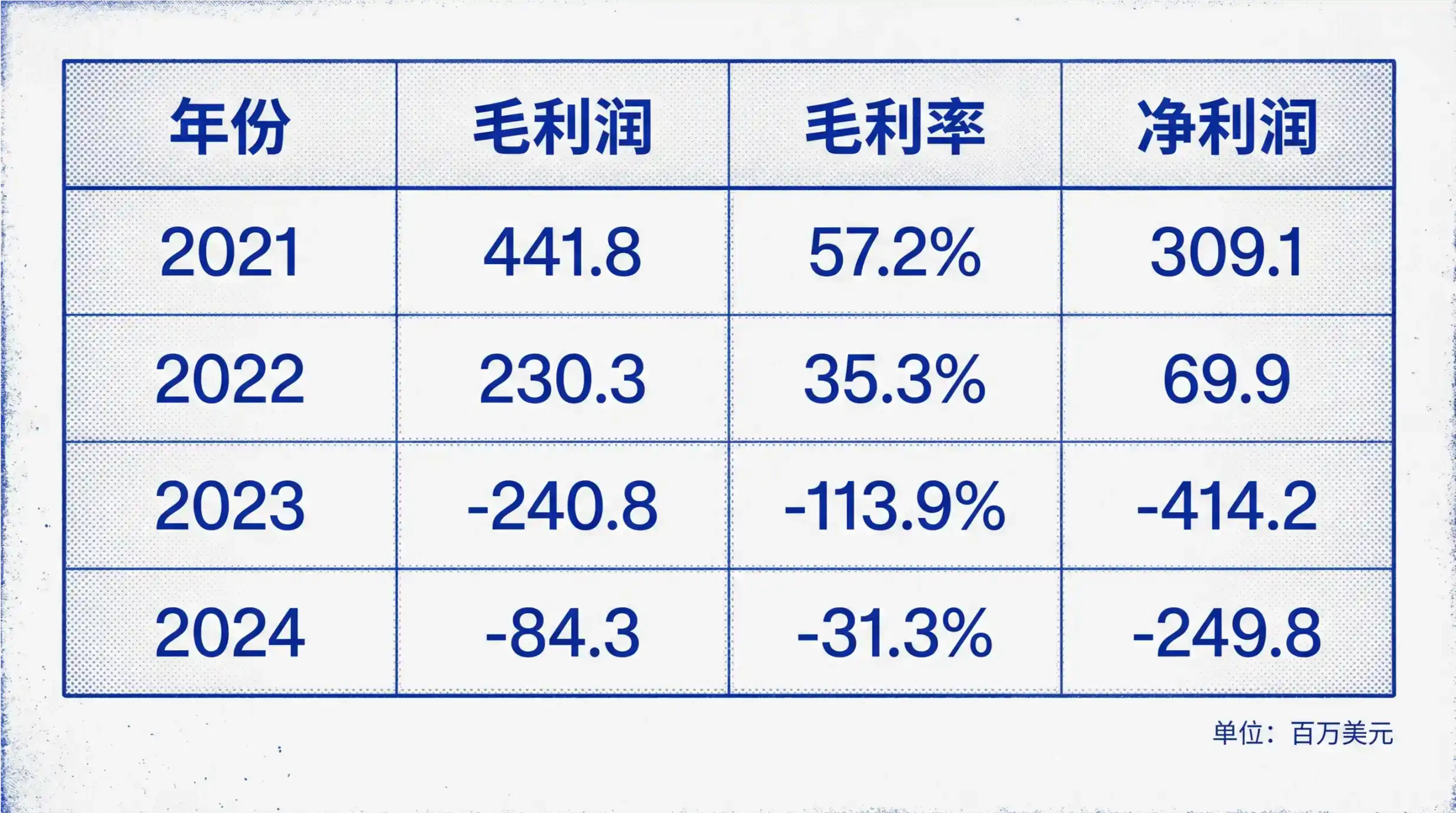
Canan's annual reports from 2021 to 2024 show a continuous decline in net profit over the four years, from earning over $300 million in 2021 to a loss of nearly $250 million in 2024. The reasons include inventory write-downs due to the 2022 bear market, which impacted profits, and fierce competition that kept R&D expenses and operating costs high without effectively increasing market share.
Amid these multiple challenges, a sharp drop in demand became the final straw. According to analysis by MSX researcher Frank, the overhyped expectations of Bitcoin mining narratives and visibly intensifying competition have led many Bitcoin mining companies to transition to AI computing infrastructure. Although "selling shovels" has always been a solid business model, in the current capital market, the Bitcoin story clearly lacks the certainty of AI, and capital has naturally voted with its feet, shifting toward AI-related companies.
In fact, Canan began developing AI chips nearly a decade ago. In 2018, it launched its first commercial edge AI chip based on the RISC-V architecture, the Kendryte K210, designed for edge computing and supporting AI vision and audio processing. Over the next six years, Canan released three more chips, each with significant innovations built on the previous generation.
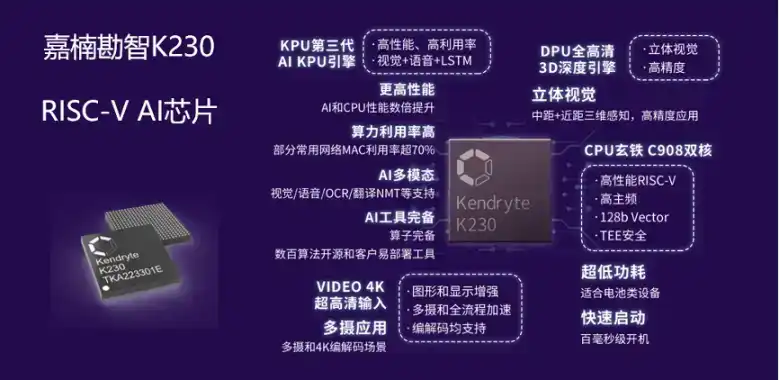
Although Canan's chips had technical highlights and an early start, they lacked the ecosystem support and large-scale demand compared to giants like NVIDIA and Intel. In 2024, its AI-related business revenue was only about $900,000, while operating expenses accounted for 15% of the entire company. In June 2025, Canan announced it would discontinue non-core AI semiconductor operations and shut down its AI chip division. The related announcement stated that the company had been exploring the sale of its AI business since March 2022 but failed to find a buyer, ultimately deciding to abandon it to focus on crypto mining machines and the North American market.
Canan Technology is a microcosm of the实体业务 (physical business) in the Web3 industry. Another listed Bitcoin mining machine manufacturer, Ebang International, has seen its stock price fall from nearly $450 at its 2020 peak to around $3, a drop of over 99%. For hardware manufacturers, there is a mature and fixed valuation model. If the industry they are in shows no clear growth prospects, it is easy to fall into a vicious cycle.
On a positive note, in late 2025, Canan first signed a large order for 4.5 MV in October, followed by completing a $72 million financing round in November. Clearly, there are still those in the market who believe that the former "Pumpkin Zhang" can overcome its difficulties. But to break free from its predicament, Canan Technology may need a new story.