US Stock Market Trend (June 16): SpaceX Rises 42% in Two Days, New Fed Chairman Takes Office Today

marsbit2026-06-16 tarihinde yayınlandı2026-06-16 tarihinde güncellendi

Özet

**U.S. Stocks Trend (June 16): SpaceX Soars 42% in Two Days, New Fed Chair Takes Office Today** Markets surged on Monday following former President Trump's social media announcement of a completed U.S.-Iran deal to reopen the Strait of Hormuz, pending a June 19 signing. The news triggered a broad risk-on rally: oil prices crashed, tech stocks soared, bond yields fell, and defensive sectors lagged. **Market Performance:** The Nasdaq jumped 3.07%, led by semiconductor stocks like Micron (+9.2%). The S&P 500 gained 1.65%, and the Dow rose 0.92% to a record high. However, the Russell 2000 small-cap index underperformed (+0.72%). SpaceX continued its hot streak, rising another 5% pre-market after disclosures of large buys by an Australian billionaire and Cathie Wood's ARK. Boeing also rallied on the transportation optimism. Conversely, energy stocks like Chevron fell over 3% on the oil price plunge, with other defensive sectors also selling off. The day's action showed a clear rotation of funds from energy/defensive plays into AI and tech narratives. **Macro & Outlook:** The VIX fear index fell 8.37%. Treasury yields declined, and WTI crude dropped over 5%. Attention now shifts to a packed schedule: the Bank of Japan is widely expected to hike rates to 1.0% on Tuesday. The Fed's June meeting concludes Wednesday, marking new Chair Wash's debut. While rates are expected to hold, his tone on stubborn inflation and the "dot plot" will be crucial for gauging the 2024 rate path. The ...

Author: Trend Research

On Monday, Washington set Wall Street alight with a social media post. Trump announced late Sunday night that a US-Iran deal "has been completed," with both sides reaching a 60-day agreement to reopen the Strait of Hormuz, scheduled to be signed in Switzerland on June 19. This Middle East news pressed all the buttons: oil prices collapsed, tech stocks soared, bond yields fell, and defensive sectors were left behind alone. The market didn't wait for the signing; it priced in all the good news upfront.

Market Performance

The Dow Jones closed up 469 points (+0.92%) at 51,671 points, hitting a new record high. The S&P 500 rose 1.65% to 7,554 points, and the Nasdaq surged 3.07% to 26,684 points, marking its best single-day performance since March 31. However, the small-cap Russell 2000 only gained 0.72% to 2,965 points, lagging behind on a broadly positive day. While all indices were in the green, the winners were far more concentrated than the index names suggested, with Technology and Consumer Discretionary leading the gains, while Energy and defensive sectors were outsiders in this feast. Beneath the surface, money is quietly changing teams.

Chip stocks led the charge, spearheaded by Micron. Micron skyrocketed 9.2% in a single day, driving the Philadelphia Semiconductor Index up 4.5% to a record high. Even NVIDIA, which had been sluggish recently, closed up 3%. Chip stocks are the highest-beta proxy for AI demand; once geopolitical risks eased and discount rates fell, they rebounded the fastest. The US-Iran deal didn't change any balance sheet but managed to add hundreds of billions in market value back to the entire sector with a single piece of news.

SpaceX (SPCX) was another major theme. Gina Rinehart, Australia's richest person and a mining magnate, was revealed to have built a position worth over $1 billion. The news sent the stock up over 5% pre-market to $169.48. On the same day, Cathie Wood's ARK also disclosed purchases exceeding $500 million. The heat from its 19% surge on its IPO debut last week hadn't faded, and institutional investors' collective rush to buy this largest-ever IPO at a moment of peace and positive news is itself a clear snapshot of risk appetite returning.

Within the Dow, Boeing led the components with a 4.66% surge. The reopening of Hormuz means potential repair in global shipping and commercial aviation demand, placing this company, plagued by safety and production issues in recent years, on the side of good news for a change.

In contrast to the tech stock frenzy was the bleeding in the energy sector. Chevron fell 3.60%, Merck dropped 3.37%, and Verizon declined 2.06%. The oil price crash directly dragged down energy stocks, while defensive sectors like healthcare and telecoms also saw selling. Money flowed out of these slow-moving variables and rushed straight towards AI.

Tech and small caps leading, traditional defensives and energy closing down - this was the clearest capital logic on Monday. On the S&P 500, 299 constituents rose, led by Technology, Consumer Discretionary, and Industrials. The energy sector was collectively sold off as oil prices plummeted, with capital from the old economy being herded in batches towards the AI narrative. The market is betting on whether the narrative of "loosening inflation, a pivot in rates" can be passed on, rather than simply a retreat of risk-off sentiment. In other words, what unfolded this day was a clear directional migration. Funds flowed out of defensive and resource sectors like energy, healthcare, and telecoms, concentrating into semiconductors and the AI supply chain, rather than a broadly distributed, evenly spread rally. The underperformance of small caps also confirms that preference remains firmly locked onto large-cap tech.

Macro & Outlook

The VIX fear index closed at 16.20, down 8.37% for the day, returning near pre-war average levels, with sentiment clearly relaxing from weeks of tension. The 10-year US Treasury yield fell over 2 basis points to 4.459%, and the 2-year yield dropped over 3 basis points to 4.054%. The peace deal reopened the imagination of slowing inflation, drawing bond buyers. WTI crude oil settled around $80.30 per barrel, falling over 5% in a single day to its lowest since mid-March, marking the most dramatic asset volatility of the day and the source of this round of loosening inflation expectations. Gold futures rose 2.81% to $4,357, and BTC gained about 2% from Sunday to $65,710. A weaker dollar combined with returning risk appetite made precious metals and crypto marginal beneficiaries of this geopolitical thaw.

The celebration won't last long, with two central bank meetings landing back-to-back this week. The Bank of Japan's June 15-16 meeting results will be announced Tuesday. The market is almost uniformly betting on a 25 basis point hike, raising the policy rate from 0.75% to 1.0%, with about 94% of economists expecting this move. This would be the BOJ's first hike since last December, with the focus shifting to the pace and endpoint of subsequent tightening.

The Federal Reserve's June 16-17 meeting will be the debut for new Chairman Warsh. Maintaining the 3.50% to 3.75% range is the consensus. The real focus is on how he characterizes the 4.2% inflation rate, which touched a three-year high in May, and whether the dot plot completely shuts the window for rate cuts this year. This relates to the entire market repricing of the interest rate path for the second half of the year. With two meetings back-to-back and the market closed Friday for the Juneteenth holiday, all pricing must be compressed into four trading days.

Trend Perspective

The peace deal is real positive news, but the market is trading a 3%-up Nasdaq day as if "the inflation problem is solved," moving too fast. The real test is that this shortened trading week has to cram three major events into four days: the BOJ's likely hike to 1.0% on Tuesday, tightening the world's last source of cheap liquidity; Warsh's FOMC on Wednesday presenting a directional divergence of global monetary policy (one tightening, one holding); and the Hormuz signing on Friday moving the "deal is done" expectation into textual details. Chip stocks, having just rebounded from early-month plunges with valuations stretched tight again, are the most vulnerable link among these three events. Any disappointment could hit them hardest. Monday's broad rally feels more like an advance payment of optimism for this intensive price discovery. The real accounting begins with the BOJ's statement on Tuesday and Warsh's press conference on Wednesday. Watch the nuance in the wording, not just the rate decision itself.

İlgili Sorular

QWhat were the main reasons behind the Nasdaq's strong performance of 3.07% on the day discussed in the article?

AThe Nasdaq's surge was primarily driven by the announced U.S.-Iran agreement to reopen the Strait of Hormuz, which reduced geopolitical risk and led to lower discount rates. This boosted high-beta sectors like tech and semiconductors. Specifically, chip stocks (e.g., Micron up 9.2%) and AI-related plays saw massive inflows as money rotated out of defensive and energy sectors into tech narratives.

QWhich specific stock or event was highlighted as a clear indicator of returning risk appetite in the market?

AThe significant institutional buying in SpaceX (SPCX) was highlighted as a clear indicator. Following its recent IPO, Australian mining billionaire Gina Rinehart was disclosed to have built a position worth over $1 billion, and Cathie Wood's ARK Invest bought over $500 million. This aggressive buying on a geopolitical peace catalyst signaled a sharp return of risk appetite.

QAccording to the article, what is the key concern for the market following the initial rally, and what are the imminent events that pose a test?

AThe key concern is that the market rallied too aggressively, pricing in a 'solved inflation' narrative prematurely. The imminent tests are three major events packed into a short trading week: 1) The Bank of Japan's expected rate hike to 1.0% on Tuesday, 2) New Fed Chair Wash's first FOMC meeting and press conference on Wednesday, and 3) The formal signing of the Strait of Hormuz agreement on Friday. The article suggests chip stocks are particularly vulnerable to any disappointment from these events.

QWhat was the contrasting performance between different market sectors, and what does this indicate about fund flows?

AThere was a stark contrast: Technology, consumer discretionary, and industrials led the gains (e.g., Philadelphia Semiconductor Index up 4.5%), while energy (Chevron down 3.60%), healthcare, and telecom sectors declined. This indicates a clear 'rotation' or 'directional migration' of funds. Money flowed out of traditional defensive, resource, and slow-growth sectors and was concentrated into semiconductor and AI-related growth narratives, rather than a broad-based rally.

QWhat were the significant movements in key macroeconomic indicators (like oil, bonds, VIX) mentioned, and what triggered them?

AThe trigger was the U.S.-Iran agreement news. Key movements included: WTI crude oil prices plummeting over 5% to around $80.30/barrel (a 3-month low). The 10-year and 2-year Treasury yields fell by 2+ and 3+ basis points respectively. The VIX fear index dropped 8.37% to 16.20. Gold and Bitcoin rose (~2.8% and ~2% respectively). These moves reflected collapsing geopolitical risk premia, lower inflation expectations, a softer dollar, and returning risk appetite.

İlgili Okumalar

As the US and Japan Hike Interest Rates, Which Asset Class is Most at Risk?

This week, global markets face two major events: the Bank of Japan's likely interest rate hike and the US Federal Reserve's FOMC meeting. For risk assets, it is a pivotal and volatile week. In the US, expectations for rate cuts have faded dramatically. May's higher-than-expected CPI and resilient jobs data have shifted the Fed's focus from potential cuts to the possibility of future hikes. New Fed Chair Wash is unlikely to raise rates at this meeting, but any hawkish shift in communication, the dot plot, or the policy statement could lead markets to price in tighter policy, pushing up short-term Treasury yields and strengthening the dollar. High-valuation growth stocks, AI-related assets, and small-cap stocks reliant on cheap funding are most vulnerable to rising rates. In Japan, a 25 basis point hike is almost fully priced in (98.3% probability), which would bring the policy rate to 1%, its highest since 1995. The concern is not the hike itself, but its potential to unwind the massive "carry trade," where investors borrowed low-yielding yen to invest globally. Historically, Japan's rate hikes have coincided with global market stress (2000, 2007, 2024). While this well-telegraphed hike may be digested smoothly, two key factors increase uncertainty: 1) Governor Ueda's absence due to illness, putting communication in the hands of less-familiar deputies, and 2) the Fed meeting occurring just days later, creating potential for a compounded market reaction if both central banks sound hawkish. Asset implications: * **Bonds:** US short-term yields sensitive to Fed signals. Japan's rate hike could pressure its massive US Treasury holdings. * **Currencies:** Dollar likely supported by Fed; Yen's reaction hinges on BoJ's forward guidance. * **Equities:** US growth stocks, small-caps most at risk. Japanese stocks face pressure from a stronger yen. * **Crypto:** Assets like Bitcoin face headwinds from higher rates and tighter liquidity; high-beta altcoins are even more vulnerable. The convergence of these two central bank meetings amplifies market volatility risks, with potential spillovers across asset classes globally.

marsbit3 dk önce

As the US and Japan Hike Interest Rates, Which Asset Class is Most at Risk?

marsbit3 dk önce

Data Decrypts the BTC Cycle: Three Major Bottom Signals Illuminate Simultaneously, Q4 Could Be a Crucial Turning Point Window?

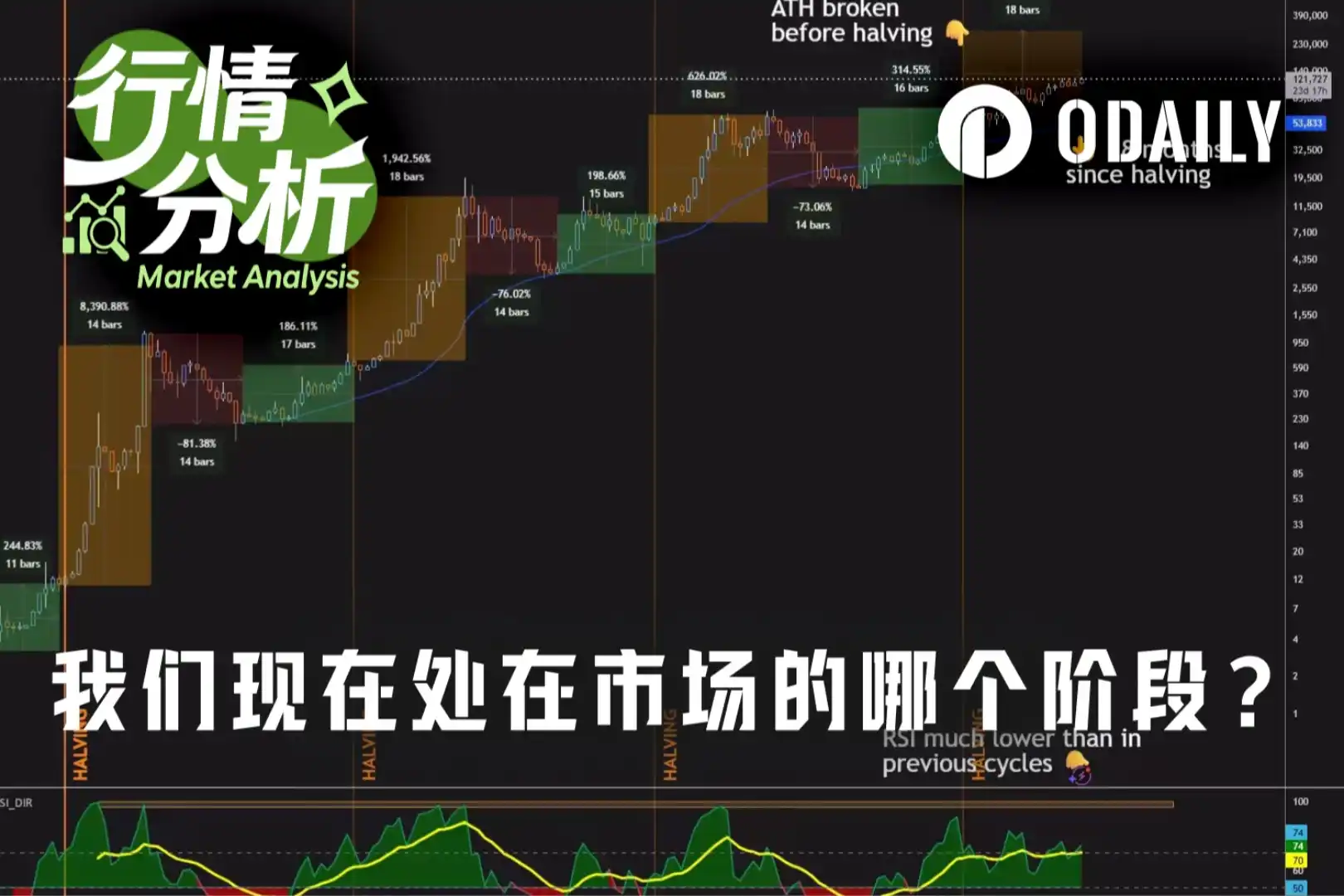
"Decoding the Bitcoin Cycle: Three Bottom Signals Flash Simultaneously, Is Q4 the Key Turning Point?" The article analyzes Bitcoin's current market position, comparing it to historical cycles. BTC has corrected over 52% from its October 2025 peak of $126,198 to around $59,100 in June 2026. While significant, this drawdown is milder than the 77-86% declines seen in past bear markets. The analysis is framed within Bitcoin's four-year halving cycle. Past cycles show a pattern: prices peak 12-18 months post-halving, bottom 12-14 months after the peak, with lows typically occurring roughly 17 months before the next halving. Following the April 2024 halving and the October 2025 peak, this pattern suggests a potential bottoming window around Q4 2026, ahead of the expected 2028 halving. Three key on-chain metrics are signaling undervaluation: The MVRV Z-Score has dropped near 0.27, approaching historic bottom zones. The market price is only about 9% above the network's average realized price of ~$53,600, a rare low premium. Bitcoin's price recently touched its 200-week moving average (~$62,200), a level that aligned with bottoms in 2015, 2018, and 2020. While US spot Bitcoin ETFs saw record outflows in May/June 2026, indicating retail panic, whale addresses (holding 100+ BTC) reached a yearly high. Entities like MicroStrategy resumed buying, and long-term holders control a near-record 78% of the supply, suggesting accumulation. A major macro overhang was partially removed with a US-Iran ceasefire agreement in mid-June 2026, which eased oil prices and triggered a sharp BTC rally. However, persistent inflation means high-interest rates remain a constraint. The conclusion notes that genuine investment opportunities often arise when confidence is lowest, amidst narratives that "this time is different." While not guaranteeing an immediate bottom, the confluence of cycle timing, undervaluation signals, and shifting macro risks suggests late 2026 may be a critical period for reassessing risk/reward and patient accumulation for long-term believers.

marsbit3 dk önce

Data Decrypts the BTC Cycle: Three Major Bottom Signals Illuminate Simultaneously, Q4 Could Be a Crucial Turning Point Window?

marsbit3 dk önce

The Shutdown of Claude Mythos Revealed the True Cost of Renting AI to Me

The sudden shutdown of Claude Mythos this week starkly highlights a critical, often overlooked risk for founders: when your core capability relies entirely on someone else's platform, your fate is not in your own hands. The key question becomes: who truly owns the intelligence your product depends on? For years, the debate around open-source models focused on cost. Now, the evidence is clear: fine-tuned open-source models can achieve frontier-level quality for specific, mission-critical tasks at a fraction of the cost. However, the deeper issue is control. Relying on a third-party API is like renting; it works until the landlord changes the rules, raises the rent, or asks you to leave—as Mythos experienced. The lesson is not to stop using frontier models—they are incredible infrastructure. The goal is ownership. Ownership means starting with a powerful open-source model and shaping it around what makes your company unique: your data, workflows, domain expertise, and definition of "good." Over time, the model becomes less generic and more reflective of your business, creating durable value. The optimistic conclusion is that AI's future doesn't hinge on one superior model. There is no single frontier. The frontier includes proprietary models, models fine-tuned on company-specific knowledge, specialized models for narrow problems, and intelligent routers orchestrating model ensembles. The most interesting development is not models getting smarter, but intelligence becoming increasingly customizable. The winning companies will be those that transform intelligence into a unique, owned asset. Looking ahead, the vision is not one model dominating all, but many teams owning the part of the frontier that matters most to them.

marsbit50 dk önce

The Shutdown of Claude Mythos Revealed the True Cost of Renting AI to Me

marsbit50 dk önce

Tiger Research: U.S. Strategic Bitcoin Reserve - Should the Market Be Happy or Disappointed?

Tiger Research analyzes the evolution of U.S. legislative efforts regarding a strategic Bitcoin reserve, concluding the market impact is limited in the short term but potentially positive long-term. The core event was a March 2025 executive order by former President Trump, which designated confiscated Bitcoin as a strategic reserve and promised not to sell existing holdings (approx. 190k BTC). As it contained no mandate to purchase new Bitcoin, the market reacted negatively, with prices dropping 5.7%. Legislative history shows a significant retreat from initial ambitions. The 2024 "BITCOIN Act" proposed mandatory purchases of 1 million BTC over five years. Reintroduced in 2025, it stalled due to high fiscal costs, concerns over dollar hegemony, and opposition from the Treasury Secretary. The current frontrunner, the 2026 "American Retirement and Monetary Advancement (ARMA) Act," is a compromise. It lacks any purchase requirement, instead focusing on consolidating existing government-held Bitcoin and legally prohibiting its sale for at least 20 years. While ARMA has higher passage odds due to bipartisan support and no purchase mandate, its immediate market effect is neutral. It eliminates potential government selling pressure but creates no new demand. The long-term significance is that formally establishing Bitcoin as a national reserve asset in law could later reignite debates on mandatory purchases. Therefore, the path to a government buyer is longer than initially priced by the market, but the directional narrative remains intact.

marsbit53 dk önce

Tiger Research: U.S. Strategic Bitcoin Reserve - Should the Market Be Happy or Disappointed?

marsbit53 dk önce

İşlemler

Spot
Futures
活动图片