Is SpaceX Stock Still a Buy at $140?

2026-08-19 tarihinde yayınlandı2026-08-19 tarihinde güncellendi

Özet

SpaceX (SPCX) has been on a rollercoaster ride since its IPO: it debuted at $135, surged to a high of $225.64, then dropped to $104.83 before rebounding to $140 as of August 14th. While it's down 38% from its peak, this doesn't necessarily mean the stock is cheap.

SpaceX (SPCX) has taken a roller-coaster ride since its IPO: priced at $135, it surged to a high of $225.64, then fell to $104.83, before rebounding to around $140 as of August 14. While this represents a 38% decline from the peak, it doesn't necessarily mean the stock is cheap.

SpaceX currently operates three main businesses. Starlink is the primary profit driver, generating $4.29 billion in revenue and $1.66 billion in operating income in Q2 2026, with its user base growing to 12 million. The rocket business forms the core competitive moat but remains unprofitable. The AI business is the fastest-growing segment, with quarterly revenue up 247% year-over-year to $2.56 billion; however, capital expenditures soared to $15.83 billion, representing both the greatest growth opportunity and the largest financial risk.

The company's total revenue for Q2 was $7.81 billion, up 92% year-over-year. Adjusted EBITDA reached $3.54 billion, a 191% increase. However, capital expenditures for the first half of the year totaled $28.48 billion, resulting in free cash flow of approximately negative $25 billion. In other words, while growth is rapid, the company is still burning significant amounts of cash.

Valuation is the primary concern at current levels. Based on diluted shares after the Cursor acquisition, the $140 share price implies a market capitalization of approximately $1.91 trillion, resulting in an enterprise value roughly 80 times the past twelve months' revenue. The article presents pessimistic, neutral, and optimistic valuation scenarios of $32, $130, and $265 per share, respectively, with a risk-weighted value of approximately $116.

On the technical front, the $118-$125 range is the primary support zone, with stronger support between $105 and $110. Significant resistance lies near the $146-$151 area. Buying at $140 is akin to chasing near resistance levels, with insufficient downside protection.

A more prudent strategy would be: initiate a small position after stabilization in the $120-$125 range; consider adding to the position at $110-$115; the risk-reward ratio becomes more attractive closer to $105. Investors favoring trend trading could wait for a confirmed breakout above $151 on strong volume, followed by a successful hold above that level.

Key risks include underperformance of AI investments relative to expectations, customer concentration, persistent negative free cash flow, dilution from share issuances, the unlocking of a large amount of restricted stock, delays in the Starship program, and governance risks stemming from Elon Musk's controlling stake of over 80% of the voting power.

The conclusion is straightforward: SpaceX is an outstanding company, but $140 may not be an outstanding entry point. One can maintain a long-term bullish outlook without the need to chase the price higher immediately. The $115-$125 range represents a more balanced zone in terms of valuation, technical support, and market sentiment.


İlgili Okumalar

Why Didn't Oil Prices Stabilize Above $100 as Traffic Through the Strait of Hormuz Plunged Again?

Despite a significant drop in daily oil tanker traffic through the critical Strait of Hormuz in August, Brent crude oil prices have failed to stabilize above $100 per barrel, instead hovering around $90. This contrasts with traditional market logic, where a threat to a chokepoint handling roughly 20 million barrels per day (27% of global seaborne oil) should trigger a sustained supply risk premium. The article explains that the market is pricing in increased transit costs rather than an imminent, complete supply cutoff. Investors currently believe multiple buffers can absorb the shock: strategic and commercial inventories, the potential for coordinated stock releases, available OPEC+ spare capacity, and alternative export routes from the Gulf. Furthermore, workarounds like ship-to-ship transfers outside the Strait and route adjustments by buyers and shippers add resilience, though at a higher cost for insurance, financing, and longer voyages. The underlying U.S.-Iran tensions frame this reassessment as a problem of cost allocation across the supply chain. The price action suggests traders are awaiting clearer signals—such as a military escalation, sustained Iranian attacks, or stricter enforcement of secondary sanctions on buyers—before pricing in a worst-case, long-term disruption scenario. In the longer term, the episode is accelerating investments to reduce dependency on the Strait, such as expanded storage and pipeline infrastructure, which will embed higher costs into the energy system. While Brent may remain range-bound for now, the real-time impact of the Hormuz risk is likely appearing first in freight rates, insurance premiums, and regional product spreads like diesel crack margins. The stability of current prices depends on how much longer these existing buffers can effectively absorb the mounting transit costs and logistical friction.

marsbit35 dk önce

Why Didn't Oil Prices Stabilize Above $100 as Traffic Through the Strait of Hormuz Plunged Again?

marsbit35 dk önce

BONK Crypto Treasury Company Has Only $2.14 Million Cash Left, 70% of Revenue Comes from Founder's Own Platform

BONK Inc. (BNKK), the NASDAQ-listed company associated with the Solana meme coin BONK, reported stark financials for the first half of the year. While revenue skyrocketed 6,218% year-over-year to $5.5 million, the company posted a net loss of $7.88 million and its cash reserves plummeted to just $214,000. Its auditors issued a "going concern" warning, citing cumulative losses of $191.4 million, negative operating cash flow, and critically low liquidity. A critical detail is that $3.92 million, or 71%, of its revenue came from an "affiliate revenue share" with LetsBonk.fun, a meme coin launchpad. This platform is linked to founder Mitchell Rudy, whose entity, Lucky Dog Holdings, beneficially owns approximately 40.2% of common stock and all C Series preferred shares. These preferred shares grant the holder the right to elect half of the company's board. The company's financial structure is further intertwined with Rudy; it sold $50 million worth of stock to his entities, accepting payment in BONK tokens. Fluctuations in the value of these and other held digital assets led to an $8.17 million unrealized loss, the primary driver of the net loss. With operating cash outflows of $4.17 million for the half-year, the remaining cash covers roughly nine days of operations at the current burn rate, highlighting severe financial strain despite top-line growth.

marsbit1 saat önce

BONK Crypto Treasury Company Has Only $2.14 Million Cash Left, 70% of Revenue Comes from Founder's Own Platform

marsbit1 saat önce

CryptoQuant Noted a Signal of a Bitcoin Reversal

CryptoQuant has highlighted a potential reversal signal for Bitcoin, suggesting the bearish phase might be nearing its end as on-chain metrics show initial signs of spot demand recovery. Their analysis indicates that the 30-day spot demand metric has recovered from -206,000 BTC in late July to approximately -5,000, close to turning positive for the first time since February 2026. Historically, such a reversal has been followed by a median 60-day price gain of 18.1%, with a win rate of 78% (increasing to 87% when valuations are depressed). However, they caution that this is a favorable sign, not a guarantee. Analysts from Bitfinex Alpha note that two of three conditions for a sustainable Bitcoin recovery are already met: improved Federal Reserve rate expectations and relatively accommodative financial conditions, thanks to easing inflation and reduced odds of a near-term rate hike. The missing third catalyst is a capital rotation from traditional markets (like stocks and AI infrastructure) into cryptocurrencies. If this occurs, Bitcoin could reclaim $70,000. Conversely, continued negative flows might see support tested around $57,000. Current headwinds include significant weekly outflows from US spot Bitcoin ETFs (roughly $385 million) and reduced stablecoin supply. Wintermute offers a more cautious outlook, pointing to the same large ETF outflows and ongoing miner selling pressure. They note that Bitcoin has failed to rally despite the improved Fed outlook, which is typically bullish for risk assets. As an example, they cite miner Riot Platforms, which sold a substantial portion of its Bitcoin reserves in Q2 as its mining cost (~$91,000 per BTC) remains far above the current market price, forcing sales for liquidity. This combination of ETF outflows and miner selling is suppressing new demand.

cryptonews.ru1 saat önce

CryptoQuant Noted a Signal of a Bitcoin Reversal

cryptonews.ru1 saat önce

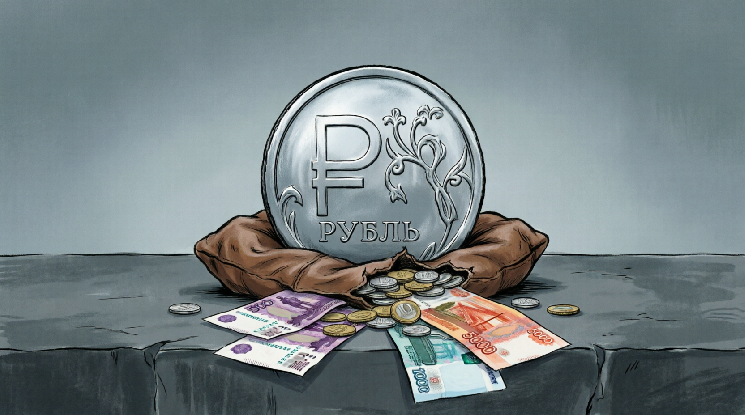
Is a Strong Ruble Good? Not for the Budget: Treasury Already Short 1.5 Trillion

The Russian budget has lost about 1.5 trillion rubles in revenue since the start of 2026 due to the ruble being stronger than the government's planned exchange rate. The budget was based on an average annual rate of 92.2 rubles per US dollar, but the actual average for the first seven and a half months was just 76.9 rubles. This discrepancy creates a significant shortfall, as every ruble of appreciation against the dollar reduces annual budget revenues by 140–160 billion rubles. When accounting for oil and gas revenues, the sensitivity is even higher, with potential annual losses reaching up to 2.5 trillion rubles. So far this year, the budget has already missed out on roughly 1.7 trillion rubles. The ruble's exchange rate has shown considerable volatility in 2026, ranging from a low near 71 rubles per dollar in May to over 85 rubles by mid-August. Despite this recent weakening, the year's average remains well below the budget target, creating a structural deficit in oil and gas revenues. Forecasts suggest the final average rate for 2026 will be around 80–82 rubles, which would result in a budget shortfall of about 1.6 trillion rubles. A strong ruble reduces import costs and inflation but also cuts the ruble earnings of exporters and threatens the funding of social obligations. The gap between the planned and actual rate is attributed not only to oil price dynamics but also to the fiscal rule mechanism, which can influence the currency's direction. The Ministry of Finance recently halted foreign currency sales under this rule, removing dollar supply from the market and contributing to pressure on the exchange rate. The budget policy is now forced to adapt to a stronger ruble than originally planned.

cryptonews.ru1 saat önce

Is a Strong Ruble Good? Not for the Budget: Treasury Already Short 1.5 Trillion

cryptonews.ru1 saat önce

İşlemler

Spot
活动图片