Talking about NFT is talking about the Bored Ape Yacht Club (BAYC) collection, which has provided 145,000%+ profits for anyone who bought at the minimum price less than a year ago. And a similar thing is happening with its new token Apecoin.
ApeCoin (APE) has become the most traded token by Ethereum whales over the past 24 hours, reaching a holder count of over 36,500 wallets just 6 days after being listed on the largest cryptocurrency exchanges.
This means that the bet on APE is as important as the one on the NFT collection per se.
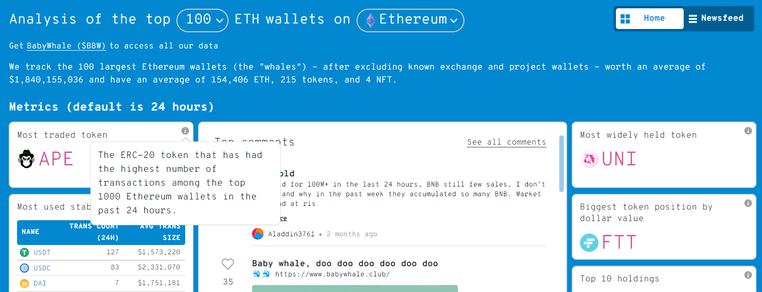
Apecoin Data. Image Whalestats Why Has ApeCoin Been So Successful?
As CryptoPotato recently reported, APE Coin is the native cryptocurrency of the BAYC ecosystem. Since its launch, each BAYC holder was awarded 10,094 APEs ($128,000) for each NFT they held as a reward. Those with a Mutant Ape (MAYC) received 2,042 APEs ($26,068).
In other words, they rewarded their buyers’ loyalty by giving them 62% of the total supply of APE tokens.
Introducing ApeCoin ($APE), a token for culture, gaming, and commerce used to empower a decentralized community building at the forefront of web3. 🧵
— ApeCoin (@apecoin) March 16, 2022
On the other hand, Yuga Labs, BAYC’s parent company, will keep a total supply of 16% to continue developing new products and tools such as the game “Otherside,” which is expected to be launched by the end of 2022.
In addition to this and thanks to their social media fame, Yuga Labs has obtained the rights for two of the most iconic NFT collections of all time, such as CryptoPunks and Meebits.
Some big news to share today: Yuga has acquired the CryptoPunks and Meebits collections from @LarvaLabs, and the first thing we’re doing is giving full commercial rights to the NFT holders. Just like we did for BAYC and MAYC owners. pic.twitter.com/lAIKKvoEDj
— Yuga Labs (@yugalabs) March 11, 2022
The BAYC And Its Debut in Crypto Gaming
Another critical factor in the success of BAYC has undoubtedly been the marketing strategy that Yugal Labs deployed, turning the new native cryptocurrency into the token used by several crypto games for their NFT transactions.
For example, Animoca Brands, a software company dedicated to developing and distributing free-to-play games, announced the adoption of ApeCoin for a secret project being developed alongside BAYC. The day after the announcements, Yuga Labs posted a video showing the company’s star character drinking a beverage that teleports him to another world where the CryptoPunks and other NFT characters are portrayed.
See you on the Otherside in April. Powered by @apecoin pic.twitter.com/1cnSk1CjXS
— Yuga Labs (@yugalabs) March 19, 2022
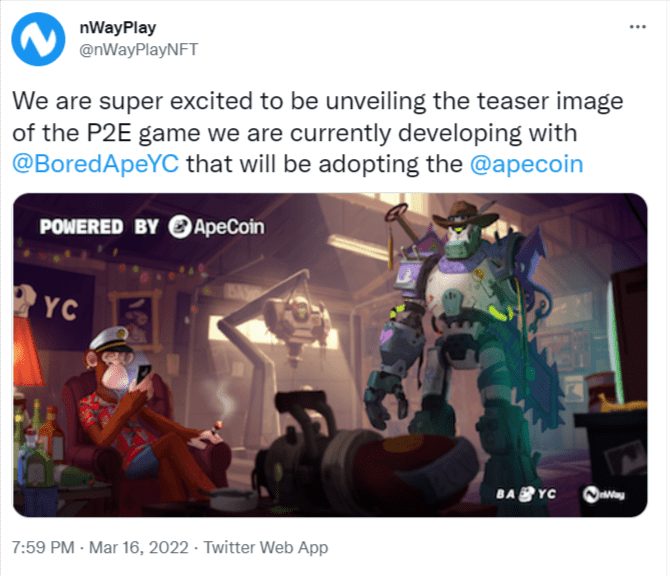
nWayPlay, is another game developer that announced its collaboration with BAYC to create a new crypto game that will adopt the APE token and offer Play to earn (P2E) functionalities to its users. Although the game is not yet available, the quality of images it offers suggests that it will give a lot to talk about in the ecosystem.
The team behind BAYC has had a very demanding and promising start to the year, so we will likely continue to see news that will help drive the adoption of the project, which is practically selling itself.