Huobi Global Weekly News (10.03-10.09)

HuobiPubblicato 2022-10-09Pubblicato ultima volta 2022-10-10

Introduzione

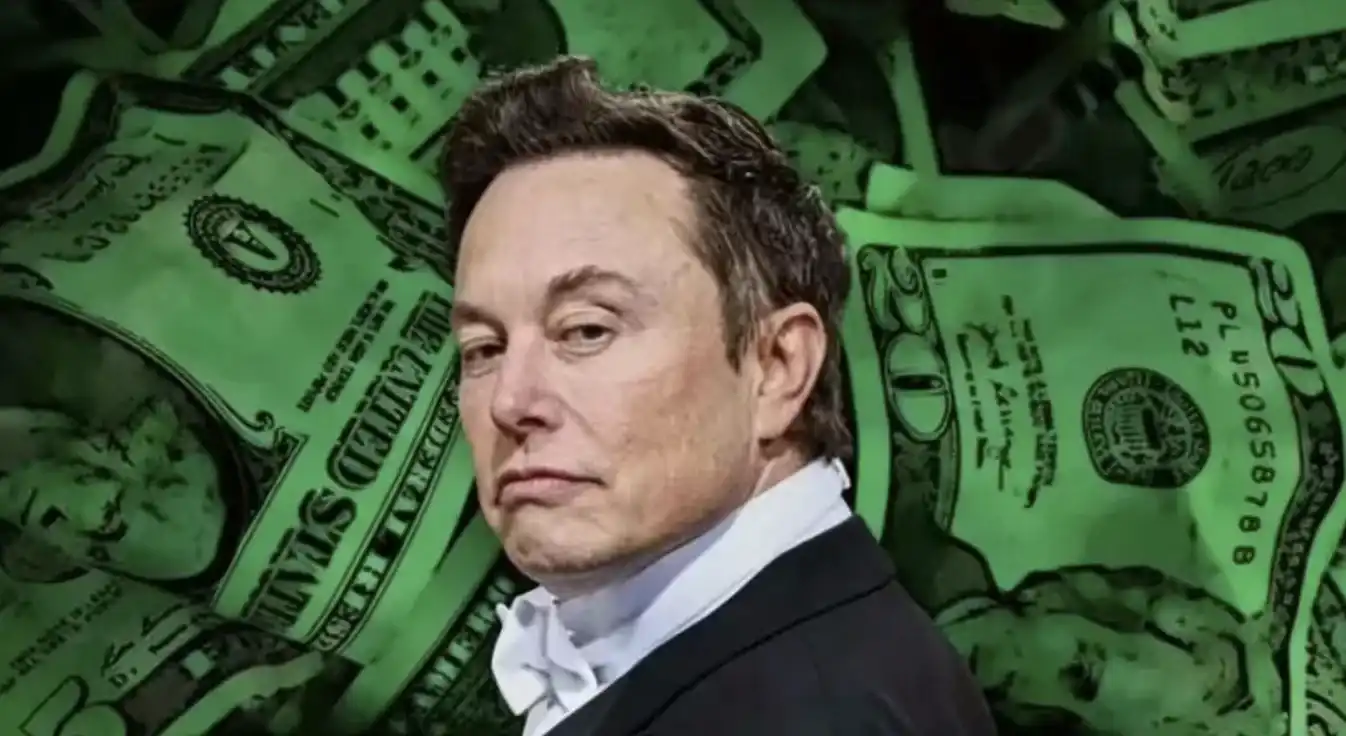
1. Huobi Global's major shareholder completes share sale; 2. EU’s Russian crypto ban confirmed as bloc tightens sanctions; 3. Musk allegedly proposed to Twitter to move forward with a deal at $54.20 per share.

1. Huobi Global's major shareholder completes share sale;

2. EU’s Russian crypto ban confirmed as bloc tightens sanctions;

3. Musk allegedly proposed to Twitter to move forward with a deal at $54.20 per share.

“”

#POLICY

1. Japanese Prime Minister says it will vigorously promote the use of Web3 services such as the Metaverse and NFT;

2. US Senator introduces "No Digital Dollar Act" to prohibit Treasury and the Fed from interfering with Americans using paper currency;

3. CFTC Chairman: Working together with the SEC to regulate the crypto market;

4. The Ministry of Finance of Russia stands for strict regulation of in-game currencies;

5. Russian Ministry of Finance gives green light for international settlements with crypto for all sectors;

6. Russian Central Bank requires Bitcoin and crypto to be recorded as assets by banks in their accounts;

7. EU policymakers vote to modernize tax with blockchain technology;

8. EU puts crypto at top of list for IMF meetings, EU Commissioner for financial services says;

9. EU seals text of landmark crypto law MiCA, fund transfer rules;

10. South Korea court rules there’s no interest limit on crypto loans;

11. EU’s Russian crypto ban confirmed as bloc tightens sanctions;

12. Chairman of the Russian Parliament's Committee on Financial Market calls for a ban on Cryptocurrency Settlement in Russia;

13. ECB Minutes: Most members lean towards raising key ECB rate by 75bps;

14. Malaysia to establish national public blockchain;

15. FSB to propose crypto market regulation plan next week.

“”

#CRYPTOCURRENCY

1. India freezes the crypto currencies WRX and USDT equivalent to Rs 47.64 lakhs;

2. Tether increases US Treasury portfolio, cuts commerical paper holdings to below $50M;

3. Supply of Ethereum after the Merge has increased by more than 10,000 ETH;

4. Vitalik Buterin: Centralization risk of block builders can be dealt with through partial block auctions;

5. DOJ objects to Celsius plans to reopen withdrawals and sell stablecoins;

6. Celsius asset auction date has been determined, bidding deadline is October 17;

7. Mastercard pushes deeper into crypto with new tool for combating fraud;

8. Matrixport signs $50M insurance policy with Lloyd’s syndicate;

9. McDonald’s starts to accept Bitcoin and Tether in Swiss town;

10. Number of Bitcoin holders has been steadily rising amid bear market;

11. Musk allegedly proposed to Twitter to move forward with a deal at $54.20 per share;

12. Valkyrie Funds will offer crypto separately managed account;

13. South Korean prosecutors have frozen Do Kwon’s $67 million in BTC and other virtual assets;

14. Elon Musk: Buying Twitter is an accelerant to creating X;

15. Asset management giant Fidelity adds to crypto offerings with Ethereum Index Fund;

16. Santiment: Bitcoin whales are showing signs of sustained accumulation;

17. SWIFT presents framework for global CBDC system, claiming to have solved interoperability between different networks;

18. Do Kwon reiterates no funds have been frozen;

19. Musk seeks up to 30% discount on Twitter acquisition;

20. Twitter could go public in 2026 after being taken private by Musk;

21. Grayscale unveils bitcoin mining-centered investment entity;

22. Morgan Stanley: crypto ETP continues to grow in crypto market bear market;

23. Mt. Gox creditors can choose repayment methods and register payee information in the claims system;

24. Huobi Global's major shareholder completes share sale;

25. Grayscale Digital Large Cap Fund adds MATIC;

26. CryptoQuant: Bitcoin's next bull run may begin as massive USDC flows into exchanges.

“”

#NFT

1. GameStop NFT declares to introduce Kiraverse NFT collection on its venue;

2. NFT sales plunge in Q3, down by 60% from Q2;

3. Hugo Boss to launch NFT and '360-degree metaverse experience';

4. Time magazine has made more than $10 million in profits from the NFT;

5. Latin Grammy awards signs contract for award show NFTs;

6. LG Art Lab launches Wallypto iOS app that allows users to buy NFT;

7. NFT company Dapper Labs freezs accounts related to Russia.

“”

#DEFI

1. Trait Sniper founder: Project financial situation is difficult and is cutting costs through layoffs;

2. Jared Grey was elected Sushi's new "Chef" with over 83% of the vote;

3. Loopring will use 16% of the protocol funds to sponsor liquidity mining in the fourth quarter;

4. Transit Finance will eventually refund 100% of the user’s losses, first part of the refund asset will be accessible to claim on October 7;

5. MakerDAO allocates $500M for treasuries, corporate bond investment;

6. Proposal to deploy Uniswap V3 on zkSync is up for voting;

7. Yam DAO mulling distribution of treasury among token holders.

“”

#FUNDING

1. NYDIG raises $720 million for its Institutional Bitcoin Fund;

2. Bored Apes' Otherside builder Improbable eyes fresh funding at $3.6 billion valuation;

3. Thai media giant to work with Sygnum for $300m hybrid equity-NFT raise.

“”

#METAVERSE

1. UPS launches store in Decentraland metaverse;

2. Samsung Latam launches 'House of Sam' metaverse experience in Decentraland;

3. Metaverse-related firm Movella plans to become a publicly traded company on Nasdaq through SPAC;

4. Warner Music Group plots metaverse push;

5. Meta's internal letter mandates employees to use its meta-universe product Horizon Worlds;

6. Dubai launches local government Metaverse platform DEWAVerse.

“”

#Web 3

1. Ripple announced as founding partner of Web 3 carbon credit marketplace Thallo;

2. Bitwise launches web3-focused ETF;

3. Web 3.0 blockchain market to hit $33.53 billion by 2030;

4. Animoca Ventures and Blocore enter into partnership to co-invest in Web3 companies;

5. M31 Capital Management launches the Web3 Opportunity Fund.

Letture associate

Soaring Export Data for Memory Chips, Market Is Redefining the Valuation Anchor for Memory Stocks

Korean storage export data for the first 20 days of June shows substantial year-on-year increases in both value and price-per-kilogram for categories like DRAM, NAND, and SSDs. This signals a potential shift beyond simple demand recovery, indicating rising prices and a product mix shift towards higher-value items, possibly influenced by AI infrastructure needs. A key point is that the surge in price-per-kilogram is not simply a uniform chip price hike. It reflects a combination of actual price increases and, more importantly, an export structure increasingly dominated by high-value-density products like HBM (High-Bandwidth Memory) and advanced DRAM, which are critical for AI servers. This suggests AI-driven demand may be spilling over from just HBM into broader memory markets. SK Hynix stands to benefit directly due to its leading HBM position. For Samsung and Micron, the implication is potential for greater margin elasticity if the tightness in high-end memory spreads to enterprise SSD and NAND prices. However, the storage sector remains cyclical. Risks include supply expansion, inventory changes, and potential slowdowns in broader AI capital expenditure. Ultimately, while the strong export data supports upward revisions for storage company earnings and fuels discussion of an "AI infrastructure bottleneck premium," a definitive valuation shift from a cyclical to a structural story depends on upcoming quarterly reports. Investors need confirmation from SK Hynix, Samsung, and Micron that improvements in average selling prices, product mix, and, crucially,毛利率 are sustained over multiple quarters.

marsbit1 h fa

Soaring Export Data for Memory Chips, Market Is Redefining the Valuation Anchor for Memory Stocks

marsbit1 h fa

Why Does SpaceX Have Such a High Valuation Ceiling? The Answer Lies in Musk's Business Blueprint

SpaceX achieved a record-breaking IPO on June 12, 2026, with its market cap surging past $2.1 trillion. This valuation reflects its central role within Elon Musk's expansive, interconnected technological ecosystem. The article details how four core components form a synergistic closed-loop system: 1) **The "Brain" (xAI & Orbital Compute):** xAI provides AI models and massive ground/space-based supercomputing for simulation and decision-making across the system. 2) **The "Neural Logistics Core" (Starlink & Starship):** Starlink's low-latency satellite network enables global data transmission, while Starship's low-cost, reusable launch capacity aims to make large-scale space deployment economically viable. 3) **The "Physical Body" (Tesla & Optimus):** Tesla's manufacturing prowess and energy products support hardware production and power, pivoting toward mass-producing the Optimus humanoid robot for terrestrial and potential space-based labor. 4) **The "Human Interface" (Neuralink & X):** Neuralink seeks direct brain-computer communication, and the X platform provides real-time societal data. Together, these elements create three reinforcing "flywheels": manufacturing/logistics, data-driven iteration, and energy/compute/network synergy. This integrated approach promises lower costs, faster innovation cycles, and potential infrastructure-as-a-service offerings. However, it also concentrates technical, regulatory, and corporate governance risks. Ultimately, SpaceX's high valuation stems from its position as the indispensable infrastructural backbone—handling space transport, global communications, and future orbital computing—tying together Musk's entire vision for a self-reinforcing technological empire.

marsbit1 h fa

Why Does SpaceX Have Such a High Valuation Ceiling? The Answer Lies in Musk's Business Blueprint

marsbit1 h fa

Snap, Unprofitable for Nine Years, and a Decade-Long AR Obsession Without Return

Snap's AR Obsession: A Decade of Betting Against the Odds On June 16, Snap CEO Evan Spiegel unveiled the new AR glasses, Specs, priced at $2,195, causing the company's stock (SNAP) to plummet nearly 10%. The launch was met with intense criticism online, with investors questioning why a consistently unprofitable company would stake its future on an expensive product its core young user base can't afford. Snapchat, known for pioneering features like ephemeral Stories and popular AR lenses (like the iconic dog filter), has a history of innovation often copied by rivals like Instagram and Meta. Despite this, it has struggled to translate first-mover advantage into commercial success. Since its 2017 IPO, Snap has reported annual net losses, with a Q1 2026 loss of $89 million. Its stock is down 94% from its 2021 peak, hampered by iOS privacy changes, competition, and a young demographic less attractive to major advertisers. In this challenging context, Spiegel is doubling down on AR. He calls 2026 a "crucible moment," having recently laid off 16% of staff while reportedly investing over $3.5 billion cumulatively in its AR glasses line over nearly a decade. The new Specs represent a significant leap from the 2016 camera-focused Spectacles, offering true AR overlays, gesture control, and standalone operation. However, at $2,195, it faces tough comparisons. While more advanced than Meta's $799 Ray-Ban smart glasses, critics point to its heavier weight, short battery life, and features largely replicable by a smartphone. Facing pressure from investors to cut losses on the Specs project, Spiegel has refused, framing it as essential to Snap's long-term vision. The company finds itself in a paradoxical position: cutting costs while heavily funding a decade-long, unproven bet. Some see Specs as an awkward but necessary step in AR's evolution, akin to early mobile phones. Whether Spiegel is a visionary outlier or a gambler destined to fail remains an open question, highlighting the tension between long-term ambition and short-term market demands.

marsbit1 h fa

Snap, Unprofitable for Nine Years, and a Decade-Long AR Obsession Without Return

marsbit1 h fa

Annualized Revenue Exceeds $20 Billion, Kalshi Aims to Become the First Prediction Platform IPO?

Kalshi, a leading U.S. prediction markets platform, is reportedly in early, informal discussions for an Initial Public Offering (IPO). The company's annualized revenue now exceeds $2 billion, fueled by its dominance of over 90% of the domestic prediction market activity. This growth stems from a surge in trading volume—reaching a total of $52.7 billion—and an increase in fee rates, largely driven by sports event contracts like the NBA playoffs and the 2026 FIFA World Cup. Monthly active users are approximately 2 million. Kalshi recently raised $1 billion in a funding round led by Coatue Management, valuing the company at $22 billion. It has also expanded its offerings to include Bitcoin perpetual contracts and plans to launch a dedicated trading platform, Kalshi Pro. However, Kalshi's path to an IPO faces significant regulatory hurdles. The core risk involves jurisdictional conflicts, as multiple U.S. states are challenging its operations under local gambling laws. For instance, Arizona has filed criminal charges against the platform, while states like Kentucky have filed lawsuits. Kalshi and the Commodity Futures Trading Commission (CFTC) argue that its event contracts fall under exclusive federal jurisdiction as "swaps." The outcomes of these ongoing legal battles could critically impact Kalshi's core revenue and its IPO timeline. Analysts suggest that while an IPO could theoretically occur by late 2026, a more likely timeframe is late 2027 or 2028, contingent on resolving legal issues and favorable market conditions. If successful, its fundraising could significantly exceed $1 billion, given its current valuation and revenue multiple.

Foresight News2 h fa

Annualized Revenue Exceeds $20 Billion, Kalshi Aims to Become the First Prediction Platform IPO?

Foresight News2 h fa

Trading

Spot
Futures
活动图片