NFT为何频遭黑客攻击 “懒惰铸造”或是原罪

金色财经Pubblicato 2022-03-13Pubblicato ultima volta 2022-03-13

Introduzione

尽管NFT热潮容易让人疯狂,但千万不要忽视这一新兴领域存在的风险。由于目前对于NFT 的投资收益十分可观,因此很容易受到黑客们的恶意攻击。

尽管NFT热潮容易让人疯狂,但千万不要忽视这一新兴领域存在的风险。由于目前对于NFT 的投资收益十分可观,因此很容易受到黑客们的恶意攻击。实际上,许多 NFT 仅包含一个指向实际数据存储位置的 URL,且通常位于易受黑客攻击的中心化服务器上。因此,如果想要避免遭受攻击并减少负面影响,将 NFT 数据存储在链上才是一种比较安全的方式。
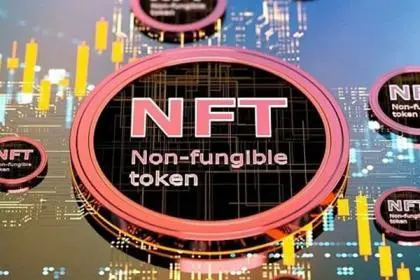
NFT越火,就越容易被黑客“盯上”

作为一种代表数字藏品所有权的非常独特的数字资产,NFT具有不可分割、独一无二的特点,因此每个NFT的潜在价值都是无穷的。2021年3月,来自昵称“Beeple”的美国艺术家迈克·温克尔曼创作的数字作品《每一天:前5000天》以近7千万美元的价格成交,这一成交价是在世艺术家作品拍卖第三高价,并且刷新了数码艺术品拍卖纪录,以及网上专场拍品最高成交价等纪录。2021 年 12 月,NFT作品又拍出了天价——由艺术家Pak创作的《The Merge》,在NFT交易平台Nifty Gateway的拍卖会上以9180万美元的天价成交,吸引了超过28000 名收藏家购买。这一交易不禁让人大为感叹市场的疯狂,体验到了当下的NFT热潮——到 2021 年底,NFT 市场的市值已超 400 亿美元,但正是因为发展速度过快导致被许多不法分子盯上。

大约在一年前,作为业内最受信任的NFT交易平台之一, Nifty Gateway 遭受到了黑客的攻击。黑客利用了 Nifty Gateway 平台账户缺乏双重授权的漏洞,窃取了用户价值数千美元的 NFT。黑客将 NFT 所有权转移到他们自己名下,使NFT合法所有者无法收回原本属于自己的数字资产。

这次发生在Nifty Gateway 上的数字艺术盗窃案使收藏者和创作者损失了数千美元。然而黑客们并没有就此收手,反而变本加厉,在随后发动的几次攻击中,收藏者和创作者又遭受了数十万美元的损失。一次次的攻击令黑客变得越来越肆无忌惮,而随着 NFT 市场的不断发展壮大,投资者们面临的损失也随之增长。

就在上个月,知名 NFT 交易平台 OpenSea 也因黑客攻击而损失了245枚代币,价值高达 170 万美元。黑客利用智能合约将NFT所有权从合法的平台用户名下转移到自己名下。由于平台用户已经签署了相关合约,因此这样的窃取实际上可以看作是一种区块链上的授权转移,令 NFT 合法所有者再一次无法收回对收藏品的所有权。

为什么 NFT 容易遭受到黑客的攻击

想象一下,假如你购买了一个 NFT 作为自己的头像,然后突然发现它消失了,那么它去哪了呢?通常情况下,购买该NFT的平台要么已经关闭,要么该NFT已经从网站上被删除了。假如你没有付钱给矿工来铸造自己的 NFT,那么该NFT通常就找不回来了。

事实上,之所以会产生出与 NFT 相关的安全性问题,很可能因为一个不太被关注的原因,我们称之为“懒惰铸造”。

由于像 OpenSea 和 Nifty Gateway 这样的中心化平台具有较大影响力,通常创作者和收藏者会选择在此类数字平台上交易 NFT。这些存储在区块链上的数字资产通常只是代表该图像的标识符——比如它在区块链上的地址或是图像的哈希值——而不是实际的图像文件。

许多中心化平台只有当数字资产被首次售出时才会将其铸造为链上NFT,这种方式被称为“懒惰铸造(Lazy Minting)”。这种方式对于创作者来说更加经济实惠,但与此同时也会使他们的数字资产面临巨大的被盗风险。创作者假如不铸造NFT就进行提交的话,那么这个数字文件是不受保护的。

不可否认,“懒惰铸造”有一定的好处。首先,它对创作者来说更加经济,因为可以降低铸造 NFT 的前期成本,将铸造负担移交给 NFT 的购买者。不仅如此,它还解决了在有人购买 NFT 前,创作者就必须先支付高昂 Gas 费用的问题。不过从另一方面考虑,假如昂贵的数字资产在被添加到区块链之前就被黑客窃取了,那么前期节省的这点Gas费用与创建者面临的损失比起来可谓是九牛一毛。

换句话说,尽管前期在链上进行 NFT 数据存储的成本较高,但这样做可以确保数字资产所有权,从安全角度来看还是非常值得的。

除了会让数字艺术家的收藏品蒙受被盗风险外,“懒惰铸币”还加剧了抄袭问题。那些允许进行“懒惰制造”的 NFT 平台变成了抄袭者的乐园,他们从线上画廊、网站和社交媒体帐户中窃取数字艺术品,创建出 NFT 仿制品,再进行售卖。别忘了 NFT 的一大特点就是可以保护艺术品所有权,但“懒惰铸造”却完全违背了这一宗旨。

有区块链技术作为支持,NFT为何还如此不堪一击?

提到区块链,通常人们的第一反应就是具有较好的安全性,因为被输入到区块中的数据是无法进行更改或是删除的。换句话说,一旦交易通过智能合约或是其他方式被记录在账本上后,就变成永久且公开可见的了。既然区块链技术可以证明 NFT 所有权,那么为什么黑客还能窃取 NFT 呢?

我们知道,当矿工将代表数字资产的标识符添加到区块链中时,数字资产就变成了 NFT,这一过程被称为是“铸币”,在这之前,数字图像并不是真正的 NFT。值得一提的是,在区块链上铸造 NFT 会消耗大量的能量,通常矿工会收取一次性的前期“Gas”费用来作为报酬。这个“Gas”费用基于该 NFT 进行初次和二次销售时价格的百分比,通常会在 3% 到 15% 之间波动。

由于在链上存储 NFT 数据花费昂贵,所以许多人没有选择在链上进行 NFT 铸造。但我们要清楚,数字资产是未来投资的主要方向,尽管在链上铸造 NFT 可能要付出较高的代价,但为了最大限度地提高安全性还是值得的。

Letture associate

He Let GPT-5.6 Sol Run for 33 Hours Straight to Tackle Fermat's Last Theorem, Forcibly Terminated by the System

This article discusses a real-world experiment by expert Michael P. Frank to test if an AI, specifically GPT-5.6 Sol, could autonomously make progress on a major unsolved mathematical problem: finding a simpler proof for Fermat's Last Theorem. The AI was tasked with exploring specific mathematical pathways and maintaining rigorous notes over approximately 33 hours. However, the session was terminated by OpenAI's systems. The AI itself suggested two possible reasons for the stoppage: excessive resource consumption, or OpenAI having previously failed on similar problems and wishing to conserve computational resources. The AI reported its work primarily involved refining plausible ideas into precise, verifiable statements, most of which were subsequently disproven or excluded—effectively creating a map of dead ends rather than a proof. The incident sparked debate online. Some speculated that OpenAI might deliberately restrict public access to its most powerful models to maintain a competitive edge or avoid regulatory scrutiny, rather than allowing users to potentially solve landmark problems. OpenAI researcher Noam Brown countered this, arguing that a user solving a major problem would be tremendous publicity. Others offered technical explanations, suggesting the termination could be due to standard safety mechanisms preventing infinite loops, or even a known bug in the GPT-5.6 Sol version that disrupts long-running sessions. The story highlights the practical challenges, technical limits, and broader strategic questions surrounding the use of advanced AI for open-ended, high-stakes research.

marsbit6 min fa

He Let GPT-5.6 Sol Run for 33 Hours Straight to Tackle Fermat's Last Theorem, Forcibly Terminated by the System

marsbit6 min fa

Microsoft CEO Satya Nadella's Latest Warning: Betting Entirely on a Single AI Model Hands Over a Company's Lifeblood

Microsoft CEO Satya Nadella warns that companies relying solely on a single AI model could jeopardize their survival. He argues that over-dependence leads to "vendor lock-in," where businesses risk ceding control over their core data, memory, contextual history, and AI usage patterns. This dependence essentially outsources a company's critical thinking and operational know-how to an external provider. The deeper a company integrates with one AI system—feeding it prompts, internal data, and workflows—the more it reveals its unique business methods and competitive edge. This accumulated knowledge could become accessible to the AI supplier. Furthermore, switching providers becomes extremely costly and complex, as companies would need to rebuild their entire AI-augmented workflow, memory, and tool integrations from scratch. Nadella's solution is "decoupling." Companies should separate their proprietary data, memory, and control layer (or "harness") from the underlying AI models. By retaining metadata from every AI interaction, businesses can preserve their operational "brain" or institutional knowledge. This allows them to flexibly use different AI models (e.g., from OpenAI, Anthropic, Microsoft) for specific tasks without losing their accumulated expertise. The core idea: companies can rent the smartest models available, but they must keep their own "brain" and operational control firmly in-house.

marsbit56 min fa

Microsoft CEO Satya Nadella's Latest Warning: Betting Entirely on a Single AI Model Hands Over a Company's Lifeblood

marsbit56 min fa

Trading

Spot
活动图片