Olympus DAO Myth Reappears? A "Sovereign On-Chain Central Bank" Written with 4000 Lines of Immutable Code

marsbit2026-08-24 tarihinde yayınlandı2026-08-24 tarihinde güncellendi

Özet

A new project called The Standard Reserve has emerged, branding itself as a "sovereign on-chain central bank." It aims to replicate core central bank functions—currency issuance, money supply adjustment, and reserve accumulation—entirely through 4,000 lines of immutable code, with no human governance. Its core mechanism is a "reflexive monetary policy" based on a single signal: the net ETH flow into or out of the system's sole Uniswap v4 ETH/$STANDARD pool. Sustained net ETH inflows trigger an "expansion" phase, increasing $STANDARD issuance and using protocol fees to buy tokenized gold as a permanent hard reserve. Net outflows (or zero flow) trigger an immediate "contraction" phase, reducing issuance and using fees to buy back and burn $STANDARD. The system involves six key entities: the $STANDARD token (hard-capped at 1 billion), the central Uniswap pool, the Central Bank contract, Charter NFTs (acting as "banking licenses"), Branch units under each Charter (which earn a share of newly minted $STANDARD), and separate Vaults for expansion (buying gold) and contraction (buying back $STANDARD). To participate, users ideally acquire a Founding Charter NFT (initially 1,000 are free via allowlist/public mint). Each Charter comes with one Branch; more can be opened by burning $STANDARD for "expansion permits," increasing revenue share. Retiring a Branch lets users claim accumulated $STANDARD but imposes a dynamic exit fee (higher if many exit simultaneously), with half the fee ...

Crypto friends who see the symbol (3,3) know the power of Olympus DAO $OHM @OlympusDAO in 2021.

IDO price $4, peak at $1,415, a rise of over 300 times—and that's just the price increase, not counting the additional tokens from rebases. If you held, starting with $500 could truly have a chance to become $5 million.

Since then, any project waving the flag of being an OHM copycat could garner attention or support from a group of followers.

But those days are gone!

Back to the topic.

A very interesting new project recently appeared on-chain: The Standard Reserve. It doesn't call itself a stablecoin, nor a governance token, but directly proclaims itself as "The sovereign onchain central bank."

一、 What does it actually want to do?

Traditional central banks have three core functions:

— Issue currency

— Regulate money supply

— Accumulate reserve assets

The Standard Reserve implements these three things entirely with code, with no committee, no board, no human intervention. The whitepaper sums it up in one sentence:

“It answers to no board, committee, or government. Because it’s 4,000 lines of immutable code. The bank is code.”

The entire system is a closed monetary economy with only four core elements:

One currency: $STANDARD

One market: The ETH/$STANDARD pool on Uniswap v4 (with a custom hook)

One signal: The net ETH flow of this pool

One authority: The code itself

二、 Core Mechanism: Reflexive Monetary Policy

This is the most essential part of the entire project.

The system only looks at one signal

—— Net ETH Flow: Net inflow > 0 (someone continuously buys $STANDARD with ETH) → Expansion period increases the issuance rate of $STANDARD, then uses the fees mainly to purchase tokenized gold, held permanently as hard reserves

—— Net inflow ≤ 0 (someone continuously sells $STANDARD) → Contraction period immediately reduces issuance rate, uses the fees mainly to repurchase and burn $STANDARD

Moreover, the adjustment is asymmetric:

Rate cuts (contraction) take effect immediately

Rate hikes (expansion) must be gradually increased through sustained net inflow

Simply put: if a lot of capital flows in and the price rises consistently, the system issues more tokens + hoards gold; if capital flows out, the system issues fewer tokens + repurchases and burns. This is what it calls "reflexive monetary policy."

三、 Six Core Entities

1、$STANDARD

ERC-20, hard cap of 1 billion

—— The only currency, minted only upon withdrawal, continuously burned

2、The Pool

Uniswap v4 ETH/$STANDARD pool

—— The only market, all trading fees go to the bank, net flow is the policy signal

3、Central Bank

4000 lines of code

—— Reads net flow, decides issuance rate, allocates fees

4、Charter

Soulbound NFT (transfer may be opened later)

—— The banker's "business license," genesis only has 1000 free spots

5、Branch

"Storefronts" under a Charter

—— The units that actually earn issuance revenue, maximum of 10 per Charter

6、Vaults

Expansion Vault + Contraction Vault

—— Responsible for hoarding gold and repurchasing/burning respectively

补充: A Charter is a company, a Branch is its storefront. The company makes money through storefronts, expands by opening new storefronts (burns tokens), and pays dividends to the owner by closing storefronts. Closing the last storefront dissolves the company.

四、 How does one interact with the project?

1、 Acquire a Genesis Charter

1000 free Founding Charters (allowlist + public, 1 per wallet max) After that: Daily ETH Dutch auctions for new ones

2、 Open Branches to Earn

Each Charter comes with 1 Branch Can open up to 10 maximum Additional Branches require purchasing "Expansion Licenses" with $STANDARD (100% burned)

3、 Withdraw and Retire

Branch → Receive proportional accumulated $STANDARD But must pay a dynamic exit fee (higher fee with greater system exit pressure) Half of the exit fee is burned, half is distributed to remaining bankers Closing the last Branch burns the Charter

The design is interesting: to earn more, you must burn tokens to expand; to withdraw, you must permanently give up future profit share and possibly subsidize those who stay.

五、 Where does the money come from and go?

All protocol revenue (trading fees + Charter auction ETH) is pooled and then distributed:

70% → Current active vault Expansion period → Expansion Vault → Converted to tokenized gold, held permanently Contraction period → Contraction Vault → Rate-limited repurchase of $STANDARD and burn

15% → Protocol-owned liquidity (permanently added to the pool)

15% → Team

Repurchases during contraction also have rate-limiting protection:

Formula: spendtick=min⁡(0.10×V, 0.002×R) V is the Contraction Vault reserve, R is the V4 pool reserve. Meaning each hour, at most min(10% of vault balance, 0.2% of pool reserve) can be spent, preventing manipulation or one-time sell-offs.

六、 Summary

1、 Mechanism

The entire mechanism is quite intricate. Total token supply is 1 billion, initial 100 million plus the pool. The first 1000 Charters require allowlist. Acquire a Charter, get one built-in Branch. Holding a Branch allows you to share in the newly issued tokens. Want more Branches? Burn $STANDARD tokens. If you withdraw (retire), you can receive the accumulated platform tokens but must pay an exit fee. The exit fee is dynamic; the more people exit, the higher the fee. Upon exit, the corresponding Branch is destroyed. We can think of Charter as the parent NFT and Branch as the child NFT. The parent NFT is purchased with ETH (first 1000 are free), child NFTs are acquired by burning $STANDARD.

More child NFTs, more money shared.

2、 Expansion Vault and Contraction Vault

This is a point easily confused. First, money is collected uniformly, primarily from subsequent Charter auctions and $STANDARD transaction taxes (rate currently unknown).

After collection, based on the current epoch's state, it flows to either the Expansion Vault or the Contraction Vault.

If net ETH inflow > 0 (which essentially means the token price is rising, assuming ETH price is constant), then 70% of the collected money goes to the Expansion Vault to buy tokenized gold, held as permanent reserves.

If net ETH inflow ≤ 0, then 70% goes to the Contraction Vault to buy $STANDARD according to the formula and burn it continuously.

3、 How to get an Allowlist spot for Charter?

Getting a Genesis Charter is undoubtedly the most profitable way to participate.

1000 pieces, free mint, with allowlist and public spots. Three types of roles have a chance to get on the allowlist:

The most active on-chain participants / Educators in this field / Content creators / High-quality community contributors

4、 Risks

The Standard Reserve attempts to use pure code to create an on-chain central bank that regulates its own money supply, hoards its own gold, and repurchases and burns its own tokens during declines. It also gamifies the "banker" role into NFT + branch earnings, aligning participants' self-interested actions directly with the system's deflation and reserve accumulation.

The mechanism, narrative, and gameplay have some innovation. However, the project is completely anonymous, many key parameters (epoch length, base issuance rate, multiplier range, transaction fee rate, etc.) are still blank, and code security is unknown. DYOR.

@standard_rsv

Trend Kriptolar

İlgili Sorular

QWhat is The Standard Reserve, and how does it describe itself?

AThe Standard Reserve describes itself as a 'sovereign on-chain central bank'. It aims to replicate the core functions of a traditional central bank—issuing currency, regulating money supply, and accumulating reserve assets—through 4,000 lines of immutable code, operating without a board, committee, or government intervention.

QWhat is the core mechanism of The Standard Reserve's monetary policy?

AThe core mechanism is a 'reflexive monetary policy' governed by the Net ETH Flow into its primary Uniswap v4 ETH/$STANDARD pool. If net ETH inflow is positive, the system enters an expansion phase, increasing $STANDARD issuance and using fees to buy tokenized gold as hard reserves. If net inflow is zero or negative, it enters a contraction phase, immediately reducing issuance and using fees to repurchase and burn $STANDARD.

QWhat are the six core entities within The Standard Reserve system?

AThe six core entities are: 1. $STANDARD (the currency, 1 billion hard cap), 2. The Pool (Uniswap v4 ETH/$STANDARD pool), 3. Central Bank (the 4,000 lines of code), 4. Charter (soulbound NFT, the 'license'), 5. Branch (revenue-generating units under a Charter), and 6. Vaults (Expansion Vault for buying gold, Contraction Vault for repurchasing/burning $STANDARD).

QHow does a participant (banker) generate income within The Standard Reserve?

AA participant must first acquire a Charter NFT. Each Charter comes with one Branch. Holding a Branch allows the participant to receive a share of newly issued $STANDARD tokens. To increase earnings, participants can purchase additional Branches (up to 10 per Charter) by burning $STANDARD tokens for 'Expansion Licenses'.

QWhat are the primary risks mentioned regarding The Standard Reserve?

AThe primary risks mentioned are that the project is completely anonymous, several key parameters (like epoch length, base issuance rate, transaction fee rate) are still undefined, and the security of its unaudited, immutable code is unknown.

İlgili Okumalar

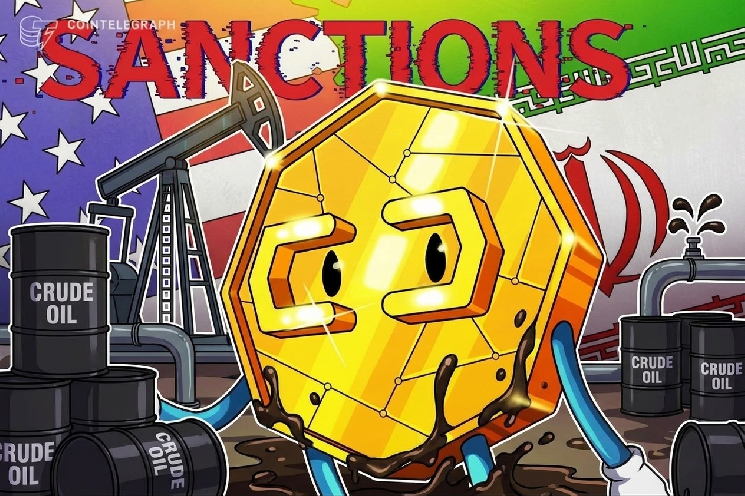
U.S. Aims at Iran's Crypto Sector Due to Oil Payments Exceeding $100 Billion

The U.S. Treasury Department has expanded sanctions on Iran to target its digital asset sector, citing over $100 million in cryptocurrency payments allegedly used to facilitate Iranian oil sales. The Treasury’s Office of Foreign Assets Control (OFAC) announced new sectoral sanctions covering digital assets, technology, gold, aviation, and shipping, alongside sanctions against nearly 60 entities, individuals, and vessels linked to nuclear, missile, cyber, and oil networks. The move allows OFAC to sanction foreign persons and firms operating in or supporting Iran’s crypto sector, which the Treasury stated is increasingly used as a "tool of choice" to circumvent sanctions, including by the Islamic Revolutionary Guard Corps (IRGC). Specific targets include Ukrainian broker Ivan Obukhov and his UAE-registered firm Foscom FZE, accused of processing over $100 million in crypto payments to facilitate oil sales for the IRGC’s Quds Force. This follows recent U.S. actions against Iran-linked crypto exchanges, including sanctions against UK-based Zedcex and Zedxion in January, four Iranian exchanges including Nobitex in June, and exchanges Shelbit and Aban Tether in August. Unlike previous targeted sanctions, the new measures establish a framework to penalize broader involvement in Iran’s crypto sector, significantly expanding OFAC’s authority under Executive Order 13902. Designated persons’ U.S.-linked property will be blocked, and foreign banks facilitating significant transactions for them may face U.S. account restrictions.

cryptonews.ru22 dk önce

U.S. Aims at Iran's Crypto Sector Due to Oil Payments Exceeding $100 Billion

cryptonews.ru22 dk önce

Conversation with Charles Zhang: Amidst the AI Frenzy, Why Pursue 'Anti-Efficiency' Content?

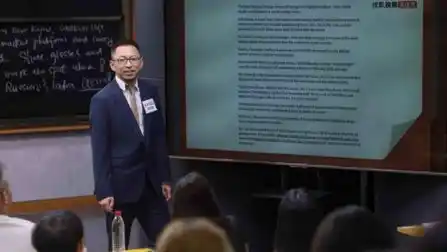
Dialogue with Charles Zhang: In the Era of AI's Sprint, Why Create "Anti-Efficiency" Content Standing out among China's early internet pioneers, Charles Zhang, founder and CEO of Sohu, maintains a distinct personal identity. He keeps a consistent public presence and embodies traits of high-energy individuals: sleeping only 4-5 hours daily, running 5km or marathons, and hosting frequent offline tech forums and dialogues with Nobel laureates. He has shifted focus from external business expansion to internal self-reconstruction, adhering to his own pace. "People aren't afraid of being busy; the busier you are, the better your health. Having nothing to do can lead to emotional issues and poor health." Marking the 10th anniversary of his live-streamed "Charles Zhang's English Class," he recently took it offline for a real-world classroom session. Following this, he discussed the course's decade-long journey, Sohu Video's content ecosystem, and the value of content in the AI era. **Pen and Mouth Diligence: A Class Against Instant Mastery** His English class began in August 2016 on "Qianfan Live." He spends about 40 minutes daily preparing, reviewing dozens of news headlines, reading five in detail, and selecting three for the lesson. Over ten years, he has completed over 2000 live sessions totaling more than 110,000 minutes, with over 52 million views. Initially, the stream was a way to "talk more" and combat emotional struggles. He started by repeating after TV news anchors, then moved to live-streaming with the launch of Qianfan Live. It was 40% for personal emotional regulation ("like a monk chanting sutras"), 30% to deliver authentic news, and 30% to promote the new platform. This daily "ritual" helped him overcome depression, leading to what he calls his "peak life state." From a product perspective, it was counter-intuitive—launched without prior market research or growth strategies, based on the founder's personal need that resonated with users. Yet, his content creation follows a strict routine. The decade of covering geopolitics, economics, tech, health, and society has built a vast "knowledge compound interest" system. In an age of AI summaries and algorithmic content, Zhang insists on "hard work": meticulous reading, handwritten notes, and manually created teaching materials, refusing AI-generated content. The English class is now a fixed daily rhythm; preparing for his weekly physics class requires a full day of solitary deduction on a blackboard. In his live streams, Zhang positions himself as a "content creator," not a CEO or teacher. He sees physics as extreme brain training and English as a "sensor" to understand the world. This explains why a top entrepreneur persists for a decade in seemingly "unprofessional" pursuits—it's the information input and psychological healing method he found during a low point. It's fundamentally an "anti-efficiency" commitment. He believes the meaning of reading lies in finding community and spiritual support, not just fleeting conversation points. For today's media, he states: "Reading news isn't the goal. As humans with many confusions, we need reference points, to find a group, find kindred spirits, or seek support and spiritual nourishment. Large language models can't satisfy these starting points; they only give you information." This offers solace and a value defense for media professionals impacted by AI summaries. **"Don't Think Earth Stops Turning Because AI Arrived"** A content creator expressed anxiety: after feeding their article to AI, it produced a more comprehensive, profound version, making their work feel valueless. Zhang responded with an analogy: "Carrots from the market, with a bit of soil, not glossy, taste delicious and flavorful. Tomatoes forced by chemical fertilizer have no taste at all." He sees AI giving world content a "plastic feel," but acknowledges its significant role in improving information access efficiency, especially in physics and social science research where he often queries AI for quick professional answers. The key, Zhang stresses, is that the outside world still needs to guide our perspective. LLMs provide "information," while the outside world offers "viewpoints." He cares deeply about *what* that external viewpoint is and *how* someone thinks about an issue. "Don't think the Earth stops turning because AI arrived," he analyzes. AI currently replaces rule-based work, noting significant impact on the software industry with many programmers laid off as even less experienced people can now write decent code. However, AI cannot yet replace arts, social sciences, emotions, and creative content. "Hollywood remains thriving, producing great works. Oscars will continue, Nobel Literature Prizes will still be awarded—all by real people, with works conceived by real people." While wary of AI, Zhang isn't anti-technology and is open to its applications. Sohu itself has launched AI assistants. In Sohu's AI practice, Zhang defines his role as a "large language model corpus provider." He believes LLM training is inseparable from human-original content as its data foundation, so original content retains irreplaceable value. "The era of self-media indeed offers everyone new ways to discover their strengths and achieve growth." He suggests every young person should consider self-media. Most importantly, the bottom line of content creation should be "authenticity." If using AI avatars, they must be clearly labeled; not doing so and misleading viewers wastes their time, especially when people still prefer real human content. Behind AI's sprint lie unavoidable realities. As AI quickly provides seemingly perfect answers, people grow accustomed to accepting "summarized" results, omitting processes of questioning, deduction, and trial-and-error, leading to a decline in deep thinking. Zhang's "anti-efficiency" practice with his two live-streamed classes is his answer to AI's狂奔: In an algorithm-driven era chasing ultimate efficiency, don't expect AI to fill inner voids. Read books, speak in front of a camera, sweat on a running track, and build connections with real people.

marsbit32 dk önce

Conversation with Charles Zhang: Amidst the AI Frenzy, Why Pursue 'Anti-Efficiency' Content?

marsbit32 dk önce

Zcash's ETF Gilding: How a Privacy Coin Was Packaged by Wall Street into a Compliant Asset

The article traces the decade-long path of Zcash (ZEC), a privacy-focused cryptocurrency, to its potential launch as the first privacy coin spot ETF, with Grayscale's ZCSH filing in August 2026. It argues ZEC's suitability stemmed not from regulatory acceptance of its privacy technology, but from its centralized, institutional structure from inception—a commercial company (ECC) with venture capital backing and a Founder's Reward—making it easier to package than decentralized alternatives. Three key institutions, intertwined in a network, drove the process: Grayscale (owned by DCG, an early ZEC investor), which had held ZEC in a trust since 2017; Coinbase, providing custody, prime brokerage, derivatives, and venture investment; and ZODL, a new for-profit entity formed in 2026 when ECC's core development team split from the non-profit foundation. The major regulatory hurdle was SEC scrutiny (2023-2026) over ZEC's historical structure, which resembled an unregistered investment contract due to automatic block rewards to ECC and the Foundation. This was resolved through governance changes (NU6 upgrade in 2024) that ended direct funding and shifted control to community voting, coinciding with a broader shift in SEC enforcement policy. Notably, the law firm Davis Polk represented both the Zcash Foundation in its SEC defense and Grayscale in the ETF filing. The push is also driven by DCG's dire financial needs amid Genesis bankruptcy lawsuits, seeking high-fee products (the ZEC ETF charges 2.5%). Concurrently, major mining operations by entities like Cypherpunk Technologies (backed by Winklevoss Capital) and DCG's Fortitude Mining expanded, motivated by profitability and aiming to influence the network. The article concludes with irony: to become a compliant ETF asset, ZEC must shed its core privacy feature for the fund's holdings, which will be held in transparent, auditable addresses. Wall Street is not adopting privacy technology but packaging the *concept* of privacy into a tradable, fee-generating financial product. The transformation was not a single master plan but the result of a network of aligned interests capitalizing on regulatory, governance, and market shifts over ten years.

marsbit42 dk önce

Zcash's ETF Gilding: How a Privacy Coin Was Packaged by Wall Street into a Compliant Asset

marsbit42 dk önce

İşlemler

Spot

Popüler Makaleler

DAO Nasıl Satın Alınır

HTX.com’a hoş geldiniz! DAO Maker (DAO) satın alma işlemlerini basit ve kullanışlı bir hâle getirdik. Adım adım açıkladığımız rehberimizi takip ederek kripto yolculuğunuza başlayın. 1. Adım: HTX Hesabınızı OluşturunHTX'te ücretsiz bir hesap açmak için e-posta adresinizi veya telefon numaranızı kullanın. Sorunsuzca kaydolun ve tüm özelliklerin kilidini açın. Hesabımı Aç2. Adım: Kripto Satın Al Bölümüne Gidin ve Ödeme Yönteminizi SeçinKredi/Banka Kartı: Visa veya Mastercard'ınızı kullanarak anında DAO Maker (DAO) satın alın.Bakiye: Sorunsuz bir şekilde işlem yapmak için HTX hesap bakiyenizdeki fonları kullanın.Üçüncü Taraflar: Kullanımı kolaylaştırmak için Google Pay ve Apple Pay gibi popüler ödeme yöntemlerini ekledik.P2P: HTX'teki diğer kullanıcılarla doğrudan işlem yapın.Borsa Dışı (OTC): Yatırımcılar için kişiye özel hizmetler ve rekabetçi döviz kurları sunuyoruz.3. Adım: DAO Maker (DAO) Varlıklarınızı SaklayınDAO Maker (DAO) satın aldıktan sonra HTX hesabınızda saklayın. Alternatif olarak, blok zinciri transferi yoluyla başka bir yere gönderebilir veya diğer kripto para birimlerini takas etmek için kullanabilirsiniz.4. Adım: DAO Maker (DAO) Varlıklarınızla İşlem YapınHTX'in spot piyasasında DAO Maker (DAO) ile kolayca işlemler yapın.Hesabınıza erişin, işlem çiftinizi seçin, işlemlerinizi gerçekleştirin ve gerçek zamanlı olarak izleyin. Hem yeni başlayanlar hem de deneyimli yatırımcılar için kullanıcı dostu bir deneyim sunuyoruz.

317 Toplam GörüntülenmeYayınlanma 2024.12.11Güncellenme 2026.06.02

DAO Nasıl Satın Alınır

Tartışmalar

HTX Topluluğuna hoş geldiniz. Burada, en son platform gelişmeleri hakkında bilgi sahibi olabilir ve profesyonel piyasa görüşlerine erişebilirsiniz. Kullanıcıların DAO (DAO) fiyatı hakkındaki görüşleri aşağıda sunulmaktadır.

活动图片