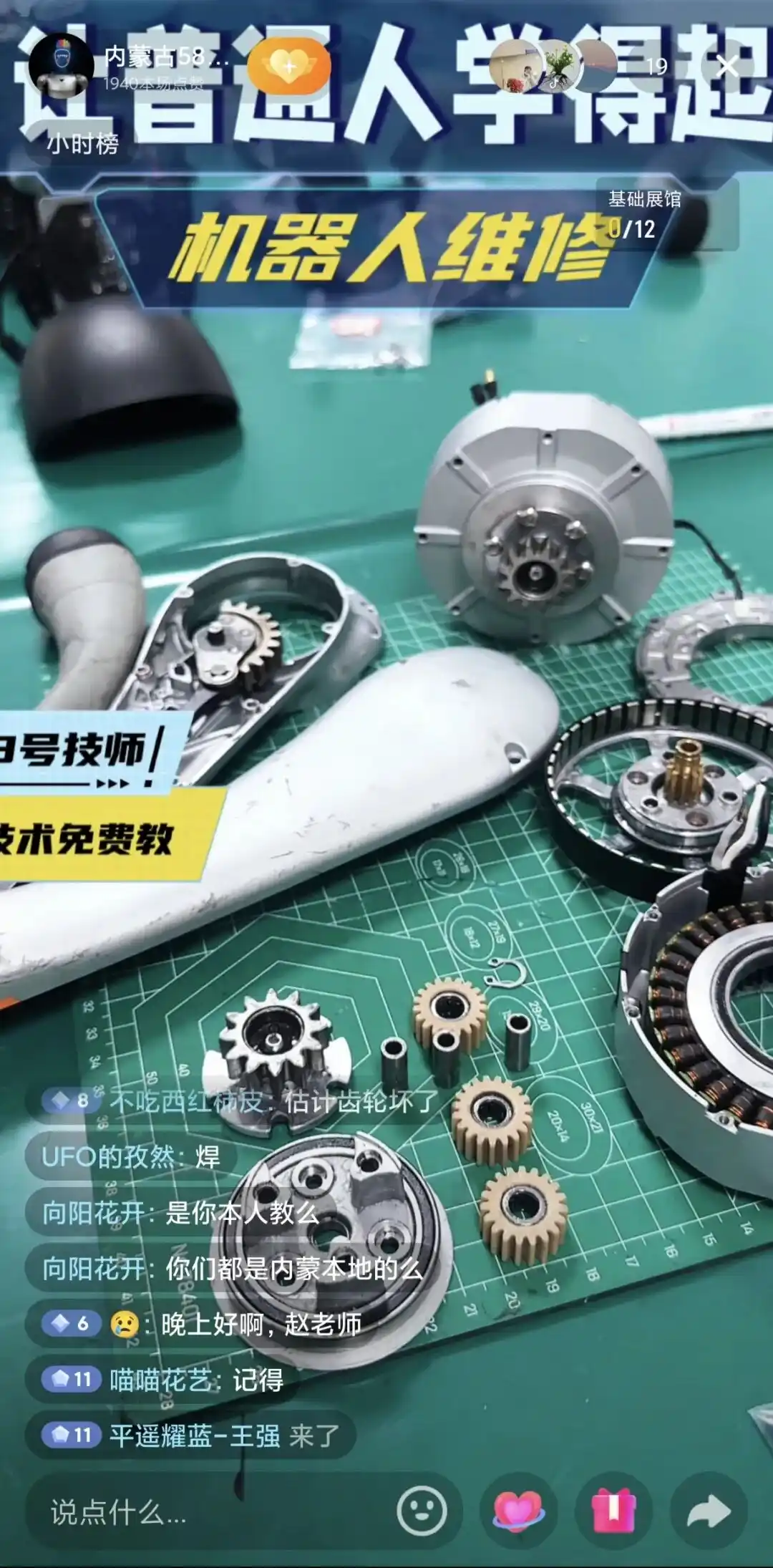
At 9:20 PM, Zhao Xin appeared punctually in his Douyin live stream room.
During the previous day's stream, a fan mentioned that their robotic dog's knee joint had abnormal sounds. Zhao Xin planned to disassemble the knee joint motor of a robotic dog's leg in front of the camera, both to teach disassembly and installation and to provide remote consultation for that fan.
Zhao Xin had already gained experience from his explorations: a "rustling" sound generally means lubrication is needed; a "clicking" sound is usually a problem with the planetary reducer's gears; while a "buzzing" current sound might indicate a short circuit on the circuit board.
By teaching robot repair, Zhao Xin's each live stream attracts over 1,700 viewers, with over 40 people online simultaneously. Although the numbers aren't huge, many viewers watch attentively, and there are even loyal fans who tune in every day.
Why are people willing to watch a live stream of someone repairing robots?
You might have seen these robot-related videos: being carried away on a stretcher after finishing a marathon, getting its head knocked off in an octagon cage fight, suddenly stumbling and falling apart during a performance...
The number of robots is growing explosively. According to data from the well-known market research firm IDC, global humanoid robot shipments will reach approximately 18,000 units in 2025; while officials from China's Ministry of Industry and Information Technology predict that China's humanoid robot production is expected to exceed 100,000 units in 2026.
As robots become increasingly common, the demand for maintenance and repair positions is also growing, with some pioneers already active in the market.
Repairing Robots Doesn't Have a High Technical Barrier
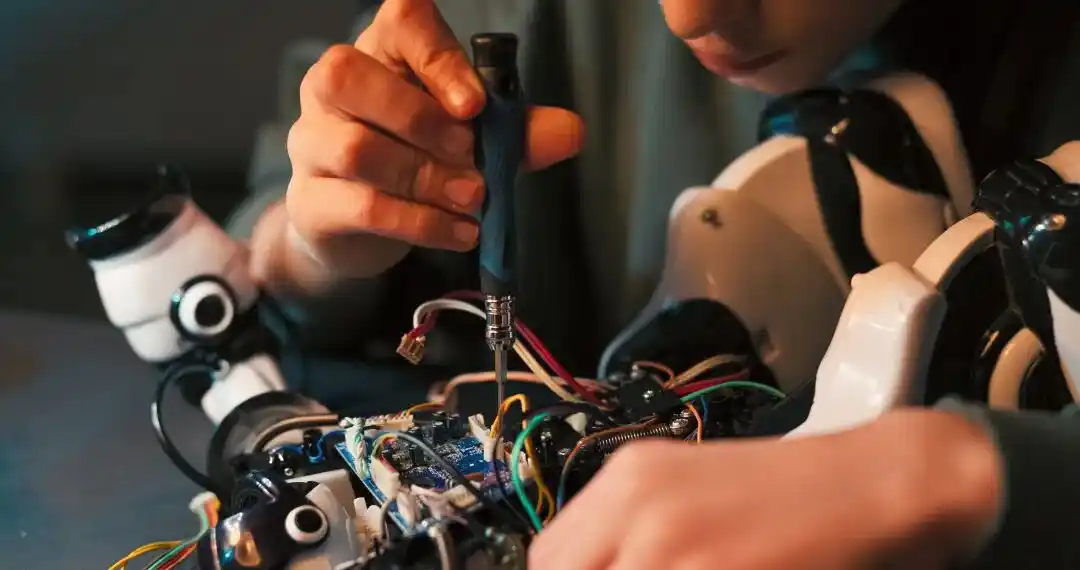
Zhao Xin works at a robotics and drone repair training institution in Ordos, Inner Mongolia. His persona on Douyin is: an ordinary person learning robot repair from scratch.
This aligns with his real experience. Born in 1990, Zhao Xin majored in civil engineering in college. His work experience was mainly in the service industry. Although he had a hobby of disassembling electronic products, he had never done repair work before. Learning to repair robots was almost entirely self-taught.
He first disassembled a robotic dog just half a year ago. After his first disassembly and reassembly, he had 10 screws left over and didn't know where they belonged. He had to disassemble another robotic dog to compare and find their positions one by one.
During his first disassembly of a humanoid robot, he snapped three screws and two clamps. Some screw holes were reinforced with anaerobic adhesive. After using a hot air gun to melt the glue, the screws softened and broke when force was applied.
On another occasion, a robot he was repairing prepared to stand up from a squatting position. Instead of moving forward, it exerted force backward and did a full splits fall. He and his colleagues researched for a long time and found that the square inertial measurement unit (IMU) chip at the robot's waist had been installed upside down by 180 degrees. Even though the software didn't report an error, the robot's force direction was precisely opposite.
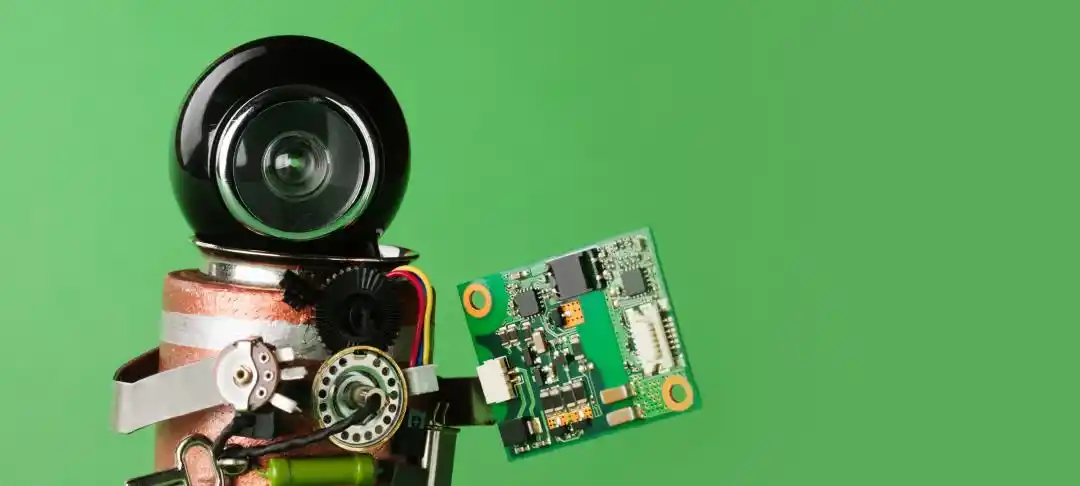
Beyond repairs, robots and robotic dogs also require routine maintenance.
Zhao Xin encountered a robotic dog where the app reported no faults, but the machine was unstable. After thorough disassembly, the problem was traced to a bearing inside a leg joint linkage. It had worn two deep grooves, a result of not receiving timely maintenance.
Despite many initial missteps, Zhao Xin repeatedly emphasizes that the technical barrier to repairing robots is actually not high.
The first robotic dog Zhao Xin repaired had a communication fault. Replacing a ribbon cable and doing some soldering solved the problem in about an hour.
Generally, combining the fault description from the customer with error reports in the app can roughly locate the problematic part. For damaged components, it's usually not necessary to struggle with repairs; simply replacing them with new parts is the norm.
Industry practitioners generally state that the difficulty of repairing humanoid robots and robotic dogs is less than repairing robot vacuum cleaners or drones.
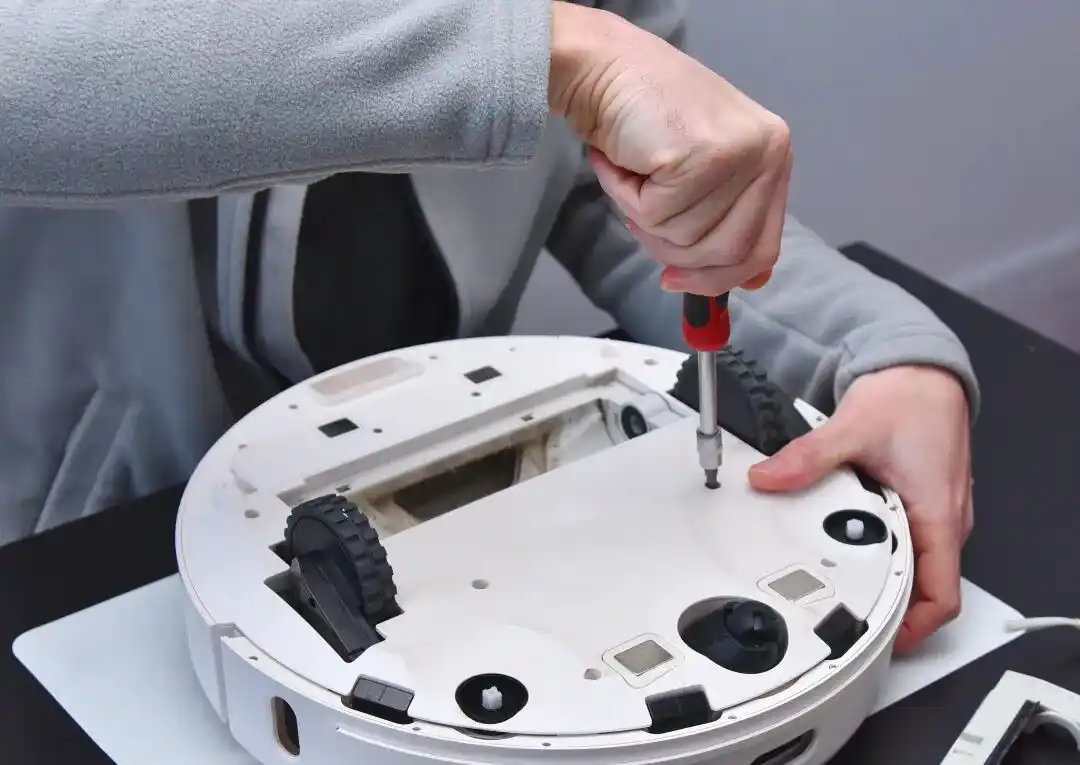
A greater variety of parts also implies more complexity in repairs. Compared to robot vacuum cleaners, the components of humanoid robots and robotic dogs are much simpler, mainly consisting of joint modules (including motors, reducers, encoders, driver boards, bearings, etc.), perception systems (LiDAR, cameras, IMU, etc.), mainboards, batteries, etc.
Repairing robots and robotic dogs also doesn't require highly difficult techniques. Unlike drones, which often involve working on circuit boards the size of a fingernail, there's a repair known as "flying wire" repair. It requires using 0.2mm copper wire to wind a small loop on a solder joint to restore the connection between a chip and the circuit board. This entire procedure is performed under a microscope, testing both skill and patience.
Zhao Xin says that someone starting from zero can master robot repair in just over a month. Those with electronics and circuit knowledge or repair experience can learn even more easily.
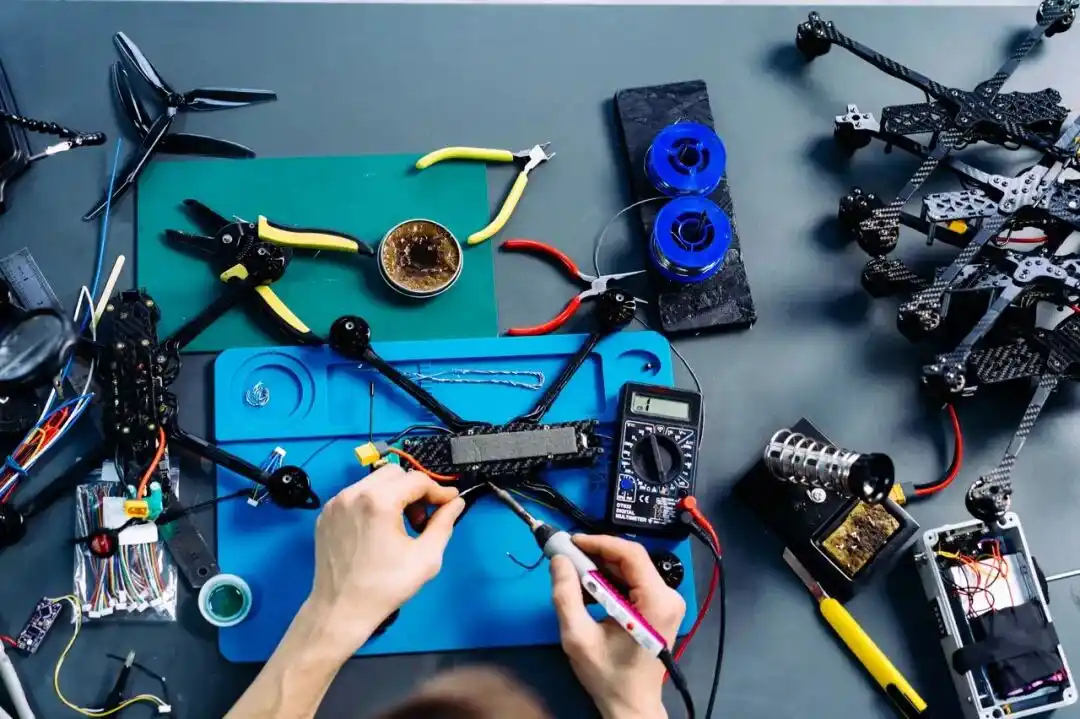
The hardest part of robot repair is not the technology, but the monopoly on parts by manufacturers.
Core robot components are mostly custom-made by manufacturers, are not interchangeable between brands, and there are almost no third-party alternatives. Authorized dealers can purchase parts from the manufacturer but are often restricted by region and intended use; unauthorized businesses can only look for second-hand salvaged parts or find their own channels.
When repairing phones or drones, one can consult publicly available circuit diagrams for various models to understand the function of each chip and its circuit connections. Robots and robotic dogs not only lack such diagrams but sometimes even have chip names or markings intentionally removed before leaving the factory.
Even robot accessories aren't cheap. When the rubber on a robot's foot soles wore out, replacing a pair cost 400 yuan. Zhao Xin's own shoes cost only 59 yuan.
Last year, the institution where Zhao Xin works spent 800 yuan on a suit for a robot to wear during performances. Some keen-scented clothing factories have already started producing specialized clothing and accessories for robots.
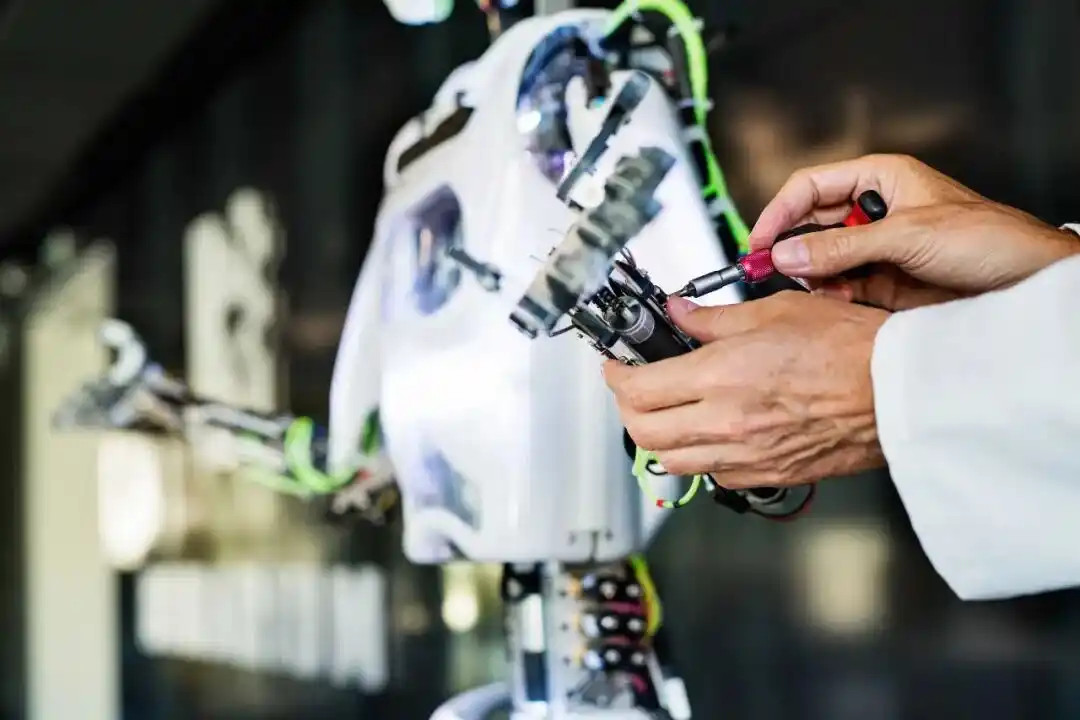
Third-Party Repair: Cheaper and Time-Saving
In just over ten minutes, Zhao Xin disassembled a robotic dog's leg in front of the camera. He neatly arranged the parts on the table, explaining their structure, function, and working principles one by one to the audience.
The model of this robotic dog is Unitree's Go2. The Go2 series and Unitree's humanoid robot G1 are currently the most common brand models found in third-party repair shops and training institutions.
In 2025, Unitree took the top spot in humanoid robot shipments, selling over 5,500 units for the year, with Zhiyuan coming in second at over 5,100 units, creating a significant gap with the following players.
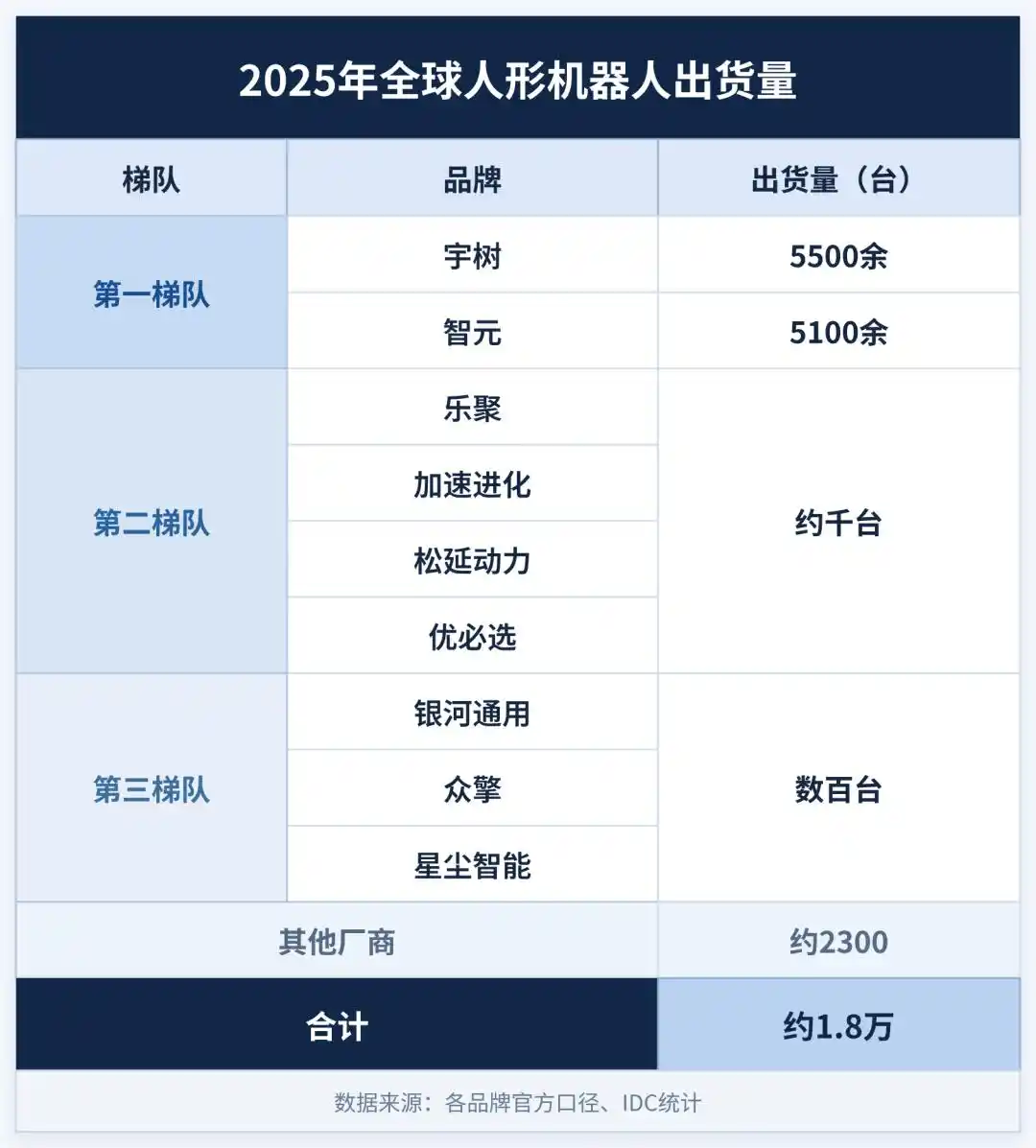
These numbers are still growing rapidly. A Unitree executive predicted that the company's total shipments in 2026 are expected to at least double compared to last year, possibly even increase nearly threefold. Zhiyuan also announced in late June 2026 that its cumulative production of general-purpose embodied robots had exceeded 15,000 units.
Unitree also dominates the robotic dog market. Unitree founder Wang Xingxing stated in July 2025 that Unitree's quadruped robot sales accounted for 60% to 70% of global shipments.
Robotic dog sales are higher than humanoid robot sales. According to statistics from the Gaogong Robot Industry Research Institute (GGII), China's quadruped robot sales in 2025 were approximately 57,600 units, nearly three times that of humanoid robots.
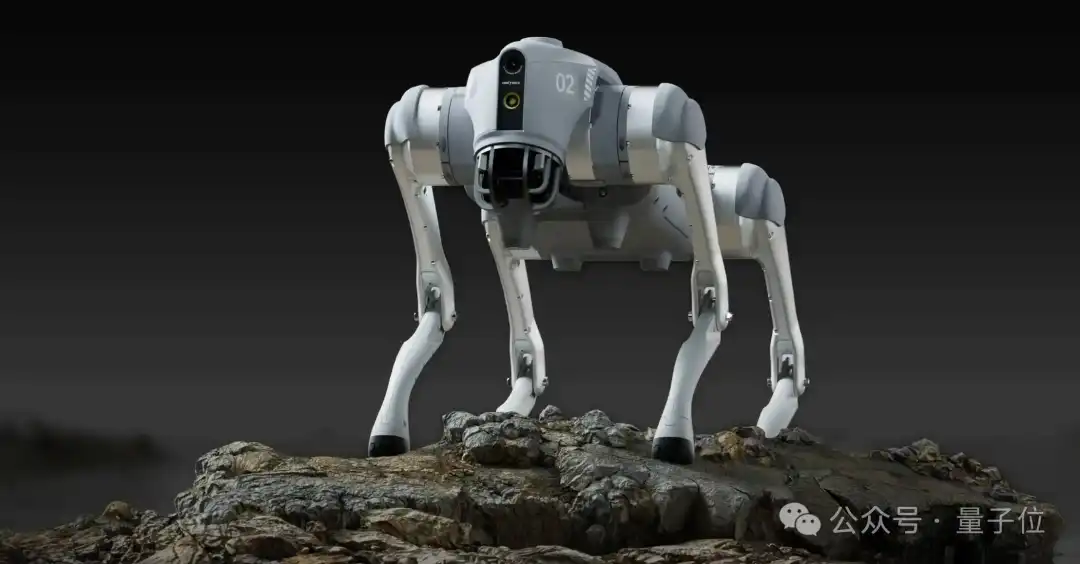
Unitree Quadruped Robot Go2 (Official Website Image)
With the growth in overall robot shipments, brands other than Unitree are gradually generating repair orders. Fang Jinghua, General Manager of Nanjing Kaogong Yunji Robotics Technology Co., Ltd., said they have five repair points nationwide. Since the beginning of this year, they have seen a gradual increase in repairs for other brands like Zhiyuan, Leju, Zhongqing, etc.
Although the overall practical application of robots is still in a very early stage, different brands are beginning to show slight differentiation in their application scenarios.
The top-selling brands, Unitree and Zhiyuan, both focus on general-purpose platforms and full-scenario applications. However, Unitree's humanoid robots are more used for scientific research and performances, while its robotic dogs are often used for inspection, surveying, and emergency response. Zhiyuan's main application directions are industrial manufacturing, commercial retail, cleaning inspection, etc.
Other brands with lower sales: Leju focuses on data collection, scientific research, etc.; Ubtech focuses on industrial scenarios; Jiasu Jinhua's main scenarios are competitions and scientific research; Songyan Dongli's small robots are mainly used for entertainment performances; Fourier Robotics' biggest feature is medical rehabilitation; Yinhe Tongyong focuses on commercial retail, industrial manufacturing, cultural tourism, etc.
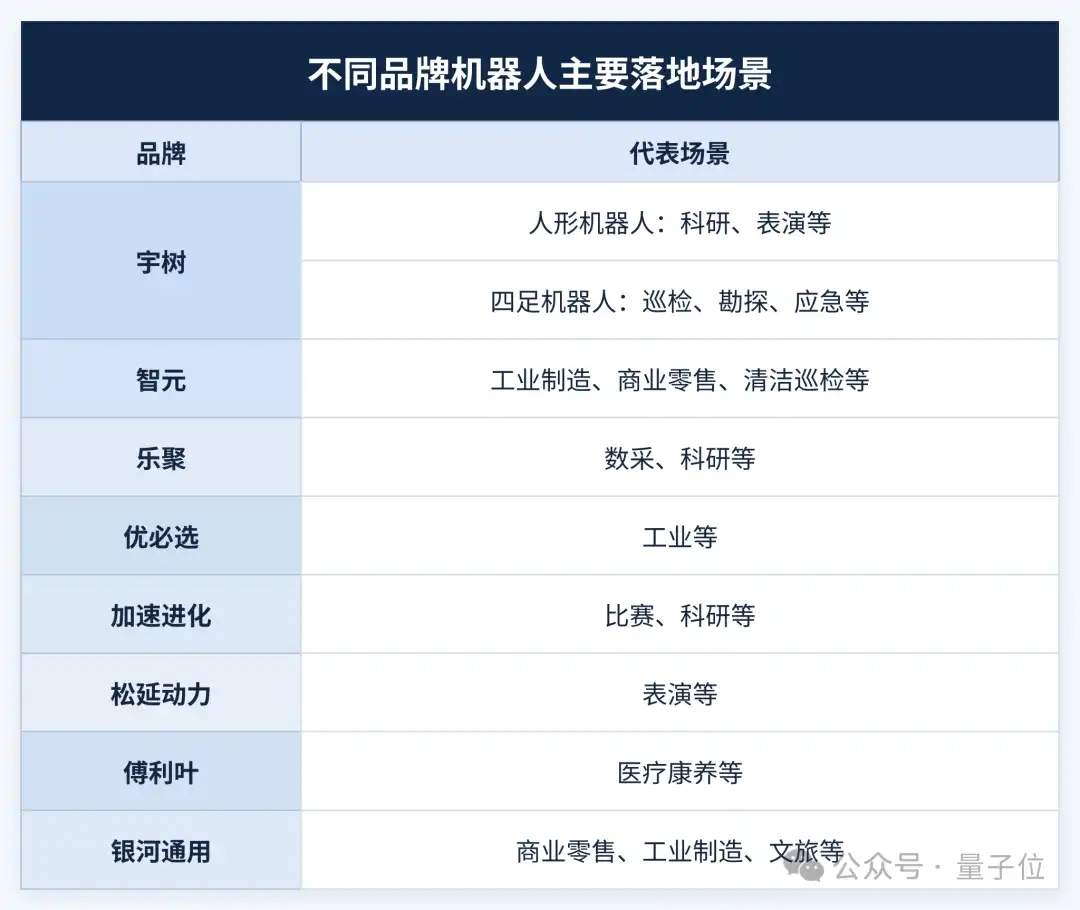
Note: The official statements of the above brands all encompass multiple application scenarios. The article only lists the more representative or distinctive scenarios in practical applications.
The warranty period for mainstream model robots and robotic dogs is typically around one year. During the warranty period, returning to the original manufacturer for repair is the choice for the vast majority.
Robot manufacturers usually stipulate: Non-human-caused quality issues within the warranty period are eligible for free repair; while faults caused by human damage, private disassembly, or not following the instruction manual require the user to bear the repair cost.
After the warranty expires, robots and robotic dogs no longer receive free repairs, making the more cost-effective third-party repair an advantageous option.
Fang Jinghua said their average repair price is usually 10%-15% of the robot's selling price, which can be 20% cheaper than returning to the manufacturer. A merchant in Shenzhen even claimed they could be half the price of manufacturer repairs.
Regarding time, the cycle for manufacturer repairs generally exceeds one month, while third-party repairs are usually completed within about a week.
The most mainstream current application scenario for robots is scientific research. According to the "2025–2026 Humanoid Robot Industry Development Research Report" released by the Humanoid Robot Scene Application Alliance, the educational and scientific research application scenario accounts for 42%, followed by data collection, services, and performances, with industrial scenarios having the smallest share.
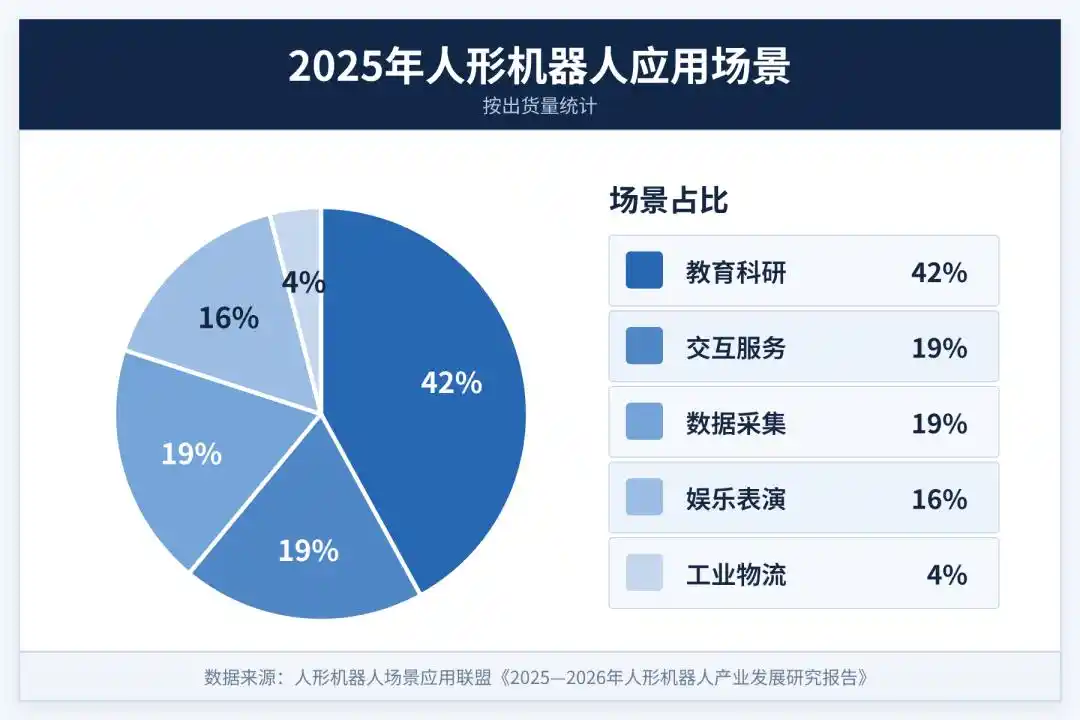
However, the majority of robots visiting third-party repair shops are damaged due to entertainment performances. Clients are mostly "individual entrepreneurs" like robot rental companies and self-media bloggers.
Interestingly, the period before each May Day holiday is a peak for new businesses opening, entertainment performance demand is high, and it's also the peak season for third-party robot repairs. During summer, with high outdoor temperatures and fewer commercial activities, the repair industry enters its off-season.
In contrast, institutional clients using robots for scientific research, development, data collection, etc., are usually less price-sensitive and more willing to opt for manufacturer repairs.
Robot Repair is Currently Only a Side Hustle
Although third-party repairs are cheaper and save time, it's currently difficult for businesses to make a profit.
The main reason is the small number of robots available for repair. Many robots are still under warranty. Among those out of warranty, a significant proportion are still returned to the manufacturer for repair. Additionally, considering geographical dispersion, the number of robots that can be sent to various third-party repair shops is limited.
The institution where Zhao Xin works receives an average of only 1-3 repair orders for robots and robotic dogs per month. Fang Jinghua's company, with its five national repair points, repaired over 10,000 household robot vacuum cleaners and various commercial service robots in the past year, but averaged only 5-6 humanoid robots and 10+ robotic dogs for repair per month.
Therefore, relying solely on robot repair business cannot sustain them yet, and these businesses all have other "main businesses" to make money.
Zhao Xin's institution, Zhongyun Zhike (Inner Mongolia) Technology Co., Ltd., started with training related to open-pit coal mining machinery operation; Fang Jinghua's company makes money from repairing robot vacuum cleaners and commercial service robots; Shenzhen Leike Intelligent Technology Co., Ltd. has years of experience repairing industrial robots; Beijing Silicon Base Park Technology Co., Ltd. profits from robot rentals, research trips, and other businesses; some other institutions' main business is drone repair and training.
To increase revenue, these institutions have all coincidentally started or plan to start robot/robotic dog repair training.
The training industry is currently in its early stages and lacks standards, showing great divergence in training institution backgrounds, training durations, pricing, etc.
The content taught by these institutions is similar, covering robot fault diagnosis, disassembly/assembly, parts replacement, calibration, etc. However, training durations range from as short as 8 days to as long as 40 days; tuition fees vary from 5,000 yuan to 30,000 yuan.
Lu Anding, the head of Shenzhen Leike, said that since their training classes started in February this year, six sessions have trained over 100 students, with 70-80% entering the robotics industry after graduation.
However, most of these graduates enter basic positions like robot sales, operation, and maintenance, with few actually engaging in repair work.
Lu Anding stated that, for example, a robot rental company needs dedicated personnel to transport robots to event sites, operate them, and oversee the entire performance. Conservatively estimated, one operator is needed for every three robots. Robot manufacturers cannot train that many people, so they rely on social institutions to train and then supply personnel to employers.
The talent requirements for the robot repair industry are not high. Respondents generally stated that graduates from vocational colleges and technical schools can be competent, and some repair training institutions have even lowered the recruitment threshold to a high school diploma.
However, once extending from basic repair to secondary development, the threshold increases significantly. Such positions often require a bachelor's degree because secondary development involves extensive robotics专业知识, as well as programming and algorithms.
The real salary ranges given by several respondents are relatively consistent: newcomers earn around 6,000 to 8,000 yuan per month, while skilled workers can earn over 10,000 yuan per month, varying according to regional average salary levels.
Besides social institutions, major companies like JD.com have also entered the field, claiming they will train 100,000 engineers within five years to cover services like robot repair. Many vocational colleges are also planning to establish robot repair majors.
But regardless of the training provider, robot repair remains a business waiting for the market to mature.
This article is from the WeChat public account "QbitAI" (ID: QbitAI), author: Lin Fangzhou.