OpenAI's latest internal reasoning model has released ten astonishing mathematical advances in one go.
These include:
- The first proof of the existence of non-sofic groups;
- New circuit lower bounds;
- Conquering the hardness limit of the Closest Vector Problem (CVP);
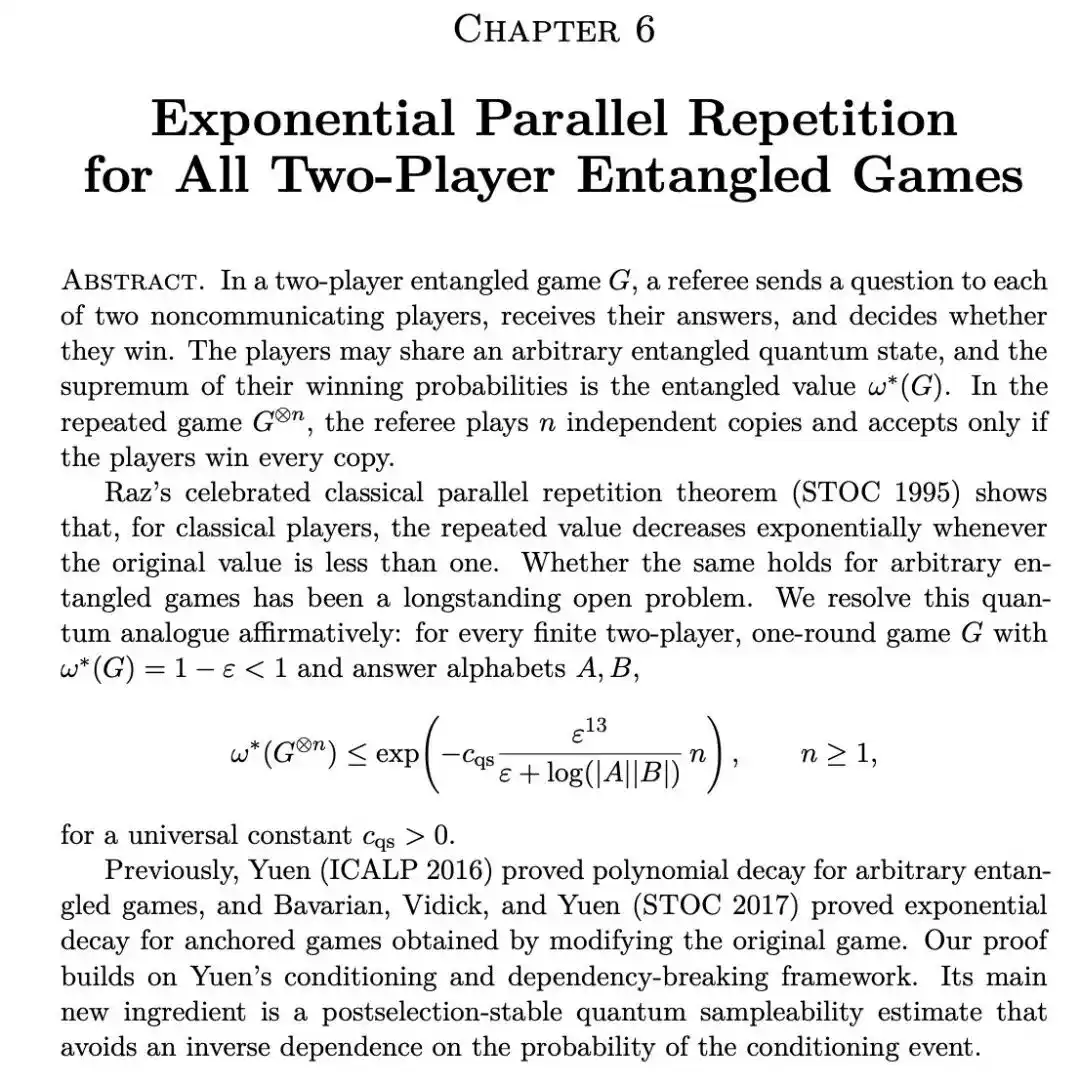
- And the theorem of exponential decay in quantum parallel repetition for two-player games.
The one that matters most to Columbia University Associate Professor Henry Yuen is the last one—
In 2016, Yuen made significant progress on this problem but did not solve it completely. For ten years, he struggled repeatedly, even attempting to make a final push for the ultimate proof using ChatGPT 5.5 just a month ago, but with little success.
And AI, building on his shoulders, gently nudged the ball into the goal.
The Proof Is Correct, but Humans Don't Understand It
A few days ago, Lijie Chen sent a draft paper to Henry Yuen and a few others.
Life was busy at the time, and he didn't have the chance to delve into it. Now, the paper has been made public. He can't hold back; he has something to say.
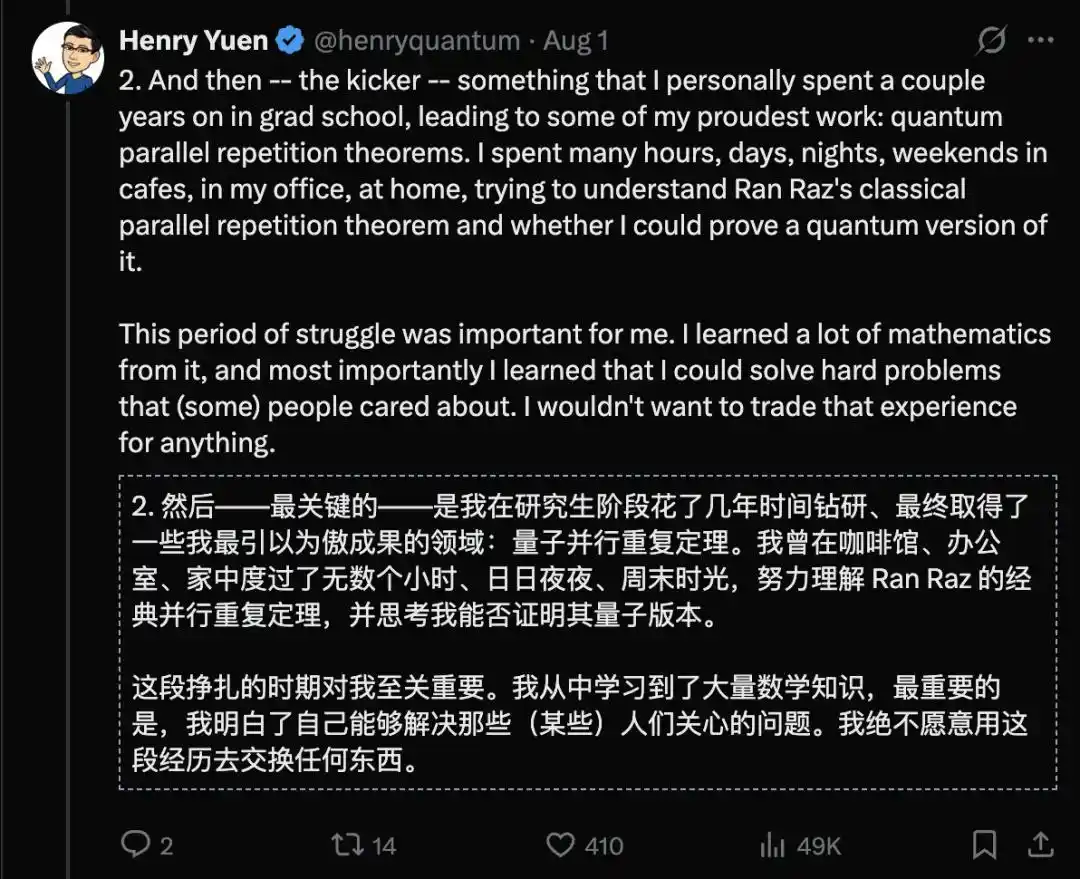
The quantum parallel repetition theorem is a field that Henry Yuen spent several years of his graduate studies deeply immersed in, and it's the result he's most proud of.
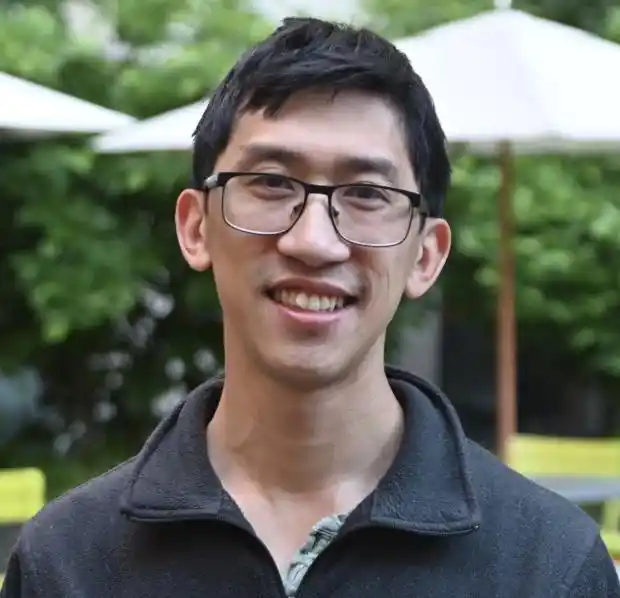
Henry Yuen, currently Srivani Family Associate Professor of Computer Science at Columbia University
He remembers those afternoons spent in cafes, late nights in the office, and countless weekends that should have been for rest, repeatedly dissecting and studying Ran Raz's classic parallel repetition theorem.
He wanted to solve the quantum version of this theorem, losing sleep over it, tossing and turning. He ingested tons of mathematical tools and eventually succeeded in proving polynomial decay.
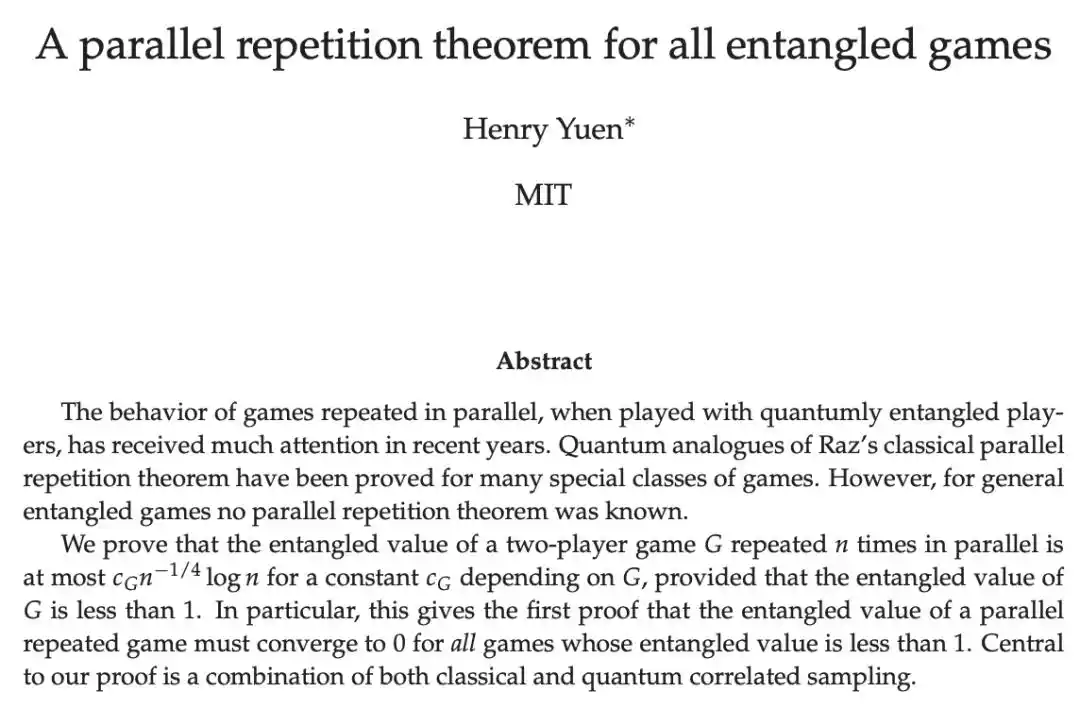
https://arxiv.org/pdf/1604.04340
More importantly, he gained confidence from it, finally recognizing his own ability and proving that he could indeed solve problems (at least some) that others also cared about.
He believes OpenAI's proof is likely correct, especially since there is already a Lean formalized proof. But to digest this new proof, Henry Yuen needs some time.
Although the new proof indeed picks up from where he left off, the AI broke through the limitations of his original proof strategy, using some techniques and methods. These methods might already be familiar to researchers in operator theory and functional analysis.
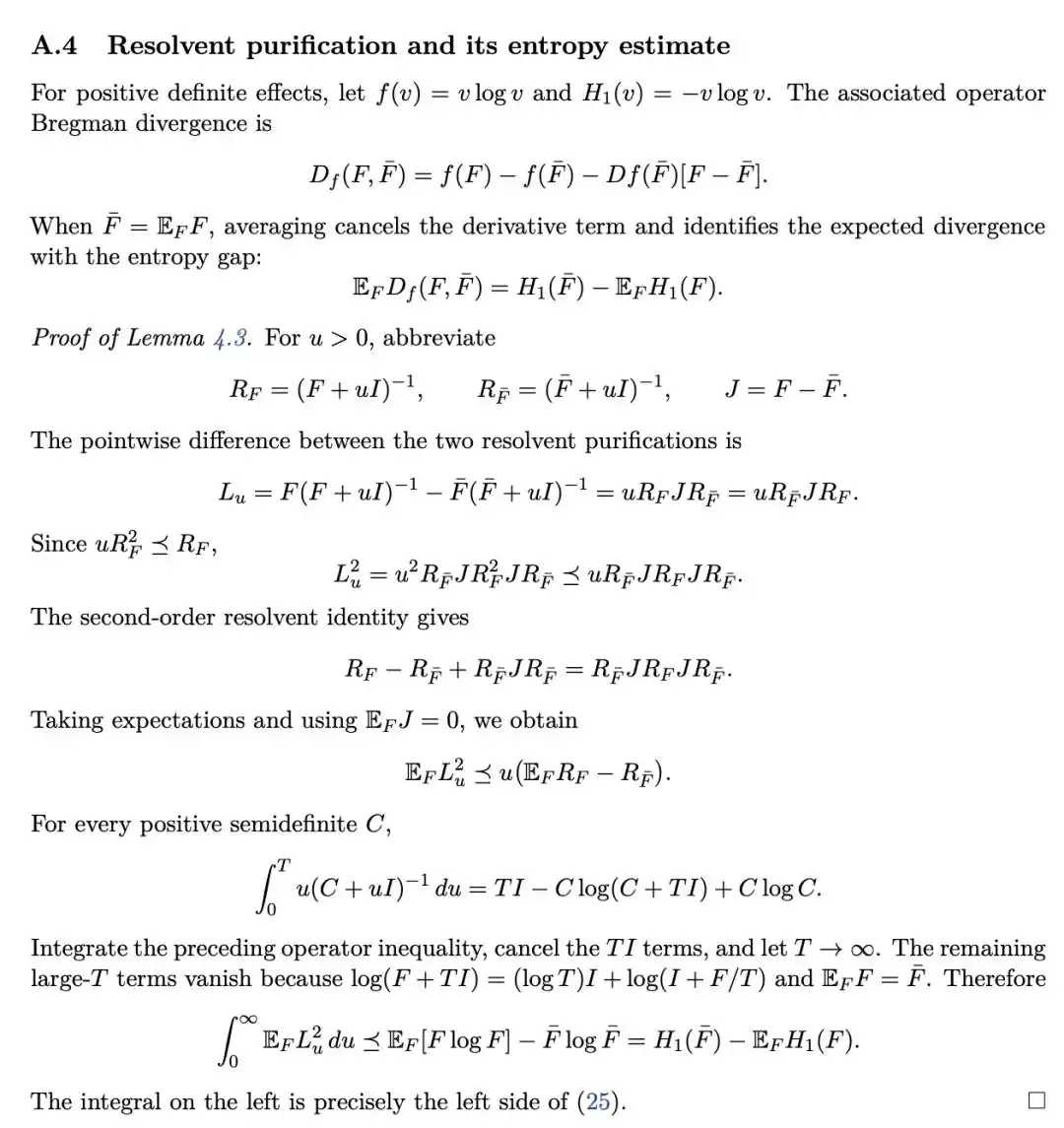
Beyond the excitement, Yuen's first feeling is disappointment—disappointment with the writing style of the paper.
He says the proof reads with a strong AI flavor: lengthy and circuitous introductions, but the key steps appear like magic tricks, leaving readers baffled.
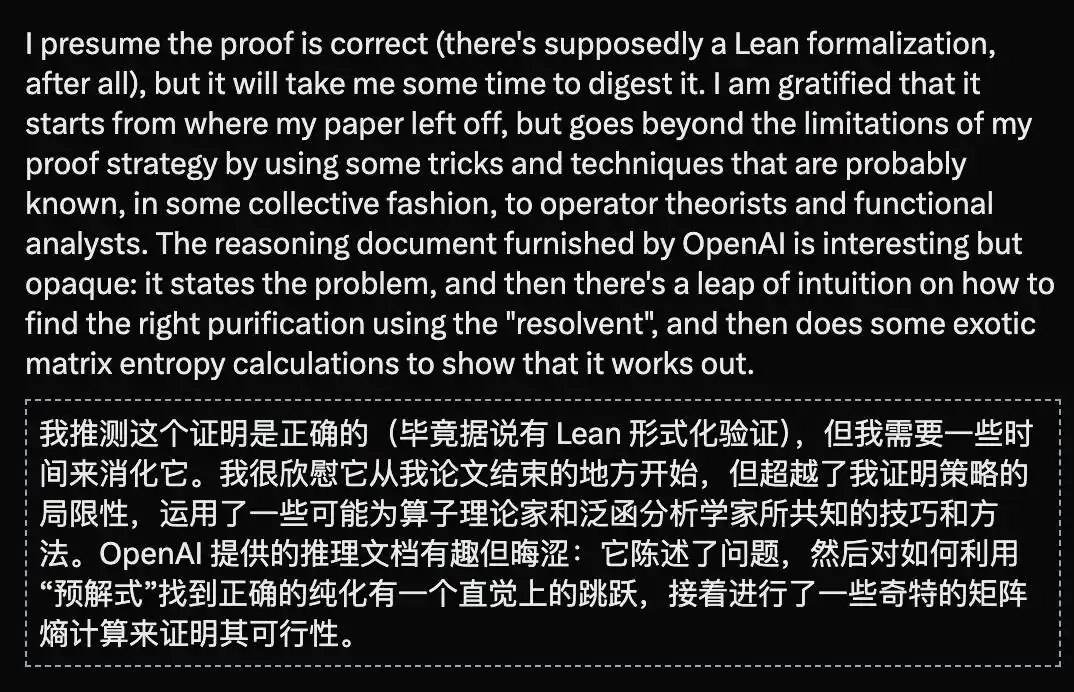
OpenAI's proof is interesting to read but also somewhat of a headache.
It first sets the problem squarely on the table, then suddenly leaps in the direction of "finding the correct purification using resolvents," with almost no logical steps in between.
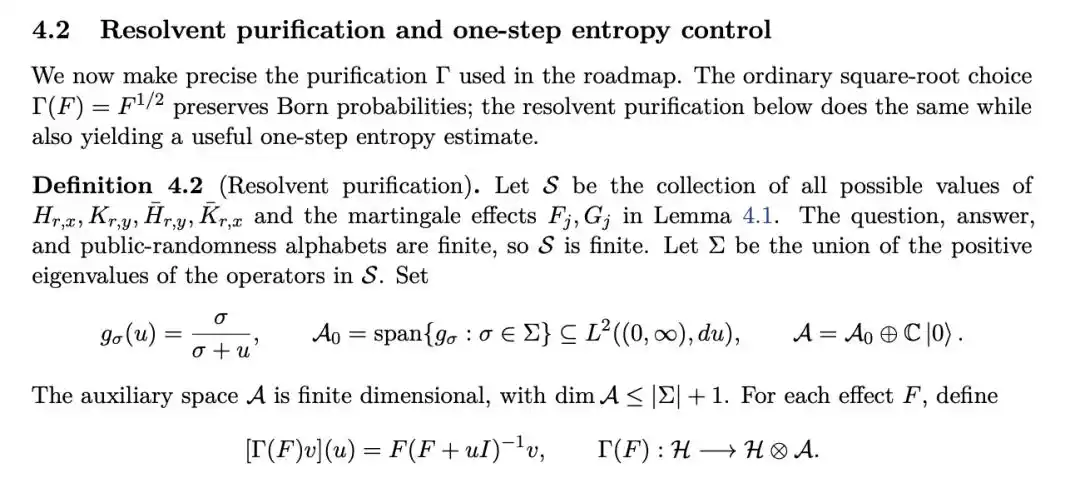
What follows is a series of rather unconventional matrix entropy calculations, winding and twisting until finally declaring: this path works.
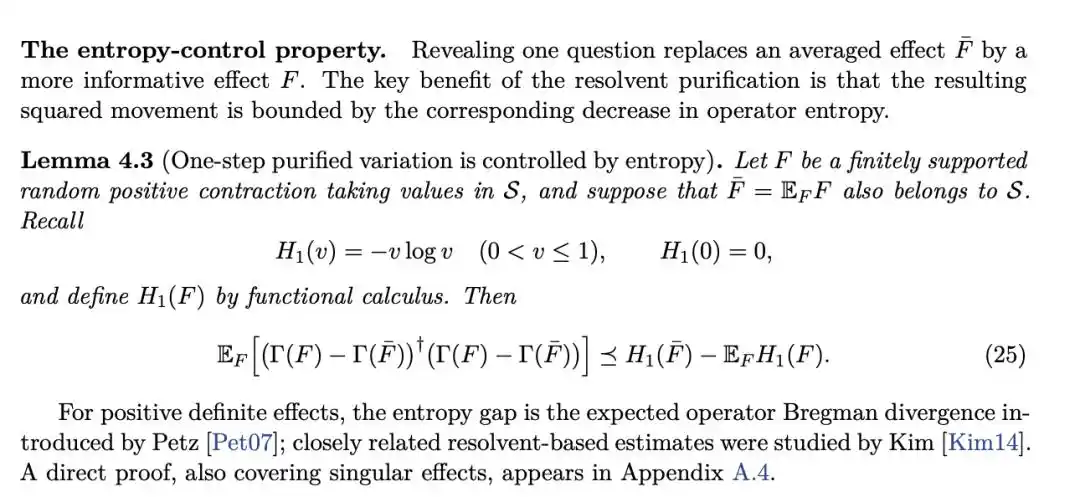
But that most crucial step—where the intuition came from—it doesn't say.
And the most exquisite, most creatively challenging stroke—the technique of expanding the operator space using the Uhlmann transformation, which should have been the most thrilling climax of the entire proof—is discarded by the AI like dirt, thrown into Section 4 without warning or explanation.
A correct proof, but it hides the most important ideas.
He hopes OpenAI could spend a few more prompts to properly organize this manuscript.
More heartbreaking is the second layer: Lean verification passing does not equal understanding.
The machine can guarantee that every step of the deduction is flawless, but "why this trick works," "what it means in the broader theoretical landscape," "where else it can be applied"—these questions, Lean cannot answer any of them.
Yuen admits he is still digesting this proof.
The answer is right in front of him, yet he has to reverse-engineer the unspoken intuition of the AI, line by line, as if reading a paper from an outsider.
Sure, there's a Lean proof there. But that's just formalization; it doesn't mean I understand it. To truly digest it, I'll probably have to rely on time to grind it out slowly.
Indeed, AI expands the frontier of human understanding, but then what? What's left of the joy and meaning of research? If AI solves all the problems he's obsessed with, what does he have left?
Questions keep coming. But one thing he is increasingly sure of: mathematicians won't be idle in the days to come. They'll have to tame these intellectual giants and translate their jargon into human language.
AI "Disproves" Century-Old Math Conjecture Debunked! Lean Isn't a Safe Box Either
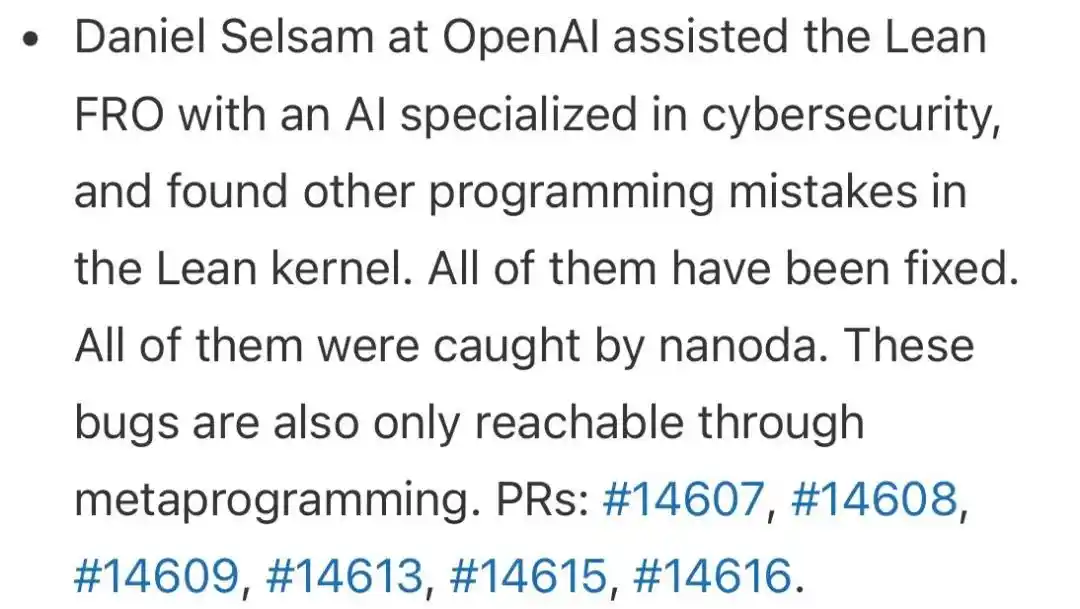
Last week, Ramana Kumar used 300 lines of Lean to disprove the most famous unsolved mathematical mystery, the "Collatz conjecture."
The problem it poses is particularly simple: given a positive integer, repeatedly apply two rules—if it's even, divide by 2; if it's odd, multiply by 3 and add 1—does it always eventually fall to 1, no matter where you start?
You can try it:
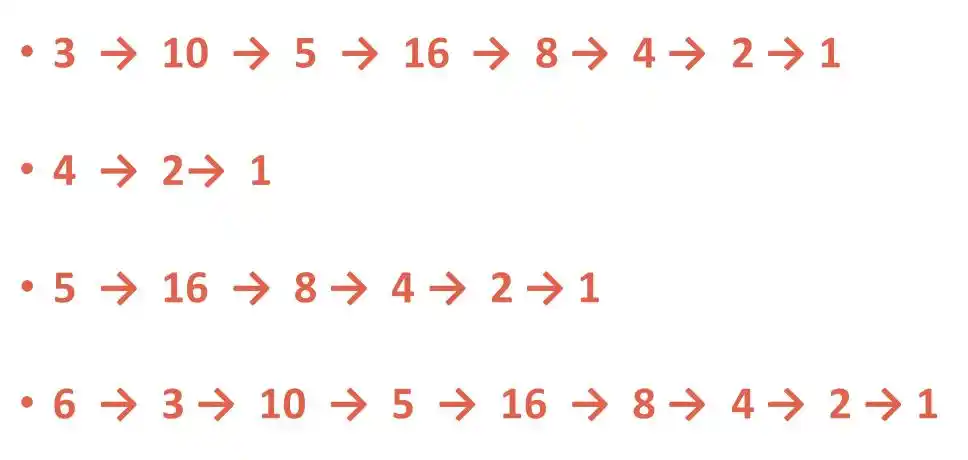
The conjecture states that no matter which positive integer you start with, you'll eventually fall into this loop: 4→2→1.
Since mathematician Lothar Collatz proposed it in 1937, no one has been able to prove it true, nor has anyone found a counterexample.
Mathematician Paul Erdős called it: "Mathematics may not be ready for such problems," and American Academy of Sciences member Jeffrey Lagarias believed "it's an extraordinarily difficult problem, completely beyond the scope of today's mathematics."
If disproven, it would undoubtedly be explosive news in the mathematics community.
Unfortunately, three days later, this formalized Lean proof was deemed invalid because it actually exploited a low-level bug in the Lean kernel.
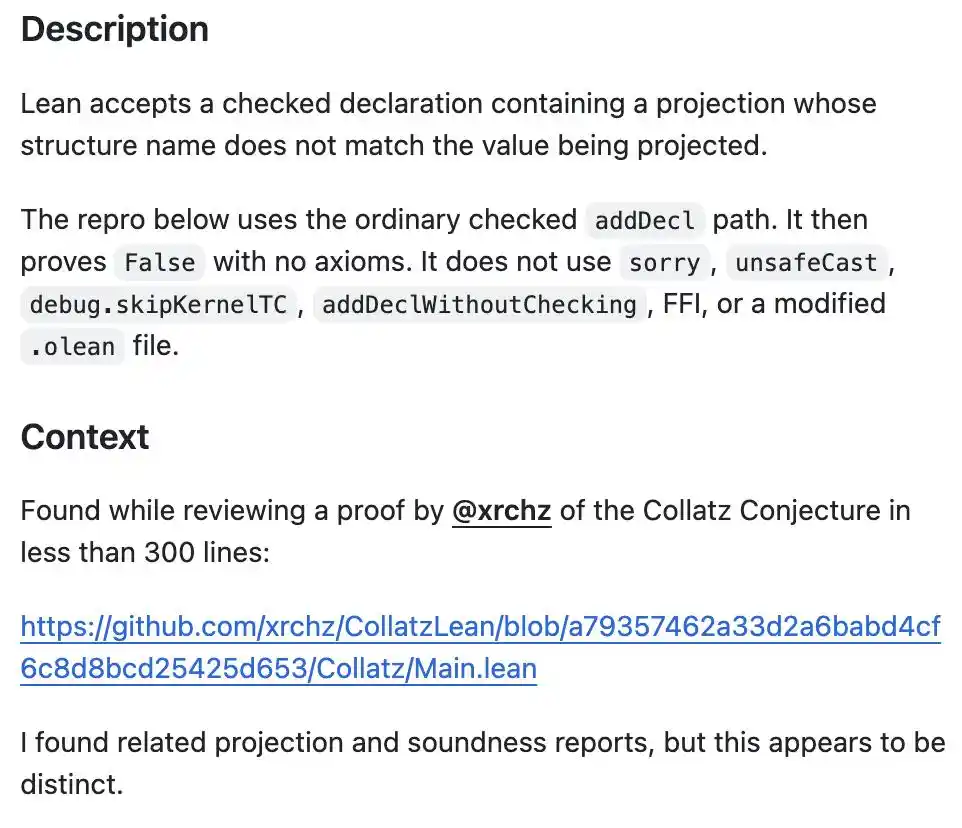
OpenAI's Daniel Selsam, along with an AI specializing in cybersecurity, assisted Lean FRO in conducting a kernel audit.
The result? They found not just one, but multiple vulnerabilities in the Lean kernel!
At almost the same time, Rutgers University mathematics professor and Lean specialist research organization advisor Alex Kontorovich posted a reminder: don't treat Lean as an all-powerful verifier.
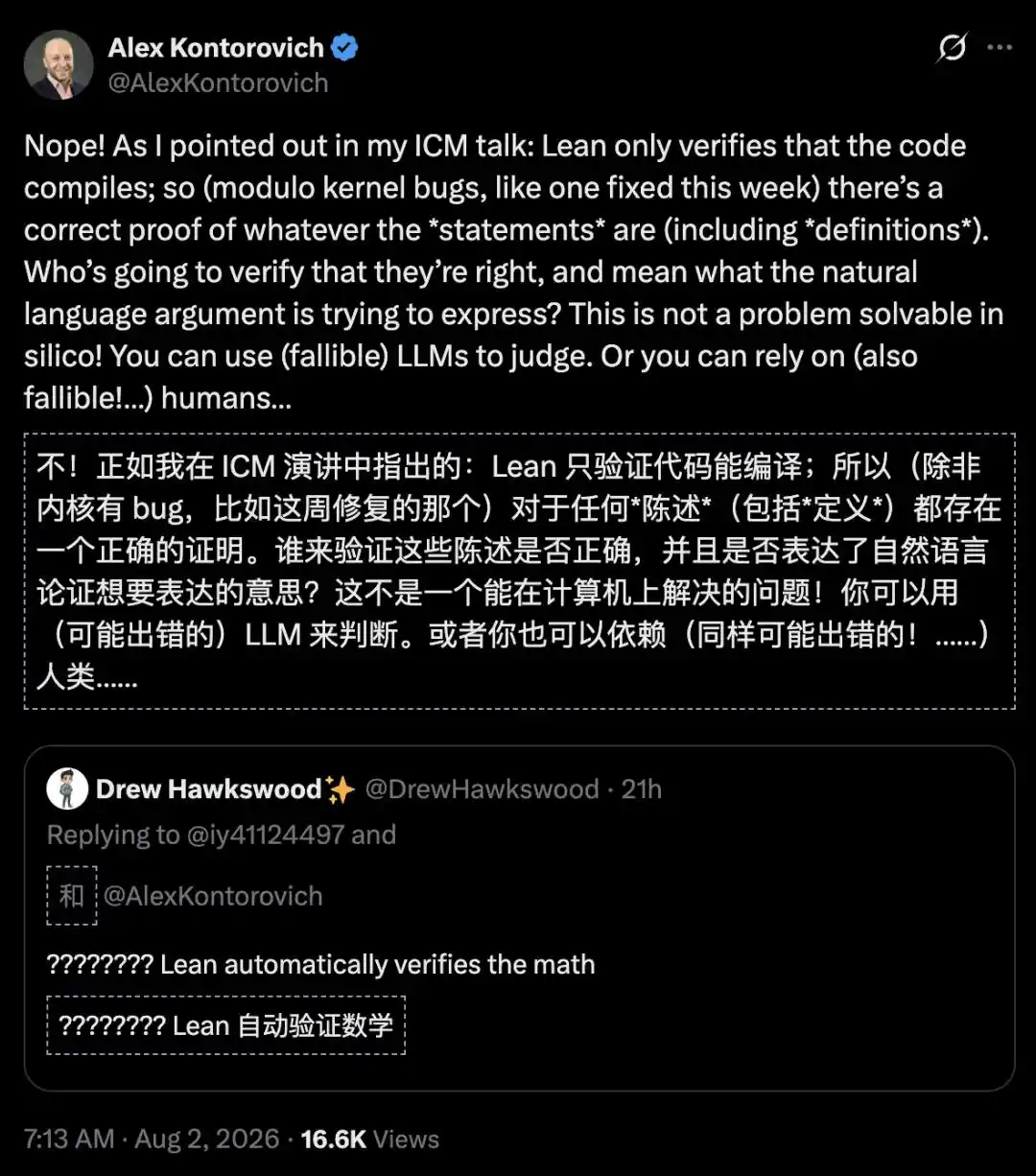
He pointed straight to the Achilles' heel—Semantic Alignment.
Even if the Lean kernel is flawless, Lean only cares about code compilation. Who ensures that the "definition" you write in code aligns with the "intuitive intent" humans have in natural language?
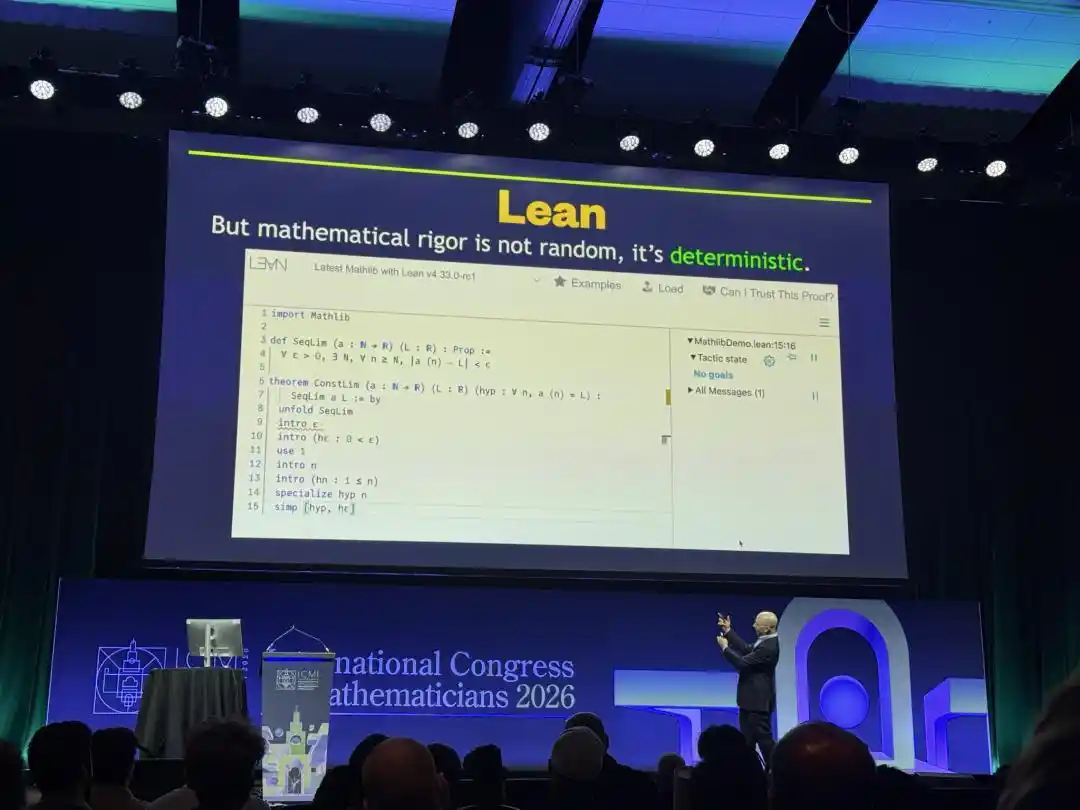
The only thing Lean can confirm is: the code compiles, and the formal logic is correct. But it absolutely does not verify a more critical question: does this formalized statement truly correspond to the theorem you intended to prove?
The theorem is proven correctly, but the problem statement was copied wrong—Lean will still give the green light.
And this alignment problem cannot be solved purely by computers.
In his ICM 2026 speech, Kontorovich pointed out: the biggest blind spot in formalized mathematics isn't "deriving correctly," but "saying the right thing." The final check still has to be done by human experts.
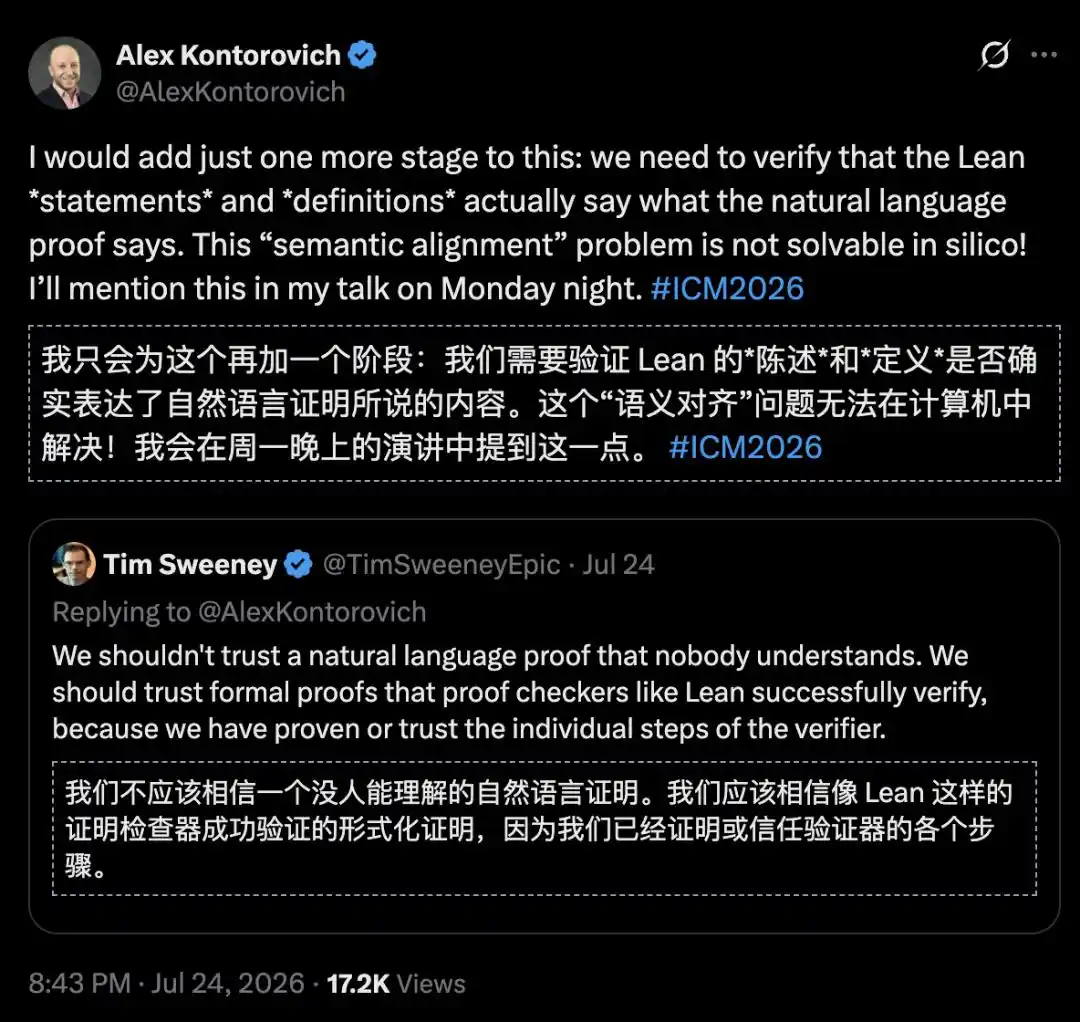
The reason the Liquid Tensor Experiment became legendary back then was precisely because of the researchers' almost obsessive manual scrutiny of every mathematical definition.
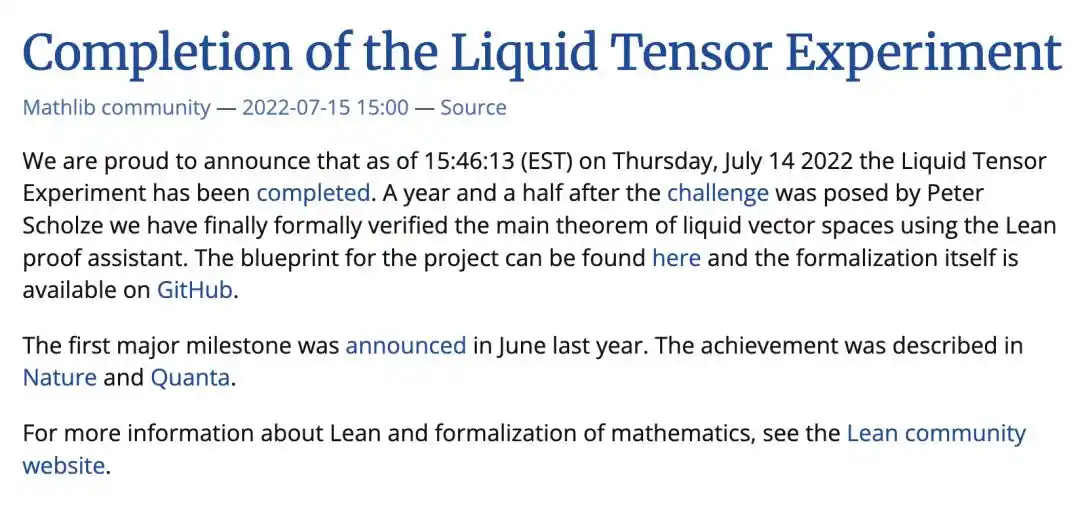
Putting the words of both professors together points to the same fact: AI can prove, machines can verify, but understanding and oversight are still human tasks.
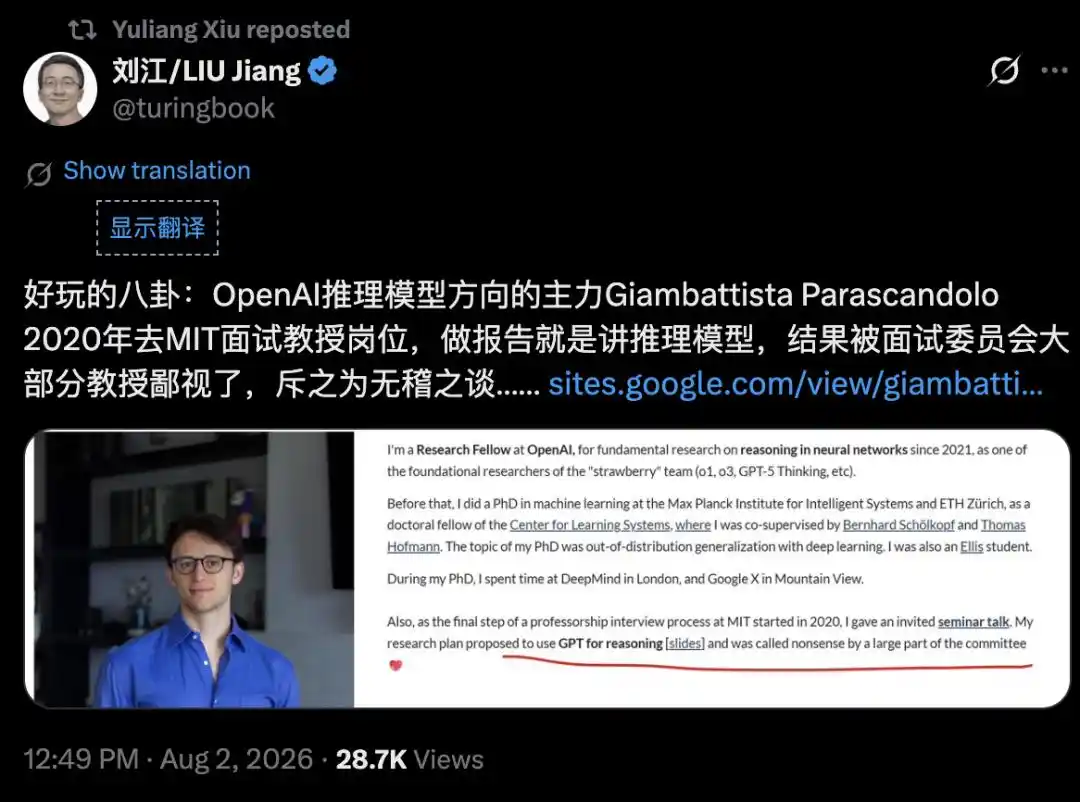
Finally, a piece of gossip about AI reasoning models:
References:
https://www.henryyuen.net/posts/on-openai-and-quantum-parallel-repetition/
https://x.com/AlexKontorovich/status/2083919186825236831
https://x.com/henryquantum/status/2083623700608237956
This article is from WeChat public account "New Zhiyuan," author: ASI Apocalypse; editor: David