火过SpaceX,超额认购逾6586倍,溜溜梅(06658.HK)背后的Meme力量是?

marsbitPubblicato 2026-06-15Pubblicato ultima volta 2026-06-15

Introduzione

溜溜梅(06658.HK)在港交所上市,开盘股价大涨超116%,盘中最高涨幅超190%。其股价暴涨并非源于传统消费概念,而是因其名称缩写“LLM”与大语言模型(AI)热点相同,被戏称为“正宗AI大语言模型股”,吸引了大量散户资金追捧。 此次IPO公开发售部分获得约6586倍超额认购,但散户份额仅占10%,机构占90%,股价主要由公开市场的散户交易驱动,呈现出“Meme股”特征——即依靠网络迷因和注意力吸引买盘。文章指出,全球股市正步入“股票Meme化时代”,类似案例如美股的GameStop、A股的“川大智胜”等,均因谐音、名人效应或社会热点而出现短期暴涨。 这种现象与加密市场的Meme币逻辑相似,都是注意力经济在资本市场的体现。AI热潮也助推了这一趋势,许多与AI相关的公司或名称沾边的股票都获得资金关注。文章最后提醒,Meme股虽有造富效应,但也存在拉高出货等风险,投资者需理性看待这股潮流。

原创|Odaily星球日报(@OdailyChina)

作者|Wenser(@wenser2010 )

“你没事吧?没事吧?没事就吃溜溜梅!”

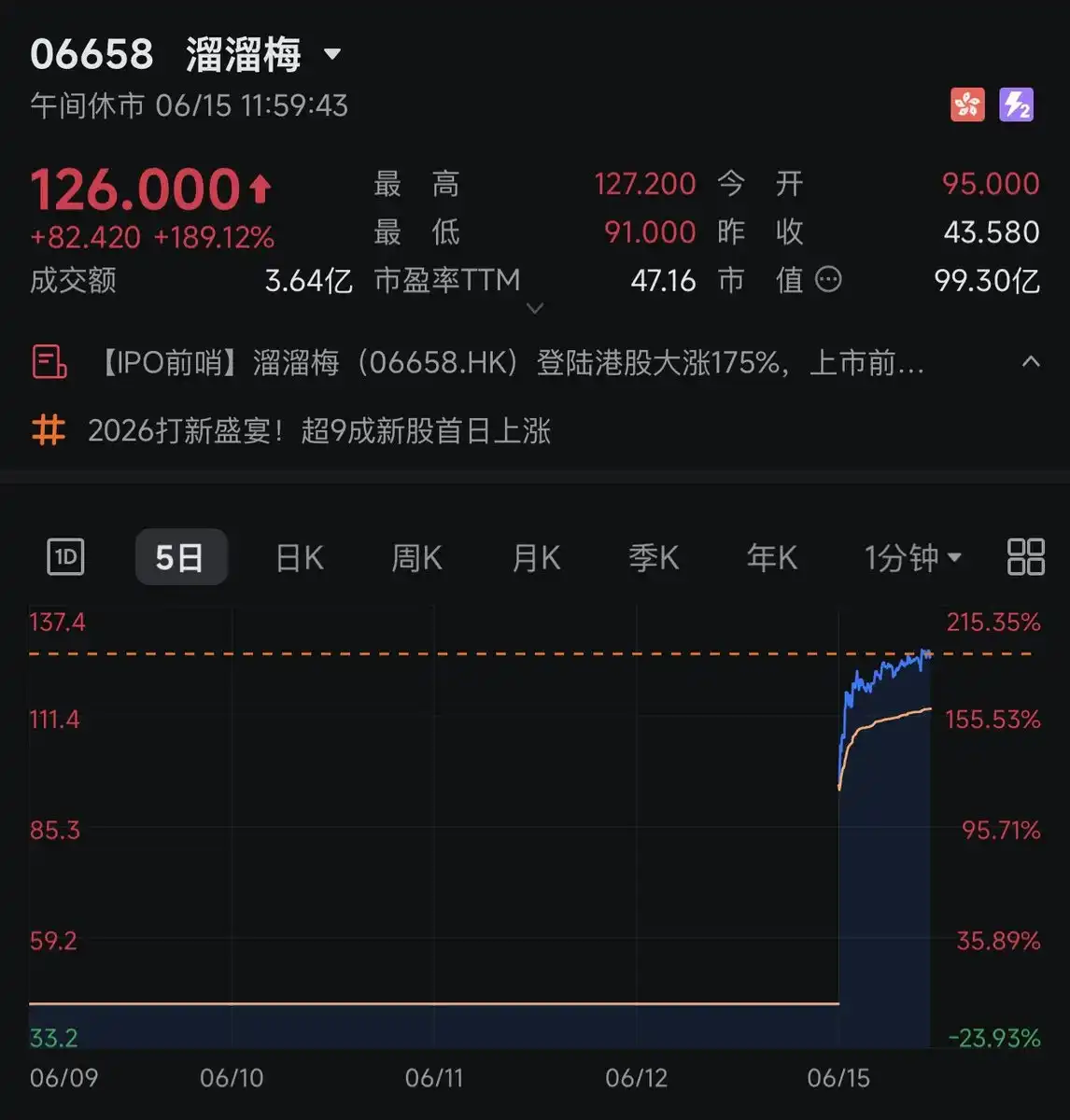
曾几何时,杨幂一句洗脑广告词让溜溜梅走进了千家万户,而其背后公司也凭借数十年的积累今天终于正式登陆港交所,成为港股“青梅零食第一股”。据悉,其发行价为 43.58 港元,开盘价 95 港元,较发售价 42 港元大涨约 116%;盘中最高触及 127.50 港元,涨幅超 190%;现已回落至 125 港元,涨幅仍有超 186%。

但和很多人预想中的不一样,溜溜梅(06658.HK)的股价暴涨,不是“新消费、新零售、新零食”概念的复兴,而是名字首字母简称蹭上了“LLM”(大语言模型)的热度,赶上了今天智谱(02513.HK)大涨 45%的春风。

不少人称其为“正宗 AI 大语言模型股”,无数资金热钱随之蜂拥而至。无论承认与否,或许全球股市都在步入“股票 Meme 化时代”。

全球股市新时代:当股票与 Meme 撞个满怀

先说溜溜梅这次 IPO 的基本情况:这已经是溜溜梅第四次冲击资本市场。

2019 年,溜溜梅冲刺 A 股未果;2025 年,两度递表港交所后均失效;直到今年 5 月 21 日,第三次更新递表材料并将主体从“溜溜梅集团股份有限公司”更名为“溜溜梅股份有限公司”后,仅用不到一个月便成功上市。不得不说,有时候名字这件事确实是一种玄学。

根据该公司公布的配发结果,此次 IPO 公开发售部分录得约 6586.73 倍超额认购。最终公开发售股份数目为 114.65 万股,占全球发售总数的约 10%。共接获约 18.05 万份有效申请,其中约 11,465 份申请获受理,申购一手获配发股份的比率仅为 1.5%,意味着一手中签率低至 1.5%,认购竞争极为激烈;国际配售方面,溜溜梅获 2.64 倍认购,国际发售股份最终数目为 1,031.76 万股,占发售股份总数的 90%。以此数据对比,溜溜梅此次 IPO 的热度已经超过去年 3 月登陆港股的“奶茶门店数量第一股”蜜雪冰城,后者的港股公开认购超额认购倍数为 5258.21 倍。

换言之,机构并不看好但份额占比 90%;散户看好但份额占比仅有 10%,开盘上涨的主要驱动力量,更多来自于自由博弈的“散户与庄家共舞”的公开市场。而这,正是“ Meme 股”的能量所在——将 Meme 吸引的注意力转化为资本市场的买盘。

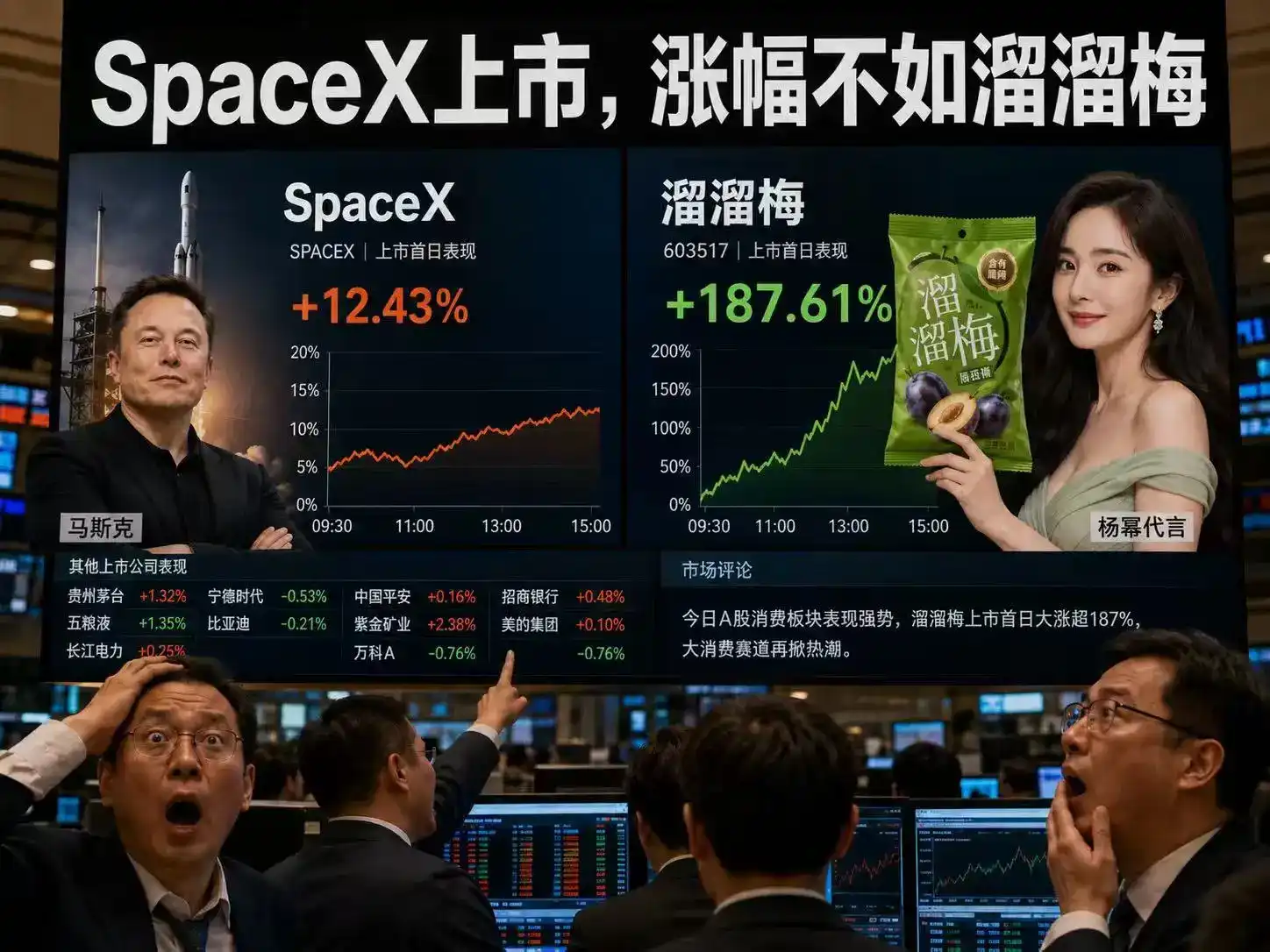
更有网友将溜溜梅的开盘表现与 SpaceX 做了对比,市场涨幅远比后者更为亮眼。
值得一提的是,“Meme 股”并不是最近出现的新名词,而是美股、港股、A 股等主要资本市场上客观存在的一类股票;但“股票 Meme 化时代”绝对是近 1-2 年内出现的最新趋势,而其背后推波助澜的主要因素,与加密市场也有一定关联。

最早的 Meme 股已不可考,我们只聊近些年来颇具代表性的一些个股标的。

2021 年的 Gamestop(游戏驿站)或许是不少人的美股 Meme 启蒙起点,在 Roaring Kitty 等知名牛散的带领下,全球散户团结一致对外,逼空华尔街资本机构,引发众多券商平台及交易所“拔网线”避风头;前段时间 Gamestop 突传收购 EBay 的消息也引发了盘面震动,股价一时拉涨。

特斯拉与近期完成 IPO 的 SpaceX 此前也被视为 Meme 股的一种,因为这两大公司、股票与颇具话题性的“全球万亿美元首富”马斯克强相关、深绑定,在公司业务尚未拿出有力的业绩证明之前都被视为“市梦率超高的叙事型企业”。

2024 年特朗普赢得美国总统大选前夕,A 股市场就已提前异动,“川大智胜”频频登上平台热榜,甚至多次涨停;当年,特朗普竞选时期遇刺,耳朵一度遭遇流弹打碎的玻璃划伤,歌尔股份(谐音“割耳)也受此影响盘中拉涨。

去年,中日邦交关系恶化,军工股孚日股份一度因“俘虏日本”这一颇具爱国主义情怀的谐音梗而股价暴涨, 连续 8 个交易日拉出涨停板,股价累计上涨超 100%,成为 A 股市场中的短期“妖股”之一。

当下的资本市场,和注意力碎片化、情绪集中化的加密市场一样,能够最大范围引发讨论、关注的个股标的及赛道板块,早已成为了搅动资金、流动性的“注意力焦点”。
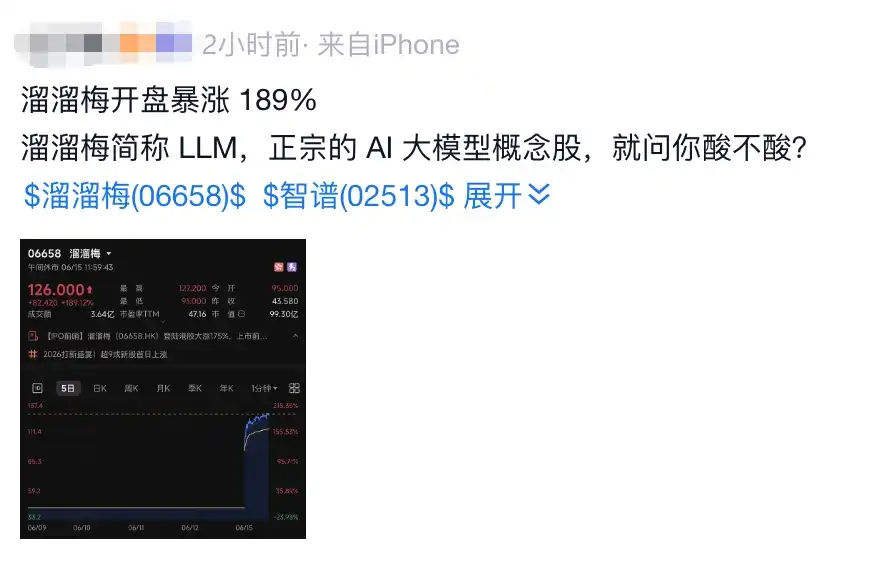
溜溜梅的暴涨,也是“股票 Meme 化”时代的一大例证。

股票 Meme 化时代开启:谐音梗、简写、AI 时代红利

随着 OpenAI、Anthropic 估值抬升至接近万亿美元规模,与 AI 产业密切相关的光、通信、材料、算力等产业链条相关的公司及股票相继迎来爆发期:

  • 英伟达成为史上第一家市值超 5 万亿美元的上市公司;
  • 美光、闪迪等股价接连突破新高,机构纷纷上调其看涨价格;
  • SK 海力士、三星电子股价波动间主宰着韩国 KOSPI 指数涨跌;
  • 英伟达创始人一句“看好迈威尔成为万亿美元巨头”,迈威尔(MRVL)股价应声上涨;
  • 新股神 Serenity 提及的 Innolight(中际旭创)因翻译问题被误读为英诺激光,后者股价因 3 亿热钱涌入急速拉升 10%。

“股票 Meme 化”的时代大潮中,与 AI 沾边、蹭上“大语言模型”的热度、与热门标的谐音、得到名人提及等等都成为了市场的关注理由,也成为了注意力与资金同步卷入的最佳舞台。
“特朗普概念股票”、“美股政府概念股”、“TACO 式交易受益标的”等等,也是这一行业趋势的连带表现。而这正是加密市场一直以来极为推崇的“注意力密集型产业”——Meme 币赛道的常见玩法。

只不过,资本市场不一样了,市场规则不一样了,资金、流动性规模也与加密市场不可同日而语。毕竟,与美股市场、港股市场、A 股市场、日韩股市的交易规模相比,加密市场总体不足 3 万亿美元的体量看上去多少有些令人心酸。

SpaceX 甫一上市就一跃成为全球大类资产排名前 10,相对的,BTC 则在该榜单排名已经跌落至第 17 位,不得不说,数字层面的对比看起来总是这么残酷——加密行业兢兢业业十几年的发展,抵不上人家一家公司的 IPO 市值体量。

如今,Meme 股的出现乃至增加,或许已经成为了一个行业趋势,之前九阳公司因“哈基米南北绿豆”热梗而产出对应产品并引发股价上涨的事情就已经说明了一件事:对于现在社会主体中的年轻人群体、投资人群体而言,那些能够引发情绪波动、吸引市场注意力、搅动流动性的投资标的,是更加值得买入的对象。

哪怕这种短暂的追逐情绪只是一时火热,对于多数人来说,打不过就加入才是更好的选择。当然,客观地说,Meme 股的出现并不意味着一边倒的好处,如造富效应或者产业热潮;有时候,这一过程也伴随着拉高出货、单方面收割、情绪营销等负面现象的存在。

就像溜溜梅的开盘暴涨,也有人怒喷其是为了“割韭菜”而拉盘;也有人分析认为或许是溜溜梅加入了“港股通”,允许 A 股市场资金买入才推动其股价上涨。真相如何,原因必定是多维且混沌的,对于我们而言,或许能做的就是顺应这股时代潮流,寻找属于自己的致富之道。

Domande pertinenti

Q溜溜梅(06658.HK)的股价暴涨被市场认为与什么概念有关?

A与‘LLM’(大语言模型)的热度有关,其名字首字母简写蹭上了AI概念,被称为‘正宗AI大语言模型股’,并赶上了智谱(02513.HK)大涨的行情。

Q根据文章,溜溜梅此次IPO的公开发售部分超额认购倍数是多少?

A溜溜梅此次IPO的公开发售部分录得约6586.73倍超额认购。

Q文章中提到‘股票Meme化时代’的开启,列举了哪些例子?

A例子包括:2021年的Gamestop(游戏驿站)、特斯拉和SpaceX(与马斯克强相关)、A股的‘川大智胜’和‘歌尔股份’(谐音梗)、‘孚日股份’(因谐音‘俘虏日本’暴涨),以及近期因AI热潮和名人提及而波动的英伟达、迈威尔、英诺激光等股票。

Q文章将溜溜梅的IPO热度与哪个知名品牌进行了对比?

A与‘奶茶门店数量第一股’蜜雪冰城进行了对比,后者的港股公开认购超额认购倍数为5258.21倍,低于溜溜梅的6586.73倍。

Q文章认为‘Meme股’的能量和潜在风险分别是什么?

A能量在于将Meme吸引的注意力转化为资本市场的买盘,搅动资金和流动性。潜在风险包括可能伴随拉高出货、单方面收割、情绪营销等负面现象,股价波动可能只是短暂的情绪追逐,并非完全基于公司基本面。

Letture associate

The Trillion-Yuan Market Cap 'Yi Zhong Tian': Who is the True Value King?

The article analyzes the three leading Chinese optical module companies, collectively nicknamed "Yi Zhong Tian": Xinyisheng, Zhongji Innolight, and TFC Optical Communication. It evaluates their "cost-performance" not by current stock price, but through three lenses: PEG ratio (growth vs. valuation), earnings quality, and premium/discount for certainty. Xinyisheng shows the most attractive PEG ratio and high profitability, but its valuation reflects discounts for risks like high customer concentration and reliance on overseas markets. Zhongji Innolight, the most expensive, commands a premium for its market leadership, dominant share in key products like 800G/1.6T modules, and higher earnings certainty, though it faces geopolitical risks. TFC Optical, as an upstream component supplier ("water seller"), has the highest gross margin and bets on the long-term CPO/NPO architecture trend, but trades at a high valuation with more stable, less explosive growth. The core argument is that while these companies dominate module assembly, the true profit pool and technological moat lie upstream in laser and switch chips, currently controlled by U.S. firms like Lumentum and Coherent. The long-term "cost-performance" for these Chinese leaders hinges on whether the domestic industry, exemplified by companies like Yuanjie Technology, can successfully move up the value chain into high-power laser chips. Otherwise, their high growth may remain confined to the lower-margin assembly segment.

marsbit2 min fa

The Trillion-Yuan Market Cap 'Yi Zhong Tian': Who is the True Value King?

marsbit2 min fa

Has the Crypto Market Bottomed? Here's What Institutions Think

The crypto market is in a period of significant debate, with leading institutions offering differing views on whether a bottom has been reached. Three prominent firms have published detailed analyses: * **Galaxy Digital** argues Bitcoin has **not yet bottomed**. Their analysis of 13 historical indicators across six dimensions (valuation, profit-taking, miner pressure, etc.) shows only four are fully met. They project a potential bottom range between $30k and $54k. * **NYDIG** states a bottom is **possible but not likely**. While metrics are close to historic bear market extremes, they note the absence of a classic panic-selling event. They also suggest increased institutional adoption may have structurally altered the market cycle, potentially leading to a shallower downturn. * **Standard Chartered Bank** asserts the **bottom has already occurred** at around $59k. They cite two key factors: potential US-Iran diplomatic progress and the anticipated SpaceX IPO, which they believe absorbed capital and caused ETF selling pressure that is now subsiding. They forecast a year-end price target of $100k. Despite the surface-level disagreement, the reports share critical common ground more valuable for long-term investors: 1. All three believe the market bottom will form **within this year**. 2. All agree the current price is **closer to the bottom than to previous highs**. 3. All maintain a **bullish long-term outlook** for Bitcoin and a new cycle. The core takeaway is that while the exact bottom price ($40k, $50k, or $60k) is debated, the consensus is that a bottom is imminent. For long-term holders, the primary focus should not be pinpointing the absolute low, but on the future potential for prices to reach $100k, $200k, or higher. The fundamental thesis for Bitcoin—sovereign debt accumulation, inflation, declining trust in centralized institutions, global digitization, and improved accessibility—remains intact and is arguably strengthening. The overall landscape is viewed as more favorable than in previous crypto winters.

marsbit12 min fa

Has the Crypto Market Bottomed? Here's What Institutions Think

marsbit12 min fa

The 'Chip' Challenge and Breakthroughs in China's Optical Industry Chain

China's Photonics Industry: Bottlenecks and Breakthroughs In the global AI race, computing chips dominate the narrative, but the underlying bottleneck increasingly defining the scale of AI clusters is light—or more specifically, optical connectivity. Optical modules, which translate electrical signals to light and vice versa, are crucial for connecting thousands of GPUs in AI data centers, preventing data congestion and ensuring efficient model training. High-speed modules (800G, 1.6T) are now standard, with performance hinging on advanced DSP (Digital Signal Processor) chips. This is where a critical dependency lies. Two US giants—Marvell and Broadcom—collectively dominate over 90% of the high-end DSP chip market. Chinese optical module leaders like Zhongji Innolight and Eoptolink rely on these chips to manufacture modules for overseas AI customers, primarily in North America. While this creates a supply chain vulnerability, complete decoupling is difficult. Marvell derives over half its revenue from Greater China, and the US firms depend on Chinese partners for chip packaging and optical components. The risk from laser chips (e.g., from Lumentum), another key component, is considered more manageable due to multiple global suppliers and faster progress in domestic alternatives from companies like YOFC and Accelink. To mitigate risks, China's industry is pursuing a multi-pronged strategy: diversifying supply chains and locking in long-term orders; fostering a domestic market ecosystem to adopt homegrown DSPs from firms like Huawei HiSilicon and CETC; accelerating R&D in high-speed DSPs and advanced packaging; and investing in next-gen technologies like silicon photonics and Co-Packaged Optics (CPO) to reduce reliance on discrete DSPs. The ultimate solution lies not in short-term博弈 but in persistent advancement of domestic high-end chip R&D and manufacturing. While challenges remain in performance, certification, and ecosystem building, China's vast domestic market and manufacturing base provide a crucial buffer, buying time for the industry to achieve greater technological independence.

marsbit25 min fa

The 'Chip' Challenge and Breakthroughs in China's Optical Industry Chain

marsbit25 min fa

Behind SpaceX's $2 Trillion Market Cap: Why Does Musk Always Have the Next Move Planned?

On June 12th, SpaceX debuted on the Nasdaq, reaching a valuation that briefly touched $2 trillion. This marked the culmination of a 24-year journey from its founding in 2002, driven by Elon Musk's frustration at the high cost of buying rockets. The company's path was defined by early failures, with its first three Falcon 1 launches ending in explosions before a successful 2008 flight opened the era of commercial spaceflight. Key to its model was a fixed-price NASA contract, incentivizing cost reduction. SpaceX mastered rocket reusability, first achieving a Falcon 9 landing in 2015, which drastically cut launch costs. This enabled its profitable Starlink satellite internet constellation, envisioned years before reusability was proven, to create an internal market for frequent launches. Similarly, the next-generation Starship rocket was in development long before its first flight, with its business case evolving from Mars colonization to supporting the emerging concept of in-orbit data centers for AI—a story now central to its valuation. The company's recent IPO, a reversal of its long-standing "no IPO" stance, is funding this ambitious "space-based compute" vision. While major tech players like Google, Blue Origin, and others are investing heavily, significant technical and cost hurdles remain. Ultimately, SpaceX's history is one of creating its own demand: first with Starlink and now with space-based AI compute, betting that its next rocket will enable its next giant market.

marsbit28 min fa

Behind SpaceX's $2 Trillion Market Cap: Why Does Musk Always Have the Next Move Planned?

marsbit28 min fa

Trading

Spot
Futures

Articoli Popolari

Cosa è MEME 2.0

Memecoin 2.0: L'Ascesa di $MEME 2.0 nel Mondo delle Criptovalute Introduzione Nel panorama in continua evoluzione delle criptovalute, è emerso un nuovo contendente. Memecoin 2.0, simboleggiato come $MEME 2.0, porta il concetto di meme coin a un livello emozionante. Come prodotto derivato dal Memecoin originale, questo progetto ha catturato l'attenzione della comunità crypto spostando il focus da incentivi finanziari tipici a un'esperienza coinvolgente e divertente. Operando sulla blockchain di Ethereum, Memecoin 2.0 ridefinisce audacemente l'impegno della comunità nella sfera crypto. Che cos'è Memecoin 2.0, $MEME 2.0? Alla base, Memecoin 2.0 è un progetto di criptovaluta che dà priorità allo spirito di comunità e al divertimento associato alla cultura meme. A differenza delle criptovalute convenzionali, che si concentrano su casi d'uso pratici e benefici tangibili, Memecoin 2.0 si distingue abbracciando il lato più leggero della moneta digitale. Il progetto esiste senza promesse di utilità, una roadmap strutturata o ritorni finanziari, concentrandosi invece sulla creazione di una comunità vibrante incentrata sui meme e sul divertimento condiviso. Facendo così, attinge alla crescente tendenza della cultura meme nello spazio online, rendendola un giocatore unico nel mondo degli asset digitali. Creatore di Memecoin 2.0, $MEME 2.0 Nonostante ricerche approfondite sulle origini di Memecoin 2.0, l'identità esplicita del suo creatore rimane sconosciuta. Questa anonimità non è rara nella comunità crypto, dove molti progetti sono guidati da individui o gruppi che preferiscono rimanere dietro le quinte. La mancanza di informazioni pubblicamente disponibili sul creatore potrebbe essere vista come una mossa strategica, mettendo in evidenza l'impegno della comunità piuttosto che la notorietà individuale all'interno dello spazio. Investitori di Memecoin 2.0, $MEME 2.0 Le informazioni riguardanti gli investitori o il supporto finanziario per Memecoin 2.0 sono scarse. Questa assenza di dettagli potrebbe suggerire che il progetto sia autofinanziato o che il suo focus sulla comunità piuttosto che sulle strutture d'investimento tradizionali abbia attratto un tipo diverso di sostenitore. Poiché il mondo delle meme coin coinvolge tipicamente un maggior coinvolgimento di base piuttosto che investimenti istituzionali, questo approccio si allinea con l'etica dei progetti guidati dalla comunità. Come funziona Memecoin 2.0, $MEME 2.0? Memecoin 2.0 opera interamente sulla blockchain di Ethereum, capitalizzando le sue robuste caratteristiche di sicurezza e scalabilità. Sfruttando i punti di forza di Ethereum, Memecoin 2.0 può offrire un ambiente sicuro per le interazioni degli utenti garantendo che le transazioni siano sia efficienti che convenienti. Uno degli attributi unici di Memecoin 2.0 risiede nella sua struttura guidata dalla comunità. Il valore e la popolarità del token $MEME 2.0 derivano dalla partecipazione attiva dei suoi utenti, piuttosto che dalla utilità intrinseca. Questo design rinforza il focus del progetto sull'aspetto dell'intrattenimento delle criptovalute, implicando che la risata e l'impegno della comunità siano le vere monete che guidano il suo successo. Inoltre, il progetto si inserisce all'interno dell'ecosistema più ampio delle meme coin, dove il valore di ciascuna meme coin oscilla in base alla cultura, alle tendenze e all'impegno della comunità piuttosto che ai principi economici tradizionali. Cronologia di Memecoin 2.0, $MEME 2.0 Per comprendere meglio l'evoluzione e le pietre miliari di Memecoin 2.0, ecco una cronologia che evidenzia eventi significativi nella sua storia: 2024: L'inizio di Memecoin 2.0 è riconosciuto come un ramo del Memecoin originale, affermandosi all'interno del contesto fiorente delle meme coin mentre opera sulla blockchain di Ethereum. 13 luglio 2024: Memecoin 2.0 si posiziona ufficialmente come una meme coin incentrata sulla comunità sulla rete Ethereum, enfatizzando il suo approccio centrato sull'intrattenimento che invita gli utenti a impegnarsi e partecipare alla sua crescita. Punti Chiave su Memecoin 2.0, $MEME 2.0 Diverse caratteristiche critiche definiscono Memecoin 2.0: Approccio Centrico alla Comunità: La missione principale di Memecoin 2.0 è creare un'esperienza comunitaria divertente e coinvolgente, capitalizzando il piacere collettivo derivante dalla cultura memetica. Costruita su Ethereum: Operare sulla blockchain di Ethereum fornisce al progetto un'infrastruttura essenziale che garantisce sicurezza e scalabilità. Mancanza di Utilità o Roadmap: In una marcata deviazione dalle criptovalute tradizionali, Memecoin 2.0 non promette alcuna caratteristica utilitaria o ritorni finanziari, riaffermando il suo impegno per il coinvolgimento della comunità e l'impegno sociale. Focus sulla Cultura Memetica: Abbracciando gli aspetti umoristici e culturali del fenomeno meme, Memecoin 2.0 offre una piattaforma per gli utenti per interagire con la crypto offline e online. Ulteriore Contesto: L'Importanza delle Meme Coin Le meme coin sono emerse come una classe distinta di criptovaluta, spesso guidata dall'umorismo e da un approccio spensierato al trading. Queste monete generalmente mancano di significative utilità o roadmap di sviluppo, attirando gli utenti con la promessa di divertimento, interazione comunitaria e rilevanza culturale. Nel panorama del più ampio ecosistema crypto, le meme coin rianimano l'importanza dell'impegno della comunità, opponendosi ad approcci esclusivamente orientati al profitto. Progetti come Memecoin 2.0 danno il via a un'era in cui l'intrattenimento può armonizzarsi con le aspirazioni finanziarie, trasformando la blockchain in un parco giochi per la creatività e l'interazione sociale. Conclusione Memecoin 2.0, o $MEME 2.0, incarna una nuova ondata di criptovaluta che dà priorità all'impegno della comunità rispetto a rigidi strutture finanziarie. Con un focus sull'umorismo e l'interazione sociale, capitalizza sulla fascinazione circondante la cultura meme. Operando sulla blockchain di Ethereum, Memecoin 2.0 sfrutta le capacità della tecnologia mantenendo fermo il suo impegno per il valore ricreativo della valuta digitale. Mentre lo spazio delle criptovalute continua a evolversi, Memecoin 2.0 serve come testimonianza della nozione che il futuro degli asset digitali potrebbe ben dipendere da esperienze condivise, risate e solidi legami comunitari. Nel mondo imprevedibile delle crypto, forse la gioia può essere altrettanto preziosa quanto il guadagno finanziario tradizionale.

93 Totale visualizzazioniPubblicato il 2024.04.04Aggiornato il 2024.12.03

Cosa è MEME 2.0

Come comprare MEME

Benvenuto in HTX.com! Abbiamo reso l'acquisto di Memeland (MEME) semplice e conveniente. Segui la nostra guida passo passo per intraprendere il tuo viaggio nel mondo delle criptovalute.Step 1: Crea il tuo Account HTXUsa la tua email o numero di telefono per registrarti il tuo account gratuito su HTX. Vivi un'esperienza facile e sblocca tutte le funzionalità,Crea il mio accountStep 2: Vai in Acquista crypto e seleziona il tuo metodo di pagamentoCarta di credito/debito: utilizza la tua Visa o Mastercard per acquistare immediatamente MemelandMEME.Bilancio: Usa i fondi dal bilancio del tuo account HTX per fare trading senza problemi.Terze parti: abbiamo aggiunto metodi di pagamento molto utilizzati come Google Pay e Apple Pay per maggiore comodità.P2P: Fai trading direttamente con altri utenti HTX.Over-the-Counter (OTC): Offriamo servizi su misura e tassi di cambio competitivi per i trader.Step 3: Conserva Memeland (MEME)Dopo aver acquistato Memeland (MEME), conserva nel tuo account HTX. In alternativa, puoi inviare tramite trasferimento blockchain o scambiare per altre criptovalute.Step 4: Scambia Memeland (MEME)Scambia facilmente Memeland (MEME) nel mercato spot di HTX. Accedi al tuo account, seleziona la tua coppia di trading, esegui le tue operazioni e monitora in tempo reale. Offriamo un'esperienza user-friendly sia per chi ha appena iniziato che per i trader più esperti.

298 Totale visualizzazioniPubblicato il 2024.12.12Aggiornato il 2026.06.02

Come comprare MEME

Discussioni

Benvenuto nella Community HTX. Qui puoi rimanere informato sugli ultimi sviluppi della piattaforma e accedere ad approfondimenti esperti sul mercato. Le opinioni degli utenti sul prezzo di MEME MEME sono presentate come di seguito.

活动图片