[New Zhiyuan] A seismic shift hit OpenAI overnight! Its three ace products—ChatGPT, Codex, and the API—have been urgently merged, with the president taking personal command! With rival Anthropic's valuation soaring to $900 billion, this is a life-or-death battle before OpenAI's IPO. The era of the super app is coming.
Just moments ago, another blockbuster news shook the tech world on Saturday morning.
OpenAI officially announced, without warning, the largest and most dramatic organizational restructuring in the company's history on the eve of its IPO.
ChatGPT, Codex, and the lifeblood of the developer ecosystem—the API—all three core product lines have been dismantled and merged in place into a unified product organization!
Even more shocking, Greg Brockman, OpenAI's co-founder, president, and the technical titan who once resigned in anger over Sam Altman's ousting, has formally been pushed into the spotlight to take full control of product strategy!
On the surface, this is a strategic focus by OpenAI for the Agent era.
But in essence, this is clearly a gripping "Silicon Valley Game of Thrones": the founding figure of ChatGPT has been reassigned, core executives have left one after another, and the head of AGI is on indefinite medical leave...
Now, OpenAI's competitors are circling like vultures.
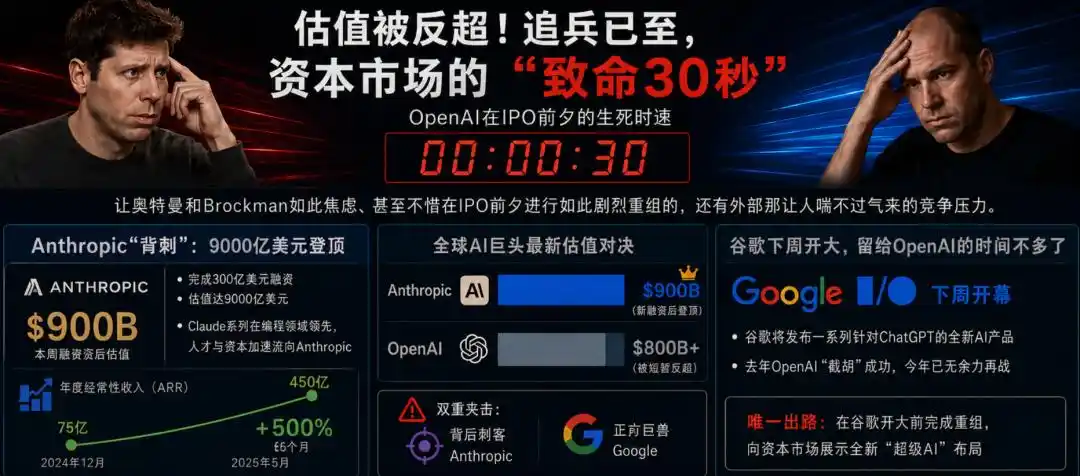
Anthropic just secured $30 billion in funding, its valuation skyrocketing to $900 billion, achieving an epic overtaking of OpenAI; Google is sharpening its knives ahead of next week's I/O conference.
With 900 million weekly active users hanging in the balance, the world's strongest AI empire is facing its moment of life or death!
The Sudden Replacement of a Leader, and the Shadow King Steps Forward
The most jaw-dropping aspect of this reshuffle is OpenAI's ruthless handling of its core contributors.
The "Father" of ChatGPT is Reassigned
If one were to name the most prominent功臣(meritorious figure) at OpenAI over the past two years, Nick Turley would definitely be on the list.
As the person fully responsible for ChatGPT since its launch, Nick Turley nurtured ChatGPT from an obscure "freebie" into today's global #1 super app with 900 million weekly active users.
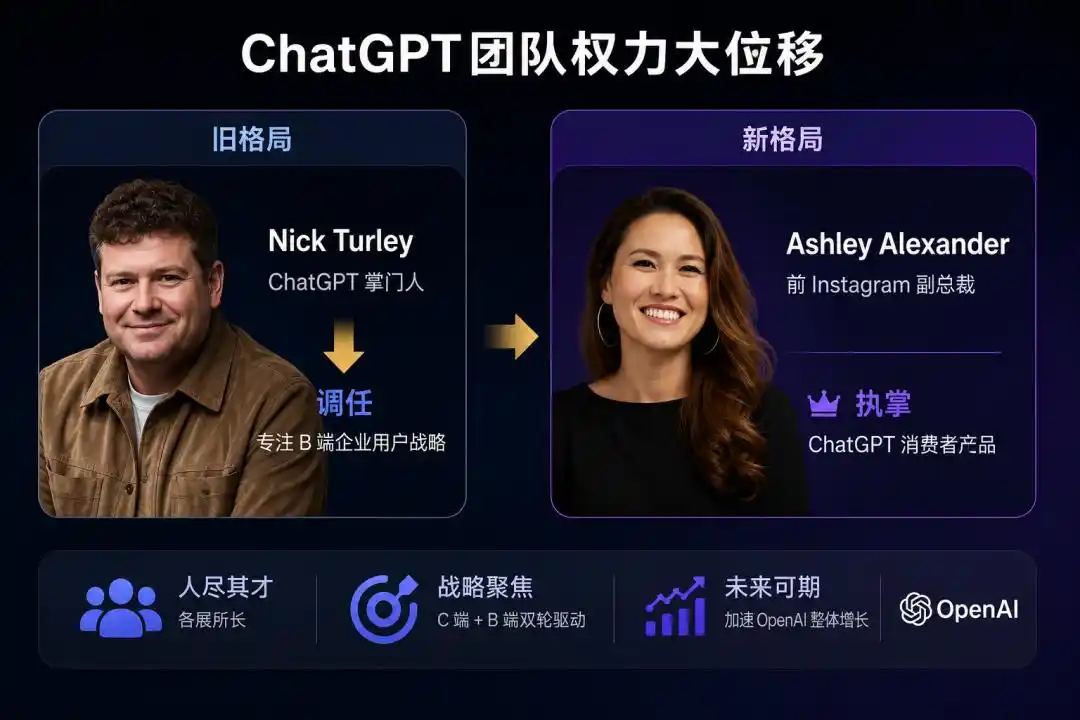
However, in this power reshuffle, this distinguished "father" of ChatGPT was transferred by a single order away from the most core, most high-profile consumer product line to lead the relatively mundane "Enterprise Users" direction.
"He is no longer responsible for any consumer products," WIRED coldly announced the curtain call of a ChatGPT founding figure in the C端(main consumer) stronghold.
Taking over his position as head of consumer products is former Instagram VP Ashley Alexander.
This executive, originally responsible for healthcare applications at OpenAI, has parachuted directly into the heart of the traffic.
The Warlord Returns: Brockman's "Rule from Behind the Curtain" Ends
If Nick Turley's reassignment is a "change of generals," then Greg Brockman's personal assumption of command is a seismic change at OpenAI's highest power level.
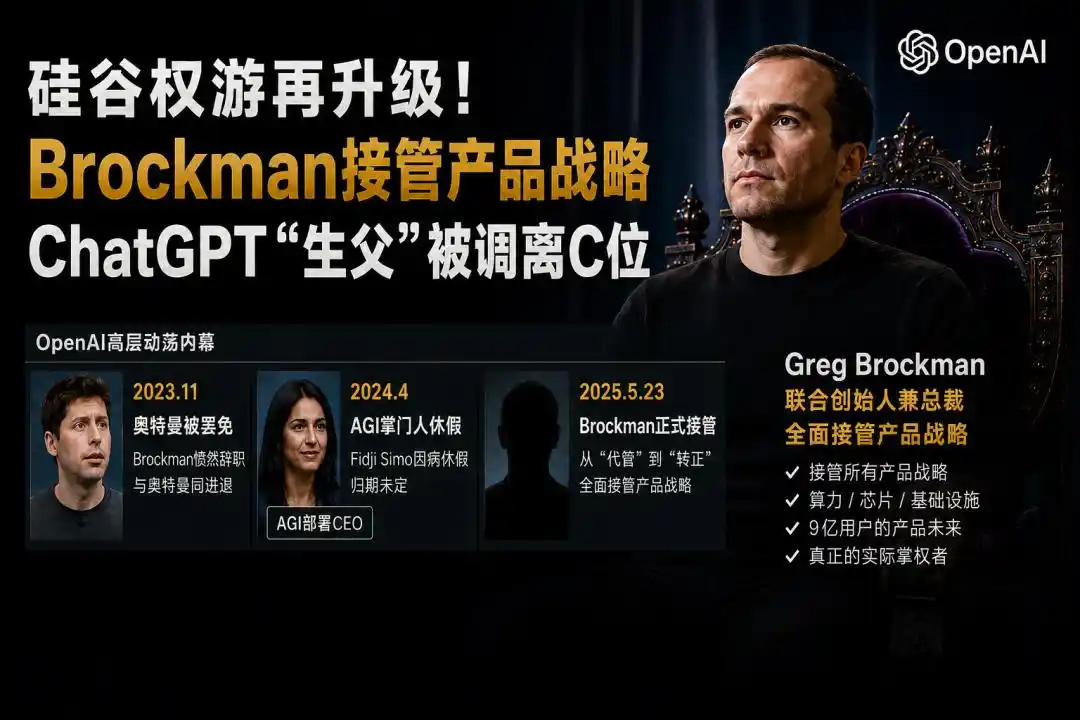
As OpenAI's co-founder and president, Brockman has always been a formidable figure in tech circles.
He could walk away from his iron rice bowl in solidarity when Altman was purged by the board, and after returning, he could silently grind away on AI infrastructure in the background.
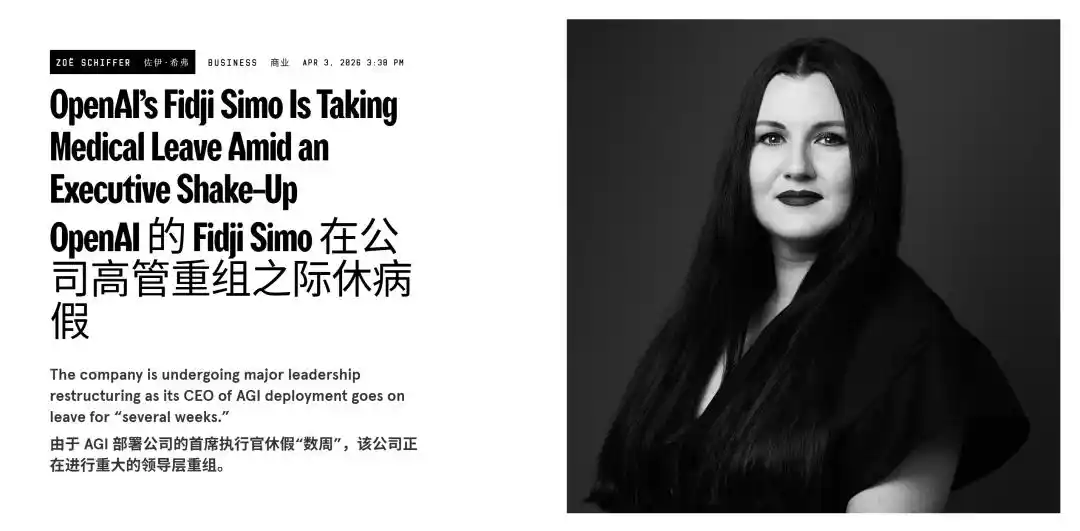
Recently, Fidji Simo, OpenAI's nominal "AGI Deployment CEO," has been on continuous leave since early April due to a severe recurrence of a chronic illness, with no definite return date. Brockman had previously only been overseeing products on an acting basis.
But this Friday, OpenAI directly issued a memo to all employees: Brockman's "acting" role is now official.
He will fully and permanently take charge of all product strategy at OpenAI!
The "Shadow King" who was building roads and bridges in the technical back-end has finally been forced into the spotlight.
From now on, he will not only manage computing power, chips, and the Blackwell supply chain, but also oversee what 900 million people chat about in ChatGPT every day, becoming the true de facto ruler.
Three Lines Merge into One! Altman's Audacious Gambit: The "Super App" Arrives
Why force-merge the three major product lines at this critical juncture?
In leaked internal memos, Brockman provided the answer in highly provocative industry language.
"We are consolidating our product work to move into the Agentic Future with the greatest focus, winning across both consumer and enterprise!"

For the first time in history, OpenAI's top brass has so explicitly admitted: OpenAI's original product lines have reached an unwieldy point where change is unavoidable.
From "Three Chariots" to "A Single Iron Plate"
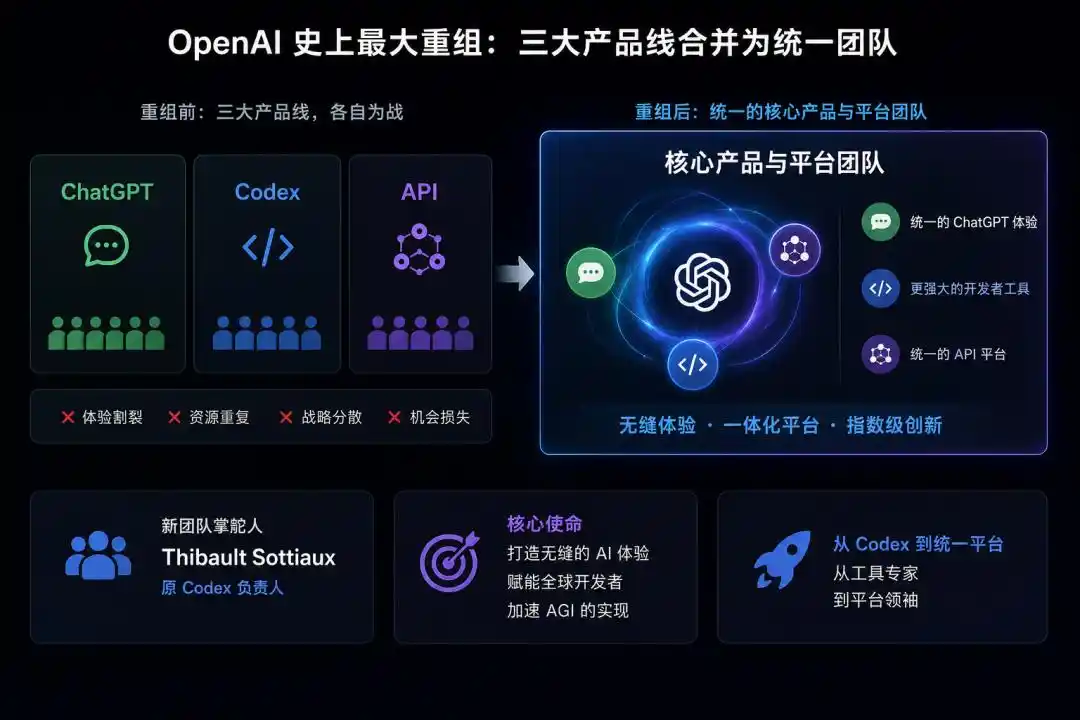
Before the reorganization, OpenAI's three major product lines were almost operating independently.
ChatGPT: Responsible for looking pretty, capturing C端 traffic, and attracting 900 million weekly active users;
Codex: Responsible for quietly making money, grinding away at programming and code generation, a holy grail for programmers;
API: Responsible for taxing developers worldwide, building an ecosystem moat.
But in Brockman's eyes, this fragmentation is unacceptable. As AI capabilities evolve, these three things are naturally converging.
If today's ChatGPT can't write code or autonomously run APIs, it's just a pretty chat interface; Codex, without ChatGPT's interactive interface, cannot become a productivity tool usable by novices.
Therefore, the three teams are now dissolved on the spot and merged into a new core Products and Platforms team. The helm of this behemoth team is none other than the former head of Codex—Thibault Sottiaux.
Once, he made Codex OpenAI's fastest-growing王牌(ace) product and achieved great feats; now, he has become Brockman's number one general.
The Ultimate Trump Card: The Desktop Devourer Codenamed "Super App"
Accompanying this reorganization, OpenAI's real big move has finally surfaced.
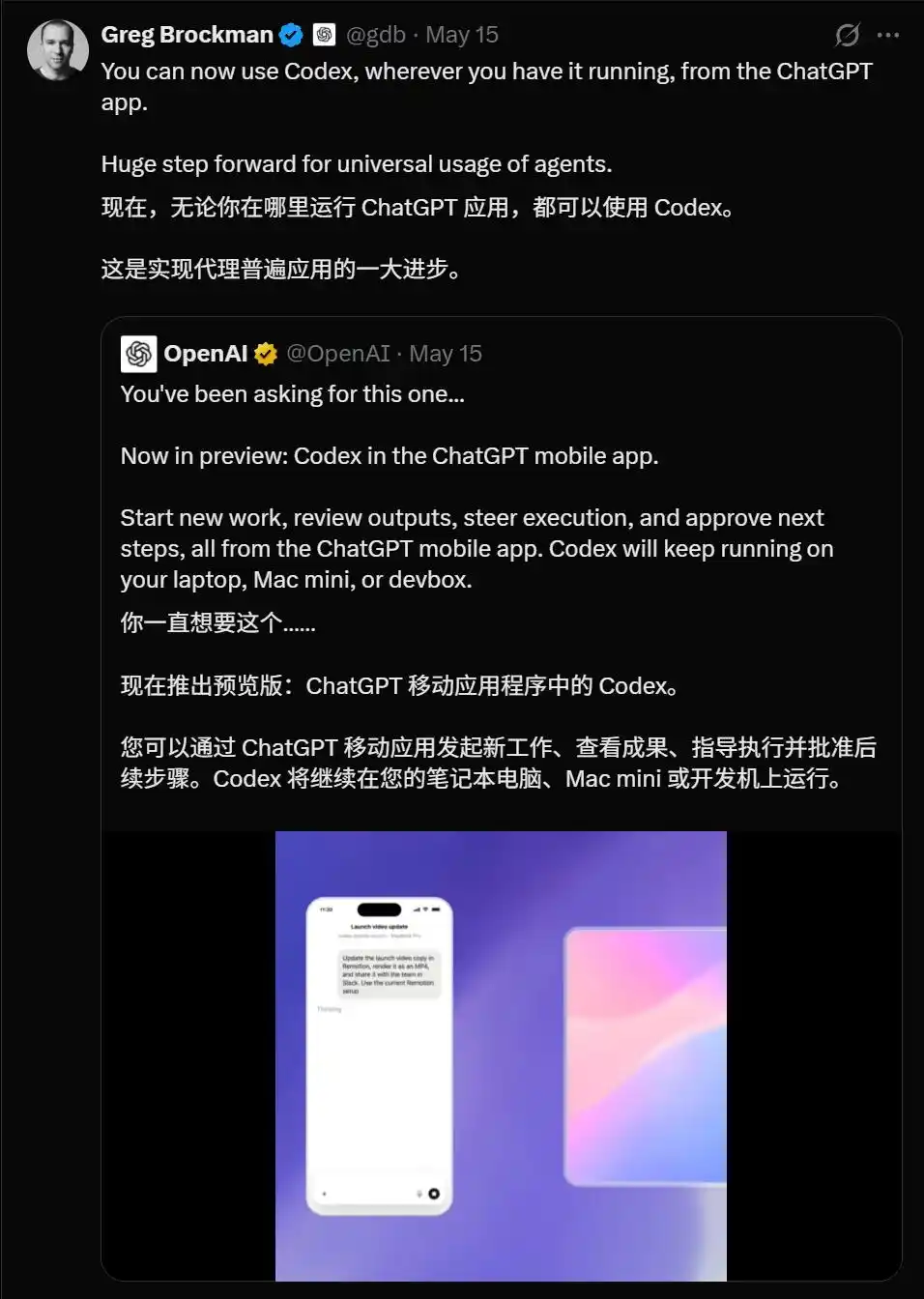
Thibault Sottiaux is currently secretly leading the development of an ultimate weapon internally referred to as the "Super App."
This is far more than just an upgraded web version of ChatGPT. It's a unified desktop application that combines ChatGPT, the Codex programming agent, and OpenAI's yet-to-be-released "Atlas web browser" into one!
This means OpenAI is leaping completely beyond the constraints of a "chat box."
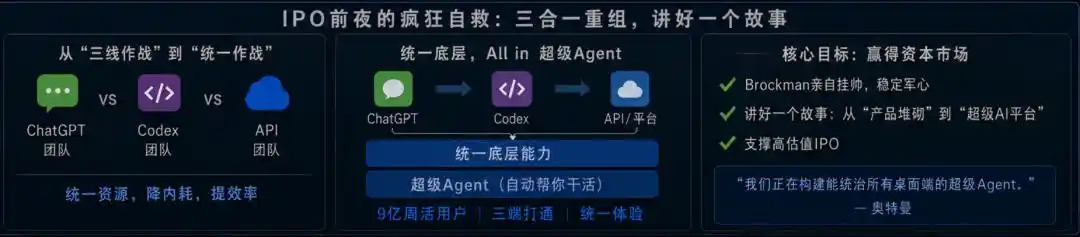
From now on, this super app lives on your computer desktop. It has its own browser (Atlas) and can view webpages; it has the strongest code execution ability (Codex) and can write scripts; it has ChatGPT's brain and understands your intent.
It doesn't require you to copy and paste; it can "autonomously perform complex digital tasks on behalf of the user."
This is the "Agentic Future" in Altman and Brockman's eyes—the era of Agents!
Hollowing Out of Executives: Bleeding and Hidden Worries Behind the Frenzy
This news might seem like a positive "proactive strike."
But if you carefully read OpenAI's recent list of personnel changes, you'll discover a terrifying fact: OpenAI's executive layer is almost hollowed out.
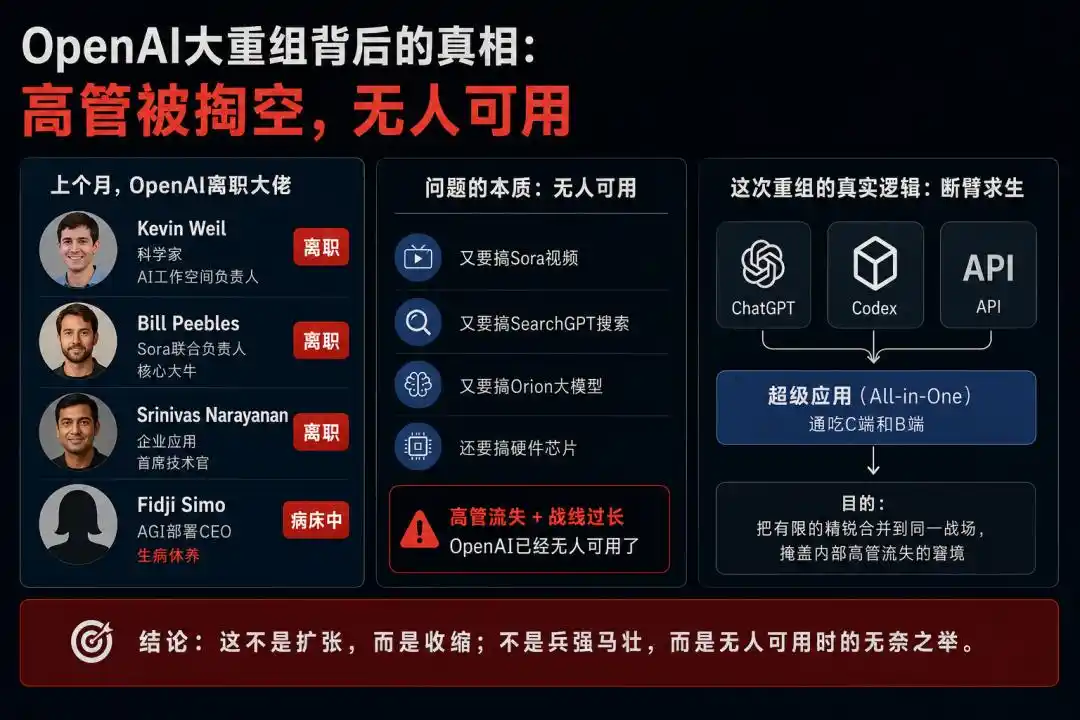
Just one month before this reorganization, a tsunami-like wave of personnel shockwaves hit OpenAI internally.
Last month, a batch of神仙大佬(god-tier experts) left OpenAI.
Kevin Weil, Head of Scientist AI Workspace at OpenAI, left!
Bill Peebles, the prominent co-lead and core expert of Sora, left!
Srinivas Narayanan, Chief Technology Officer for Enterprise Applications, left!
Not to mention, the "AGI Deployment CEO" Fidji Simo, who should be strategizing, is currently confined to a hospital bed, only able to remotely discuss plans with Brockman from her room.
So, the underlying logic of this major reorganization isn't because OpenAI is strong and well-staffed, but because they are running out of people.
After continuously losing multiple technical VPs, CTOs, and project leads, OpenAI's front lines have stretched too thin—they have to work on Sora video, SearchGPT search, the Orion large model, and even hardware chips.
Brockman mashing ChatGPT, Codex, and the API into one is essentially a断臂式(amputation-style) contraction.
Merging the limited elite forces onto the same battlefield, using a "Super App" that caters to both C端 and B端 to cover up the embarrassment of internal executive attrition.
Valuation Overtaken! Pursuers Have Arrived, the "Deadly 30 Seconds" in Capital Markets
What's making Altman and Brockman so anxious, even forcing them to undergo such a drastic reorganization on the eve of the IPO, is also the suffocating competitive pressure from outside.
Silicon Valley's AI throne changed hands just this week.
Anthropic's "Backstab": A $900 Billion Behemoth is Born
This very week, OpenAI's most fatal rival, Anthropic—founded by former employees who left—quietly finalized a new round of funding that颠覆行业格局(disrupted the industry landscape).
In this massive $30 billion funding round led by top consortia, Anthropic's valuation was directly pushed to a staggering $900 billion!
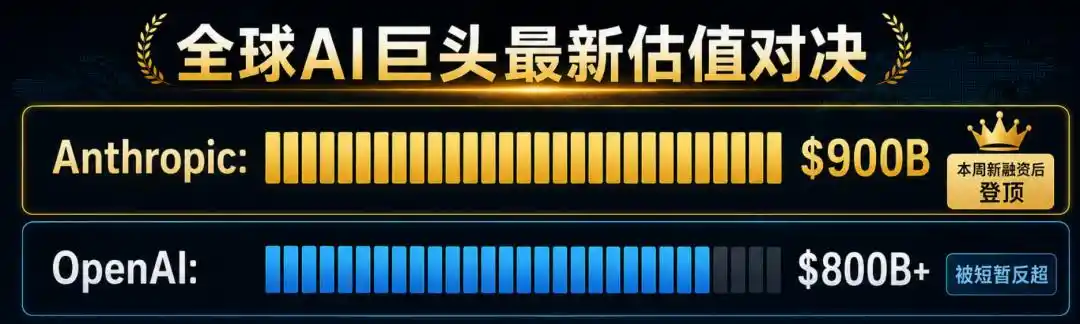
What does $900 billion mean? It surpasses OpenAI's latest valuation in the private market at a stroke, becoming the world's highest-valued independent AI unicorn!
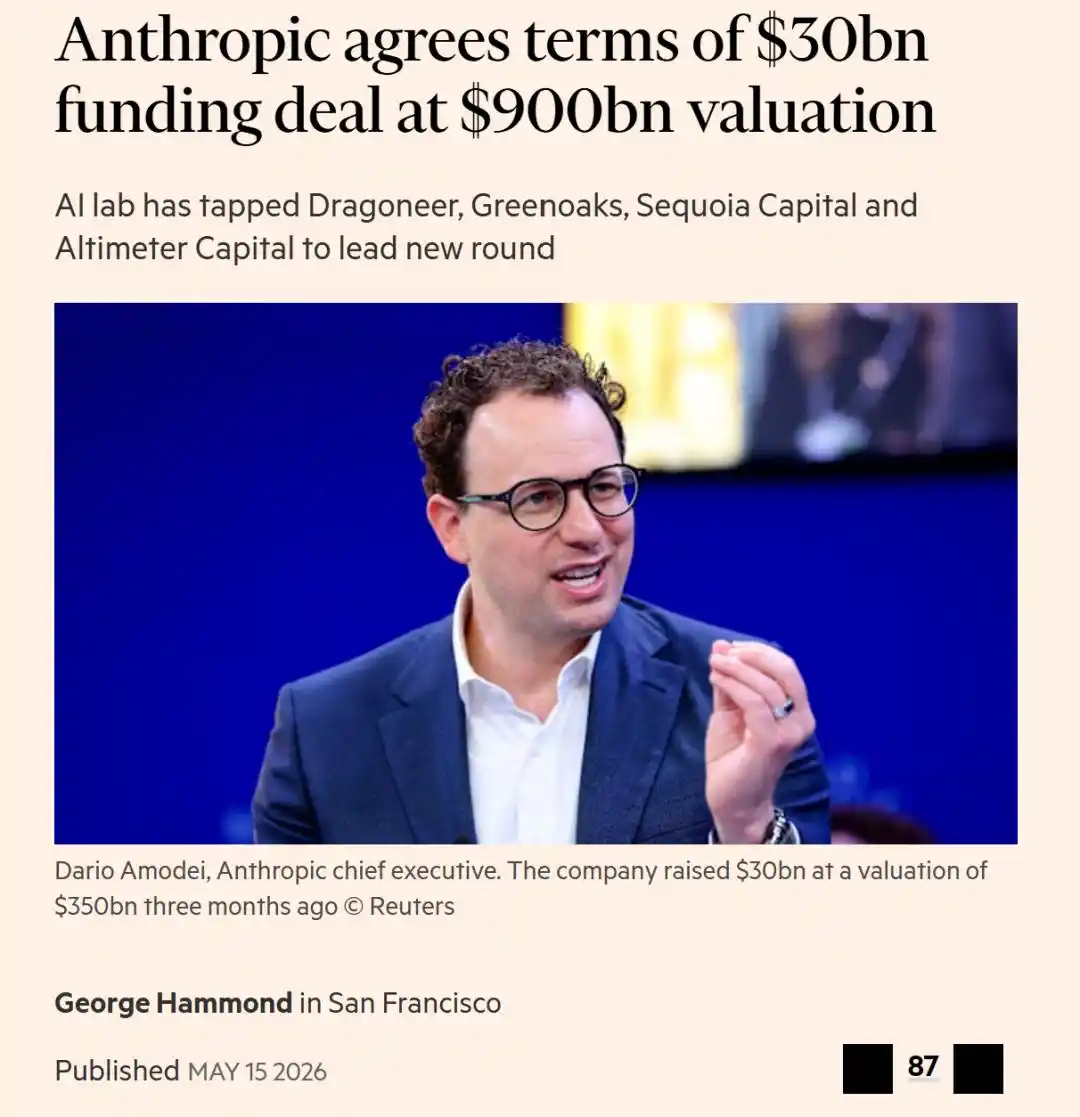
Worse, Anthropic has executed precise降维打击(dimensionality reduction attacks) against OpenAI in the programming field. The Claude series models have been压得抬不起头(pressing OpenAI down) in long-context and code generation.
Technical talent is fleeing madly to Claude, capital is pouring madly into Anthropic. If OpenAI keeps clinging to its ChatGPT webpage that only chats, its empire could crumble on the eve of its public listing.

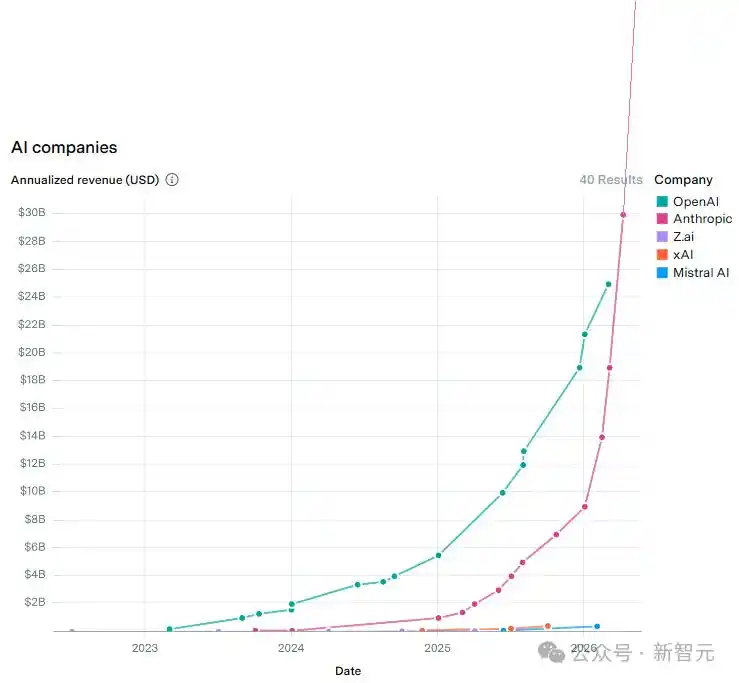
In May, Anthropic's annual recurring revenue has skyrocketed to $45 billion, with revenue growing 500% in just 5 months. This steep revenue curve is unprecedented in the entire history of tech business!
Google Unleashes Next Week, Time is Running Out for OpenAI
Besides the assassin from behind, Anthropic, the titan directly ahead—Google—is also死死盯着(dead set on) OpenAI.
Next week, the Google I/O annual developer conference will officially open. According to Silicon Valley sources, Sundar Pichai has prepared a basketful of new AI products targeting ChatGPT.
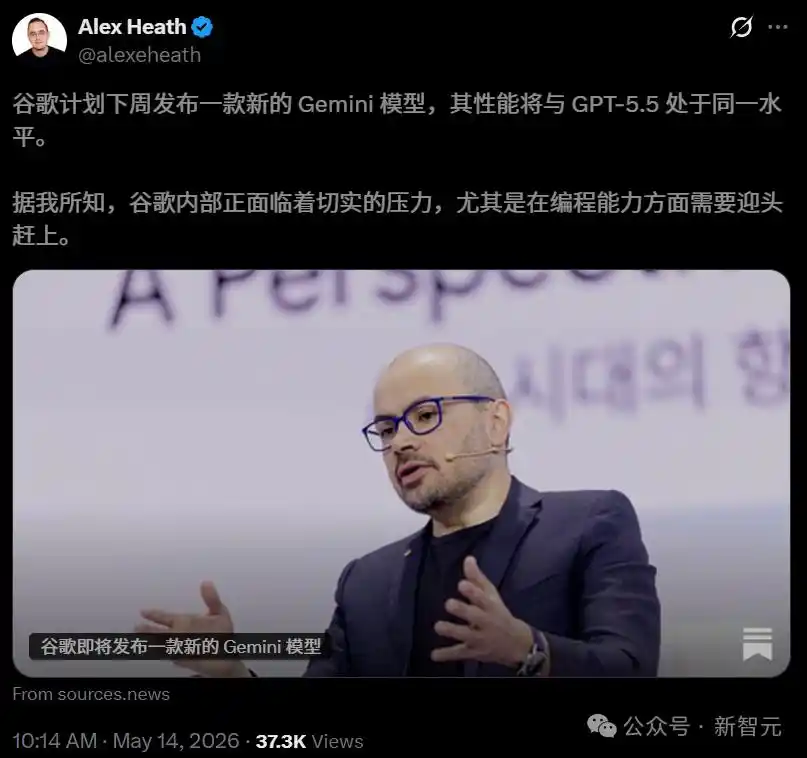
Last year, OpenAI stole Google's thunder by launching GPT-4o the day before Google I/O; this year, the hollowed-out OpenAI no longer has the spare capacity to stage a launch event for another "steal."
The only way is to adjust its organizational structure before Google unleashes its大招(big moves), telling Wall Street: Don't just look at Anthropic's high valuation, we're already working on a tripartite Super App.
The Final Battle: Frenzied Self-Rescue on the Eve of the IPO
According to WIRED's exclusive exposé, behind this reorganization lies another open secret in Silicon Valley: OpenAI plans to正式推进(advance its) IPO within this year.
For any super unicorn preparing to go public, capital markets most忌讳(dislike) "unclear storylines" and "internal executive infighting and attrition."
During the critical window for listing, if OpenAI's prospectus reads: We have a ChatGPT team, an independent Codex team, an API team, and these three teams fight daily for computing resources, Wall Street analysts would undoubtedly heavily discount the valuation.
Through this reorganization, Altman is telling an extremely sexy new story to the capital markets.
"We don't have messy products; we only have unified underlying capabilities. We are about to launch a super Agent that dominates all desktops, has 900 million weekly active users, and can automatically perform tasks for you."
Having Brockman, this highly respected founder in Silicon Valley, personally take charge of products is also meant to boost the confidence of shaky investors: Look, although some have left, the company's technical soul is still pioneering on the front lines.
From the non-profit lab founded in a San Francisco apartment to the commercial empire now frantically reorganizing for its IPO, OpenAI is navigating the most perilous voyage since its birth.
Brockman stepping forward is both answering a call in a crisis and making a last stand.
When ChatGPT, Codex, and the Atlas browser merge into that terrifying "Super App" in the near future, will we see the ultimate key to AGI?
Silicon Valley's battle for the AI throne has just entered its bloodiest stage of close combat.
References:
https://www.wired.com/story/openai-reorg-greg-brockman-product/
https://www.theinformation.com/briefings/openai-reorganizes-product-teams-around-unified-app-strategy?rc=epv9gi
This article is from the WeChat public account "新智元(New Zhiyuan)", author: 新智元(New Zhiyuan)