Epic Blunder: South Korean Exchange "Slip-up" Sends Out $44 Billion in Error

华尔街日报Published on 2026-02-08Last updated on 2026-02-08

Abstract

In a major operational error, South Korean cryptocurrency exchange Bithumb mistakenly distributed Bitcoin worth over $44 billion to users, causing a sharp drop in the platform’s Bitcoin price and triggering a regulatory review. The incident occurred when Bithumb intended to issue a promotional cash payment of 2,000 won (approx. $1.4) per user. Due to a system error, 695 users each received at least 2,000 Bitcoin instead. The exchange restricted trading and withdrawals within 35 minutes and has since recovered 99.7% of the wrongly distributed Bitcoin. As a result, Bitcoin prices on Bithumb temporarily plunged by 17% before partially recovering. South Korea’s Financial Services Commission described the incident as exposing "the vulnerability and risks of virtual assets" and announced plans to examine internal controls and operations at Bithumb and other exchanges. If violations are found, on-site inspections will follow. Bithumb attributed the mistake to an internal operational error and emphasized that it was not caused by external hacking or security breaches. Approximately 0.3% of the Bitcoin, worth around $132 million, remains unrecovered. The error occurred when the system incorrectly substituted "Bitcoin" for "Korean won," amplifying the reward amount by billions of times. As South Korea’s second-largest crypto exchange, Bithumb’s incident may lead to stricter industry-wide risk management and technical reliability standards.

South Korean cryptocurrency exchange Bithumb mistakenly sent users Bitcoin worth over $44 billion due to an operational error, triggering a plunge in the platform's coin prices, and regulators have launched a review process.

The incident occurred on Friday. Bithumb originally intended to distribute a cash promotion reward of 2,000 won (approximately $1.4) per user, but a system error resulted in at least 2,000 Bitcoin being sent to each of 695 users. The exchange restricted trading and withdrawal functions for the affected accounts within 35 minutes, and has since recovered 99.7% of the erroneously sent Bitcoin.

The incident directly impacted market confidence. The price of Bitcoin on the Bithumb platform plummeted by 17% to 81.1 million won on Friday evening before recovering somewhat; the latest trading price is 104.5 million won.

After holding an emergency meeting, the Financial Services Commission and other regulatory agencies stated that this event "exposed the fragility and risks of virtual assets". They will conduct a review of Bithumb's and other cryptocurrency exchanges' internal control systems, asset holdings, and operational status. If any violations are found, on-site inspections will be initiated.

According to a Reuters report, Bithumb attributed the incident to an internal operational error. The exchange emphasized in a statement: "We want to make it clear that this incident is unrelated to external hacking or security breaches. There are no issues with system security or customer asset management."

Calculated at the current Bitcoin price, Bithumb erroneously distributed a total of 620,000 Bitcoin, worth approximately $44 billion. The promotional activity was originally designed to distribute a small cash reward of no less than 2,000 won to each user, but the system mistakenly replaced the numerical unit from won to Bitcoin during execution, causing the reward amount to be magnified by billions of times.

The exchange acted swiftly upon discovering the error, freezing the trading and withdrawal permissions of the affected accounts within 35 minutes. As of now, 99.7% of the wrongly sent Bitcoin has been recovered, but approximately 0.3% remains unrecovered, proportionally worth about $132 million.

South Korean financial regulators responded quickly to this incident. The Financial Services Commission, following an emergency meeting, issued a statement noting that this event reveals systemic risks present in the virtual asset industry.

Regulators plan to conduct a comprehensive review of cryptocurrency exchanges' internal control systems, virtual asset holdings, and operational processes. If violations or management loopholes are discovered during the review, on-site inspection procedures will be initiated immediately. This signals a potential further increase in the intensity of South Korea's regulation of the cryptocurrency industry.

Bithumb is South Korea's second-largest cryptocurrency exchange,仅次于 market leader Upbit. This incident may prompt regulators to reassess risk management standards and technical system reliability requirements across the entire industry.


Related Questions

QWhat was the main cause of the $44 billion Bitcoin distribution error at Bithumb?

AThe error occurred because the system mistakenly replaced the unit of currency from the South Korean Won to Bitcoin when distributing promotional rewards. Instead of sending 2,000 won (about $1.4) per user, the system sent 2,000 Bitcoins per user.

QHow much of the mistakenly sent Bitcoin has Bithumb managed to recover?

ABithumb has successfully recovered 99.7% of the erroneously distributed Bitcoin.

QWhat immediate action did Bithumb take after discovering the error?

AWithin 35 minutes of discovering the error, Bithumb restricted the trading and withdrawal functions of the affected accounts.

QHow did this incident affect the price of Bitcoin on the Bithumb exchange?

AThe price of Bitcoin on the Bithumb exchange temporarily plummeted by 17% to 81.1 million won before recovering to 104.5 million won.

QWhat was the regulatory response from South Korean authorities to this incident?

ASouth Korea's Financial Services Commission announced it would conduct a comprehensive review of the internal control systems, asset holdings, and operational processes of Bithumb and other cryptocurrency exchanges. They stated they would initiate on-site inspections if any violations or management loopholes are found.

Related Reads

WEEX Labs: The Lobster Craze, What Can Agentic Economy Bring to Web3?

WEEX Labs: The Rise of OpenClaw and What Agentic Economy Brings to Web3 NVIDIA CEO Jensen Huang recently praised OpenClaw as the "largest, most popular, and most successful open-source project in human history." This AI agent, developed by a former Apple engineer, gained 320,000 GitHub stars in just three months, surpassing Linux and React. Its logo resembles a lobster claw, hence the nickname "Lobster" in Chinese communities. Unlike traditional AI chatbots like ChatGPT or Claude, which primarily respond to queries, OpenClaw represents a shift towards autonomous execution. It can take over operating systems, autonomously use browsers, code executors, APIs, and iMessage, planning and performing tasks until completion. Its official skill marketplace, ClawHub, already offers over 27,000 skills, expanding its capabilities. This development signals the beginning of the Agentic Economy, where AI evolves from conversational tools to proactive doers. Web3 is identified as the ideal ecosystem for this growth due to its native compatibility with autonomous, code-driven interactions. Key integrations include: - The x402 protocol enabling autonomous payments and model switching. - ERC-8004 providing portable reputation and identity. - ClawPay, ClawCredit, and ClawRouter facilitating private payments, native credit, and routing. - Stablecoins like USDT and USDC serving as 24/7 banking for agents. Notable projects leveraging this synergy include KITE (a PoAI L1 blockchain for agents), Pieverse (enabling gasless on-chain transactions via messaging apps), and GoPlus Security’s SafuSkill (a security-focused skills marketplace). Meme tokens like "Lobster" have also emerged, capitalizing on the trend. The article concludes that OpenClaw’s rise marks a new phase—Agentic Era—where AI agents can perform 24/7 transactions, collaboration, and entrepreneurship, driving new DeFi narratives and on-chain activity.

marsbit14m ago

WEEX Labs: The Lobster Craze, What Can Agentic Economy Bring to Web3?

marsbit14m ago

US SEC and CFTC Jointly "Unbind": Crypto Assets Are "Digital Commodities" Not "Securities"

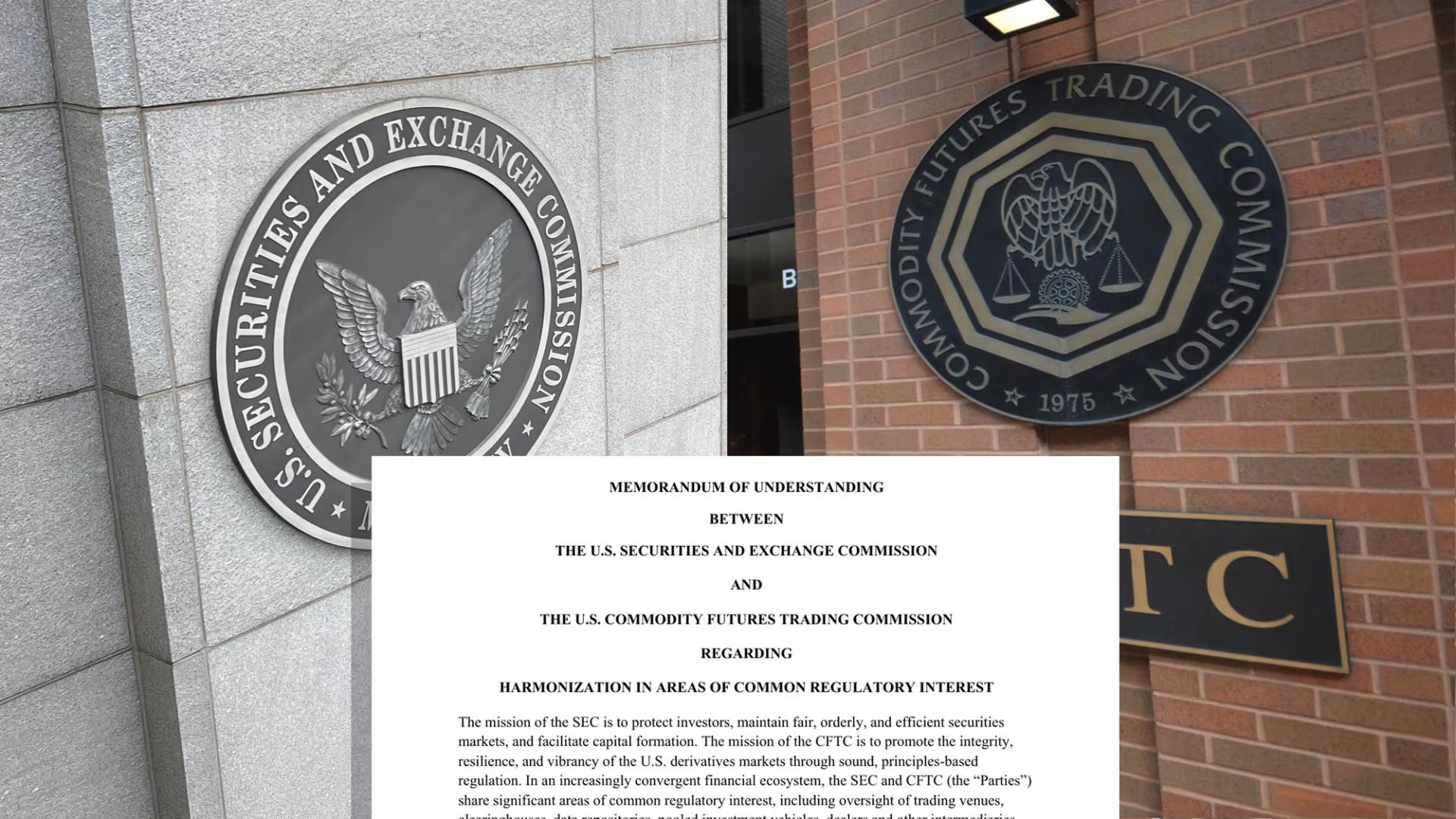
The U.S. SEC and CFTC have jointly issued new interpretive guidance clarifying that most crypto assets are not securities. Instead, they are classified as digital commodities, digital collectibles, digital tools, or stablecoins—provided stablecoin issuers do not pay interest. Only tokenized assets that represent traditional financial instruments are considered securities. Key classifications include: - Digital commodities (e.g., Bitcoin, Ethereum) are non-securities whose value derives from utility and market dynamics. - Digital collectibles (e.g., NFTs, meme coins) are for collection or use. - Digital tools (e.g., membership tokens, credentials) serve functional purposes. - Stablecoins are non-securities if they do not pay yields. The guidance also states that DeFi mining, staking, wrapped assets, and airdrops generally do not constitute securities offerings—unless airdrops require active effort (creating an investment contract risk). Notably, a token initially sold as a security can later be reclassified as a non-security if it becomes decentralized or gains utility. This clarity is expected to benefit crypto IPOs (e.g., exchanges like OKX and Kraken), DeFi protocols, and prediction markets like Polymarket by reducing regulatory uncertainty and attracting institutional liquidity. However, increased regulatory alignment may reduce innovation in gray areas and raise compliance costs. Overall, the move signals tighter integration with mainstream finance, potentially ensuring the industry’s broader adoption and stability.

Odaily星球日报30m ago

US SEC and CFTC Jointly "Unbind": Crypto Assets Are "Digital Commodities" Not "Securities"

Odaily星球日报30m ago

Trading

Spot
Futures
活动图片