[Key interpretation] ETH's open interest grows rapidly, pay attention to leverage risk

Huobi Research2022-07-29 tarihinde yayınlandı2022-08-01 tarihinde güncellendi

Özet

BTC rebounded quickly and paid attention to the change of selling pressure.

1. BTC triple positive rebound

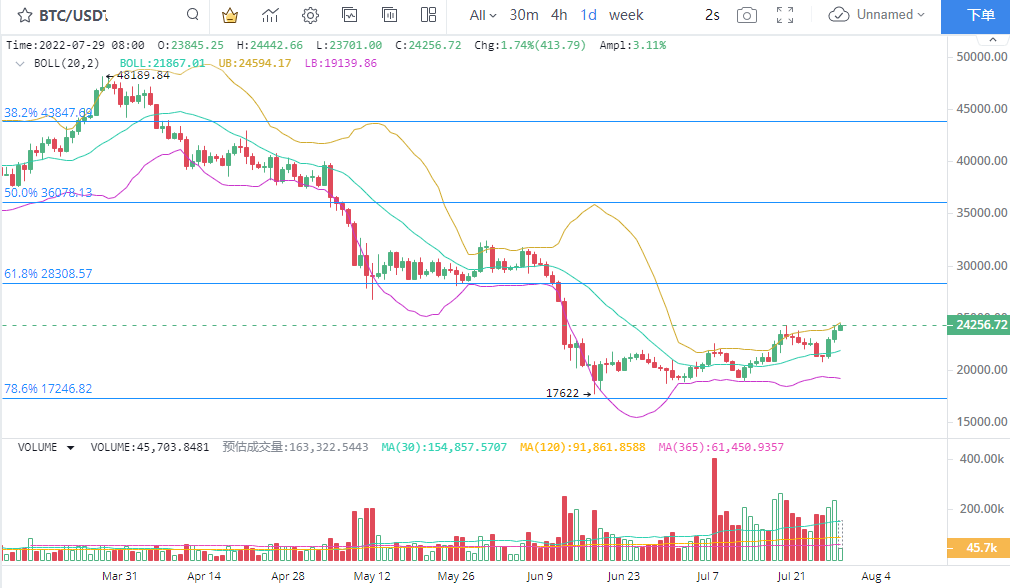
Trading volume remained high, pushing BTC higher for three consecutive trading days. From the perspective of trading volume performance, the current volume can still support the strong performance of BTC, and the short-term rebound space needs to pay attention to the performance of pressure level. The important price platform is around us $28308, which is the corresponding point of 61.8% in Fibonacci. Considering the increase of BTC activity, there is room for further upward movement in the short term in terms of amplitude. Next, we can pay attention to the performance of volume and price. In the case of large-scale operation, the risk of holding currency is low.
2. Large amount transactions are active on the BTC chain

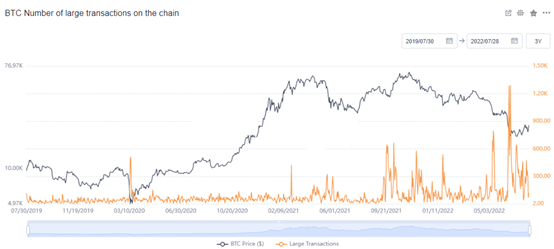
Large transactions on the chain cannot directly prompt the trading direction of the main force, but the high number of transfers on the chain means that the main force has changed hands relatively fully. Based on the fact that the trading volume of BTC in the exchange also maintained a relatively high level, it is judged that BTC is in a relatively active stage. During the month, large value transactions on the BTC chain were particularly frequent, and the peak value was high, which means that there is a possibility of a large number of successful BTC turnover in the near future. Therefore, the current price rebound of BTC may be caused by the new main force. Next, the market development may still be limited to the range, focusing on selling pressure below the pressure level of $28000.
3. Decrease in unrecognized losses of BTC

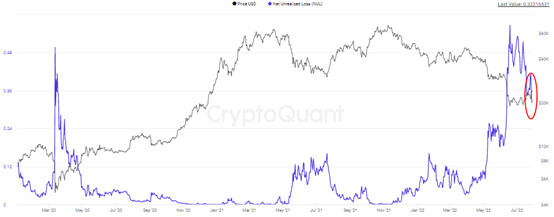
The number of unrecognized losses of BTC has decreased significantly and at a faster rate, which is relatively consistent with the rebound rhythm of BTC. On June 28, the nul index fell to around 0.322, indicating a decline from the year's high of 0.566. Under normal circumstances, the proportion of unrecognized losses of BTC will be less than 0.12. Before the unconfirmed loss drops to 0.12, the existence of loss will always affect the expectation of price rebound. Importantly, BTC kept approaching the cost price of more investors in the rebound stage, which was one of the sources of selling pressure.
4. Eth reconfirmed the rebound expectation

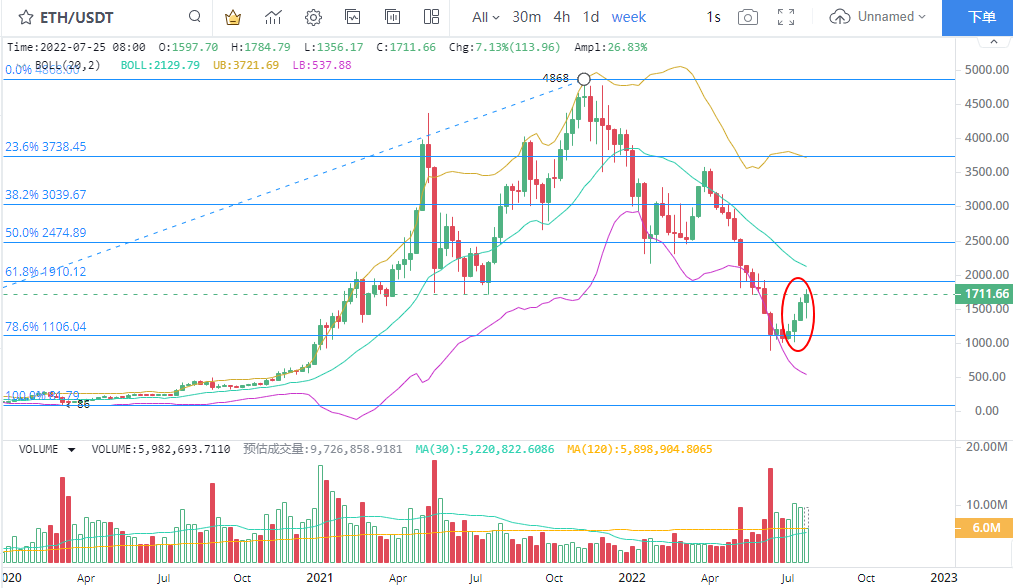
The technical rebound of eth has turned into a weekly range fluctuation, the maximum increase in price has doubled, and is about to hit the pressure level of $1910. In terms of weekly K-line, ETH accumulated a large trading volume, which made this price increase easily exceed expectations. Recently, the number of eth active addresses has rebounded, and the address activity of sending eth is very high. Therefore, ETH is still a technical rebound. Therefore, we should pay attention to price adjustment factors while making profits by holding money.
5. Eth positions rebounded

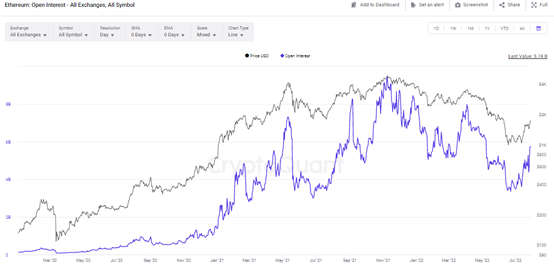
Eth rebounded faster. Compared with the price trend, its contract position has more room for rapid growth. At present, the contract sprint has rebounded to near the one-year average. This shows that investors are relatively sensitive to market changes. The rapid growth rate of contract positions makes it easy for eth to prompt bullish trading signals.

İlgili Okumalar

Ethereum 2026 Q1 Review: On-Chain Activity Hits Record Highs, Tokenized Assets Lead the Industry

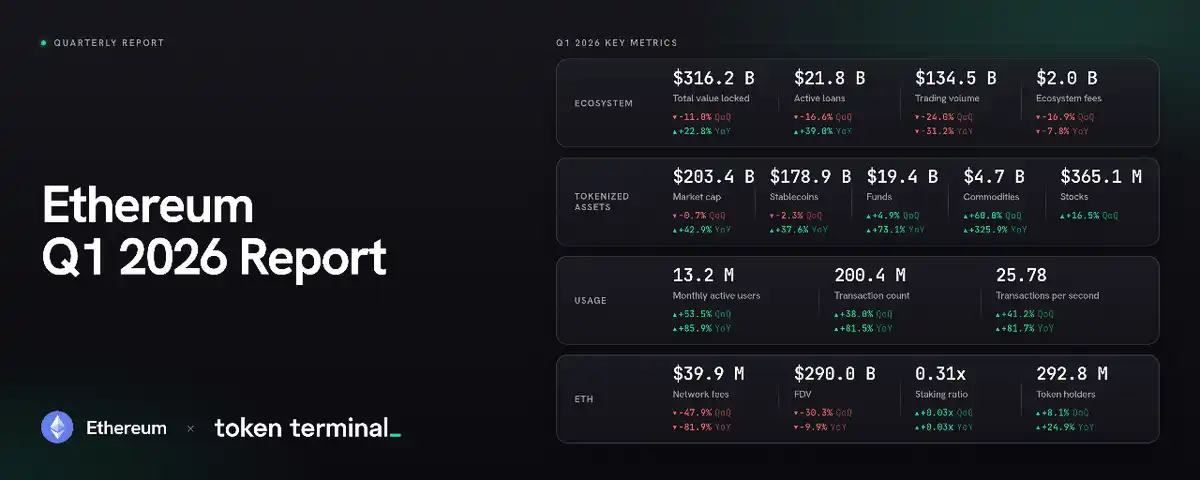
Ethereum Q1 2026 Review: Record On-Chain Activity, Tokenized Assets Lead the Industry. Despite a price correction impacting USD-denominated metrics, Ethereum's on-chain usage hit all-time highs in Q1 2026. Monthly active addresses surged 85.9% year-over-year to 13.2 million, while L1 transactions and throughput also set new records. This growth occurred alongside a significant 47.9% quarterly drop in L1 transaction fees, demonstrating the impact of network scaling via upgrades like the Blob Parameter Fork. The ecosystem maintained its dominance in decentralized finance (DeFi), holding 71% of the total value locked among top chains and 79.2% of active borrowing. Ethereum solidified its position as the primary platform for tokenized real-world assets (RWAs), with a total market cap of $203.4B. It holds leading shares in stablecoins (61.8%), tokenized funds (73%), and tokenized commodities (84%) across major chains. Key developments included the ERC-8004 standard for AI agents and heightened institutional engagement at forums. Major financial institutions like BlackRock, JPMorgan, and a European banking consortium announced new tokenized products on Ethereum throughout the period. The report draws parallels to the early internet, suggesting Ethereum is sacrificing short-term fee revenue for long-term network expansion and adoption. Its strategy focuses on becoming a neutral, open settlement layer for global finance, with scaling roadmaps aiming for tens of thousands of TPS by 2029.

marsbit33 dk önce

Ethereum 2026 Q1 Review: On-Chain Activity Hits Record Highs, Tokenized Assets Lead the Industry

marsbit33 dk önce

Matrixdock Featured Again in SBMA’s 《Crucible》: Discussing How Tokenisation Enhances Efficiency in the Precious Metals Market

Matrixdock's research article, titled "Why Tokenisation Matters for the Bullion Industry and How Carrying Costs Fit In," has been featured again in the SBMA's industry publication *Crucible*. Authored by Matrixdock lead Eva Meng, the piece examines how tokenisation enhances the efficiency and utility of the precious metals market. The article argues that tokenisation builds upon the accessibility improvements brought by gold ETFs, not by redefining gold's value but by enabling it to function within digital finance. It extends gold's role beyond a portfolio holding, potentially facilitating instant settlement, digital collateral, and operation in 24/7 markets. A key focus is transparently handling the unavoidable carrying costs (storage, insurance) of physical assets like gold and silver. Matrixdock introduces the Fungible Reserve Standard (FRS) framework, based on an "Economic Purity Principle," which aims to reflect these real-world economic costs clearly within the token mechanism, rather than bundling them opaquely. The platform's practical applications are highlighted, including its gold token XAUm and its silver token XAGm, the first built on the FRS framework. As the tokenised gold market surpassed $6 billion in February 2026, the industry's focus is shifting from initial proofs of reserves to broader concerns of market efficiency and capital utilization. Tokenisation is positioning gold and other precious metals to become active components within the evolving digital financial system.

marsbit1 saat önce

Matrixdock Featured Again in SBMA’s 《Crucible》: Discussing How Tokenisation Enhances Efficiency in the Precious Metals Market

marsbit1 saat önce

İşlemler

Spot
Futures
活动图片