(51/52) Quan sát thị trường hàng tuần | Tuần thứ 5 tháng 12 | Tuần cuối cùng của thu hoạch tổn thất thuế

marsbitPublicado a 2025-12-29Actualizado a 2025-12-29

Resumen

Bản tin thị trường tuần thứ 5 tháng 12: Tuần cuối cùng của Tax-Loss Harvesting **Tin tức nổi bật:** Thị trường biến động mạnh do ảnh hưởng từ kỳ nghỉ lễ và các quyền chọn hết hạn, nhưng thiếu định hướng rõ ràng. Bitcoin gần như đi ngang, tăng nhẹ 0.55%, với khối lượng giao dịch thấp nhất kể từ tháng 7. Giao dịch và thanh khoản dự kiến sẽ phục hồi bình thường sau năm mới. **Triển vọng vĩ mô:** Trung Quốc sẽ áp dụng giấy phép đặc biệt cho xuất khẩu bạch kim từ 1/1/2026, dự kiến tác động lớn đến chuỗi cung ứng kim loại toàn cầu. Đơn đặt hàng hàng hóa lâu bền của Mỹ tháng 10 giảm 2.2%, thấp hơn dự báo. Tuy nhiên, GDP Q3 tăng trưởng 4.3%, vượt kỳ vọng, cho thấy sức bền của chi tiêu tiêu dùng, xuất khẩu và chi tiêu chính phủ. **Tổng quan tiền mã hóa:** - Morgan Stanley đang khám phá dịch vụ giao dịch tiền mã hóa cho khách hàng tổ chức. - Ngân hàng lớn nhất nước Nga, Sberbank, đã thực hiện khoản vay thế chấp bằng tiền mã hóa đầu tiên. - Coinbase thâu tóm The Clearing Company để tăng cường sản phẩm thị trường dự đoán. - Kraken lên kế hoạch thâm nhập thị trường dự đoán. - Đại gia du lịch Trip.com tích hợp thanh toán bằng stablecoin. - MicroStrategy tăng dự trữ tiền mặt lên 2.19 tỷ USD và nắm giữ 671,268 BTC. **Lớp 1 & Lớp 2:** - Quỹ Solana ra mắt Kora, một trình ký và trình trung chuyển phí đã được kiểm toán. - Shift4 triển khai thanh toán stablecoin trên Polygon. - Spire Labs triển khai ứng dụng chain đầu tiên trên Base tại Celo. - Flow Network bị tấn công, th...

Tin tức nổi bật: Tuần cuối cùng của thu hoạch tổn thất thuế

  • Chịu ảnh hưởng của kỳ nghỉ lễ và các hợp đồng quyền chọn chính đáo hạn vào thứ Sáu tuần trước, biến động thị trường gia tăng, nhưng thiếu niềm tin định hướng rõ ràng. Bitcoin về cơ bản đóng cửa đi ngang trong tuần này, tăng nhẹ 0,55%, lập mức khối lượng giao dịch thấp nhất hàng tuần kể từ tháng 7. Thị trường dự kiến hoạt động giao dịch và thanh khoản sẽ trở lại bình thường sau năm mới.

Triển vọng vĩ mô: Xung đột chiến lược hàng hóa đại tông

  • Từ ngày 1 tháng 1 năm 2026, chính phủ Trung Quốc sẽ yêu cầu cấp phép đặc biệt cho xuất khẩu bạch kim, biện pháp này dự kiến sẽ có tác động lớn đến chuỗi cung ứng kim loại toàn cầu.

  • Đơn đặt hàng hàng hóa lâu bền của Mỹ vào tháng 10 giảm 2,2%, thấp hơn dự báo thị trường là -1,5%. Tuy nhiên, GDP quý III của Mỹ tăng trưởng 4,3%, cao hơn đáng kể so với dự báo thị trường là 3,3%, cho thấy chi tiêu tiêu dùng, xuất khẩu và chi tiêu chính phủ có sức bền.

Lịch kinh tế sắp tới bao gồm:

  • Thứ Tư, ngày 31 tháng 12, 3:00 sáng: Tóm tắt cuộc họp FOMC

Tổng quan tiền điện tử hàng tuần: Aave DAO đối bỏ Aave Labs

  • Theo báo cáo, Morgan Stanley đang khám phá việc cung cấp dịch vụ giao dịch tiền điện tử cho nhóm khách hàng tổ chức của mình, bao gồm thị trường giao ngay và phái sinh.

  • Ngân hàng lớn nhất ngành ngân hàng Nga, Sberbank, đã thực hiện khoản vay thế chấp bằng tiền điện tử đầu tiên của quốc gia này, cung cấp vốn cho thợ đào Bitcoin Intelion Data.

  • Coinbase thông báo mua lại The Clearing Company để tăng cường các sản phẩm thị trường dự báo của mình, giao dịch này dự kiến hoàn thành vào tháng 1 năm 2026.

  • Kraken thông báo kế hoạch thâm nhập lĩnh vực thị trường dự báo, mục tiêu là ra mắt dịch vụ này vào năm 2026.

  • Gã khổng lồ du lịch Trip.com đã tích hợp thanh toán bằng stablecoin, cho phép người dùng toàn cầu đặt dịch vụ du lịch bằng tài sản kỹ thuật số.

  • Strategy đã tăng dự trữ thêm 748 triệu USD, nâng tổng số tiền mặt nắm giữ lên 2,19 tỷ USD, ngoài ra còn nắm giữ 671,268 BTC.

Lớp 1 và Lớp 2

  • Quỹ Solana đã ra mắt Kora, một trình ký và nút ký tên được kiểm toán, nhằm mục đích thực hiện giao dịch miễn phí gas và ký từ xa an toàn.

  • Polygon thông báo nhà xử lý thanh toán chính Shift4 đã ra mắt giải pháp stablecoin trên mạng lưới của mình, cung cấp dịch vụ thanh toán 24/7 cho hàng chục nghìn người bán.

  • Spire Labs đã triển khai ứng dụng chuỗi dựa trên Base đầu tiên trên Celo, sử dụng "bằng chứng con người" bảo vệ quyền riêng tư của Self Protocol để chống lại các cuộc tấn công nữ thần.

  • Flow Network bị tấn công do lỗ hổng lớp thực thi, thiệt hại 3,9 triệu USD.

Dapps

  • Hyperliquid đã ra mắt tính năng ký quỹ danh mục đầu tư trên mainnet của mình, với các hạn chế ban đầu khá thận trọng và đã thêm tính năng kiếm lãi BLP trên trang Kiếm tiền của mình.

  • Đội ngũ Polymarket đã chỉ ra rằng việc phát triển và ra mắt mạng lớp 2 chuyên dụng của họ hiện là nhiệm vụ chính của nền tảng này.

  • Kamino Finance đã ra mắt PRIME, một nguyên sinh lợi nhuận mới trên Solana, cung cấp APY tương quan thấp 8%, được hỗ trợ bởi tín dụng HELOC thế giới thực do Figure cung cấp.

  • GMX hiện đã trực tuyến trên mainnet Ethereum, cho phép người dùng giao dịch hơn 100 thị trường hợp đồng vĩnh viễn, giao dịch trên 23 thị trường giao ngay và cung cấp tính thanh khoản thông qua GM hoặc GLV.

  • Maple Finance đã tạo khoản vay USDC lớn nhất từ trước đến nay trị giá 500 triệu USD.

  • Resolv thông báo mở rộng tài sản trên thị trường giao dịch chênh lệch giá của mình sang HYPE trên Hyperliquid và SOL trên sàn giao dịch Binance, với cấu hình ban đầu là 10%.

  • Hinkal Protocol hợp tác với Resolv Labs để cung cấp giao dịch riêng tư cho USR và RLP.

  • Mellow Protocol sẽ tích hợp Fluid và Resolv trên Plasma vào quỹ stRATEGY của mình, cho phép truy cập quỹ tổ chức mô-đun mà không cần công việc kỹ thuật tùy chỉnh.

  • F(x) Protocol đã ra mắt FX100 Perp, một nền tảng giao dịch hợp đồng vĩnh viễn phi tập trung mới với đặc điểm là vị thế không thể thanh lý (vị thế sẽ được cân bằng lại để giảm đòn bẩy) và đòn bẩy cao tới 100x.

  • Giao thức bộ xử lý ZK Brevis đã công bố mô hình kinh tế tiền tệ cho token BREV của mình, token này sẽ hoạt động như một phương tiện thanh toán, thế chấp và quản trị cho thị trường ProverNet.

Quản trị và Alpha sắp tới

  • Đề xuất quản trị để Aave DAO tiếp quản quyền kiểm soát tài sản thương hiệu Aave đã bị từ chối.

  • Cộng đồng Uniswap đã thông qua đề xuất Unification và đốt 1 tỷ UNI, đồng thời sẽ kích hoạt công tắc phí và thực hiện các thay đổi giao thức khác sau khi hết thời gian khóa.

  • Cuộc bỏ phiếu công khai lần thứ ba về công tắc phí của LayerZero đã không đạt được số phiếu tối thiểu, điều này có nghĩa là phí giao thức sẽ duy trì đóng ít nhất sáu tháng nữa.

  • Cộng đồng Bitcoin đang tranh luận sôi nổi về mối đe dọa tiềm ẩn của máy tính lượng tử đối với mạng lưới Bitcoin. Trong đó, BIP-360 được đưa vào cuộc thảo luận để triển khai giải pháp chữ ký chống lượng tử.

Mở khóa token

  • Token IO sẽ được mở khóa vào ngày 31 tháng 12, chiếm 6,09% nguồn cung.

  • Token KMNO sẽ được mở khóa vào ngày 31 tháng 12, chiếm 6,92% nguồn cung.

  • Token EIGEN sẽ được mở khóa vào ngày 1 tháng 1, chiếm 7,52% nguồn cung.

  • Token LA sẽ được mở khóa vào ngày 5 tháng 1, chiếm 5,94% nguồn cung.

  • Token MOVE sẽ được mở khóa vào ngày 10 tháng 1, chiếm 5,78% nguồn cung.

  • Token LINEA sẽ được mở khóa vào ngày 10 tháng 1, chiếm 6% nguồn cung.

  • Token HOME sẽ được mở khóa vào ngày 10 tháng 1, chiếm 4,16% nguồn cung.

  • Token RAIN sẽ được mở khóa vào ngày 10 tháng 1, chiếm 11% nguồn cung.

  • Token US sẽ được mở khóa vào ngày 10 tháng 1, chiếm 6,32% nguồn cung.

  • Token BB sẽ được mở khóa vào ngày 13 tháng 1, chiếm 10,9% nguồn cung.

  • Token ZKC sẽ được mở khóa vào ngày 15 tháng 1, chiếm 6,71% nguồn cung.

Vui lòng nhấp vào đây để đăng ký nhận Bản tin Quan sát Thị trường Hàng tuần và Nghiên cứu Độc quyền.


Criptos en tendencia

Preguntas relacionadas

QTuần cuối cùng của thu hoạch tổn thất thuế là gì và nó ảnh hưởng như thế nào đến thị trường?

ATuần cuối cùng của thu hoạch tổn thất thuế đề cập đến thời điểm cuối năm khi các nhà đầu tư bán tài sản thua lỗ để giảm thuế. Tuần này, thị trường biến động mạnh do kỳ nghỉ lễ và các quyền chọn hết hạn, nhưng thiếu định hướng rõ ràng. Bitcoin gần như không thay đổi, chỉ tăng nhẹ 0.55%, và khối lượng giao dịch thấp nhất kể từ tháng 7. Thị trường dự kiến sẽ phục hồi hoạt động bình thường sau năm mới.

QTrung Quốc áp dụng giấy phép đặc biệt cho xuất khẩu bạch kim từ năm 2026 sẽ ảnh hưởng thế nào đến chuỗi cung ứng kim loại toàn cầu?

ATừ ngày 1 tháng 1 năm 2026, chính phủ Trung Quốc sẽ yêu cầu giấy phép đặc biệt cho xuất khẩu bạch kim. Biện pháp này dự kiến có tác động lớn đến chuỗi cung ứng kim loại toàn cầu, vì Trung Quốc là nhà sản xuất và xuất khẩu bạch kim quan trọng, có thể gây ra biến động giá và thay đổi trong phân phối nguồn cung.

QCác sự kiện kinh tế quan trọng nào sắp diễn ra vào cuối tháng 12 và đầu tháng 1?

ACác sự kiện kinh tế sắp tới bao gồm: Vào lúc 3:00 sáng ngày 31 tháng 12 (theo giờ địa phương), sẽ có bản tóm tắt cuộc họp FOMC. Đây là sự kiện quan trọng để theo dõi các quyết định chính sách tiền tệ của Cục Dự trữ Liên bang Mỹ.

QMicroStrategy đã tăng dự trữ tiền mặt và nắm giữ Bitcoin như thế nào?

AMicroStrategy đã tăng dự trữ tiền mặt thêm 748 triệu USD, nâng tổng số tiền mặt nắm giữ lên 21.9 tỷ USD. Ngoài ra, công ty còn nắm giữ 671,268 BTC, thể hiện chiến lược mạnh mẽ trong việc tích lũy Bitcoin như một tài sản dự trữ giá trị.

QNhững đồng tiền nào sắp được mở khóa vào đầu tháng 1 và tỷ lệ phần trăm của chúng là bao nhiêu?

ACác đồng tiền sắp được mở khóa vào đầu tháng 1 bao gồm: EIGEN (7.52% nguồn cung) vào ngày 1 tháng 1, LA (5.94%) vào ngày 5 tháng 1, MOVE (5.78%) và LINEA (6%) vào ngày 10 tháng 1, HOME (4.16%) vào ngày 10 tháng 1, RAIN (11%) vào ngày 10 tháng 1, US (6.32%) vào ngày 10 tháng 1, BB (10.9%) vào ngày 13 tháng 1, và ZKC (6.71%) vào ngày 15 tháng 1.

Lecturas Relacionadas

Low Investment Isn't Apple's Immunity Pass

While Meta and Google face investor scrutiny over ballooning AI capital expenditures, Apple's minimal AI investment has paradoxically become a strength. Its market cap recently reclaimed the global top spot, surpassing $5 trillion. The irony is deep: Apple's own AI efforts have lagged, with "Apple Intelligence" delayed and core talent lost, forcing reliance on partners like Google Gemini and Alibaba's Qianwen. Its Q3 FY2026 (Q2 CY) earnings initially seemed stellar. Revenue hit $109.4B (up 16% YoY), with iPhone and Mac sales, growing 22% and 29% respectively, driving most of the growth. However, the stock fell over 8% post-earnings. The primary concern was a weaker Q4 revenue growth forecast of 9-11%, below expectations, due to looming supply chain constraints. Apple is feeling the indirect cost of the AI boom. Soaring memory and chip prices, fueled by massive data center investments from Microsoft, Amazon, and others, are forcing Apple to raise Mac and iPad prices significantly. The upcoming iPhone launch is also expected to see substantial price hikes. Despite avoiding heavy AI infrastructure spending—its capital expenditures are actually down 28%—Apple cannot escape the industry-wide supply and cost pressures. While Apple's operating cash flow remains robust, its substantial R&D spending (up 32% YoY) has yet to yield major AI breakthroughs. As Tim Cook prepares to step down as CEO, Apple faces a challenging transition: balancing its premium hardware success against the strategic and cost pressures of the AI era it has so far cautiously navigated.

marsbitHace 24 min(s)

Low Investment Isn't Apple's Immunity Pass

marsbitHace 24 min(s)

PA Graphics Explanation | One Chart to Understand the Major Web3 Events in August 2026

**PANews Crypto Calendar: Key Web3 Events in August 2026** PANews introduces its revamped crypto calendar, featuring comprehensive coverage, flexible filtering, and easy export options. The market in August will be shaped by multiple key events across macroeconomics, regulation, tokenomics, and project developments: * **Macro & Policy:** Key US economic data releases (July Non-Farm Payrolls, CPI), the Federal Reserve meeting minutes, and the Jackson Hole Economic Symposium will be in focus. On the regulatory front, the US Senate plans to release a new draft of the *CLARITY Act*, while the EU's expanded crypto ban against Belarus comes into effect. * **Token Unlocks:** Significant token unlocks are scheduled for assets including ENA, AVAX, CONX, ZRO, and KAITO, which may influence market volatility. * **Project Updates & Shutdowns:** Several services, including Exchange Art, Ctrl Wallet, Zapper, NFTfi, and Summer.fi, are set to cease operations or undergo major adjustments. Users are advised to manage their assets accordingly. * **Corporate Activity:** Q2 earnings reports from companies like SpaceX, Circle, and Nvidia are due. Unitree Robotics will initiate its IPO subscription on the STAR Market, and Moonshot AI plans to begin a Pre-IPO financing round. * **Industry Events:** Major conferences such as Bitcoin Asia 2026 and the 2026 Digital Expo will take place. The overarching market narrative for August will revolve around macroeconomic expectations, regulatory developments, token unlock schedules, and ongoing industry consolidation.

marsbitHace 34 min(s)

PA Graphics Explanation | One Chart to Understand the Major Web3 Events in August 2026

marsbitHace 34 min(s)

Wall Street's Most Famous 'Cassandra' Now Has His Sights Set on Nvidia

Michael Burry, the famed "Big Short" investor, has once again captured Wall Street's attention with a series of short positions against major tech and semiconductor stocks, most notably Nvidia. In late June and July, through his "Cassandra Unchained" newsletter, Burry disclosed short bets against Nvidia, Tesla, Applied Materials, Caterpillar, the SOXX semiconductor ETF, and later, Micron Technology. His core thesis revolves around potential distortions in the AI infrastructure boom, specifically questioning whether extended depreciation schedules (e.g., 6 years vs. a realistic 2-3 years for AI chips) by cloud giants like Microsoft and Google artificially inflate profits. He also raises concerns about possible "off-balance-sheet circular financing," where chip demand might be propped up by vendor-backed funding to clients. Nvidia's stock experienced volatility following these disclosures, briefly dipping but largely holding near Burry's reported entry points, leaving his positions roughly flat or slightly underwater as of late July. This move is part of a pattern for Burry, whose track record since his legendary 2008 bet is mixed. He has faced notable losses, such as on Tesla in 2021, while scoring on broader market turns like the 2020 pandemic crash. His methodology focuses intensely on free cash flow and scrutinizing original financial documents to spot overvaluation and structural risks, but it often struggles with timing the market. The article contrasts Burry's stance with other prominent investors. Steve Eisman, another "Big Short" figure, is not shorting Nvidia, citing strong fundamentals but expressing nervousness about sustainability. Jim Chanos agrees with the broad "accounting mismatch" concern—comparing it to the dot-com bubble—but targets financial leverage in private equity firms rather than the chip stocks themselves. While Nvidia's short interest remains relatively low at 1.3-1.4% of float, the massive stock size means absolute short losses have been significant, exceeding $5 billion earlier this year. The piece concludes that for ordinary investors, the key takeaway is not replicating specific short bets but learning from the critical frameworks these investors use: questioning rosy accounting, identifying structural vulnerabilities, and maintaining skepticism during market euphoria, even if pinpointing the exact catalyst for a downturn remains elusive.

marsbitHace 59 min(s)

Wall Street's Most Famous 'Cassandra' Now Has His Sights Set on Nvidia

marsbitHace 59 min(s)

Weekly Selection丨Epic Stock Market Volatility, Changxin Tech's IPO Reshapes Storage Landscape, Saylor Aims to Re-Anchor STRC Around September 8th

PANews Weekly Digest: Market Turmoil, Tech Breakthroughs, and Crypto Developments. The week saw significant volatility across global markets. South Korea's KOSPI index experienced extreme turbulence, including multiple trading halts, largely driven by sharp declines in AI hardware stocks like SK Hynix. In contrast, China's Changxin Xinqiao (CXC) achieved a landmark IPO with a market cap surpassing 4 trillion yuan, marking a major success for the domestic DRAM industry after a decade of losses. In the crypto and Web3 space, several key narratives emerged. AI is driving demand for new infrastructure, with projects like AI agent wallets and programmable payments gaining traction, attracting interest from firms like Coinbase. The Bitcoin mining sector is pivoting, with companies like MARA focusing on energy management as electricity becomes a core AI-era asset. Meanwhile, the RWA (Real World Assets) sector faces a "utilization puzzle," with hundreds of billions in on-chain assets remaining dormant. Notable market movements included a historic single-day surge of over 17% for the KOSPI index and a significant migration of $16.5 billion in staked ETH within the Lido ecosystem. Michael Saylor announced a target to re-peg the STRC stablecoin around September 8th. Other highlights include discussions on Ethereum's ambitious 2030 roadmap for scaling and privacy, analysis showing high protocol revenues not always translating to token price gains, and warnings from Citi about potential extreme commodity price shocks by late 2026.

marsbitHace 1 hora(s)

Weekly Selection丨Epic Stock Market Volatility, Changxin Tech's IPO Reshapes Storage Landscape, Saylor Aims to Re-Anchor STRC Around September 8th

marsbitHace 1 hora(s)

When the Market Begins to Question AI Capex: A Full Analysis of Q2 Earnings Reports from Five Tech Giants

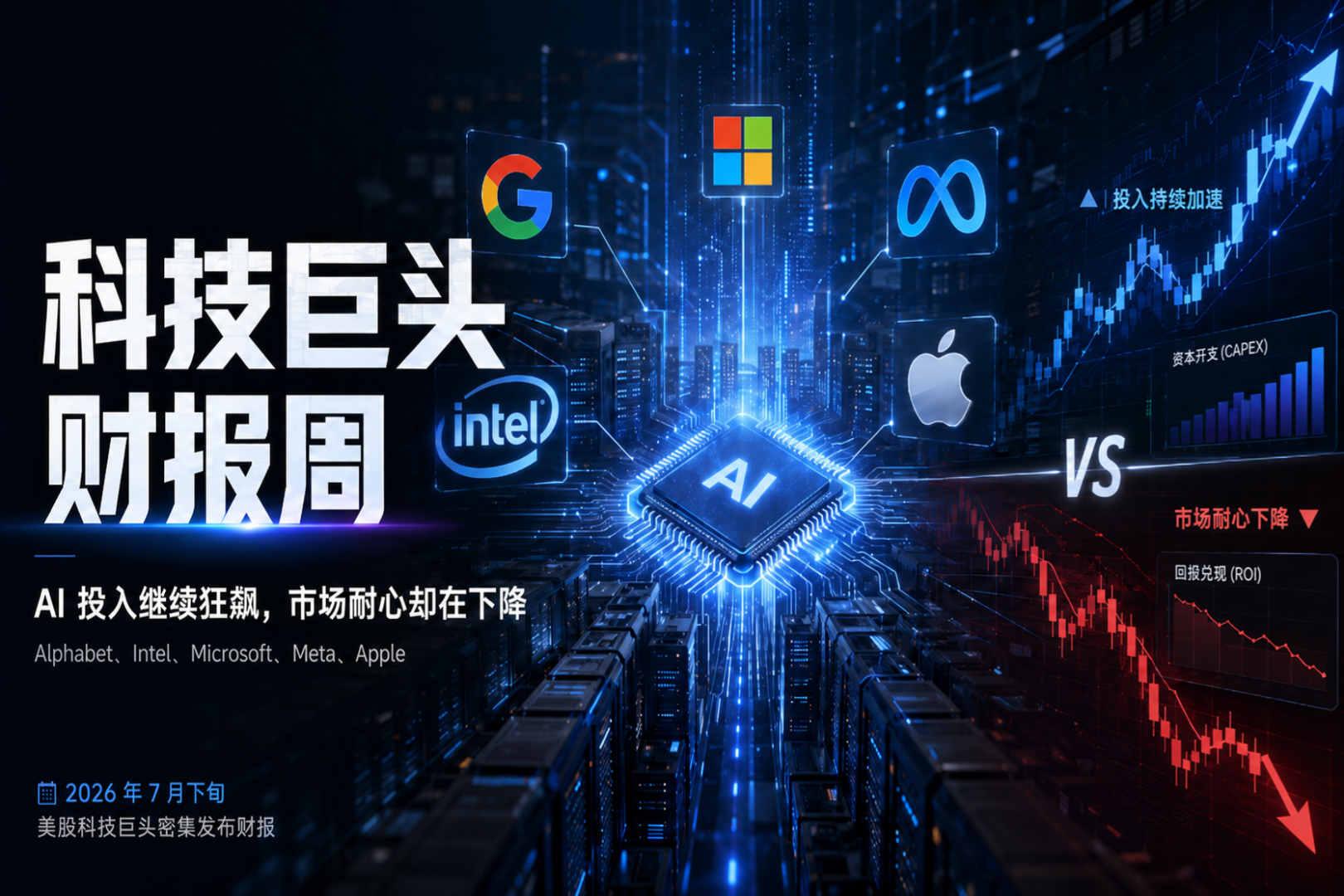
In late July 2026, five major US tech giants—Alphabet, Intel, Microsoft, Meta, and Apple—released their Q2 earnings reports. While all companies exceeded revenue and profit expectations, driven by strong AI-related business growth, investor reactions diverged sharply due to concerns over escalating AI capital expenditures (capex) and their impact on free cash flow. Alphabet reported strong revenue growth and a surging cloud business, but its stock fell after announcing a doubled year-on-year capex and negative quarterly free cash flow for the first time. Intel posted its strongest revenue growth in over 15 years, but its stock experienced volatile trading after significantly raising its full-year capex guidance. Microsoft saw its stock surge after beating estimates and, crucially, lowering its capex forecast while projecting positive free cash flow. Meta faced the most severe sell-off as its profits declined despite revenue beats, with free cash flow plunging over 90% and its capex guidance raised. Apple reported record June-quarter results, but its stock plummeted after providing Q4 revenue guidance that fell short of expectations, citing supply chain constraints and forex headwinds. The overall takeaway is that the market's focus has shifted from validating AI demand to scrutinizing the timeline for returns on massive AI investments. Companies demonstrating a clearer path to managing capex and preserving free cash flow, like Microsoft, were rewarded, while those signaling continued aggressive spending faced investor skepticism.

Odaily星球日报Hace 1 hora(s)

When the Market Begins to Question AI Capex: A Full Analysis of Q2 Earnings Reports from Five Tech Giants

Odaily星球日报Hace 1 hora(s)

Trading

Spot

Artículos destacados

Cómo comprar HOT

¡Bienvenido a HTX.com! Hemos hecho que comprar Holo (HOT) sea simple y conveniente. Sigue nuestra guía paso a paso para iniciar tu viaje de criptos.Paso 1: crea tu cuenta HTXUtiliza tu correo electrónico o número de teléfono para registrarte y obtener una cuenta gratuita en HTX. Experimenta un proceso de registro sin complicaciones y desbloquea todas las funciones.Obtener mi cuentaPaso 2: ve a Comprar cripto y elige tu método de pagoTarjeta de crédito/débito: usa tu Visa o Mastercard para comprar Holo (HOT) al instante.Saldo: utiliza fondos del saldo de tu cuenta HTX para tradear sin problemas.Terceros: hemos agregado métodos de pago populares como Google Pay y Apple Pay para mejorar la comodidad.P2P: tradear directamente con otros usuarios en HTX.Over-the-Counter (OTC): ofrecemos servicios personalizados y tipos de cambio competitivos para los traders.Paso 3: guarda tu Holo (HOT)Después de comprar tu Holo (HOT), guárdalo en tu cuenta HTX. Alternativamente, puedes enviarlo a otro lugar mediante transferencia blockchain o utilizarlo para tradear otras criptomonedas.Paso 4: tradear Holo (HOT)Tradear fácilmente con Holo (HOT) en HTX's mercado spot. Simplemente accede a tu cuenta, selecciona tu par de trading, ejecuta tus trades y monitorea en tiempo real. Ofrecemos una experiencia fácil de usar tanto para principiantes como para traders experimentados.

117 Vistas totalesPublicado en 2024.12.11Actualizado en 2026.06.02

Cómo comprar HOT

Qué es HOLO

Entendiendo HOLO: El Futuro de las Aplicaciones Descentralizadas Introducción a HOLO, $holo En el paisaje en rápida evolución de las criptomonedas y las tecnologías descentralizadas, HOLO, también conocido como Holo, ha emergido como un jugador notable. Este proyecto innovador facilita el desarrollo de aplicaciones descentralizadas (DApps) a través de su arquitectura subyacente conocida como Holochain. Con la visión de crear un puente entre el internet centralizado que conocemos hoy y el ecosistema descentralizado del futuro, HOLO tiene como objetivo hacer que las DApps sean accesibles para el usuario cotidiano sin los obstáculos de instalaciones complejas y habilidades técnicas. ¿Qué es HOLO, $holo? En su núcleo, HOLO es una plataforma distribuida diseñada para alojar DApps construidas sobre Holochain. A diferencia de las plataformas de blockchain tradicionales, Holochain adopta un enfoque único al permitir que cada aplicación funcione bajo su propio conjunto de reglas. El mandato de HOLO es conectar estas aplicaciones Holochain (hApps) con los usuarios a través de tecnologías web familiares. El objetivo principal de HOLO es democratizar el acceso y uso de las DApps al permitir que los usuarios accedan a estas aplicaciones directamente a través de navegadores web estándar. Esta accesibilidad es clave para reducir la fricción para los usuarios promedio de internet, permitiéndoles utilizar aplicaciones de próxima generación sin necesidad de navegar por las complejidades a menudo asociadas con las criptomonedas y el uso de DApps. Creador de HOLO, $holo HOLO surge de la visión de sus creadores, Arthur Brock y Eric Harris-Braun. Ambos son desarrolladores experimentados y codificadores de contratos, y comenzaron el proyecto en diciembre de 2016 como parte del Proyecto MetaCurrency. Esta iniciativa se centró inicialmente en desarrollar herramientas y tecnologías destinadas a fomentar una economía de igual a igual. Sus antecedentes en codificación y emprendimientos los posicionaron de manera única para abordar los desafíos del desarrollo y alojamiento de aplicaciones descentralizadas. Inversores de HOLO, $holo Si bien los detalles específicos sobre inversores individuales en HOLO no están fácilmente disponibles, es evidente que el proyecto ha recibido un respaldo y atención significativos de la comunidad de criptomonedas en general. Su enfoque innovador para alojar aplicaciones descentralizadas, junto con una comunidad de apoyo, ha alimentado el interés y la inversión en el proyecto. ¿Cómo funciona HOLO, $holo? HOLO opera creando un extenso ecosistema en el que los anfitriones contribuyen con almacenamiento y poder de procesamiento para las DApps basadas en Holochain. Al convertir sus dispositivos o incluso hardware dedicado como HoloPorts en nodos de alojamiento, los individuos pueden monetizar efectivamente los recursos no utilizados de sus computadoras. Los componentes funcionales clave de HOLO incluyen: Proveedor de Aplicaciones: Estas entidades compran créditos de alojamiento de HOLO, que se mantienen en una cuenta de reserva. Este mecanismo permite a los desarrolladores de DApp asegurar los recursos necesarios para ejecutar sus aplicaciones. Anfitrión: Individuos u organizaciones que eligen alojar DApps generan registros de servicio firmados a medida que responden a las solicitudes de los usuarios. Este proceso asegura que todas las interacciones en la red sean rastreadas y autenticadas. Prueba de Servicio: Un elemento crucial de la integridad operativa de HOLO, los anfitriones envían facturas a los proveedores de aplicaciones, que luego validan el servicio proporcionado. Tras la validación, los anfitriones reciben compensación en forma de créditos de alojamiento. HoloFuel: Sirviendo como el token nativo de la red Holo, HoloFuel está diseñado para microtransacciones. Este token facilita el extenso rendimiento de transacciones necesario para que la plataforma soporte miles de millones de transacciones simultáneas sin problemas. La sinergia combinada de estos componentes asegura un entorno de alojamiento robusto y descentralizado, impulsando la utilidad y el alcance de las aplicaciones Holochain. Cronología de HOLO, $holo El viaje de HOLO ha estado marcado por varios hitos desde su inicio: Diciembre de 2016: La creación de HOLO por Arthur Brock y Eric Harris-Braun como parte del Proyecto MetaCurrency. 2018: La emisión de un token ERC20, conocido como HoloToken (HOT), que sirvió como un “IOU” que es canjeable por HoloFuel al lanzamiento del proyecto. Desarrollo Continuo: Avances continuos, pruebas y optimización de la red Holo y HoloFuel, asegurando que el proyecto permanezca a la vanguardia de la tecnología de alojamiento de aplicaciones descentralizadas. Características Únicas de HOLO, $holo HOLO se destaca en el abarrotado campo de las criptomonedas y plataformas descentralizadas debido a sus características distintivas y el marco innovador en el que opera: Alojamiento de Igual a Igual: HOLO abre la puerta para que cualquiera se convierta en anfitrión de DApps simplemente utilizando sus computadoras. Esta democratización del alojamiento es similar a cómo plataformas como Airbnb interrumpieron la industria hotelera tradicional al empoderar a los individuos para participar en la economía. Marco Holochain: Central a las innovaciones de HOLO está el marco Holochain en sí. Posicionado como una tecnología de próxima generación, Holochain cuenta con escalabilidad sin igual, velocidades de transacción rápidas, eficiencia energética excepcional y rentabilidad en comparación con las tecnologías de blockchain convencionales. HoloFuel para Microtransacciones: HoloFuel está meticulosamente diseñado para acomodar microtransacciones, permitiendo que la red Holo gestione de manera eficiente miles de millones de transacciones simultáneamente. Esta capacidad es fundamental para la adopción generalizada, permitiendo a los desarrolladores crear aplicaciones que sean económicamente viables a gran escala. Conclusión HOLO representa un avance significativo en el panorama de las aplicaciones descentralizadas y la tecnología blockchain. Con su infraestructura robusta, enfoque amigable para el usuario y el innovador marco Holochain, HOLO está preparado para desempeñar un papel crucial en el futuro de la web. Si mejorará las experiencias cotidianas de internet o redefinirá cómo los desarrolladores y usuarios interactúan con las aplicaciones digitales sigue siendo una incógnita, pero su progreso hasta ahora vale la pena seguirlo a medida que el mundo continúa avanzando hacia una economía digital descentralizada. A medida que el proyecto evoluciona, sus desarrollos continuos y el compromiso de la comunidad serán componentes cruciales de su éxito, estableciendo potencialmente a HOLO como una plataforma principal para aplicaciones descentralizadas. Con el creciente interés en torno a las tecnologías descentralizadas, la importancia e impacto de proyectos como HOLO solo aumentarán en los años venideros.

121 Vistas totalesPublicado en 2024.12.26Actualizado en 2024.12.26

Qué es HOLO

Discusiones

Bienvenido a la comunidad de HTX. Aquí puedes mantenerte informado sobre los últimos desarrollos de la plataforma y acceder a análisis profesionales del mercado. A continuación se presentan las opiniones de los usuarios sobre el precio de HOT (HOT).

活动图片