2天20倍,速览新金狗 snowball 的自动做市机制

深潮Pubblicato 2025-12-22Pubblicato ultima volta 2025-12-22

Introduzione

十二月的加密市场遇冷,但一个名为 Snowball 的 meme 币在四天内市值突破1000万美元,引发关注。其核心机制是将通常由开发者收取的交易手续费(0.05%-0.95%)全部自动转入链上做市机器人,用于回购代币、增加流动性并销毁部分代币,形成“交易产生费用→费用变买盘→价格上升→吸引更多交易”的雪球效应。 目前 Snowball 持有地址超7000个,前十大持有者占比约20%,买卖交易相对平衡。开发者公开所有钱包及交易日志,强调链上可查,避免“抽钱跑路”风险。 然而,该机制依赖持续交易量支撑回购动力,若市场冷淡或资金流入不足,雪球可能反向崩溃。类似机制项目(如 FIREBALL)也在出现,但 meme 币仍面临砸盘、流动性不足等风险。需注意:机制创新可讲好故事,但不创造实际价值,参与者应保持理性,避免上头。

十二月的加密市场和天气一样冷。

链上交易已经冬眠很久,新叙事也难产。看看中文CT这几天在聊的撕逼和八卦,就知道这个市场已经没有什么人在玩了。

但英文区这几天在讨论一个新东西。

一个叫 Snowball 的 meme 币,12月18日在 pump.fun 上发射,四天时间市值冲到1000万美元市值,还在创新高;而中文圈几乎没什么人提。
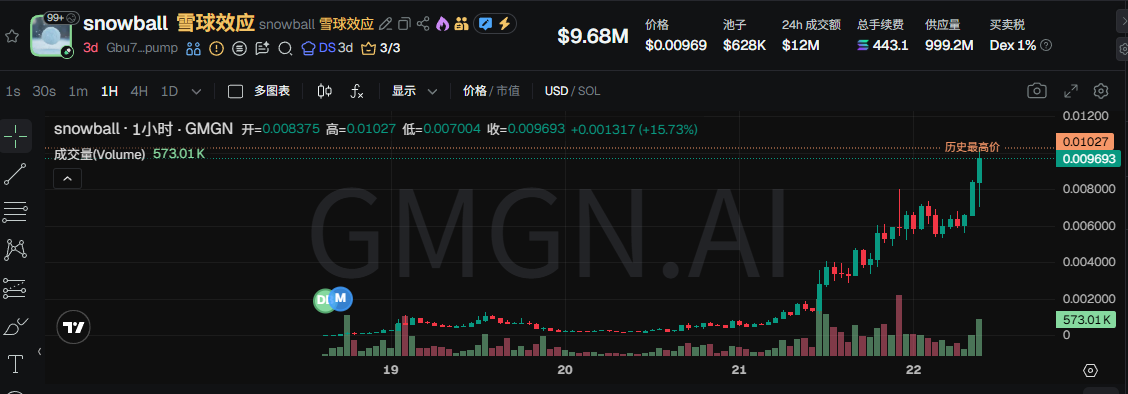
在当前没什么新叙事和 meme 狗都不玩的环境里,这算是为数不多让人眼前一亮,有点局部财富效应的东西了。

而 Snowball 这个名字翻译过来就是雪球效应,本身就是它想讲的故事:

一套能让代币「自己越滚越大」的机制。

把交易费变成买盘,滚雪球做市

要理解 Snowball 在做什么,先得知道 pump.fun 的代币通常怎么赚钱。

在 pump.fun 上,任何人都可以花几分钟创建一个代币。代币创建者可以设置「创作者费用」,说白了就是每笔交易抽一定比例进自己钱包,通常在0.5%到1%之间。

这笔钱理论上可以用来做社区建设、市场推广,但实际操作中,大部分 Dev 的选择是:攒够了就跑。

这也算是土狗典型生命周期的一部分。发射、拉盘、收割手续费、跑路。投资者在赌的不是代币本身,而是开发者的良心。

Snowball的做法是,不要这笔创作者费用的钱。

准确说,是100%的创作者费用不进任何人的钱包,而是自动转进一个链上做市机器人。

这个机器人每隔一段时间执行三件事:

第一,拿积累的资金在市场上买入代币,形成买盘支撑;

第二,把买到的代币和对应的SOL加进流动性池,让交易深度更好;

第三,每次操作销毁0.1%的代币,制造通缩。
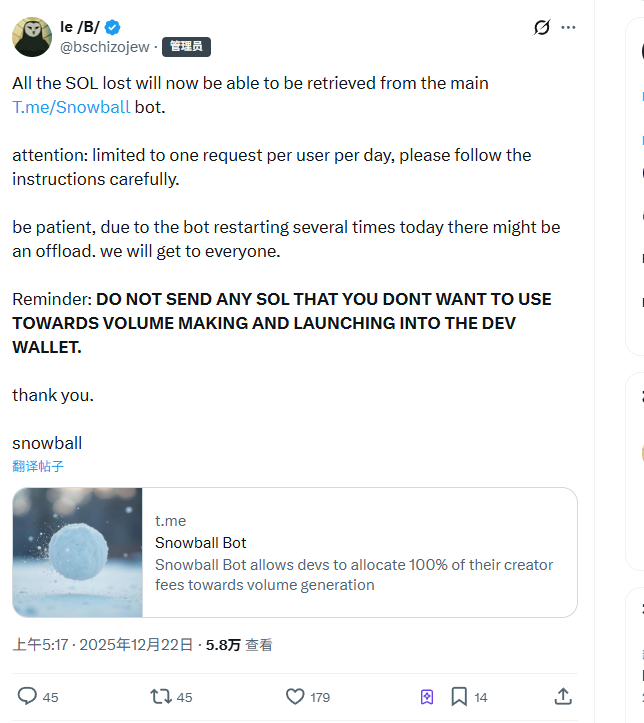
同时,这个币收取的创作者费用的比例不是固定的,会根据市值在0.05%到0.95%之间浮动。

市值低的时候抽得多一点,让机器人更快积累弹药;市值高了就降下来,减少交易摩擦。

用一句话概括这套机制的逻辑,你每交易一次,就有一笔钱自动变成买盘和流动性,而不是进开发者口袋。

因此,你也很容易理解这个雪球效应:

交易产生费用→费用变成买盘→买盘推高价格→价格吸引更多交易→更多费用......理论上可以自己滚起来。

链上数据情况

机制讲完了,看看链上数据。

Snowball在12月18日发射,到现在四天。市值从零冲到1000万美元,24小时成交额超过1100万。

对一个pump.fun上的土狗来说,这个成绩已经算现在这个环境里活得久的了。

筹码结构上,持有者目前有7270个地址。前十大持有者加起来占总供应量的20%左右,最大的单一持有者占4.65%。
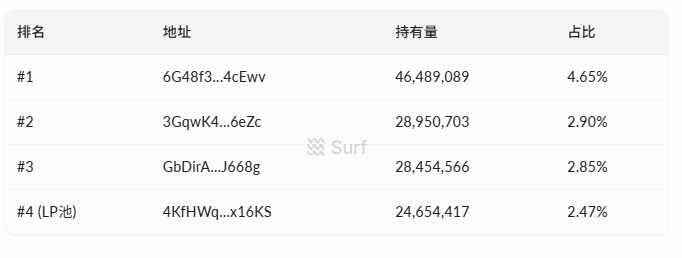
(数据来源:surf.ai)

没有出现一个地址握着两三成筹码的情况,分布算是相对分散。

交易数据方面,发射以来累计58000多笔交易,其中买入33000笔、卖出24000笔。买入总金额440万美元,卖出430万美元,净流入大概10万。买卖基本持平,没有出现一边倒的抛压。

流动性池里躺着大概38万美元,一半是代币一半是SOL。对于这个市值体量来说,深度不算厚,大单进出还是会有明显滑点。

另外一个值得注意的点是,Bybit Alpha 在发射后不到96小时就宣布上线该代币,一定程度上也印证了短期热度。

永动机遇上冷市场

逛了一圈,可以看到英文社区对 Snowball 的讨论主要集中在机制本身。支持者的逻辑很直接:

这是第一个把创作者费用100%锁进协议的meme币,开发者没法拿钱跑路,至少在结构上比其他土狗安全。

开发 Dev 也在配合这个叙事。开发者钱包、做市机器人钱包、交易日志全部公开,强调「链上可查」。

@bschizojew 给自己贴的标签是「链上精神分裂症、4chan特种部队、第一代meme币老兵」,一股自嘲式的 degen 味道,很对加密原生社区的胃口。

但机制安全和能不能赚钱是两回事。

雪球效应成立的前提是,有足够的交易量持续产生费用,喂给机器人去执行回购。交易越多,机器人弹药越足,买盘越强,价格越高,吸引更多人交易...

这也是牛市里任何 meme 所谓的回购飞轮转起来的理想状态。

问题是,飞轮需要外部动力来启动。

当前的加密市场是什么环境?链上活跃度低迷,meme币整体热度下降,愿意冲土狗的资金本来就少。在这种背景下,如果新买盘跟不上,交易量萎缩,机器人能收到的费用就会越来越少,回购力度变弱,价格支撑减弱,交易意愿进一步下降。

飞轮可以正向转,也可以反向转。

更现实的问题是,机制解决的是「开发者抽钱跑路」这一个风险点,但 meme 币面临的风险远不止这个。

庄家砸盘、流动性不足、叙事过气,这些事情随便发生一个,100%的手续费回购能起到的作用很有限。

大家都被割怕了,中文圈有老哥也总结得挺到位:

玩归玩,别上头。

不止一个雪球在滚

Snowball 不是唯一在讲这个自动做市故事的项目。

同样在pump.fun生态里,一个叫 FIREBALL 的代币也在做类似的事:自动回购加销毁,把它包装成一个其他代币可以接入的协议。但市值比 Snowball 小得多。
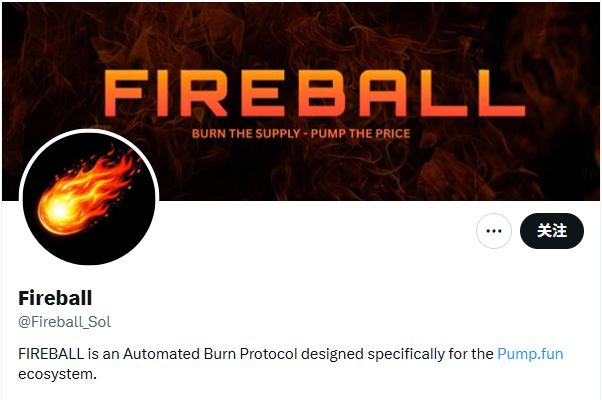
这说明市场现在对「机制型meme币」这个方向是有反应的。

传统的喊单、拉盘、社区炒作那套玩法越来越难吸引资金,用机制设计讲一个「结构性安全」的故事,可能是meme币最近的套路之一。

不过说到人为制造某个机制,也不是什么新玩法了。

2021年OlympusDAO的(3,3)是最典型的案例,用博弈论包装质押机制,讲的故事是「大家都不卖就能一起赚」,高峰期市值冲到几十亿美元。后来的结局大家也知道,螺旋下跌,跌去了90%以上。

再早一点还有 Safemoon 那套「每笔交易抽税分给持有者」的玩法,也是机制创新叙事,最后被SEC起诉,创始人被指控欺诈。

机制可以是很好的叙事钩子,能在短期内聚集资金和注意力,但机制本身不创造价值。

当外部资金停止流入,再精巧的飞轮也会停转。

最后,我们再来捋一下这个小金狗到底在干什么:

把 meme 币的创作者费用变成「自动做市机器人」。机制本身不复杂,解决的问题也很明确,就是让开发者没法直接拿钱跑路。

开发者不能跑路,不等于你能赚钱。

如果你看完觉得这个机制有意思,想参与,记住一句话:它首先是个 meme 币,其次才是个新机制的实验。

Crypto di tendenza

Domande pertinenti

QSnowball 的自动做市机制是如何运作的?

ASnowball 的自动做市机制将100%的创作者费用自动转入链上做市机器人,该机器人定期执行三个操作:用积累的资金买入代币形成买盘支撑、将买到的代币和SOL加入流动性池以改善交易深度、每次操作销毁0.1%的代币制造通缩。交易费用比例会根据市值在0.05%到0.95%之间浮动。

QSnowball 的代币在市值和交易数据上表现如何?

ASnowball 在四天内市值从零增长到1000万美元,24小时交易额超过1100万美元。持有者地址达7270个,前十大持有者占总供应量约20%,最大单一持有者占4.65%。累计交易58000多笔,买入和卖出基本持平,流动性池约有38万美元。

QSnowball 的机制解决了传统 pump.fun 代币的什么问题?

ASnowball 的机制解决了传统 pump.fun 代币中开发者直接收取创作者费用并可能卷款跑路的问题,通过将费用自动用于市场回购和流动性提供,在结构上增强了安全性。

Q当前市场环境对 Snowball 的‘雪球效应’有何影响?

A当前加密市场活跃度低,meme币热度下降,资金流入少。如果交易量不足,机器人的回购资金会减少,可能导致价格支撑减弱和交易意愿下降,‘雪球效应’可能无法持续或反向运行。

Q除了 Snowball,还有哪些类似机制的项目?

A类似机制的项目包括 FIREBALL,它也采用自动回购和销毁机制,并试图将其包装为其他代币可接入的协议,但市值远小于 Snowball。历史上类似案例还有 OlympusDAO 的 (3,3) 机制和 Safemoon 的交易抽税分配模式。

Letture associate

A Guide to Grayscale’s ‘Bottom Fishing’: Using Cash Flow to Assess Cryptocurrency Value

**Title:** Grayscale's Guide to Bottom-Fishing: Valuing Cryptoassets Using Cash Flows **Summary:** This report by Grayscale Research presents a fundamental valuation framework for cryptocurrency assets, moving beyond pure speculation to analyze those with underlying cash flows. It distinguishes between "commodity-like" assets (e.g., Bitcoin) and "cash-flow" assets, primarily within DeFi. Using the leading decentralized lending protocol Aave as a case study, the analysis applies traditional financial methodologies like Discounted Cash Flow (DCF) and Price-to-Earnings (P/E) multiples. Key findings indicate that AAVE tokens are currently undervalued. Despite recent challenges, the protocol's strong revenue growth, ~50% net profit margin, and diversified treasury support a fundamental valuation range of $80-$100 per token (compared to a ~$75 market price at the time of writing). In a base-case scenario driven by stablecoin adoption and regulatory clarity, the fair value could rise to around $175 within a year. The report emphasizes that protocol success does not automatically translate to token value. It critically examines the "value capture" mechanisms—such as buybacks, burns, and staking rewards—that channel protocol profits to token holders. Furthermore, it addresses the legal and governance complexities of Decentralized Autonomous Organizations (DAOs), noting their difference from traditional corporate equity but highlighting how robust, transparent governance can align protocol economics with holder interests. The conclusion is that the crypto market is maturing, with capital increasingly flowing towards projects with demonstrable fundamentals, real adoption, and disciplined capital allocation, creating opportunities for value-based investors.

marsbit42 min fa

A Guide to Grayscale’s ‘Bottom Fishing’: Using Cash Flow to Assess Cryptocurrency Value

marsbit42 min fa

After semiconductors lead the gains, are funds buying into AI orders or a macroeconomic rebound?

After US-Iran talks led to a temporary ceasefire and framework for reopening the strategic Strait of Hormuz, U.S. stocks rose on June 18, with the Nasdaq gaining 1.9%. The semiconductor and AI hardware sectors outperformed. This rally stemmed primarily from reduced geopolitical risk, which lowered oil prices and inflation expectations, easing discount rate pressure on high-valuation growth stocks like tech. The key question is not whether tech rebounded, but the nature of the rebound. The market appears to be selectively repricing AI infrastructure plays rather than broadly chasing AI narratives. Gains were concentrated in chips, optical interconnects, memory, and domestic manufacturing—segments tied to tangible data center build-outs and capital expenditure. Intel's ~10% surge, fueled by a Trump statement about potential Apple collaboration, exemplifies this mixed dynamic. It reflects policy catalysts and domestic manufacturing sentiment more than confirmed fundamentals. Meanwhile, strong earnings from companies like Astera Labs (revenue up 93% YoY) provided concrete evidence of AI-driven demand in hardware. In essence, the rally represents a risk-premium recalibration. Lower Middle East tensions opened a valuation repair window, and capital flowed first into AI infrastructure segments with visible near-term revenue streams. The sustainability of this move hinges on upcoming Q2 earnings, specifically continued strength in cloud provider capex, AI server orders, and hardware company guidance. Policy hopes alone are insufficient; the cycle needs validation from orders and financials.

marsbit48 min fa

After semiconductors lead the gains, are funds buying into AI orders or a macroeconomic rebound?

marsbit48 min fa

The Entire Internet Hails Noam's Joining, But OpenAI's Loss Bill Just Got Thicker

While the AI community celebrates Noam Shazeer, co-author of the "Attention Is All You Need" paper, joining OpenAI as Head of Architectural Research, the company's audited financials reveal a starkly different reality. In 2025, OpenAI reported $13.07 billion in revenue but a massive $20.92 billion operating loss. Even excluding a one-time accounting charge, the cash burn is severe, with $3.7 billion consumed in Q1 2026 alone. This high-profile hiring occurs against a backdrop of significant internal research talent drain, with key founders and researchers departing as the company's focus shifts from exploratory research to product iteration. Meanwhile, OpenAI's fundamental business model faces a deep crisis. It paid Microsoft $10.59 billion for compute in 2025, while its vast user base of 9 billion weekly actives includes only 50 million paying customers, making growth a direct driver of escalating costs. The article argues Shazeer's recruitment is less about technical necessity and more about crafting a compelling narrative for OpenAI's upcoming IPO, aiming to justify a rumored $1 trillion valuation to future public market investors. It contrasts OpenAI's strategy with Anthropic's reported path to profitability, which relies on a strong enterprise customer base and cost control, rather than star-powered narratives. Ultimately, the piece concludes that while Shazeer's architectural work may take 1-2 years to materialize, OpenAI's financial clock is ticking much faster, with its massive losses undercutting the celebratory headlines.

marsbit2 h fa

The Entire Internet Hails Noam's Joining, But OpenAI's Loss Bill Just Got Thicker

marsbit2 h fa

Trading

Spot
Futures

Articoli Popolari

Come comprare QUICK

Benvenuto in HTX.com! Abbiamo reso l'acquisto di Quickswap (QUICK) semplice e conveniente. Segui la nostra guida passo passo per intraprendere il tuo viaggio nel mondo delle criptovalute.Step 1: Crea il tuo Account HTXUsa la tua email o numero di telefono per registrarti il tuo account gratuito su HTX. Vivi un'esperienza facile e sblocca tutte le funzionalità,Crea il mio accountStep 2: Vai in Acquista crypto e seleziona il tuo metodo di pagamentoCarta di credito/debito: utilizza la tua Visa o Mastercard per acquistare immediatamente QuickswapQUICK.Bilancio: Usa i fondi dal bilancio del tuo account HTX per fare trading senza problemi.Terze parti: abbiamo aggiunto metodi di pagamento molto utilizzati come Google Pay e Apple Pay per maggiore comodità.P2P: Fai trading direttamente con altri utenti HTX.Over-the-Counter (OTC): Offriamo servizi su misura e tassi di cambio competitivi per i trader.Step 3: Conserva Quickswap (QUICK)Dopo aver acquistato Quickswap (QUICK), conserva nel tuo account HTX. In alternativa, puoi inviare tramite trasferimento blockchain o scambiare per altre criptovalute.Step 4: Scambia Quickswap (QUICK)Scambia facilmente Quickswap (QUICK) nel mercato spot di HTX. Accedi al tuo account, seleziona la tua coppia di trading, esegui le tue operazioni e monitora in tempo reale. Offriamo un'esperienza user-friendly sia per chi ha appena iniziato che per i trader più esperti.

95 Totale visualizzazioniPubblicato il 2024.12.11Aggiornato il 2026.06.02

Come comprare QUICK

Discussioni

Benvenuto nella Community HTX. Qui puoi rimanere informato sugli ultimi sviluppi della piattaforma e accedere ad approfondimenti esperti sul mercato. Le opinioni degli utenti sul prezzo di QUICK QUICK sono presentate come di seguito.

活动图片