Phân tích thị trường ngày 19/12: Tại sao hôm nay lại giảm? Gợi ý thao tác với BTC, ETH, BNB, SOL, F, RESOLV, GHST, DOLO và các altcoin

金色财经Published on 2025-12-19Last updated on 2025-12-19

Abstract

Phân tích thị trường ngày 19/12: Toàn thị trường tiền điện tử giảm 1.5% trong 24 giờ, với tổng mức vốn hóa hiện tại khoảng 3,03 nghìn tỷ USD. Nguyên nhân đợt giảm giá này chủ yếu do thanh lý các vị thế đòn bẩy cao, bất ổn kinh tế vĩ mô (chính sách FED, lạm phát), và lo ngại định giá cổ phiếu AI ảnh hưởng lan sang thị trường crypto. Cảnh báo: 151.369 nhà đầu tư bị thanh lý, tổng số tiền lên tới 556 triệu USD. Diễn biến chính: - BTC: ~87.001 USD, cần giữ vững 86.600 để kỳ vọng phục hồi. - ETH: ~2.922 USD, ngưỡng then chốt tại 2.870. - BNB, SOL có biến động nhẹ, cần theo dõi các ngưỡng hỗ trợ và kháng cự. Tâm lý thị trường ở mức 17 (Sợ hãi cực độ), cho thấy trạng thái bán tháo nhưng cũng tiềm ẩn cơ hội cân bằng. Cần theo dõi sự kiện options Bitcoin 230 tỷ USD đáo hạn vào thứ Sáu. Top tăng: F (+30%), RESOLV (+21%), HOLO (+16%). Top giảm: GHST (-14%), DOLO (-8%), TNSR (-7%).

Trong 24 giờ qua, thị trường tiền điện tử đã giảm 1,5%, với mức giảm tích lũy trong tuần lên tới 7%. Thị trường đang trong giai đoạn điều chỉnh, chịu áp lực ngắn hạn, khuyến nghị theo dõi dữ liệu vĩ mô và biến động đòn bẩy. Các yếu tố chính dẫn đến đợt giảm này bao gồm:

1. Thanh lý các vị thế đòn bẩy cao và biến động thị trường gia tăng (gần đây có nhiều vụ thanh lý lớn cả long lẫn short).

2. Sự không chắc chắn của kinh tế vĩ mô, như kỳ vọng chính sách của Fed, áp lực lạm phát và đồng USD mạnh lên đè nén tài sản rủi ro.

3. Lo ngại về định giá cổ phiếu liên quan đến AI lan sang thị trường tiền điện tử (mối tương quan giữa tiền điện tử và cổ phiếu công nghệ tăng lên). Còn có các sự kiện kỹ thuật như quyền chọn đáo hạn làm khuếch đại biến động giá.

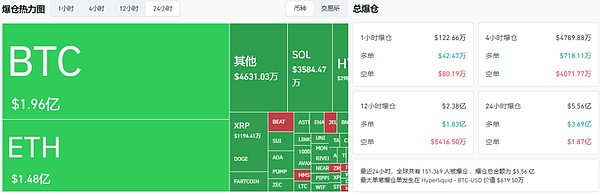
? Cảnh báo thanh lý:

Trong 24 giờ, toàn mạng có 151.369 người bị thanh lý, tổng số tiền 556 triệu USD, trong đó phe long bị xóa sổ thảm khốc (369 triệu USD), phe short cũng khó thoát khỏi (187 triệu USD).
? Biểu hiện của các coin chính:

1. Bitcoin (BTC): Giá khoảng 87001, tăng 0.58% trong 24 giờ

Hôm nay điểm then chốt theo dõi Bitcoin nằm ở mức 86600, chỉ cần giữ vững được mức này trên khung 4 giờ, nhịp điệu phục hồi có thể khởi động, áp lực phía trên lần lượt có thể quan sát ở vùng lân cận 88000, 89450, 90370.

Nhưng nếu 86600 bị phá vỡ, đợt phục hồi 4 giờ này có thể tạm dừng, tiếp theo hãy chú ý theo dõi biểu hiện hỗ trợ ở vùng lân cận 85220, 83830, 82170.

2. Ethereum (ETH): Giá khoảng 2922, tăng 3.36% trong 24 giờ

Ethereum hiện tại trọng điểm quan sát vị trí 2870, nếu khung 4 giờ có thể giữ vững, phục hồi hy vọng triển khai, áp lực phía trên xem 2964, 3025, 3062附近.

Nếu mất vị trí 2870, thì phục hồi có thể tạm hoãn, hỗ trợ phía dưới có thể quan tâm đến vùng 2815, 2773, 2720.

3. BNB: Giá khoảng 839, tăng 0.77% trong 24 giờ

BNB hôm nay cần đứng vững trên 840, khung 4 giờ mới có thể mở ra không gian phục hồi, lên trên lần lượt xem áp lực vùng lân cận 853, 866, 876.

Nếu luôn không thể đứng vững trên 840, lực phục hồi có thể bị hạn chế, phía dưới có thể chú ý các vị trí hỗ trợ 829, 818, 808.

4. SOL: Giá khoảng 123, tăng 0.31% trong 24 giờ

Ranh giới mạnh yếu của SOL ở vùng lân cận 122, sau khi khung 4 giờ đứng vững hy vọng hướng về 126, 130, 134 phục hồi.

Nếu không thể突破122, động lực phục hồi ngắn hạn có thể không đủ, phía dưới có thể quan tâm vùng hỗ trợ 117, 112, 109.

?️Tâm lý thị trường:

Hôm nay, tổng vốn hóa thị trường tiền điện tử khoảng 3.03 nghìn tỷ USD, tổng khối lượng giao dịch 24 giờ khoảng 1590 tỷ USD.

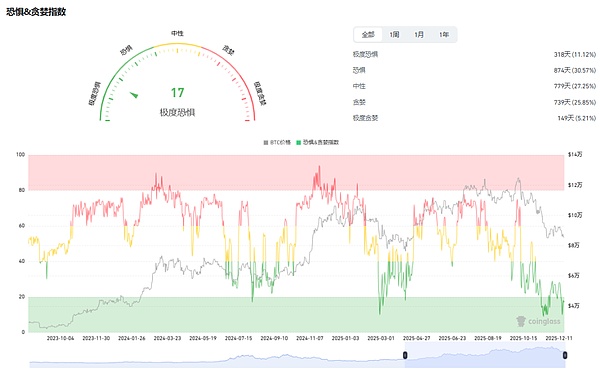
Tâm lý thị trường hiện tại là 17 (Cực kỳ sợ hãi), tâm lý thị trường vì kỹ thuật yếu và bán tháo hoảng loạn trở nên đặc biệt bi quan, nhưng trạng thái bán quá mức cũng có nghĩa là hàng có thể dần cân bằng. Tiền điện tử và thị trường truyền thống vẫn gắn bó chặt chẽ. 230 tỷ USD quyền chọn Bitcoin đáo hạn vào thứ Sáu tuần này, sẽ là tín hiệu then chốt cho biến động thị trường. Trọng điểm quan tâm giá đóng cửa đứng trên đường trung bình động 7 ngày 2.96 nghìn tỷ USD, khả năng lớn sẽ đón nhận phục hồi ngắn hạn.
Bảng xếp hạng tăng giảm tiền điện tử hôm nay?

? Top 3 tăng:

1.F: Giá $0.00753, tăng 30% trong 24 giờ

2.RESOLV: Giá $0.0802, tăng 21% trong 24 giờ

3.HOLO: Giá $0.0685, tăng 16% trong 24 giờ

? Top 3 giảm:

1.GHST: Giá $0.165, giảm 14% trong 24 giờ

2.DOLO: Giá $0.03390, giảm 8% trong 24 giờ

3.TNSR: Giá $0.0849, giảm 7% trong 24 giờ

Biểu hiện của các coin chính khác:

Dogecoin (DOGE): Giá $0.12570, tăng 0.67% trong 24 giờ

TRON (TRX): Giá $0.2786, tăng 0.47% trong 24 giờ

Cardano (ADA): Giá $0.3607, giảm 0.33% trong 24 giờ

Hyperliquid (HYPE): Giá $23.593, giảm 2.95% trong 24 giờ

Avalanche (AVAX): Giá $11.70, giảm 0.43% trong 24 giờ

Stellar (XLM): Giá $0.2107, tăng 1.20% trong 24 giờ

Sui (SUI): Giá $1.3903, giảm 0.54% trong 24 giờ

Chainlink (LINK): Giá $12.23, tăng 0.91% trong 24 giờ

Hedera (HBAR): Giá $0.10666, giảm 1.52% trong 24 giờ

Bitcoin Cash (BCH): Giá $587.0, tăng 10.03% trong 24 giờ

Shiba Inu (SHIB): Giá $0.00000726, giảm 2.42% trong 24 giờ

Litecoin (LTC): Giá $75.41, tăng 0.40% trong 24 giờ

Pepe hiba Inu (PEPE): Giá $0.00000382, giảm 1.04% trong 24 giờ

Toncoin (TON): Giá $1.441, giảm 1.91% trong 24 giờ

Related Questions

QNguyên nhân chính nào dẫn đến sự sụt giảm của thị trường tiền điện tử vào ngày 19 tháng 12?

ACác nguyên nhân chính bao gồm thanh lý các vị thế đòn bẩy cao, sự biến động gia tăng trên thị trường, sự không chắc chắn về kinh tế vĩ mô (như kỳ vọng chính sách của Fed, áp lực lạm phát và đồng USD mạnh hơn), cùng với mối lo ngại về định giá cổ phiếu AI lan sang thị trường tiền mã hóa. Các sự kiện kỹ thuật như quyền chọn hết hạn cũng làm khuếch đại biến động giá.

QBitcoin (BTC) cần duy trì trên mức giá nào để kích hoạt đợt tăng giá và các mức hỗ trợ tiềm năng là gì nếu nó giảm?

ABitcoin cần duy trì trên mức 86.600 USD trên khung thời gian 4 giờ để kích hoạt đợt tăng giá, với các mức kháng cự tiềm năng lần lượt ở 88.000 USD, 89.450 USD và 90.370 USD. Nếu giảm xuống dưới 86.600 USD, các mức hỗ trợ cần theo dõi là 85.220 USD, 83.830 USD và 82.170 USD.

QTài sản nào có mức tăng phần trăm cao nhất trong 24 giờ và mức tăng đó là bao nhiêu?

ATài sản có mức tăng phần trăm cao nhất trong 24 giờ là F (F là mã token), với mức tăng 30%, giá là 0,00753 USD.

QChỉ số sợ hãi và tham lam hiện tại của thị trường tiền điện tử là bao nhiêu và điều đó cho thấy điều gì?

AChỉ số sợ hãi và tham lam hiện tại của thị trường là 17, được xếp vào loại 'Sợ hãi cực độ'. Điều này cho thấy tâm lý thị trường đặc biệt bi quan do các yếu tố kỹ thuật yếu và hoảng loạn bán tháo, nhưng tình trạng bán quá mức cũng ngụ ý rằng thị trường có thể sớm cân bằng trở lại.

QSự kiện kỹ thuật quan trọng nào vào cuối tuần này có thể là tín hiệu then chốt cho biến động thị trường?

ASự kiện kỹ thuật quan trọng là đợt quyền chọn Bitcoin trị giá 23 tỷ USD sẽ hết hạn vào thứ Sáu tuần này. Đây được dự báo sẽ là một tín hiệu then chốt cho biến động thị trường.

Related Reads

OpenAI's Hyperliquid Pre-IPO Pricing Venture: Why Did It Last Only Half a Year?

The article discusses the rise and fall of Pre-IPO pricing markets on the Hyperliquid blockchain. Trade.xyz, an anonymous team, successfully built the largest pre-market for SpaceX (SPCX) by launching a contract with a clear anchor: the eventual Nasdaq listing price. This provided inherent price stability and validation. In contrast, Ventuals, a team backed by Paradigm, failed despite holding exclusive contracts for highly sought-after companies like OpenAI and Anthropic. Its key mistake was its pricing mechanism. For companies with no near-term IPO date, Ventuals' oracle relied partly on opaque private market transactions and, critically, partly on its own contract's moving average price. This created a self-referential feedback loop where prices were artificially propped up and detached from genuine supply and demand, leading to illiquid markets. Ventuals shut down after nine months, settling positions at final prices of $1,341.80 for OpenAI and $1,618.90 for Anthropic. Ironically, some employees and late-stage investors of these very companies reportedly used these flawed Ventuals prices for valuation reference, highlighting the acute demand for any price signal in illiquid private markets. The article concludes that while demand for pre-IPO trading is real and growing, with players like Coinbase now entering the space, the fundamental challenge remains: without a public listing to provide a definitive price anchor, these markets struggle to establish truly accurate and liquid pricing. The need for a transparent, self-correcting market is the critical lesson from Ventuals' failure.

marsbit5m ago

OpenAI's Hyperliquid Pre-IPO Pricing Venture: Why Did It Last Only Half a Year?

marsbit5m ago

With Daily Active Users Reaching 3-4 Times That of the Industry's Second Place, Which Crack in the Office Agent Market Has Tencent's WorkBuddy Torn Open?

Tencent's AI office assistant, WorkBuddy, has achieved daily active users (DAU) 3-4 times that of the industry's second-place product, primarily driven by non-technical users like HR, operations, and administrative staff. Its rapid growth, starting with a public beta in March 2026, highlights a key strategic divergence from competitors like OpenAI's Codex and Anthropic's Claude Code. Unlike those tools, which originated as developer-focused assistants (in command lines or IDEs) and are now expanding towards office scenarios, WorkBuddy was built from the ground up for non-technical office workers. Its development was user-driven, initiated after腾讯云's team observed non-technical employees using their CodeBuddy coding tool for general tasks. WorkBuddy's design is defined by three core decisions aimed at lowering barriers: 1) Using natural language instead of technical concepts, so users describe their goal without needing to understand prompts or agents. 2) Providing pre-packaged "Skill" templates for common office tasks like data processing, content creation, and research. 3) Natively integrating into existing腾讯 ecosystems like腾讯 Docs and WeChat, making the agent a seamless part of the user's workflow rather than a separate tool. This "scenario encapsulation" approach, prioritizing the shortest path for users to get work done, contrasts with the "underlying capability" focus of Codex and Claude, which offer more flexibility but require more technical setup. Analysts confirm WorkBuddy's leading market position in China by mid-2026, with massive user and request growth following its launch. Recognizing the same trend of surging non-technical adoption, OpenAI and Anthropic are now pivoting their products with features like role-based plugins (Codex) and a simplified desktop interface (Claude Cowork). However, adapting tools built for developers requires significant changes to interaction models and integrations. WorkBuddy currently holds an estimated six-month lead in delivering a complete solution for non-technical office users. Its recently launched enterprise version aims to solidify this advantage. The competition underscores two valid paths: embedding agent capabilities directly into familiar work environments versus building powerful, general-purpose agents that users must learn to access. WorkBuddy's early success demonstrates the effectiveness of the former strategy for mainstream office adoption.

marsbit14m ago

With Daily Active Users Reaching 3-4 Times That of the Industry's Second Place, Which Crack in the Office Agent Market Has Tencent's WorkBuddy Torn Open?

marsbit14m ago

Dalio's Latest Warning: Don't Get Carried Away by AI, Real Returns on US Stocks in the Next 5-10 Years Could Be -5% to -10%

Ray Dalio, founder of Bridgewater Associates, warns investors against excessive concentration in AI stocks. He argues the current market, dominated by a few AI giants, mirrors historical patterns where revolutionary new technologies lead to high risk, volatility, and uncertainty. While acknowledging AI's transformative potential, Dalio emphasizes that most investors fail at this stage of the cycle by over-concentrating in a handful of leading companies. He cites inherent risks: companies cannot accurately forecast investment needs or external shocks (e.g., monetary policy, geopolitics, taxes), face potential disruption from future technologies and international competition (notably from China), and experience significant price swings. Dalio's core advice is diversification, calling it his "Holy Grail of Investing." He presents a mathematical case that a well-diversified portfolio of 15-20 uncorrelated, good bets offers a superior risk-adjusted return compared to a concentrated position. Dalio also offers a cautious outlook, suggesting U.S. stocks may deliver real returns of -5% to -10% over the next 5-10 years based on valuation and bubble indicators. He concludes that in the face of high uncertainty, the prudent strategy is not to avoid betting entirely, but to avoid large, concentrated bets where one lacks sufficient informational edge. Instead, investors should build a strategically balanced, diversified portfolio.

marsbit1h ago

Dalio's Latest Warning: Don't Get Carried Away by AI, Real Returns on US Stocks in the Next 5-10 Years Could Be -5% to -10%

marsbit1h ago

Trading

Spot
Futures

Hot Articles

What is $BITCOIN

DIGITAL GOLD ($BITCOIN): A Comprehensive Analysis Introduction to DIGITAL GOLD ($BITCOIN) DIGITAL GOLD ($BITCOIN) is a blockchain-based project operating on the Solana network, which aims to combine the characteristics of traditional precious metals with the innovation of decentralized technologies. While it shares a name with Bitcoin, often referred to as “digital gold” due to its perception as a store of value, DIGITAL GOLD is a separate token designed to create a unique ecosystem within the Web3 landscape. Its goal is to position itself as a viable alternative digital asset, although specifics regarding its applications and functionalities are still developing. What is DIGITAL GOLD ($BITCOIN)? DIGITAL GOLD ($BITCOIN) is a cryptocurrency token explicitly designed for use on the Solana blockchain. In contrast to Bitcoin, which provides a widely recognized value storage role, this token appears to focus on broader applications and characteristics. Notable aspects include: Blockchain Infrastructure: The token is built on the Solana blockchain, known for its capacity to handle high-speed and low-cost transactions. Supply Dynamics: DIGITAL GOLD has a maximum supply capped at 100 quadrillion tokens (100P $BITCOIN), although details regarding its circulating supply are currently undisclosed. Utility: While precise functionalities are not explicitly outlined, there are indications that the token could be utilized for various applications, potentially involving decentralized applications (dApps) or asset tokenization strategies. Who is the Creator of DIGITAL GOLD ($BITCOIN)? At present, the identity of the creators and development team behind DIGITAL GOLD ($BITCOIN) remains unknown. This situation is typical among many innovative projects within the blockchain space, particularly those aligning with decentralized finance and meme coin phenomena. While such anonymity may foster a community-driven culture, it intensifies concerns about governance and accountability. Who are the Investors of DIGITAL GOLD ($BITCOIN)? The available information indicates that DIGITAL GOLD ($BITCOIN) does not have any known institutional backers or prominent venture capital investments. The project seems to operate on a peer-to-peer model focused on community support and adoption rather than traditional funding routes. Its activity and liquidity are primarily situated on decentralized exchanges (DEXs), such as PumpSwap, rather than established centralized trading platforms, further highlighting its grassroots approach. How DIGITAL GOLD ($BITCOIN) Works The operational mechanics of DIGITAL GOLD ($BITCOIN) can be elaborated on based on its blockchain design and network attributes: Consensus Mechanism: By leveraging Solana’s unique proof-of-history (PoH) combined with a proof-of-stake (PoS) model, the project ensures efficient transaction validation contributing to the network's high performance. Tokenomics: While specific deflationary mechanisms have not been extensively detailed, the vast maximum token supply implies that it may cater to microtransactions or niche use cases that are still to be defined. Interoperability: There exists the potential for integration with Solana’s broader ecosystem, including various decentralized finance (DeFi) platforms. However, the details regarding specific integrations remain unspecified. Timeline of Key Events Here is a timeline that highlights significant milestones concerning DIGITAL GOLD ($BITCOIN): 2023: The initial deployment of the token occurs on the Solana blockchain, marked by its contract address. 2024: DIGITAL GOLD gains visibility as it becomes available for trading on decentralized exchanges like PumpSwap, allowing users to trade it against SOL. 2025: The project witnesses sporadic trading activity and potential interest in community-led engagements, although no noteworthy partnerships or technical advancements have been documented as of yet. Critical Analysis Strengths Scalability: The underlying Solana infrastructure supports high transaction volumes, which could enhance the utility of $BITCOIN in various transaction scenarios. Accessibility: The potential low trading price per token could attract retail investors, facilitating wider participation due to fractional ownership opportunities. Risks Lack of Transparency: The absence of publicly known backers, developers, or an audit process may yield skepticism regarding the project's sustainability and trustworthiness. Market Volatility: The trading activity is heavily reliant on speculative behavior, which can result in significant price volatility and uncertainty for investors. Conclusion DIGITAL GOLD ($BITCOIN) emerges as an intriguing yet ambiguous project within the rapidly evolving Solana ecosystem. While it attempts to leverage the “digital gold” narrative, its departure from Bitcoin's established role as a store of value underscores the need for a clearer differentiation of its intended utility and governance structure. Future acceptance and adoption will likely depend on addressing the current opacity and defining its operational and economic strategies more explicitly. Note: This report encompasses synthesised information available as of October 2023, and developments may have transpired beyond the research period.

379 Total ViewsPublished 2025.05.13Updated 2025.05.13

What is $BITCOIN

Discussions

Welcome to the HTX Community. Here, you can stay informed about the latest platform developments and gain access to professional market insights. Users' opinions on the price of BTC (BTC) are presented below.

活动图片