主流币跌麻 + 妖币乱舞、ETH 破 3000、XRP 崩 1.9、RATS 抄底 + MERL 做空机会双现

金色财经2025-12-16 tarihinde yayınlandı2025-12-16 tarihinde güncellendi

Özet

加密货币市场再现分化行情。以太坊(ETH)跌破3000美元关键支撑,最低触及2916美元,技术指标显示空头动能增强,反弹需依次突破2980、3050和3080美元阻力,若失守2920美元支撑可能进一步下探。瑞波币(XRP)同步下跌,跌破1.95美元后一度探至1.855美元,短期需站稳1.92美元方可缓解跌势。 部分山寨币表现活跃:RATS逆势三连阳,形成W底形态,建议在0.000035美元附近布局现货,目标0.00005美元;MERL疑似庄家拉盘诱多,可在0.46-0.48美元区间逢高做空,目标下看0.4美元;ASTER插针后收回,需观望底部确认;FOLKS爆拉后阴跌,适合低杠杆长线空单。 操作上建议聚焦少数标的,避免盲目追涨杀跌,注意风险控制。

加密圈又上演 “冰火两重天”!ETH、XRP 跟着大饼一起跳水,小币却有人狂涨有人挖坑,一个个说清楚,避免踩雷又能抓机会~免费近裙+Q:3260353596

? ETH:跌 5% 破 3000!2920 美元成救命线

以太坊这波是真扛不住,没守住 3150 美元就一路俯冲,3120、3050、3000 美元支撑位全破,最低砸到 2916 美元,现在在 3000 以下晃悠,还跌破了 100 小时均线,空头势头正猛。

想反弹?先闯 3 关:

第一关 2980 美元,稍微涨点就可能遇阻;

第二关 3050 美元(之前下跌波段的 50% 回撤位);

硬骨头是 3080 美元,突破了才能往 3120、3175 美元奔。
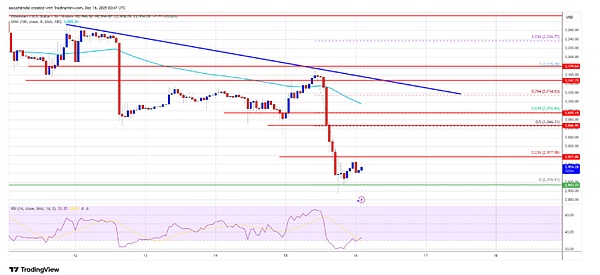
要是反弹失败,支撑位盯紧:2950→2920→2880→2800 美元,2920 美元守不住,大概率还要深跌。技术指标也不给力,MACD 在空头区增强,RSI 低于 50,下跌动能还没停。

? XRP:崩穿 1.95!1.85 美元岌岌可危

XRP 刚想在 2.02 美元反弹,结果直接被打回原形,跌破 2.00、1.95 美元,最低跌到 1.855 美元,现在连 1.90 美元和 100 小时均线都守不住,小时图还形成了空头趋势线,阻力压在 1.980 美元。
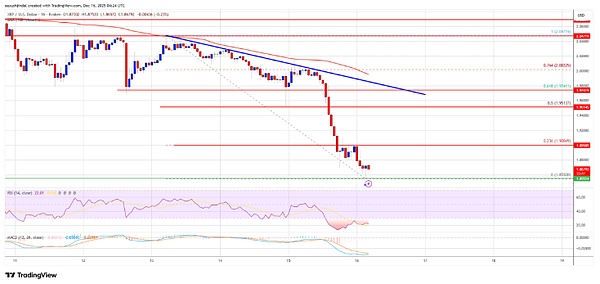
反弹关键看 3 个价位:1.90→1.92→1.95 美元,能站稳 1.92 美元,才有望冲 1.98、2.05 美元;要是冲不破 1.90 美元,支撑位盯紧 1.855 美元,再跌破就奔 1.82、1.765 美元去了。MACD 在空头区加速,RSI 低于 50,短期还是偏空。免费近裙+Q:3260353596

? RATS:3 连阳强势崛起!0.000035 可抄底

跟主流币相反,RATS 最近逆势走强,日线 3 连阳,还走出了 W 底形态,MACD 站上零轴,势头越来越猛。后续大概率会回补上方引线,冲击 0.00005 美元压力位。
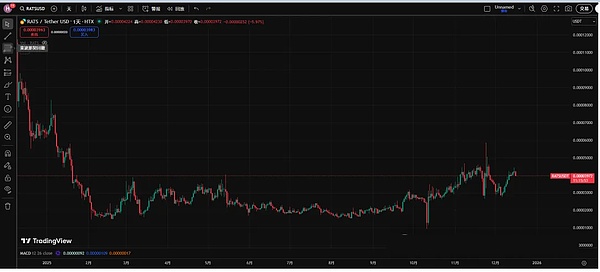
操作建议:短期回调到 0.000035 附近,喜欢炒波段的可以小仓位抄底现货,拿到 0.00005 附近止盈,性价比不错~免费近裙+Q:3260353596

⚠️ MERL:硬拉 17% 诱多!0.46-0.48 逢高开空

MERL 这波操作太明显了,24 小时涨 17% 冲到 0.48 美元,现在在 0.46-0.47 美元拉锯,完全是庄家在低流动性窗口硬拉骗多头。
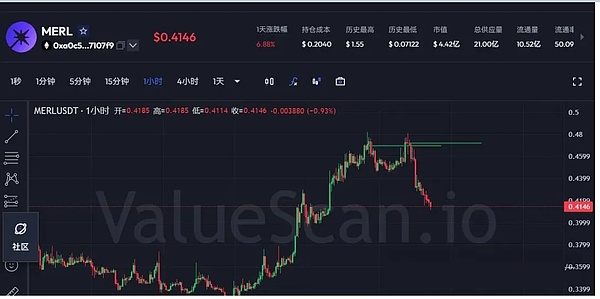
我个人看空!接下来大概率是 “预期抛压→缓慢磨底→恐慌砸盘” 的套路,建议直接在 0.46-0.48 美元附近逢高开空,别等庄家画大阳线诱骗最后一批多头。短期目标先看 0.4 美元,往下冲到 0.35 美元也有可能。免费近裙+Q:3260353596

? ASTER:插针 0.765 收回!等抄底机会

ASTER 向下插针到 0.765 美元后立马收回,正好踩在 0.618 斐波位(不过开盘插针参考意义不大),现在看着像要走下降楔形,底盘稳不稳还得观察。
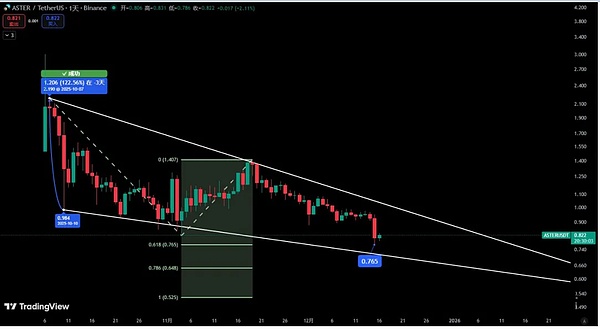
没上车的别着急,不用追高,等着抄到底部再动手,后续随时调整策略,避免被插针套住。

? FOLKS:爆拉后阴跌!低杠杆长线空机会

FOLKS 真是 “一念天堂一念地狱”,爆拉一波后就开始一路阴跌,现在很多新合约币都玩这套路。
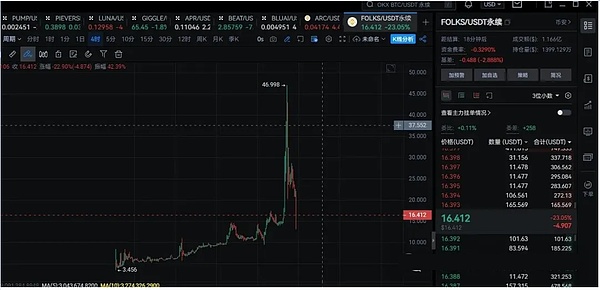
操作建议:顶部出现后可以低杠杆长线做空,只要能拿住,收益可能很高!这种阴跌趋势一旦形成,短期内很难反转,不用怕踏空。免费近裙+Q:3260353596

总结一下:ETH、XRP 短期偏空,盯紧关键支撑位别盲目抄底;RATS 可等回调布局,MERL 建议做空,ASTER 观望、FOLKS 适合低杠杆长空。加密圈现在分化严重,操作别贪多,盯紧 1-2 个标的就好~


Trend Kriptolar

İlgili Okumalar

Playing the "Decoupling" Card Again? Domestic Optical Modules Face a Stress Test

The U.S. Federal Communications Commission (FCC) is reportedly drafting a ban on importing new models of Chinese-made optical transceiver modules, with a potential implementation target of 2026. This "decoupling" move comes as Chinese firms, led by industry leaders like Zhongji Innolight and Eoptolink, dominate the global optical module market with over 60% share, and hold an even larger position in the high-speed 800G and 1.6T segments critical for AI data centers. Market reactions were mixed: U.S. optical module stocks initially rose, while Chinese A-shares opened lower but largely recovered by the close. Analysis suggests a complete U.S. decoupling from Chinese modules faces significant hurdles. North American cloud giants (Meta, Google, Microsoft, Amazon) and NVIDIA have massive demand for high-speed modules, estimated at around 40 million units in 2026. U.S. manufacturers' combined monthly production capacity for these modules is less than one-fifth that of a single major Chinese player like Zhongji Innolight, which reported production of 23.76 million units in 2025. Chinese companies are heavily reliant on the U.S. market, with over 90% of revenue for top firms coming from overseas, primarily the U.S. However, they have begun mitigating risks by establishing assembly plants in Southeast Asia and Mexico. Industry observers note the final impact depends on whether any potential U.S. restrictions target specific companies or products based on origin. Past U.S. sanctions on Chinese tech firms have often spurred increased domestic R&D and market diversification. Despite initial stock volatility, shares of major Chinese optical module companies pared losses, indicating market belief in the sector's resilience and the practical difficulties of abruptly replacing Chinese supply.

marsbit8 dk önce

Playing the "Decoupling" Card Again? Domestic Optical Modules Face a Stress Test

marsbit8 dk önce

When the Competition in Chip Manufacturing Equipment Stops Being Just About Who Is More Advanced

The competition in chip manufacturing equipment is no longer solely about who has the most advanced technology. While performance, yield, and cost remain key, U.S. export controls are adding a critical new dimension: long-term supply chain reliability. Major chipmakers like Samsung and SK Hynix, despite having mature supply chains with leading American and European vendors, are reportedly evaluating etching equipment from China's AMEC for their Chinese factories. This move is not primarily about immediate replacement or AMEC's current capabilities. Instead, it's a risk mitigation strategy. Companies are concerned that future U.S. policies could disrupt their access to spare parts, software updates, and maintenance for existing equipment over its decade-long lifespan. For chipmakers investing billions in fabs with long planning cycles, this policy-induced uncertainty is a significant new risk. The U.S., through its controls, is inadvertently eroding the very reliability and certainty that were foundational strengths of its equipment suppliers. This creates a pivotal shift for Chinese semiconductor equipment. Previously seen largely as a "domestic replacement" option when foreign gear was unavailable, they are now being assessed as potential "contingency suppliers" by global players—even before a supply disruption occurs. This provides a crucial entry point for validation in real production lines, which is essential for iterative improvement. Chinese equipment, particularly in areas like etching, has progressed from prototypes to participating in mass production within China, gaining valuable experience. However, this does not signify full global competitiveness. Gaps remain in advanced lithography, metrology, and other key tools. The current evaluations are largely confined to foreign firms' China-based fabs, not their global procurement networks. The core change is in the decision-making framework. Efficiency-driven globalization favored single, optimal suppliers. An era of heightened geopolitical risk is forcing companies to value "replaceability." While technical prowess remains paramount, supply chain certainty is now being factored into a device's competitive equation. Ultimately, U.S. policies have not made Chinese equipment more advanced, but they have given global customers a compelling reason to start testing it. The competition has expanded: it's no longer just about who is more advanced, but also about who can be relied upon to stay.

marsbit9 dk önce

When the Competition in Chip Manufacturing Equipment Stops Being Just About Who Is More Advanced

marsbit9 dk önce

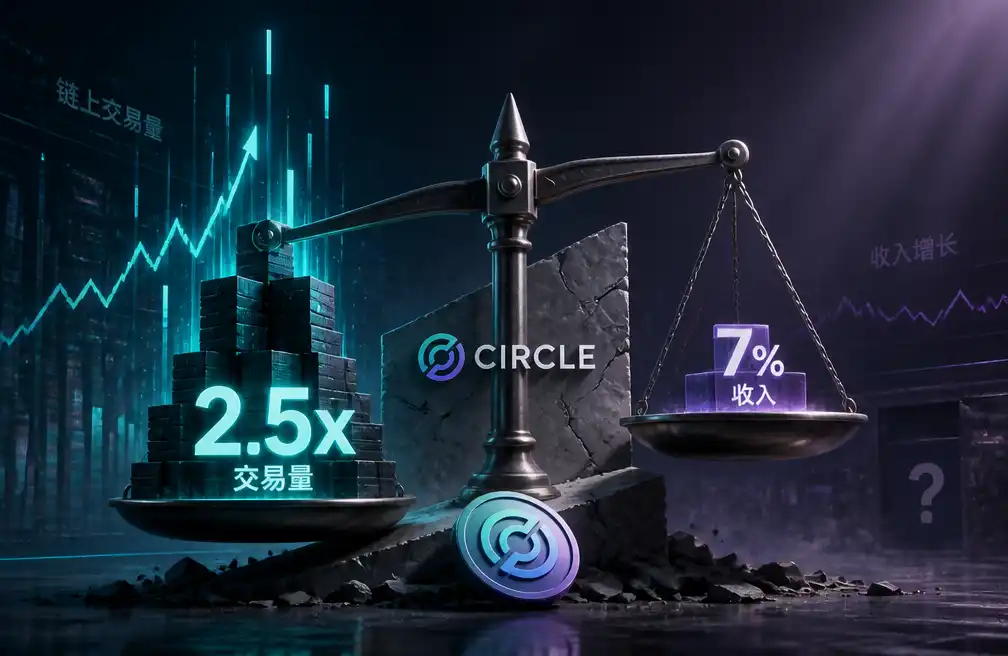
Trading Volume Increased by 2.5x, Why Did Circle's Revenue Only Grow by 7%?

Circle's Q2 performance presents a seemingly contradictory picture: the transaction volume of its stablecoin USDC surged 151% year-over-year to $14.8 trillion, while its "Total Revenue & Reserve Revenue" grew by only 7% to $701 million. This discrepancy highlights the core of Circle's business model. Revenue is primarily driven not by transaction volume, but by the average amount of USDC in circulation and the yield generated from its reserves. Key points: 1. **Revenue Drivers:** Over 90% of revenue comes from "reserve income," which is a function of average USDC circulation (up 25% YoY) and the reserve yield (which fell by 66 basis points). The net effect was a mere ~5% increase in reserve income. 2. **Transaction vs. Revenue:** High transaction volume indicates robust usage of USDC for payments and settlements, but does not translate directly to revenue. It must first convert into a sustained, average circulating balance. 3. **Cost Structure:** After accounting for distribution and other costs, the metric "Revenue Less Direct Costs" (RLDC) grew faster than total revenue, with its margin improving. However, rising operating expenses (up 23% YoY) meant that Adjusted EBITDA growth was limited to 8%. 4. **New Initiatives:** Circle reported progress on new networks like the Circle Payments Network and upcoming products (Arc, Agent Stack), but these are currently measured by adoption metrics (e.g., transaction run-rate, number of services) rather than material revenue contribution this quarter. In summary, the financial results are determined by the interplay of USDC circulation, reserve yields, and cost structures, while high transaction volume signals underlying network strength that has not yet fully flowed through to the income statement.

marsbit26 dk önce

Trading Volume Increased by 2.5x, Why Did Circle's Revenue Only Grow by 7%?

marsbit26 dk önce

Samsung China, Another Step Back

Samsung China Takes Another Step Back Samsung Electronics is further retreating from the Chinese consumer market. Following the exit of its home appliance business in May, its mobile phone division is now reportedly scaling down. Stores with monthly sales below 300,000 RMB are being closed in several cities. Data shows Samsung's smartphone market share in China has plummeted to 0.1% in Q2 2026, a stark contrast to its 22% global leadership. The decline is attributed to intense competition from domestic brands offering better value, higher specs (like faster charging), and superior localization in software and services. Samsung's premium pricing and less adapted One UI system have struggled against rivals like Huawei, Xiaomi, and Honor. This consumer electronics retreat coincides with Samsung's record-breaking semiconductor profits, driven by the AI boom. In Q2 2026, the chip division contributed nearly all operating profit, while the mobile and home appliance unit posted its first-ever operating loss. Internal dynamics, like the chip division charging market prices to the mobile unit, have increased cost pressures. Samsung's strategy now appears to be a focused retreat towards the ultra-premium segment in China, similar to its global push in high-end foldables like the Galaxy Z Fold8. The company is likely to retain only key stores in major cities to serve a niche, high-end clientele. While its deep semiconductor reserves offer a cushion, this shift away from mass-market consumer electronics reduces business diversification. The move is pragmatic but signifies a fundamental transformation; Samsung is ceding mass-market influence and betting heavily on its semiconductor strength and a narrowed premium product focus.

marsbit30 dk önce

Samsung China, Another Step Back

marsbit30 dk önce

Helium, Naphtha, and Photoresist: The Three Critical Vulnerabilities of Semiconductor Fabs

The article "Helium, Naphtha, Photoresist: The Three Achilles' Heels of Semiconductor Fabs" analyzes a hypothetical 2026 supply crisis triggered by geopolitical conflict in the Middle East, focusing on three critical materials for semiconductor manufacturing: helium, naphtha, and photoresist. A key attack on a Qatari LNG facility and the blockade of the Strait of Hormuz threaten the global supply of helium (a byproduct of LNG) and naphtha (a petroleum product). This creates a triple threat of shortages that could halt chip production. Helium is essential, particularly for precise wafer temperature control in dry etching processes; a shortage would cause an immediate "instant failure" in these steps. Naphtha is the foundational raw material for numerous equipment consumables and, crucially, for photoresist chemicals. Japan dominates the photoresist market, relying on a single key supplier for intermediates. The analysis shows the impacts would differ. The tiny fraction of global naphtha used for semiconductors (under 0.1%) makes securing supply for photoresist relatively easier. Helium is the greater vulnerability. Qatar supplies about one-third of the world's helium, exceeding the total annual consumption of the semiconductor industry (21-24% of global supply). While short-term buffers like corporate reserves, recycling, and prioritization (e.g., cutting balloon use first) can delay the crisis, helium cannot be stored long-term due to boil-off. Fabs typically hold only days to weeks of inventory. The consequences would be severe and tiered. Advanced logic nodes (e.g., 2nm, 3nm) using complex processes like GAA would be hit hardest, potentially stopping within three months. Mature nodes for automotive and power semiconductors would also eventually halt (within 6-12 months), which could be catastrophic for the auto industry due to stringent certification requirements. The crisis would unfold not as a sudden global stop, but through a sequence of allocation, severe price spikes, reduced output of low-margin products, and partial fab shutdowns by region and company if the shortage persists beyond a year.

marsbit32 dk önce

Helium, Naphtha, and Photoresist: The Three Critical Vulnerabilities of Semiconductor Fabs

marsbit32 dk önce

İşlemler

Spot

Popüler Makaleler

RATS Nasıl Satın Alınır

HTX.com’a hoş geldiniz! RATS (RATS) (RATS) satın alma işlemlerini basit ve kullanışlı bir hâle getirdik. Adım adım açıkladığımız rehberimizi takip ederek kripto yolculuğunuza başlayın. 1. Adım: HTX Hesabınızı OluşturunHTX'te ücretsiz bir hesap açmak için e-posta adresinizi veya telefon numaranızı kullanın. Sorunsuzca kaydolun ve tüm özelliklerin kilidini açın. Hesabımı Aç2. Adım: Kripto Satın Al Bölümüne Gidin ve Ödeme Yönteminizi SeçinKredi/Banka Kartı: Visa veya Mastercard'ınızı kullanarak anında RATS (RATS) (RATS) satın alın.Bakiye: Sorunsuz bir şekilde işlem yapmak için HTX hesap bakiyenizdeki fonları kullanın.Üçüncü Taraflar: Kullanımı kolaylaştırmak için Google Pay ve Apple Pay gibi popüler ödeme yöntemlerini ekledik.P2P: HTX'teki diğer kullanıcılarla doğrudan işlem yapın.Borsa Dışı (OTC): Yatırımcılar için kişiye özel hizmetler ve rekabetçi döviz kurları sunuyoruz.3. Adım: RATS (RATS) (RATS) Varlıklarınızı SaklayınRATS (RATS) (RATS) satın aldıktan sonra HTX hesabınızda saklayın. Alternatif olarak, blok zinciri transferi yoluyla başka bir yere gönderebilir veya diğer kripto para birimlerini takas etmek için kullanabilirsiniz.4. Adım: RATS (RATS) (RATS) Varlıklarınızla İşlem YapınHTX'in spot piyasasında RATS (RATS) (RATS) ile kolayca işlemler yapın.Hesabınıza erişin, işlem çiftinizi seçin, işlemlerinizi gerçekleştirin ve gerçek zamanlı olarak izleyin. Hem yeni başlayanlar hem de deneyimli yatırımcılar için kullanıcı dostu bir deneyim sunuyoruz.

353 Toplam GörüntülenmeYayınlanma 2024.12.12Güncellenme 2026.06.02

RATS Nasıl Satın Alınır

Tartışmalar

HTX Topluluğuna hoş geldiniz. Burada, en son platform gelişmeleri hakkında bilgi sahibi olabilir ve profesyonel piyasa görüşlerine erişebilirsiniz. Kullanıcıların RATS (RATS) fiyatı hakkındaki görüşleri aşağıda sunulmaktadır.

活动图片