Merlin Chain surges – Is a MERL pullback next after $75M OI peak?

ambcrypto2025-12-13 tarihinde yayınlandı2025-12-13 tarihinde güncellendi

Özet

Merlin Chain (MERL), a Bitcoin layer-2 solution, surged 16% amid increased on-chain activity, reaching a new all-time high in Open Interest at $75.79 million. This reflects strong bullish sentiment, with a taker Buy/Sell Ratio of 1.05 indicating dominant buying pressure. Spot market accumulation and exchange outflows further support the upward trend. However, the liquidation heatmap suggests potential downside risk, as unfilled liquidity clusters below current levels could trigger a short-term pullback. Despite the bullish momentum, recent buying hasn't fully offset prior selling pressure, leaving some risk of volatility.

Merlin Chain [MERL], the Bitcoin [BTC] layer-2 solution, has recorded a notable increase in on-chain activity over the past day, even as Bitcoin’s price remains largely range-bound.

The asset rallied sharply, gaining 16%, at press time, while the number of token holders climbed to 173,800. Although performance appears decisively bullish, signs of a potential price pullback still loom within the broader market structure.

Liquidity boom lifts price

The recent surge in MERL price can be largely attributed to a sharp liquidity inflow across the derivatives market.

MERL perpetual Open Interest (OI), a metric that reflects the total value of outstanding derivative contracts and overall market liquidity, has climbed to a new all-time high of $75.79 million, as of writing.

Notably, this spike highlights the bullish sentiment currently circulating in the market. OI reached this level after expanding by approximately $27 million within a single day.

Such a large one-day inflow typically includes positions from both long and short traders. In this instance, trading data indicates that long positions dominate market activity.

Trading volume has also turned decisively positive, with the taker Buy/Sell Ratio reaching 1.05. This reading suggests that taker buy orders are leading cumulative volume, reinforcing short-term bullish pressure.

Spot investors step in

Spot market participants have also continued to accumulate MERL, helping to restrict available supply.

In context, exchange outflows remain relatively modest, with roughly $700,000 worth of MERL withdrawn from centralized platforms over the past day.

On its own, this level of outflow does not strongly confirm a bullish market structure, as the amount remains comparatively small.

However, sustained accumulation alongside consistent net outflows increases the likelihood that MERL maintains its upward trajectory, as bullish investors view current levels as an attractive entry point.

Notably, the accumulation/distribution indicator has ticked higher, pointing to stronger buying pressure relative to selling. That said, the indicator remains in negative territory.

This negative reading suggests that recent buying has yet to fully offset the heavier selling pressure observed over the past week, which contributed to the prior decline.

Risk of a pullback?

Despite recent gains, MERL still shows downside risk, as indicated by the liquidation heatmap.

This tool highlights liquidity concentrations above and below the current price to signal potential moves. Liquidity positioned above often draws prices upward, while clusters below suggest possible declines as the market moves to fill those levels.

Currently, MERL’s rally has pushed the price higher, clearing major liquidity zones above. As a result, most liquidity clusters now sit below the current trading range.

Based on classical market behaviour, this setup increases the possibility of a short-term pullback. However, such outcomes are not guaranteed.

One key exception emerges when bullish momentum continues to strengthen, allowing price to defy typical liquidity-driven retracements.


Final Thoughts

  • MERL has recorded a massive liquidity inflow from the derivatives market, while spot investors continue to accumulate.
  • The liquidation heatmap shows a likelihood of price volatility, with unfilled liquidity clusters sitting below current levels.


Trend Kriptolar

İlgili Okumalar

Playing the "Decoupling" Card Again? Domestic Optical Modules Face a Stress Test

The U.S. Federal Communications Commission (FCC) is reportedly drafting a ban on importing new models of Chinese-made optical transceiver modules, with a potential implementation target of 2026. This "decoupling" move comes as Chinese firms, led by industry leaders like Zhongji Innolight and Eoptolink, dominate the global optical module market with over 60% share, and hold an even larger position in the high-speed 800G and 1.6T segments critical for AI data centers. Market reactions were mixed: U.S. optical module stocks initially rose, while Chinese A-shares opened lower but largely recovered by the close. Analysis suggests a complete U.S. decoupling from Chinese modules faces significant hurdles. North American cloud giants (Meta, Google, Microsoft, Amazon) and NVIDIA have massive demand for high-speed modules, estimated at around 40 million units in 2026. U.S. manufacturers' combined monthly production capacity for these modules is less than one-fifth that of a single major Chinese player like Zhongji Innolight, which reported production of 23.76 million units in 2025. Chinese companies are heavily reliant on the U.S. market, with over 90% of revenue for top firms coming from overseas, primarily the U.S. However, they have begun mitigating risks by establishing assembly plants in Southeast Asia and Mexico. Industry observers note the final impact depends on whether any potential U.S. restrictions target specific companies or products based on origin. Past U.S. sanctions on Chinese tech firms have often spurred increased domestic R&D and market diversification. Despite initial stock volatility, shares of major Chinese optical module companies pared losses, indicating market belief in the sector's resilience and the practical difficulties of abruptly replacing Chinese supply.

marsbit8 dk önce

Playing the "Decoupling" Card Again? Domestic Optical Modules Face a Stress Test

marsbit8 dk önce

When the Competition in Chip Manufacturing Equipment Stops Being Just About Who Is More Advanced

The competition in chip manufacturing equipment is no longer solely about who has the most advanced technology. While performance, yield, and cost remain key, U.S. export controls are adding a critical new dimension: long-term supply chain reliability. Major chipmakers like Samsung and SK Hynix, despite having mature supply chains with leading American and European vendors, are reportedly evaluating etching equipment from China's AMEC for their Chinese factories. This move is not primarily about immediate replacement or AMEC's current capabilities. Instead, it's a risk mitigation strategy. Companies are concerned that future U.S. policies could disrupt their access to spare parts, software updates, and maintenance for existing equipment over its decade-long lifespan. For chipmakers investing billions in fabs with long planning cycles, this policy-induced uncertainty is a significant new risk. The U.S., through its controls, is inadvertently eroding the very reliability and certainty that were foundational strengths of its equipment suppliers. This creates a pivotal shift for Chinese semiconductor equipment. Previously seen largely as a "domestic replacement" option when foreign gear was unavailable, they are now being assessed as potential "contingency suppliers" by global players—even before a supply disruption occurs. This provides a crucial entry point for validation in real production lines, which is essential for iterative improvement. Chinese equipment, particularly in areas like etching, has progressed from prototypes to participating in mass production within China, gaining valuable experience. However, this does not signify full global competitiveness. Gaps remain in advanced lithography, metrology, and other key tools. The current evaluations are largely confined to foreign firms' China-based fabs, not their global procurement networks. The core change is in the decision-making framework. Efficiency-driven globalization favored single, optimal suppliers. An era of heightened geopolitical risk is forcing companies to value "replaceability." While technical prowess remains paramount, supply chain certainty is now being factored into a device's competitive equation. Ultimately, U.S. policies have not made Chinese equipment more advanced, but they have given global customers a compelling reason to start testing it. The competition has expanded: it's no longer just about who is more advanced, but also about who can be relied upon to stay.

marsbit9 dk önce

When the Competition in Chip Manufacturing Equipment Stops Being Just About Who Is More Advanced

marsbit9 dk önce

Trading Volume Increased by 2.5x, Why Did Circle's Revenue Only Grow by 7%?

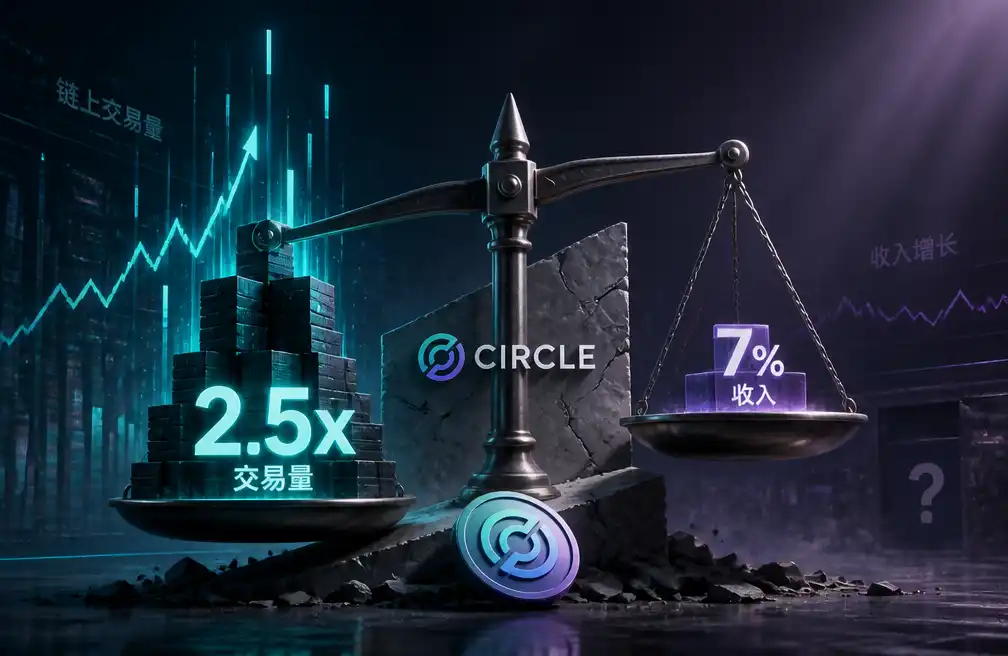
Circle's Q2 performance presents a seemingly contradictory picture: the transaction volume of its stablecoin USDC surged 151% year-over-year to $14.8 trillion, while its "Total Revenue & Reserve Revenue" grew by only 7% to $701 million. This discrepancy highlights the core of Circle's business model. Revenue is primarily driven not by transaction volume, but by the average amount of USDC in circulation and the yield generated from its reserves. Key points: 1. **Revenue Drivers:** Over 90% of revenue comes from "reserve income," which is a function of average USDC circulation (up 25% YoY) and the reserve yield (which fell by 66 basis points). The net effect was a mere ~5% increase in reserve income. 2. **Transaction vs. Revenue:** High transaction volume indicates robust usage of USDC for payments and settlements, but does not translate directly to revenue. It must first convert into a sustained, average circulating balance. 3. **Cost Structure:** After accounting for distribution and other costs, the metric "Revenue Less Direct Costs" (RLDC) grew faster than total revenue, with its margin improving. However, rising operating expenses (up 23% YoY) meant that Adjusted EBITDA growth was limited to 8%. 4. **New Initiatives:** Circle reported progress on new networks like the Circle Payments Network and upcoming products (Arc, Agent Stack), but these are currently measured by adoption metrics (e.g., transaction run-rate, number of services) rather than material revenue contribution this quarter. In summary, the financial results are determined by the interplay of USDC circulation, reserve yields, and cost structures, while high transaction volume signals underlying network strength that has not yet fully flowed through to the income statement.

marsbit26 dk önce

Trading Volume Increased by 2.5x, Why Did Circle's Revenue Only Grow by 7%?

marsbit26 dk önce

Samsung China, Another Step Back

Samsung China Takes Another Step Back Samsung Electronics is further retreating from the Chinese consumer market. Following the exit of its home appliance business in May, its mobile phone division is now reportedly scaling down. Stores with monthly sales below 300,000 RMB are being closed in several cities. Data shows Samsung's smartphone market share in China has plummeted to 0.1% in Q2 2026, a stark contrast to its 22% global leadership. The decline is attributed to intense competition from domestic brands offering better value, higher specs (like faster charging), and superior localization in software and services. Samsung's premium pricing and less adapted One UI system have struggled against rivals like Huawei, Xiaomi, and Honor. This consumer electronics retreat coincides with Samsung's record-breaking semiconductor profits, driven by the AI boom. In Q2 2026, the chip division contributed nearly all operating profit, while the mobile and home appliance unit posted its first-ever operating loss. Internal dynamics, like the chip division charging market prices to the mobile unit, have increased cost pressures. Samsung's strategy now appears to be a focused retreat towards the ultra-premium segment in China, similar to its global push in high-end foldables like the Galaxy Z Fold8. The company is likely to retain only key stores in major cities to serve a niche, high-end clientele. While its deep semiconductor reserves offer a cushion, this shift away from mass-market consumer electronics reduces business diversification. The move is pragmatic but signifies a fundamental transformation; Samsung is ceding mass-market influence and betting heavily on its semiconductor strength and a narrowed premium product focus.

marsbit30 dk önce

Samsung China, Another Step Back

marsbit30 dk önce

Helium, Naphtha, and Photoresist: The Three Critical Vulnerabilities of Semiconductor Fabs

The article "Helium, Naphtha, Photoresist: The Three Achilles' Heels of Semiconductor Fabs" analyzes a hypothetical 2026 supply crisis triggered by geopolitical conflict in the Middle East, focusing on three critical materials for semiconductor manufacturing: helium, naphtha, and photoresist. A key attack on a Qatari LNG facility and the blockade of the Strait of Hormuz threaten the global supply of helium (a byproduct of LNG) and naphtha (a petroleum product). This creates a triple threat of shortages that could halt chip production. Helium is essential, particularly for precise wafer temperature control in dry etching processes; a shortage would cause an immediate "instant failure" in these steps. Naphtha is the foundational raw material for numerous equipment consumables and, crucially, for photoresist chemicals. Japan dominates the photoresist market, relying on a single key supplier for intermediates. The analysis shows the impacts would differ. The tiny fraction of global naphtha used for semiconductors (under 0.1%) makes securing supply for photoresist relatively easier. Helium is the greater vulnerability. Qatar supplies about one-third of the world's helium, exceeding the total annual consumption of the semiconductor industry (21-24% of global supply). While short-term buffers like corporate reserves, recycling, and prioritization (e.g., cutting balloon use first) can delay the crisis, helium cannot be stored long-term due to boil-off. Fabs typically hold only days to weeks of inventory. The consequences would be severe and tiered. Advanced logic nodes (e.g., 2nm, 3nm) using complex processes like GAA would be hit hardest, potentially stopping within three months. Mature nodes for automotive and power semiconductors would also eventually halt (within 6-12 months), which could be catastrophic for the auto industry due to stringent certification requirements. The crisis would unfold not as a sudden global stop, but through a sequence of allocation, severe price spikes, reduced output of low-margin products, and partial fab shutdowns by region and company if the shortage persists beyond a year.

marsbit32 dk önce

Helium, Naphtha, and Photoresist: The Three Critical Vulnerabilities of Semiconductor Fabs

marsbit32 dk önce

İşlemler

Spot

Popüler Makaleler

MERL Nasıl Satın Alınır

HTX.com’a hoş geldiniz! Merlin chain (MERL) satın alma işlemlerini basit ve kullanışlı bir hâle getirdik. Adım adım açıkladığımız rehberimizi takip ederek kripto yolculuğunuza başlayın. 1. Adım: HTX Hesabınızı OluşturunHTX'te ücretsiz bir hesap açmak için e-posta adresinizi veya telefon numaranızı kullanın. Sorunsuzca kaydolun ve tüm özelliklerin kilidini açın. Hesabımı Aç2. Adım: Kripto Satın Al Bölümüne Gidin ve Ödeme Yönteminizi SeçinKredi/Banka Kartı: Visa veya Mastercard'ınızı kullanarak anında Merlin chain (MERL) satın alın.Bakiye: Sorunsuz bir şekilde işlem yapmak için HTX hesap bakiyenizdeki fonları kullanın.Üçüncü Taraflar: Kullanımı kolaylaştırmak için Google Pay ve Apple Pay gibi popüler ödeme yöntemlerini ekledik.P2P: HTX'teki diğer kullanıcılarla doğrudan işlem yapın.Borsa Dışı (OTC): Yatırımcılar için kişiye özel hizmetler ve rekabetçi döviz kurları sunuyoruz.3. Adım: Merlin chain (MERL) Varlıklarınızı SaklayınMerlin chain (MERL) satın aldıktan sonra HTX hesabınızda saklayın. Alternatif olarak, blok zinciri transferi yoluyla başka bir yere gönderebilir veya diğer kripto para birimlerini takas etmek için kullanabilirsiniz.4. Adım: Merlin chain (MERL) Varlıklarınızla İşlem YapınHTX'in spot piyasasında Merlin chain (MERL) ile kolayca işlemler yapın.Hesabınıza erişin, işlem çiftinizi seçin, işlemlerinizi gerçekleştirin ve gerçek zamanlı olarak izleyin. Hem yeni başlayanlar hem de deneyimli yatırımcılar için kullanıcı dostu bir deneyim sunuyoruz.

353 Toplam GörüntülenmeYayınlanma 2024.12.12Güncellenme 2026.06.02

MERL Nasıl Satın Alınır

Tartışmalar

HTX Topluluğuna hoş geldiniz. Burada, en son platform gelişmeleri hakkında bilgi sahibi olabilir ve profesyonel piyasa görüşlerine erişebilirsiniz. Kullanıcıların MERL (MERL) fiyatı hakkındaki görüşleri aşağıda sunulmaktadır.

活动图片