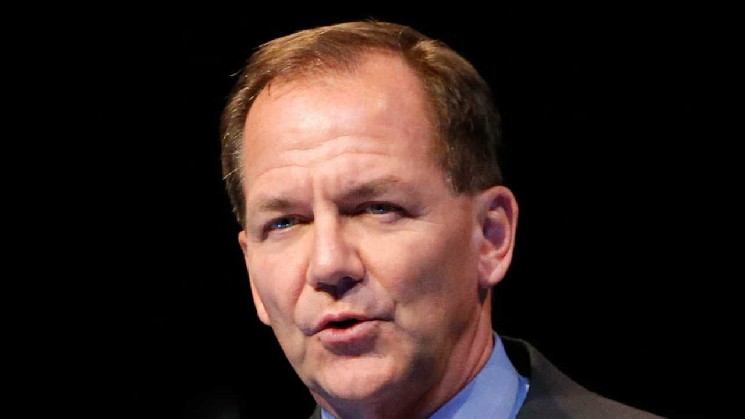
Crypto Investors Watch Closely as Kevin Hassett Becomes Frontrunner to Replace Jerome Powell

bitcoinistPubblicato 2025-11-26Pubblicato ultima volta 2025-11-26

Introduzione

Kevin Hassett has surged ahead in the race to become the next Federal Reserve Chair, as the crypto market watches...

Trusted Editorial content, reviewed by leading industry experts and seasoned editors. Ad Disclosure

Kevin Hassett has surged ahead in the race to become the next Federal Reserve Chair, as the crypto market watches closely. Hasset emerged as President Donald Trump’s preferred candidate while the administration accelerates its search ahead of a planned Christmas announcement.

With Jerome Powell’s term ending in May 2026, the stakes for markets, especially crypto, are enormous.
Crypto Bitcoin BTC BTCUSD

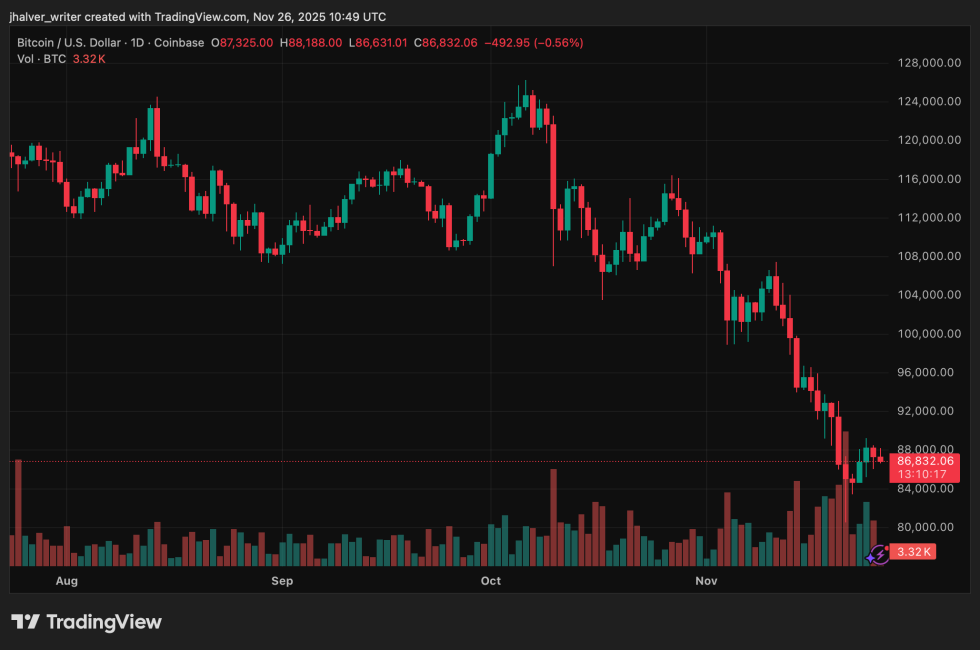
BTC's price trends to the downside on the daily chart. Source: BTCUSD on Tradingview

Hassett Leads the Pack as Trump Eyes Aggressive Rate Cuts

Multiple reports from Bloomberg, Reuters, and other outlets confirm that Hassett, the current director of the White House National Economic Council, has become the clear frontrunner among five finalists vetted by Treasury Secretary Scott Bessent.

Others still in contention include Kevin Warsh, Christopher Waller, Michelle Bowman and BlackRock executive Rick Rieder. But it is Hassett’s alignment with Trump’s preference for faster and deeper interest-rate cuts that has put him in pole position.

In recent interviews, Hassett said he would cut rates “right now” based on current economic data, a sharp contrast to Powell’s more cautious approach. Prediction platforms like Kalshi and Polymarket now show Hassett with roughly 55%–57% odds of being nominated, well ahead of his rivals.

Crypto Ties Raise Questions, and Fuel Market Optimism

Hassett’s candidacy is drawing extraordinary attention from the digital asset world. Earlier this year, he disclosed holding more than $1 million in Coinbase stock, along with receiving over $50,000 for serving on Coinbase’s Academic and Regulatory Advisory Council.

He also chaired the White House’s digital asset working group, crafting key crypto-policy recommendations, including stablecoin regulation, taxation guidelines and elements of the administration’s Strategic Bitcoin Reserve proposal.

These ties have sparked questions about potential conflicts of interest, given the Fed’s oversight of banking exposure to crypto and stablecoin frameworks.

Yet many industry analysts view his ascent as a major bullish catalyst. Bitwise strategist Juan Leon said a Hassett-led Fed would be “strongly supportive of digital assets,” citing his dovish monetary stance and direct industry experience.

Markets Brace for a Potentially Transformative Fed Shift

Trump’s dissatisfaction with Powell, combined with internal divisions over inflation, labor data and the pace of easing, has only intensified speculation. The Fed has already delivered two cuts this fall, with markets widely expecting a third in December.

If nominated and confirmed, Hassett would usher in one of the most crypto-friendly and pro-growth Federal Reserve leaderships in modern history.

With the announcement expected before Christmas, both Wall Street and the crypto markets are watching closely for what could be a defining moment for monetary policy and digital asset regulation.

Cover image from ChatGPT, BTCUSD chart from Tradingview

Editorial Process for bitcoinist is centered on delivering thoroughly researched, accurate, and unbiased content. We uphold strict sourcing standards, and each page undergoes diligent review by our team of top technology experts and seasoned editors. This process ensures the integrity, relevance, and value of our content for our readers.

Letture associate

Robert Kiyosaki Shares His Mentor's Predictions About the Emergence of Bitcoin and AI

American entrepreneur and author of "Rich Dad Poor Dad," Robert Kiyosaki, discussed the influence of futurist R. Buckminster Fuller on his worldview, linking Fuller's past technological predictions to the emergence of Bitcoin and the development of artificial intelligence. In an X post, Kiyosaki also reflected on personal purpose, sharing his journey from the music business—where he worked with bands like The Police and Iron Maiden—to creating the "Cashflow" board game and writing his famous book. He described feeling an inner emptiness despite his success, a turning point that came after meeting Fuller, whom he studied with for three summers. Kiyosaki described Fuller as a "friendly genius" who foresaw world-changing developments like Bitcoin and AI. However, the core of his post focused on Fuller's philosophical impact, particularly a quote about belonging to the universe and finding purpose by dedicating one's life to the maximum benefit of others. The entrepreneur remains a vocal advocate for cryptocurrencies. He regularly advises buying Bitcoin during market panics, viewing it and assets like Ethereum, gold, and silver as hedges against traditional financial system failures. Kiyosaki has predicted a major market crash by 2026, seeing it as an opportunity for prepared investors, with long-term price targets including $750,000 for Bitcoin and $95,000 for Ethereum.

cryptonews.ru25 min fa

Robert Kiyosaki Shares His Mentor's Predictions About the Emergence of Bitcoin and AI

cryptonews.ru25 min fa

Etherealize CEO Calls Wall Street's Private Blockchains a 'Race to the Bottom'

Etherealize co-founder and CEO Vivek Raman criticized Wall Street's growing interest in private, permissioned blockchains, calling them a "race to the bottom." In an interview with CoinDesk, Raman argued that consortium networks fragment liquidity and return the industry to the siloed systems that blockchain technology was meant to overcome. He stated that closed networks do not interoperate, undermining two key advantages of the technology: system compatibility and liquidity concentration. Etherealize promotes Ethereum as an open, foundational layer for institutional players. Raman insists that privacy and access restrictions should be built on top of public infrastructure—at the application or L2 level—rather than creating separate, closed networks. He compared Ethereum to HTTP as a base layer, with additional permissioned and private layers akin to HTTPS. Examples of this new wave of "closed" solutions mentioned include Canton Network from Digital Asset, Circle's Arc project, and Stripe's Tempo. Raman termed this trend "consortium chains 2.0," recalling earlier initiatives like the R3 interbank consortium and the Hyperledger corporate ecosystem from 2016 that failed to gain significant traction. He reiterated his firm belief that a global, open, permissionless infrastructure is necessary as a foundational base layer. Raman previously noted in June that traditional financial institutions had begun implementing Ethereum-based solutions into real business processes.

cryptonews.ru27 min fa

Etherealize CEO Calls Wall Street's Private Blockchains a 'Race to the Bottom'

cryptonews.ru27 min fa

Trading

Spot
活动图片