JPMorgan предупреждает, что решение MSCI может привести к исключению стратегии

cryptonews.ruОпубліковано о 2025-11-18Востаннє оновлено о 2025-11-20

Инвестиционный банк Уолл-стрит JPMorgan (JPM) заявил, что низкая доходность акций Strategy (MSTR) по сравнению с биткоином BTC$91 909,58 в последние месяцы в большей степени связана с надвигающимся риском включения в индекс, чем с динамикой криптовалютного рынка.

Некогда завышенная премия Strategy к стоимости её биткоин-активов в значительной степени испарилась, но недавнее снижение отражает растущую обеспокоенность тем, что поставщик индексов MSCI может исключить компанию из ключевых фондовых индексов, когда вынесет своё решение 15 января, говорится в отчёте банка, опубликованном в среду.

Компания, основанная Майклом Сэйлором, в настоящее время входит в основные индексы, в том числе в Nasdaq 100, MSCI USA и MSCI World, отмечается в отчёте.

Из примерно 59 миллиардов долларов рыночной капитализации около 9 миллиардов приходится на пассивные инструменты, биржевые фонды (ETF) и взаимные фонды, которые отслеживают эти индексы, пишут аналитики во главе с Николаосом Панигирцоглу.

Такое встроенное присутствие позволило биткоину косвенно проникнуть как в розничные, так и в институциональные портфели. По мнению аналитиков, эта динамика может резко измениться, если MSCI исключит Strategy и другие компании, которые используют цифровые активы в качестве основных казначейских активов.

По мнению аналитиков, исключение из MSCI может привести к оттоку пассивных инвестиций примерно на 2,8 миллиарда долларов, а если другие поставщики индексов последуют этому примеру, то под угрозой окажется до 8,8 миллиарда долларов.

Хотя активные управляющие не обязаны отслеживать изменения базовых показателей, аналитики банка утверждают, что потеря статуса основного индекса нанесёт удар по репутации и вызовет сомнения в способности Strategy выходить на рынки акций и долговых обязательств. Снижение активности, связанной с индексами, также может привести к снижению ликвидности, что сделает акции менее привлекательными для крупных институциональных инвесторов.

Совокупная рыночная стоимость акций, долговых обязательств и привилегированных акций Strategy по отношению к её биткоин-активам уже упала до самого низкого уровня со времён пандемии. Банк предупредил, что в случае отрицательного решения 15 января это соотношение ещё больше приблизится к единице, что фактически привяжет оценку компании почти полностью к её биткоин-активам.

На предрыночных торгах акции выросли на 3,5 % и стоили около 193 долларов.

Пов'язані матеріали

Just Now, OpenAI's Largest Pre-trained Model Doug Exposed

On August 9, X user ChrisGPT reported that OpenAI is advancing a new large-scale pre-training model codenamed **Doug**, which is said to be its largest such project to date and distinct from GPT-6. ChrisGPT later suggested GPT-6 is likely Astra, a model OpenAI recently paused due to safety concerns, with Doug potentially launching by November. This aligns with a July 9 research memo from SemiAnalysis, which stated OpenAI has overcome pre-training issues and is actively developing a much larger model codenamed Doug. If accurate, this signals a potential shift: after nearly two years of relying primarily on post-training, reinforcement learning (RL), and inference-time compute for capability gains—evidenced by models like o1, o3, and the GPT-5 system—OpenAI may be restarting large-scale foundational model scaling. The backdrop includes competitive pressure from Google's Gemini 3 release in November 2025, which reportedly prompted internal focus at OpenAI. In December 2025, The Information reported OpenAI was developing a pre-training model codenamed **Garlic**, which showed promising results and incorporated key bug fixes. This project reportedly paved the way for an "even bigger and better model"—likely Doug. In summary, Doug may represent OpenAI's return to significant base model scaling, building on resolved pre-training challenges and aiming to push capabilities beyond the limits of the current GPT-4o-era foundation enhanced by advanced post-training techniques.

marsbit20 хв тому

Just Now, OpenAI's Largest Pre-trained Model Doug Exposed

marsbit20 хв тому

OpenAI Researcher: We Don't Read Papers Anymore

An OpenAI researcher's remark that top AI labs "no longer read papers" sparked widespread discussion, highlighting a deepening crisis of trust in academic publishing. This sentiment followed exposure of questionable practices in an ICLR paper, where exceptional results were linked to undisclosed "tricks." A large-scale "experimental review" by SAI of 168 Oral papers from ICML 2026 revealed severe reproducibility issues. Of the 105 papers fully replicated, only 8 successfully verified over 80% of their claims, with a median verification rate of just 28-30%. Common problems included non-runnable code, missing files, incomplete documentation, and results mismatching those reported. Some papers even relied on now-offline models, making verification impossible. Specific cases involved an 8x inflation in claimed trained parameters and missing evaluation models from released code. Verifying a single ICML Oral paper had a median cost of around $8,900, with 17 exceeding $100,000. This creates a perverse incentive: flawed research carries high rewards (citations, jobs) with minimal risk of exposure, as verification is prohibitively expensive or impossible without code. While industry researchers at well-resourced labs may rely less on papers due to internal experiments and resources, academic and early-career researchers remain heavily dependent on publications for PhD applications, faculty positions, and entry into top labs. This creates a paradoxical system where papers are increasingly distrusted as reliable knowledge sources yet retain their gatekeeping value in career advancement. The situation underscores a critical need for systemic reforms to ensure scientific integrity and reproducibility in AI research.

marsbit29 хв тому

OpenAI Researcher: We Don't Read Papers Anymore

marsbit29 хв тому

Bitcoin Price Remains Virtually Unchanged Amid Mass Coldcard Withdrawals and BIP-110 Failure

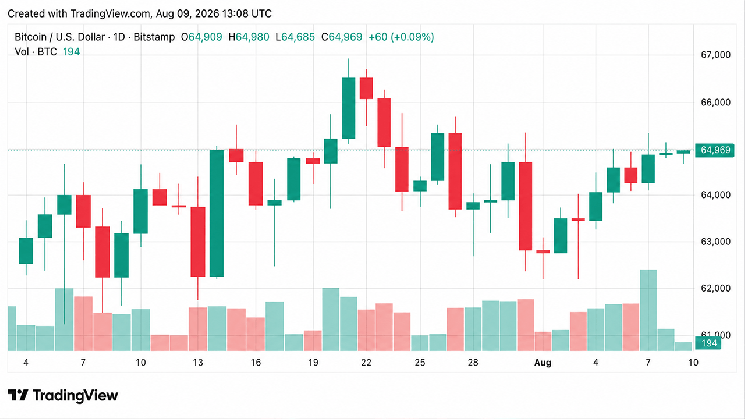
Bitcoin's price remained unusually stable, trading in a narrow range between roughly $64,500 and $65,250 over the weekend of August 9, 2026, despite two significant events. First, a security flaw in Coldcard hardware wallets led to substantial thefts, with high-confidence estimates ranging from 1,596 to 1,719 BTC (approx. $133M). The market appeared to view this as a product-specific security failure rather than a systemic Bitcoin issue, as the stolen coins were a tiny fraction of circulating supply and network operations continued normally. Second, the attempted activation of BIP-110, which required 55% miner signaling, failed dramatically, achieving only about 2.53% support. A minority chain formed but quickly stalled, controlling only a tiny fraction of the network's hash rate while inheriting Bitcoin's full mining difficulty, leaving it effectively dead in the water. Throughout both episodes, Bitcoin's price showed no sharp reaction. Technical indicators like the RSI and MACD were neutral, with immediate support seen at $64,000-$64,500 and resistance at $65,000-$65,500. The most notable aspect was the lack of a significant price move following a major wallet vulnerability and an actual chain split. Traders are now watching for a breakout from the $64,000-$66,000 corridor, which may depend more on liquidity, institutional ETF flows, and macroeconomic data than on these past events.

cryptonews.ru3 год тому

Bitcoin Price Remains Virtually Unchanged Amid Mass Coldcard Withdrawals and BIP-110 Failure

cryptonews.ru3 год тому

Торгівля

Спот
活动图片