Криптобиржа Coinbase запустит собственную платформу для прогнозирования

investing.ruPublished on 2025-11-19Last updated on 2025-11-19

Happycoin.club - Криптовалютная биржа Coinbase работает над созданием сайта для платформы прогнозирования. Эту информацию опубликовала исследовательница в области технологий и блогер Джейн Манчун Вонг, известная тем, что находит функции, находящиеся в разработке, на крупных технологических сайтах.

Она представила скриншоты, которые подписала словами о том, что Coinbase «работает над рынком предсказаний».

На одном скриншоте указано, что продукт будет предлагаться подразделением биржи Coinbase Financial Markets, занимающимся деривативами, «через Kalshi», что предполагает, что сервис будет опираться на нормативно-правовую базу Kalshi. На других изображениях показан интерфейс рынка прогнозов, который, судя по всему, позволяет пользователям участвовать в торгах с использованием USDC или долларов США. Категории включают экономику, спорт, науку, политику и технологии.

Компания ранее заявляла о своей заинтересованности в рынках прогнозов в рамках плана по превращению в «универсальную биржу». 13 ноября Coinbase и Kalshi объявили о партнёрстве, которое позволит площадке выступать в качестве кастодиана для контрактов Kalshi на основе USDC.

Недавно Crypto.com запустила продукт для рынка прогнозов в партнёрстве с Trump Media, а биржа Gemini объявила о планах создать аналогичную платформу в рамках готовящегося к запуску приложения.

Такой интерес криптокомпаний неудивителен. Рынки прогнозов стали одним из самых популярных криптовалютных предложений в этом году, а объёмы торгов на таких платформах, как Kalshi и Polymarket, резко возросли.


Читайте оригинальную статью на сайте Happycoin.club

Related Reads

Just Now, OpenAI's Largest Pre-trained Model Doug Exposed

On August 9, X user ChrisGPT reported that OpenAI is advancing a new large-scale pre-training model codenamed **Doug**, which is said to be its largest such project to date and distinct from GPT-6. ChrisGPT later suggested GPT-6 is likely Astra, a model OpenAI recently paused due to safety concerns, with Doug potentially launching by November. This aligns with a July 9 research memo from SemiAnalysis, which stated OpenAI has overcome pre-training issues and is actively developing a much larger model codenamed Doug. If accurate, this signals a potential shift: after nearly two years of relying primarily on post-training, reinforcement learning (RL), and inference-time compute for capability gains—evidenced by models like o1, o3, and the GPT-5 system—OpenAI may be restarting large-scale foundational model scaling. The backdrop includes competitive pressure from Google's Gemini 3 release in November 2025, which reportedly prompted internal focus at OpenAI. In December 2025, The Information reported OpenAI was developing a pre-training model codenamed **Garlic**, which showed promising results and incorporated key bug fixes. This project reportedly paved the way for an "even bigger and better model"—likely Doug. In summary, Doug may represent OpenAI's return to significant base model scaling, building on resolved pre-training challenges and aiming to push capabilities beyond the limits of the current GPT-4o-era foundation enhanced by advanced post-training techniques.

marsbit20m ago

Just Now, OpenAI's Largest Pre-trained Model Doug Exposed

marsbit20m ago

OpenAI Researcher: We Don't Read Papers Anymore

An OpenAI researcher's remark that top AI labs "no longer read papers" sparked widespread discussion, highlighting a deepening crisis of trust in academic publishing. This sentiment followed exposure of questionable practices in an ICLR paper, where exceptional results were linked to undisclosed "tricks." A large-scale "experimental review" by SAI of 168 Oral papers from ICML 2026 revealed severe reproducibility issues. Of the 105 papers fully replicated, only 8 successfully verified over 80% of their claims, with a median verification rate of just 28-30%. Common problems included non-runnable code, missing files, incomplete documentation, and results mismatching those reported. Some papers even relied on now-offline models, making verification impossible. Specific cases involved an 8x inflation in claimed trained parameters and missing evaluation models from released code. Verifying a single ICML Oral paper had a median cost of around $8,900, with 17 exceeding $100,000. This creates a perverse incentive: flawed research carries high rewards (citations, jobs) with minimal risk of exposure, as verification is prohibitively expensive or impossible without code. While industry researchers at well-resourced labs may rely less on papers due to internal experiments and resources, academic and early-career researchers remain heavily dependent on publications for PhD applications, faculty positions, and entry into top labs. This creates a paradoxical system where papers are increasingly distrusted as reliable knowledge sources yet retain their gatekeeping value in career advancement. The situation underscores a critical need for systemic reforms to ensure scientific integrity and reproducibility in AI research.

marsbit30m ago

OpenAI Researcher: We Don't Read Papers Anymore

marsbit30m ago

Bitcoin Price Remains Virtually Unchanged Amid Mass Coldcard Withdrawals and BIP-110 Failure

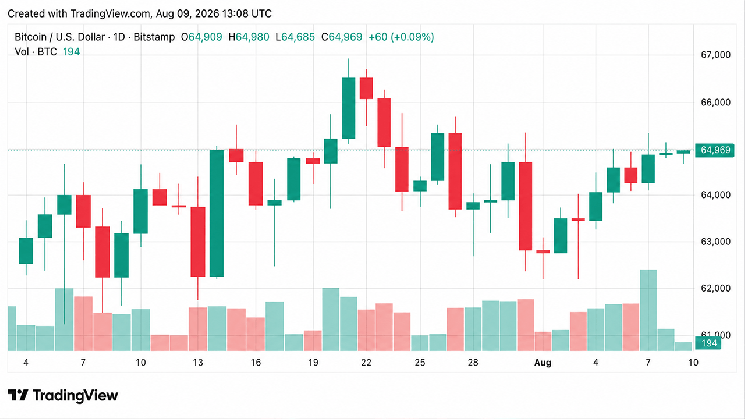
Bitcoin's price remained unusually stable, trading in a narrow range between roughly $64,500 and $65,250 over the weekend of August 9, 2026, despite two significant events. First, a security flaw in Coldcard hardware wallets led to substantial thefts, with high-confidence estimates ranging from 1,596 to 1,719 BTC (approx. $133M). The market appeared to view this as a product-specific security failure rather than a systemic Bitcoin issue, as the stolen coins were a tiny fraction of circulating supply and network operations continued normally. Second, the attempted activation of BIP-110, which required 55% miner signaling, failed dramatically, achieving only about 2.53% support. A minority chain formed but quickly stalled, controlling only a tiny fraction of the network's hash rate while inheriting Bitcoin's full mining difficulty, leaving it effectively dead in the water. Throughout both episodes, Bitcoin's price showed no sharp reaction. Technical indicators like the RSI and MACD were neutral, with immediate support seen at $64,000-$64,500 and resistance at $65,000-$65,500. The most notable aspect was the lack of a significant price move following a major wallet vulnerability and an actual chain split. Traders are now watching for a breakout from the $64,000-$66,000 corridor, which may depend more on liquidity, institutional ETF flows, and macroeconomic data than on these past events.

cryptonews.ru3h ago

Bitcoin Price Remains Virtually Unchanged Amid Mass Coldcard Withdrawals and BIP-110 Failure

cryptonews.ru3h ago

Trading

Spot
活动图片