币圈大降温:比特币从 12.5 万跌穿 11 万、SOL 和 HYPE 却被喊 “抄底首选”?

金色财经Published on 2025-10-19Last updated on 2025-10-19

前阵子还在 12.5 万美金晃悠的比特币,这阵子直接 “俯冲” 到 11 万以下了 —— 而且这波跌得还挺蹊跷,不是慢慢磨,是 “老玩家” 带头撤资的那种!免费近裙+钉钉:msp252580

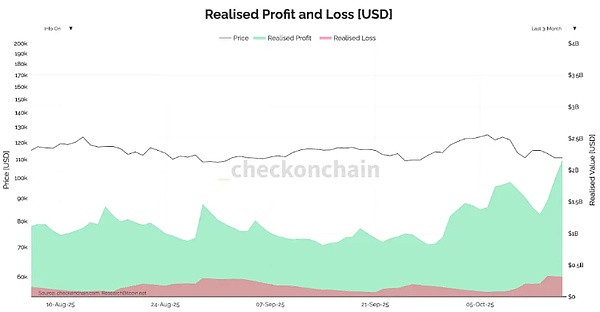
先唠唠比特币这波 “血亏现场”:10 月 15 号那天,有人忙着 “落袋为安” 兑了 18 亿美金盈利,但同一天也有 4.3 亿美金是实实在在的亏损。简单说就是:有人赚了跑,有人亏了割,市场里的 “劲儿” 明显跟不上了。
0?wx_fmt=png&from=appmsg

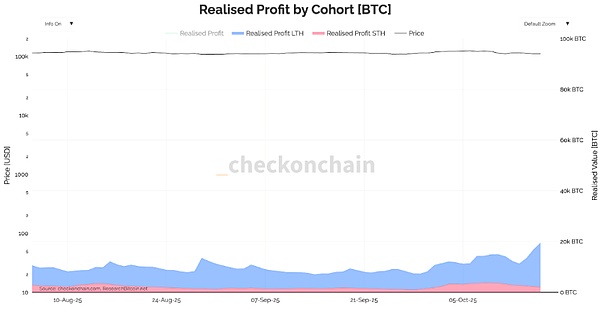
更有意思的是,这次抛盘的主力不是短期炒币的 “投机党”,而是拿了 3 个月以上的 “长期持有者”—— 他们兑的盈利是短期玩家的 6 倍多!而且人家也不是慌了神乱卖,毕竟就算上周大跌,这些老玩家还是赚得盆满钵满,说白了就是 “见好就收”,趁着市场没完全凉透先降降风险。

但坏消息是,这波资金流出已经不是 “偶尔撤点”,而是有了 “耗尽力气” 的苗头。现在比特币自 10 月初以来跌了超 10%,而且跌的导火索还挺突然 —— 川普一宣布对华商品加 100% 关税,比特币直接急跌 15%,最低摸到 10.35 万美金,连带现货 ETF 和杠杆玩家一起 “遭殃”。
0?wx_fmt=png&from=appmsg

光说比特币还不够,咱再看看爆仓情况:过去 24 小时全网上百亿合约爆仓,其中大部分是多单,30.8 万多头直接 “哭晕在屏幕前”。虽然比不上 10 月 11 号那波 190 亿美金的 “历史性爆仓”,但架不住机构也在撤 ——10 月 17 号美国 10 只比特币现货 ETF,一天就净流出 5.36 亿美金,创 8 月以来最大撤退,ARK、富达、贝莱德这些大机构全都在减码,避险情绪直接拉满。

以太坊:一边亮 “看跌信号”,一边被资金 “移情”?

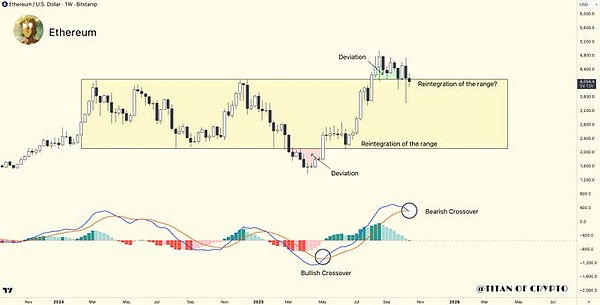
比特币凉了,以太坊也没好到哪去 —— 最近从 4400-4500 美金的关口掉下来,现在在 3994 美金晃悠,连 MACD 指标都开始 “报警” 了(懂的都懂,MACD 线跌破信号线,就是 “涨不动了,可能要跌” 的意思)。

不过以太坊也有 “小惊喜”:10 月 17 号那天,9 只以太坊现货 ETF 反而净流入了 1581 万美金。虽然过去 5 天还是净流出 1.976 亿,但这波 “反向流入” 说明有人开始从比特币撤资,去以太坊 “抄低” 了 —— 毕竟相比比特币的大跌,以太坊的回调看起来好像 “性价比更高”?
Word 图像

现在分析师对以太坊的看法很明确:守住 3900 美金还好,要是周线收在这以下,可能还要跌;但要是能反弹突破 4200-4300 美金,多头还有机会翻身。

山寨币要逆袭?SOL 和 HYPE 被喊 “下一波黑马”

就在#比特币、#以太坊 “拉胯” 的时候,有些#山寨币 反而被分析师盯上了 —— 比如 #SOL和 #HYPE,被说 “是下一波大波动前最值得买的”。

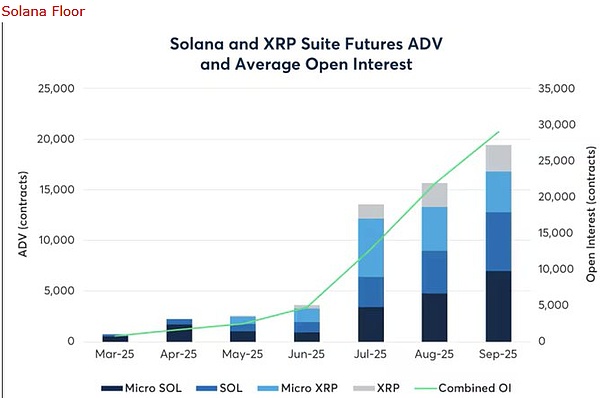
先看 SOL:虽然最近也在跌,还测试过 180 美金的支撑位,但架不住机构看好啊!SOL 的 CME 期货交易量自 3 月以来超 340 亿美金,机构都在提前布局对冲,说白了就是 “就算现在跌,也觉得它以后能涨回来”,所以被认为是 “最有潜力反弹的山寨币” 之一。
0?wx_fmt=png&from=appmsg

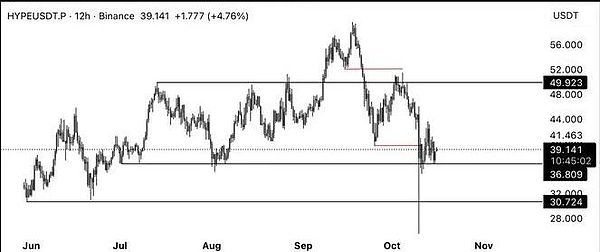
再看 HYPE:这代币虽然最近也有价格回调,还遇到过技术问题,但链上数据挺能打 —— 网络在扩大,费用收入也稳,现在价格接近关键支撑位,49 美金是个小阻力。更重要的是,最近还有以 HYPE 为中心的 2 倍杠杆 ETF 提交申请,这相当于给项目 “加了可信度”,不少人觉得它是 “被低估的潜力股”。
Word 图像

最后给家人们划重点:现在要不要入场?

其实现在币圈就像个 “考场”,关键看三个信号:

比特币 ETF 的资金流出会不会停?要是一直撤,那还得凉;

全网上的未平仓合约会不会继续降?降到位了,去杠杆才算完;

中美关税这事儿会不会再发酵?要是局势更紧张,币价还得受影响。

另外比特币的 10 万美金关口是个 “心理防线”—— 要是跌破了,未实现亏损可能从现在的 2% 涨到 5%,到时候市场可能从 “不安” 变成 “恐慌”;但要是能守住,说不定还能重新攒点涨的劲儿。

至于 SOL 和 HYPE 这些山寨币,虽然现在被喊 “抄底首选”,但还是得提醒一句:币圈波动比翻书还快,“接刀子” 有风险,入场前可得想清楚!

Related Reads

How the $900 Billion Anthropic Was Built?

Anthropic, the AI startup behind Claude, is reportedly in early talks to raise at least $30 billion in new funding, targeting a valuation exceeding $900 billion. This would propel it past OpenAI's recent $852 billion valuation. The funding round is expected to close by late May 2026. The company's valuation surge is driven by extraordinary revenue growth, reportedly reaching an annualized $30 billion by March 2026 from $1 billion in December 2024. However, OpenAI questions this figure, suggesting a net revenue closer to $22 billion after cloud platform fees. Despite high revenue, Anthropic's gross margin is reportedly around 40%, and it is not yet profitable, with breakeven projected for 2028. A significant portion of the new capital would fund massive, pre-committed computing infrastructure with partners like Amazon, Google, and Microsoft. This highlights a new AI financing model where high valuations fuel compute spending, which in turn requires even higher future valuations to sustain. Notably, many early-stage investors are reportedly sitting out this round. Bankers privately estimate a potential IPO valuation between $400-500 billion, creating a rare scenario where the final private funding round valuation ($900B+) could far exceed the expected public market debut. Anthropic is targeting an IPO between October 2026 and the first half of 2027. Its public listing is poised to be a critical test for the entire AI sector's valuation logic, potentially validating or challenging the high-stakes "valuation-compute-valuation" cycle that has defined private market investments.

链捕手40m ago

How the $900 Billion Anthropic Was Built?

链捕手40m ago

UBS Enters the Fray, 20 Swiss Banks Now Offer Crypto Trading, Covering 2.5 Million Accounts

Global wealth management giant UBS has entered the cryptocurrency market, offering Bitcoin and Ethereum trading to select private banking clients in Switzerland as of January 2026. This move is part of a broader trend in Switzerland, where approximately 20 banks now provide crypto services, collectively covering over 2.5 million accounts. Client data from Zurich Cantonal Bank (ZKB) challenges the stereotype of crypto being solely for the young, revealing that the average buyer is aged 30-50 and predominantly male. Notably, over 40% of these clients previously held no investment portfolio, indicating crypto is activating dormant capital. The business case is proving substantial. For several Swiss banks, crypto-related activities already contribute a significant and disproportionate share of profits, with unit economics often outperforming traditional banking services. This institutional adoption in Switzerland reflects a global trend, with a recent survey showing 73% of institutional investors planning to increase crypto allocations in 2026. Switzerland's early regulatory clarity through its DLT Act and established custody infrastructure have provided a foundation for this growth. However, upcoming challenges include the implementation of the OECD's Crypto Asset Reporting Framework (CARF) in 2027 and ongoing reforms by Swiss regulator FINMA. The final shape of these regulations will be crucial in determining whether Switzerland can maintain its leading position in the global banking crypto sector.

marsbit42m ago

UBS Enters the Fray, 20 Swiss Banks Now Offer Crypto Trading, Covering 2.5 Million Accounts

marsbit42m ago

Circle Releases Arc Network Whitepaper: Can the New Economic Mechanism Drive It to Become the "Clearing Coordination Layer" for Institutional-Grade Stablecoin Payments?

Circle has released the whitepaper for its Arc Network, detailing plans for a new economic coordination layer using the proposed ARC token. Arc is a Layer 1 blockchain designed for enterprise-level stablecoin payments, featuring USDC as its native gas token, a high-performance consensus mechanism for instant transaction finality, and optional enterprise privacy features. Currently operating on a Proof-of-Authority (PoA) model, the network plans a future transition to a Proof-of-Stake (PoS) system. The ARC token is intended to serve as the network's native coordination asset, facilitating governance, enabling staking rewards, and managing fee mechanisms. User fees paid in stablecoins would be converted to ARC, with portions distributed as rewards and burned. The governance model will blend token-based voting with institutional oversight, especially for high-sensitivity matters like security and compliance. While positioning Arc as a potential settlement layer for institutional stablecoin payments, the whitepaper acknowledges challenges. These include the network's current centralization, the unfinished and potentially volatile ARC token economics, and the evolving global regulatory landscape for stablecoins. The development signals a broader industry trend where Web3 infrastructure competition is shifting from pure performance to factors like liquidity, compliance, and institutional-grade stability.

marsbit1h ago

Circle Releases Arc Network Whitepaper: Can the New Economic Mechanism Drive It to Become the "Clearing Coordination Layer" for Institutional-Grade Stablecoin Payments?

marsbit1h ago

Trading

Spot
Futures

Hot Articles

What is $BITCOIN

DIGITAL GOLD ($BITCOIN): A Comprehensive Analysis Introduction to DIGITAL GOLD ($BITCOIN) DIGITAL GOLD ($BITCOIN) is a blockchain-based project operating on the Solana network, which aims to combine the characteristics of traditional precious metals with the innovation of decentralized technologies. While it shares a name with Bitcoin, often referred to as “digital gold” due to its perception as a store of value, DIGITAL GOLD is a separate token designed to create a unique ecosystem within the Web3 landscape. Its goal is to position itself as a viable alternative digital asset, although specifics regarding its applications and functionalities are still developing. What is DIGITAL GOLD ($BITCOIN)? DIGITAL GOLD ($BITCOIN) is a cryptocurrency token explicitly designed for use on the Solana blockchain. In contrast to Bitcoin, which provides a widely recognized value storage role, this token appears to focus on broader applications and characteristics. Notable aspects include: Blockchain Infrastructure: The token is built on the Solana blockchain, known for its capacity to handle high-speed and low-cost transactions. Supply Dynamics: DIGITAL GOLD has a maximum supply capped at 100 quadrillion tokens (100P $BITCOIN), although details regarding its circulating supply are currently undisclosed. Utility: While precise functionalities are not explicitly outlined, there are indications that the token could be utilized for various applications, potentially involving decentralized applications (dApps) or asset tokenization strategies. Who is the Creator of DIGITAL GOLD ($BITCOIN)? At present, the identity of the creators and development team behind DIGITAL GOLD ($BITCOIN) remains unknown. This situation is typical among many innovative projects within the blockchain space, particularly those aligning with decentralized finance and meme coin phenomena. While such anonymity may foster a community-driven culture, it intensifies concerns about governance and accountability. Who are the Investors of DIGITAL GOLD ($BITCOIN)? The available information indicates that DIGITAL GOLD ($BITCOIN) does not have any known institutional backers or prominent venture capital investments. The project seems to operate on a peer-to-peer model focused on community support and adoption rather than traditional funding routes. Its activity and liquidity are primarily situated on decentralized exchanges (DEXs), such as PumpSwap, rather than established centralized trading platforms, further highlighting its grassroots approach. How DIGITAL GOLD ($BITCOIN) Works The operational mechanics of DIGITAL GOLD ($BITCOIN) can be elaborated on based on its blockchain design and network attributes: Consensus Mechanism: By leveraging Solana’s unique proof-of-history (PoH) combined with a proof-of-stake (PoS) model, the project ensures efficient transaction validation contributing to the network's high performance. Tokenomics: While specific deflationary mechanisms have not been extensively detailed, the vast maximum token supply implies that it may cater to microtransactions or niche use cases that are still to be defined. Interoperability: There exists the potential for integration with Solana’s broader ecosystem, including various decentralized finance (DeFi) platforms. However, the details regarding specific integrations remain unspecified. Timeline of Key Events Here is a timeline that highlights significant milestones concerning DIGITAL GOLD ($BITCOIN): 2023: The initial deployment of the token occurs on the Solana blockchain, marked by its contract address. 2024: DIGITAL GOLD gains visibility as it becomes available for trading on decentralized exchanges like PumpSwap, allowing users to trade it against SOL. 2025: The project witnesses sporadic trading activity and potential interest in community-led engagements, although no noteworthy partnerships or technical advancements have been documented as of yet. Critical Analysis Strengths Scalability: The underlying Solana infrastructure supports high transaction volumes, which could enhance the utility of $BITCOIN in various transaction scenarios. Accessibility: The potential low trading price per token could attract retail investors, facilitating wider participation due to fractional ownership opportunities. Risks Lack of Transparency: The absence of publicly known backers, developers, or an audit process may yield skepticism regarding the project's sustainability and trustworthiness. Market Volatility: The trading activity is heavily reliant on speculative behavior, which can result in significant price volatility and uncertainty for investors. Conclusion DIGITAL GOLD ($BITCOIN) emerges as an intriguing yet ambiguous project within the rapidly evolving Solana ecosystem. While it attempts to leverage the “digital gold” narrative, its departure from Bitcoin's established role as a store of value underscores the need for a clearer differentiation of its intended utility and governance structure. Future acceptance and adoption will likely depend on addressing the current opacity and defining its operational and economic strategies more explicitly. Note: This report encompasses synthesised information available as of October 2023, and developments may have transpired beyond the research period.

363 Total ViewsPublished 2025.05.13Updated 2025.05.13

What is $BITCOIN

Discussions

Welcome to the HTX Community. Here, you can stay informed about the latest platform developments and gain access to professional market insights. Users' opinions on the price of BTC (BTC) are presented below.

活动图片