Kiyosaki Slams Schools for ‘Fake Money’ Indoctrination

TheCryptoTimesPublié le 2025-09-19Dernière mise à jour le 2025-09-19

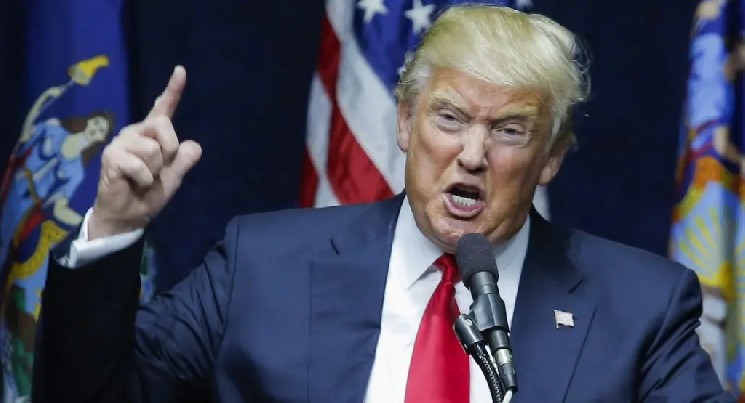
Robert Kiyosaki, the author behind the best-selling “Rich Dad Poor Dad” and a vocal Bitcoin (BTC) advocate, had criticized the U.S. education system. He has called it a form of indoctrination that traps young people into working for “fake money”.

On Wednesday, speaking on “The Bitcoin Podcast,” hosted by Jordan Walker, Co-Founder of Bitcoin Collective, Kiyosaki argued that schools and professors push a flawed financial playbook: attend college, secure a job, grind away, stash savings, and funnel money into 401(k) plans loaded with underperforming assets. 

“Poor people are poor because they have no idea what real money is,” he said. Kiyosaki reserved sharp words for central banks, labeling them “criminal organizations” and even “Marxists.” He claimed their money-printing policies enrich the wealthy while eroding the middle class and the poor. 

He added, “Every time you print money, you print this fake stuff here. Guys like me get richer, but the poor middle class get poorer.” Data from the U.S. Bureau of Labor Statistics underscores his point on inflation’s toll. A $1,000 holding from August 2000 to August 2025 would have lost about 47% of its purchasing power. 

Kiyosaki: Bitcoin soars as inflation persists, ETFs risky

The Federal Reserve targets 2% annual inflation, but August 2025 figures clocked in at 2.9% for headline inflation and 3.2% for core inflation, levels above the goal that have persisted since 2021. In contrast, Bitcoin has surged over 900% in the last five years, climbing from roughly $11,670 to about $117,200 as of Thursday, per CoinGecko

Kiyosaki, who bought his first BTC at $6,000, now holds around 60 coins, valued at roughly $7 million. His strategy now includes funneling rental property income into Bitcoin, Ethereum, gold, silver, and oil.

Looking ahead, Kiyosaki reiterated his April forecast that Bitcoin could hit $180 million by this year. Yet he urged caution on exchange-traded funds (ETFs), dubbing them “paper assets” prone to collapse in a bank run, though he conceded they’re the simplest entry for everyday investors.

Kiyosaki’s remarks echo broader debates on inflation’s global bite. Economist Saifedean Ammous, author of “The Bitcoin Standard,” recently predicted on his X post that Argentines would flee the devaluing peso toward the U.S. dollar and Bitcoin. On May 20, 2025, Real Vision CEO Raoul Pal similarly advised on X that stacking crypto and non-fungible tokens against currency erosion.

On July 28, 2025, Kiyosaki warned of a potential U.S. economic crash akin to 1929, urging people to rethink 401(k)s and IRAs heavy in stocks. He noted Buffett and Rogers sold stocks for cash or silver, while he holds gold, silver, and Bitcoin.

Also Read: Atkins Softens SEC Enforcement, Backs Crypto Growth


Mobile Only Image

Lectures associées

Vous serez surpris à quel point WeChat est différent de Telegram au niveau de l'architecture

L'audience mensuelle de WeChat et Weixin a atteint 1,428 milliard d'utilisateurs, confirmant son statut d'outil numérique central en Chine et au-delà. Cette analyse compare l'architecture de WeChat avec celle de Telegram, révélant des philosophies opposées en matière de stockage des données, de monétisation et d'ouverture aux développeurs. **Stockage des conversations :** Telegram utilise un stockage cloud illimité avec synchronisation sur tous les appareils. WeChat stocke les historiques localement sur l'appareil, nécessitant une fonction de migration spécifique pour les transférer et liant strictement la version desktop au téléphone. **Fonctionnalités sociales :** Dans Telegram, les commentaires sous les publications de chaînes sont intégrés. Dans WeChat, les commentaires sous les articles des comptes officiels sont modérés préalablement et ne disposent pas d'un système de discussion unifié. **Développement :** Telegram propose un Bot API ouvert et gratuit. L'écosystème des mini-programmes de WeChat est fermé, nécessitant souvent une vérification et une certification payante pour les développeurs. **Transfert de fichiers :** Telegram permet d'envoyer des fichiers jusqu'à 2 Go (4 Go pour Premium). WeChat limite généralement les envois à 200 Mo, proposant un "assistant de transfert" pour les volumes plus importants. **Paiements :** WeChat Pay est profondément intégré dans la vie économique chinoise, remplaçant souvent les applications bancaires. Telegram ne possède pas de système de paiement fiduciaire intégré comparable, s'appuyant sur des bots tiers et les cryptomonnaies. **Analyse de la sécurité (point de vue IA ajouté) :** L'article soulève indirectement la question de la sécurité. Telegram propose un chiffrement de bout en bout pour ses "chats secrets". WeChat, sans chiffrement de bout en bout standard, fusionne messages et paiements dans une même interface, ce qui pourrait élargir la surface d'attaque en cas de vulnérabilité, comme l'illustrent des cas de fraude signalés à Singapour. En conclusion, WeChat repose sur un modèle intégré et fermé, profondément ancré dans l'économie réelle, tandis que Telegram privilégie les protocoles ouverts, le stockage flexible et une faible barrière à l'entrée pour les développeurs. Ce choix architectural fondamental détermine leurs publics et leurs cas d'utilisation respectifs.

cryptonews.ruIl y a 5 h

Vous serez surpris à quel point WeChat est différent de Telegram au niveau de l'architecture

cryptonews.ruIl y a 5 h

Trading

Spot
活动图片