美联储决议全文:降息25个基点,19位官员中有9位预计今年还将降息两次

比推Pubblicato 2025-09-17Pubblicato ultima volta 2025-09-17

北京时间9月18日周四,美联储宣布降息25个基点,联邦基金利率目标区间降低至4%-4.25%,重启自去年12月以来暂停的降息步伐。新加入的美联储理事米兰投下反对票,他支持降息50个基点。

点阵图显示,19位官员中有9位预计2025年还会降息两次,两位预计降息一次,六位预计不再进一步降息。
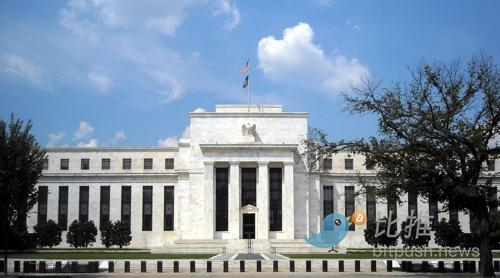
image.png

利率决议全文

最新指标显示,今年上半年经济活动的增长有所放缓。就业增速减慢,失业率略有上升,但仍处于低位。通胀有所回升并依然偏高。

委员会的目标是实现最大就业和长期2%的通胀。关于经济前景的不确定性依然高企,委员会关注其双重使命面临的风险,并认为就业方面的下行风险有所上升。

为支持既定目标,并鉴于风险平衡的变化,委员会决定将联邦基金利率目标区间下调25个基点至4%-4.25%。在考虑是否进一步调整联邦基金利率目标区间时,委员会将仔细评估最新数据、前景变化以及风险平衡。委员会将继续缩减其持有的美国国债、机构债务和机构抵押贷款支持证券。委员会坚定致力于支持最大就业并将通胀恢复至2%的目标。

在评估适当的货币政策立场时,委员会将继续监测最新信息对经济前景的影响。如果出现可能阻碍委员会目标实现的风险,委员会准备适时调整货币政策立场。委员会的评估将综合考虑广泛的信息,包括劳动力市场状况、通胀压力与通胀预期,以及金融和国际动态。

投票支持本次货币政策行动的有主席杰罗姆·H·鲍威尔(Jerome H. Powell)、副主席约翰·C·威廉姆斯(John C. Williams)、迈克尔·S·巴尔(Michael S. Barr)、米歇尔·W·鲍曼(Michelle W. Bowman)、苏珊·M·柯林斯(Susan M. Collins)、丽莎·D·库克(Lisa D. Cook)、奥斯坦·D·古尔斯比(Austan D. Goolsbee)、菲利普·N·杰斐逊(Philip N. Jefferson)、阿尔贝托·G·穆萨勒姆(Alberto G. Musalem)、杰弗里·R·施密德(Jeffrey R. Schmid)和克里斯托弗·J·沃勒(Christopher J. Waller)。投票反对的为斯蒂芬·I·米兰(Stephen I. Miran),他倾向于在本次会议上将联邦基金利率目标区间下调50个基点。
说明: 比推所有文章只代表作者观点,不构成投资建议

Letture associate

DeepSeek Announces Permanent Price Cut, But Liang Wenfeng Is Not Trying to Be a "Cyber Bodhisattva"

DeepSeek has announced a permanent 75% discount on its V4-Pro API, significantly reducing its token prices. This move stands out as a major industry-wide price cut while competitors like Anthropic, OpenAI, and Google have been quietly raising theirs. The article contrasts this strategy with the broader trend of AI becoming more expensive, citing examples of companies like Microsoft and Uber struggling with high token costs as usage soars. While CEO Liang Wenfeng is hailed by some as a "Cyber Bodhisattva" for this普惠 approach, the article argues this is a strategic business choice, not mere altruism. DeepSeek's ability to maintain low prices is attributed to several structural advantages: lower-cost AI talent in China, the impending use of domestic昇腾 hardware for further cost reductions, and, most critically, access to China's cheaper and more abundant energy infrastructure, which drastically reduces the electricity costs dominating AI operations. The analysis suggests that for many commercial applications, a "good enough" model that is radically cheaper (e.g., 1% to 11% of GPT-5.5's cost) is more valuable than the absolute top-tier model. This allows for vastly more experimentation and iteration within a budget. Therefore, as AI generally becomes more expensive, DeepSeek's cost-competitiveness—rooted in China's energy and talent advantages—becomes its core strategic value and differentiator in the global market.

marsbit1 h fa

DeepSeek Announces Permanent Price Cut, But Liang Wenfeng Is Not Trying to Be a "Cyber Bodhisattva"

marsbit1 h fa

The Veil of Mythos Becomes Anthropic's Lever to Move Trillions

The article discusses Anthropic's reported upcoming $30 billion funding round, which would value the company at over $900 billion. It analyzes how the company has leveraged strategic narratives around its unreleased "Mythos" model, rather than just its publicly available products, to drive this massive valuation. Key points include Google's surprising $40 billion investment in a competitor, suggesting it is buying strategic positioning. Anthropic's "Glasswing" cybersecurity project and the unreleased Mythos model are portrayed not through direct proof, but through carefully crafted narratives of being "too powerful for public release," creating an aura of exclusive, high-level capability. This is bolstered by reports of the White House and NSA seeking access to Claude/Mythos despite previous security concerns, implying indispensable technology. Furthermore, Anthropic's reported rapid revenue growth—from a $1 billion annual run-rate in late 2024 to over $30 billion by April 2026, largely driven by enterprise API and Claude Code—provides a financial story for investors. The article concludes that Anthropic's core business model is effectively converting unverifiable technical potential, government interest, and future revenue projections into a compelling narrative that secures immense capital, using the actions of wealthy investors and powerful institutions as the ultimate validation of its worth.

marsbit3 h fa

The Veil of Mythos Becomes Anthropic's Lever to Move Trillions

marsbit3 h fa

Google CEO Admits Lagging Behind in Coding

Google CEO Sundar Pichai acknowledged in a recent interview that Google's Gemini AI models are currently "lagging behind" in coding capabilities, particularly for complex, long-horizon tasks requiring advanced developer expertise. He noted the field is advancing at an "unprecedented" pace, where 30-60 days now brings changes equivalent to five years in the past. Pichai expressed that achieving Artificial General Intelligence (AGI) now seems closer than previously imagined due to rapid progress. While highlighting strengths in text, multimodal, and reasoning tasks, Pichai admitted competitors like Anthropic and OpenAI have focused more intently on coding. He emphasized Google's commitment to catching up, citing internal tools like Antigravity 2.0 and the newly released Gemini 3.5 Flash, which aims to address previous shortcomings. Regarding Google Search's AI-driven overhaul, Pichai stated changes will be gradual to align with user needs, not disrupt the core search experience or its advertising model. He addressed public AI anxiety as understandable, given the technology's potential to reshape jobs and society, but remained optimistic about AI augmenting human capabilities and creating new opportunities. Pichai stressed the need for broad societal dialogue and responsible development as AI approaches more advanced, potentially recursive self-improvement stages. He affirmed Google's long-term commitment to leading in AI while navigating its profound implications responsibly.

marsbit5 h fa

Google CEO Admits Lagging Behind in Coding

marsbit5 h fa

Trading

Spot
Futures
活动图片