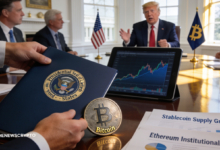
В SEC было подано пять новых заявок на крипто-ETF

cryptonews.ru2025-03-16 tarihinde yayınlandı2025-09-17 tarihinde güncellendi

  • Bitwise, Defiance, Tuttle и T-Rex подали заявки на пять новых криптовалютных ETF: от Avalanche и Sui до мемкоина Bonk.
  • Аналитики говорят, что AVAX и фонды токенизации имеют самые высокие шансы на одобрение, в то время как мемкоины и Basis Trade ETF подвергаются «более пристальному вниманию».
  • Эти заявки пополняют очередь из более чем 90 заявок на криптовалютные ETF, находящихся в SEC.

Во вторник Комиссия по ценным бумагам и биржам получила поток заявок на регистрацию криптовалютных ETF: пять отдельных заявок охватывают все: от инфраструктуры Avalanche до Bonk (BONK).

По словам соучредителя ETF Institute Нейта Джерачи, в линейку входят спотовый ETF Avalanche и ETF Stablecoin & Tokenization от Bitwise, ETF Defiance , построенные на торговле Bitcoin и Ethereum, фонды «Income Blast» от Tuttle, охватывающие Bonk (BONK), Litecoin (LTC) и Sui (SUI), а также ETF T-Rex с кредитным плечом 2x Orbs.

Вместе они расширяют и без того растущий список из более чем 90 заявок на криптовалютные ETF, находящихся на рассмотрении регулятора.

«Спотовый ETF AVAX имеет наибольшие шансы на одобрение, поскольку это простой продукт по сравнению с другими», — сказал Пратик Кала, руководитель исследований в Apollo Crypto.

Bitwise присоединяется к VanEck и Grayscale в стремлении привлечь институциональные инвестиции в ETF AVAX.

Однако Кала выразил скептицизм по поводу более экзотических продуктов, заявив, что «Basis Trade ETF станет первым в своем роде, насколько мне известно, и будет подвергаться более тщательной проверке».

Он имел в виду рыночно-нейтральные фонды Bitcoin и Ethereum компании Defiance ETF, которые реализуют стратегии арбитража хедж-фондов, покупая спотовые ETF и одновременно продавая короткие фьючерсные контракты.

Компания Tuttle Capital Management, управляющая активами на сумму более 3,6 млрд долларов, стала вторым управляющим фондами в США, подавшим заявку на биржевой фонд Bonk (BONK) наряду с продуктами «Income Blast», включающими Litecoin и Sui.

«Было бы справедливо, если бы SEC ужесточила правила для ETF на основе мемкоинов из-за долгосрочной устойчивости некоторых из этих монет, а также из-за более низкого профиля ликвидности» -сказал Кала.

Пав Хундал, ведущий аналитик Swyftx, сообщил, что «инфраструктурные монеты, такие как Avax, достаточно близки к Ethereum», чтобы иметь высокие шансы на одобрение, и «то же самое относится и к Sui».

Он отметил, что в феврале Комиссия по ценным бумагам и биржам (SEC) дала «ясное разъяснение» относительно того, что «монеты-мемы не являются ценными бумагами», и предположил, что за этим последуют и другие заявки.

Однако Хундал проявил особый энтузиазм в отношении базисного торгового ETF, назвав его «выдающимся», поскольку «рыночно-нейтральный продукт еще не запущен», и предсказал, что «такие типы доходных фондов могут стать крупными».

Массовая подача заявок совпала с подготовкой Dogecoin ETF от REX-Osprey к дебюту на этой неделе после завершения периода рассмотрения SEC.

Кала сказал, что «дико, что рассматриваются заявки на ETF на активы с длинным хвостом криптовалюты и мемкойнов», поскольку эмитенты позиционируют себя как способ «крупнейшей передачи богатства» от бэби-бумеров к более молодому поколению, которое видит, что «меметика играет большую роль в инвестировании».


Trend Kriptolar

İlgili Okumalar

Olympus DAO Myth Reappears? A "Sovereign On-Chain Central Bank" Written with 4000 Lines of Immutable Code

A new project called The Standard Reserve has emerged, branding itself as a "sovereign on-chain central bank." It aims to replicate core central bank functions—currency issuance, money supply adjustment, and reserve accumulation—entirely through 4,000 lines of immutable code, with no human governance. Its core mechanism is a "reflexive monetary policy" based on a single signal: the net ETH flow into or out of the system's sole Uniswap v4 ETH/$STANDARD pool. Sustained net ETH inflows trigger an "expansion" phase, increasing $STANDARD issuance and using protocol fees to buy tokenized gold as a permanent hard reserve. Net outflows (or zero flow) trigger an immediate "contraction" phase, reducing issuance and using fees to buy back and burn $STANDARD. The system involves six key entities: the $STANDARD token (hard-capped at 1 billion), the central Uniswap pool, the Central Bank contract, Charter NFTs (acting as "banking licenses"), Branch units under each Charter (which earn a share of newly minted $STANDARD), and separate Vaults for expansion (buying gold) and contraction (buying back $STANDARD). To participate, users ideally acquire a Founding Charter NFT (initially 1,000 are free via allowlist/public mint). Each Charter comes with one Branch; more can be opened by burning $STANDARD for "expansion permits," increasing revenue share. Retiring a Branch lets users claim accumulated $STANDARD but imposes a dynamic exit fee (higher if many exit simultaneously), with half the fee burned and half distributed to remaining participants. All protocol revenue (from pool fees and Charter auctions) is allocated: 70% to the active Vault (for gold or buybacks), 15% to permanent protocol-owned liquidity, and 15% to the team. The project presents an innovative, game-theoretic model where user actions (expanding Branches by burning tokens or exiting) align with system goals of building reserves or inducing deflation. However, it is fully anonymous, with key parameters undefined and unaudited code, posing significant risks.

marsbit21 dk önce

Olympus DAO Myth Reappears? A "Sovereign On-Chain Central Bank" Written with 4000 Lines of Immutable Code

marsbit21 dk önce

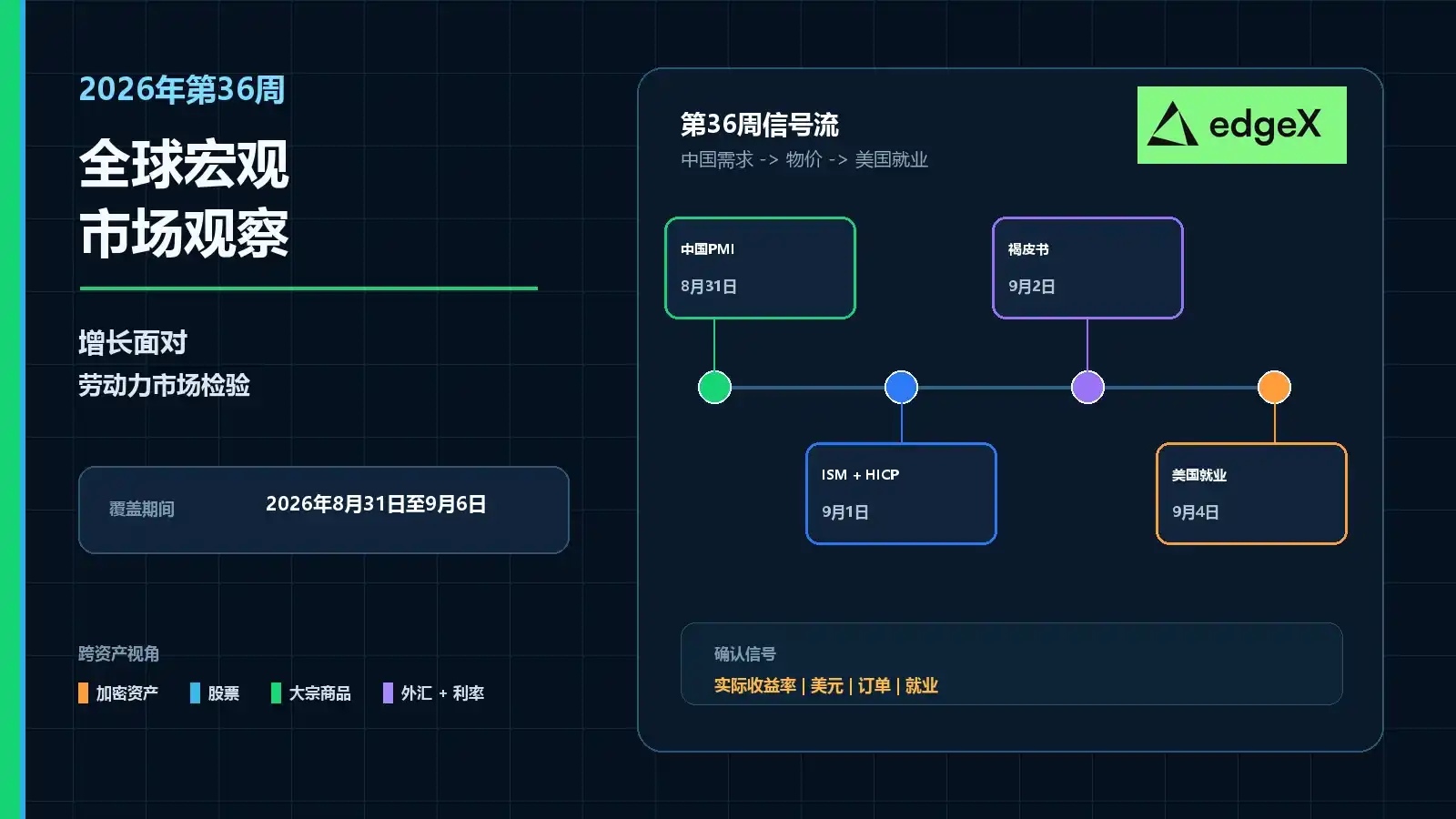
US Jobs, China PMI, and Inflation on Stage: Can Global Growth Maintain Resilience?

**Week 36 Macro Outlook: Key Data to Test Global Growth Resilience** The week from August 31 to September 6 will shift focus from policy discussions to a critical test of global economic activity. The sequence of events is key, starting with China's official August PMI on Aug 31, which will provide early signals on factory orders, services, and employment following July's contraction. The data flow then broadens. On September 1, US ISM Manufacturing PMI and the Eurozone's flash inflation estimate will offer simultaneous checks on demand, prices, and regional divergence. The subsequent US Federal Reserve Beige Book on September 2 adds granular, qualitative evidence on consumer spending, wages, and regional conditions. Australian Q2 GDP and Canadian trade and jobs data will test resilience in other major economies. The week's pivotal event, however, is the US August employment report on September 4. It will decisively influence expectations for interest rates, the US dollar, and broader risk appetite, acting as a final cross-check for the preceding data. The core question for markets is whether global growth can remain resilient. An ideal outcome would combine a rebound in China's PMI, stable US jobs growth, cooling inflation, and signs of a gradual demand slowdown. Conversely, weak Chinese manufacturing, sticky Eurozone prices, and disappointing US non-farm payrolls would create a more complex scenario of reduced corporate confidence and limited room for aggressive monetary easing, increasing pressure on cyclical assets. Investors should monitor the breadth of improvements—such as new orders and employment—rather than headline PMI figures alone. Confirmation across different data points is crucial. A positive combination of steady activity and disinflation could support equities, industrial commodities, and risk assets like crypto. However, if a growth slowdown triggers lower yields, it must be distinguished from a scenario of rising recession risks that would pressure corporate earnings, potentially limiting rallies. The market's final reaction will hinge on whether the week's signals align to either reinforce or challenge the current growth narrative.

marsbit23 dk önce

US Jobs, China PMI, and Inflation on Stage: Can Global Growth Maintain Resilience?

marsbit23 dk önce

İşlemler

Spot

Popüler Makaleler

T Nasıl Satın Alınır

HTX.com’a hoş geldiniz! Threshold Network Token (T) satın alma işlemlerini basit ve kullanışlı bir hâle getirdik. Adım adım açıkladığımız rehberimizi takip ederek kripto yolculuğunuza başlayın. 1. Adım: HTX Hesabınızı OluşturunHTX'te ücretsiz bir hesap açmak için e-posta adresinizi veya telefon numaranızı kullanın. Sorunsuzca kaydolun ve tüm özelliklerin kilidini açın. Hesabımı Aç2. Adım: Kripto Satın Al Bölümüne Gidin ve Ödeme Yönteminizi SeçinKredi/Banka Kartı: Visa veya Mastercard'ınızı kullanarak anında Threshold Network Token (T) satın alın.Bakiye: Sorunsuz bir şekilde işlem yapmak için HTX hesap bakiyenizdeki fonları kullanın.Üçüncü Taraflar: Kullanımı kolaylaştırmak için Google Pay ve Apple Pay gibi popüler ödeme yöntemlerini ekledik.P2P: HTX'teki diğer kullanıcılarla doğrudan işlem yapın.Borsa Dışı (OTC): Yatırımcılar için kişiye özel hizmetler ve rekabetçi döviz kurları sunuyoruz.3. Adım: Threshold Network Token (T) Varlıklarınızı SaklayınThreshold Network Token (T) satın aldıktan sonra HTX hesabınızda saklayın. Alternatif olarak, blok zinciri transferi yoluyla başka bir yere gönderebilir veya diğer kripto para birimlerini takas etmek için kullanabilirsiniz.4. Adım: Threshold Network Token (T) Varlıklarınızla İşlem YapınHTX'in spot piyasasında Threshold Network Token (T) ile kolayca işlemler yapın.Hesabınıza erişin, işlem çiftinizi seçin, işlemlerinizi gerçekleştirin ve gerçek zamanlı olarak izleyin. Hem yeni başlayanlar hem de deneyimli yatırımcılar için kullanıcı dostu bir deneyim sunuyoruz.

829 Toplam GörüntülenmeYayınlanma 2024.12.10Güncellenme 2026.06.02

T Nasıl Satın Alınır

Tartışmalar

HTX Topluluğuna hoş geldiniz. Burada, en son platform gelişmeleri hakkında bilgi sahibi olabilir ve profesyonel piyasa görüşlerine erişebilirsiniz. Kullanıcıların T (T) fiyatı hakkındaki görüşleri aşağıda sunulmaktadır.

活动图片