Figure与DefiLlama的“RWA数据造假”之争:什么才算“链上资产”?

marsbit2025-09-14 tarihinde yayınlandı2025-09-15 tarihinde güncellendi

在 DeFi 世界里,TVL 是为关键数据——它既是协议实力的象征,也是用户信任的晴雨表。然而,一场围绕 120 亿美元 RWA 资产的指标造假争议,迅速撕裂了用户信任。

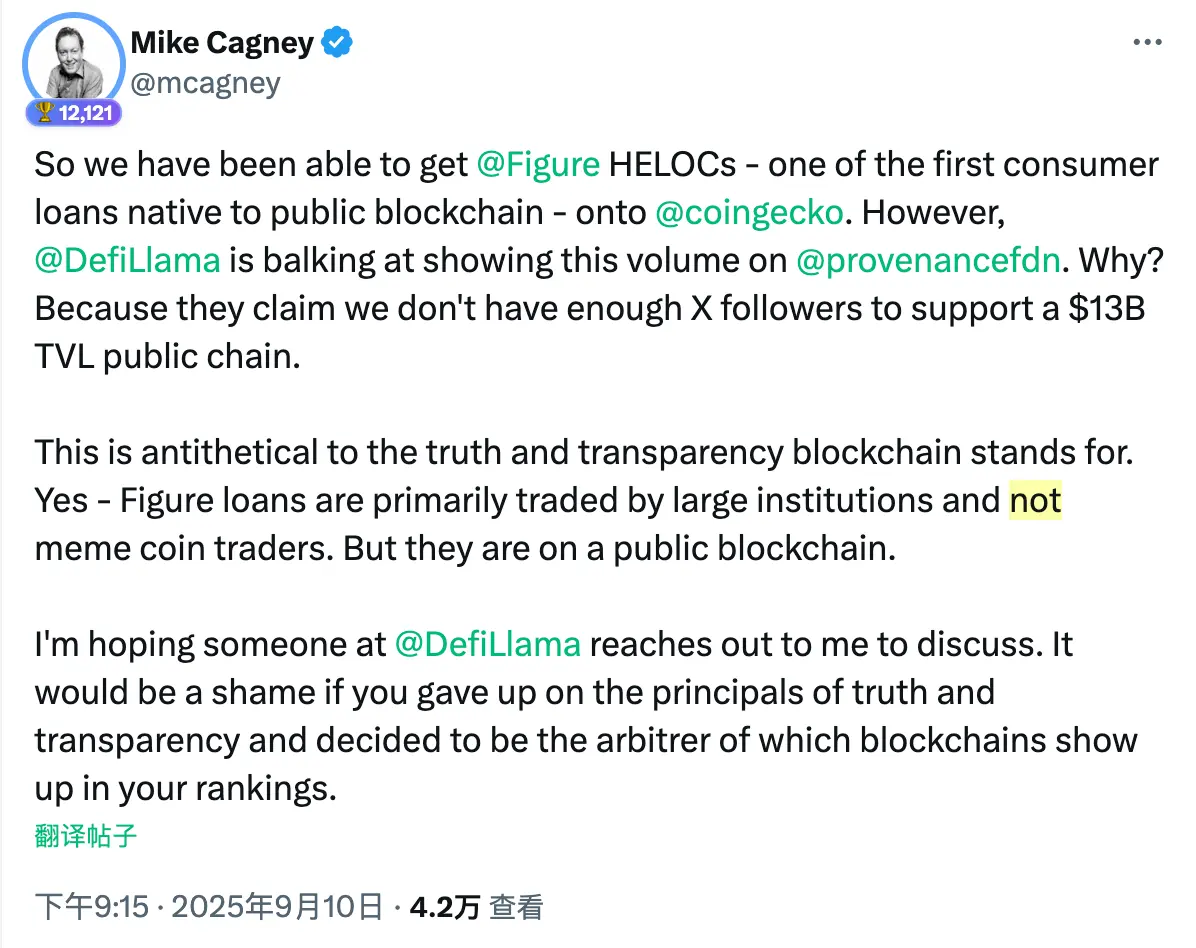
9 月 10 日,Figure 联合创始人 Mike Cagney 在 X 平台率先开火,公开指责链上数据平台 DefiLlama 拒绝展示其 RWA TVL,仅因“社交平台粉丝数不足”,并质疑其“去中心化标准”的公允性。

几天后,DefiLlama 联合创始人 0xngmi 发布长文《The Problem in RWA Metrics》进行回应,逐条揭示 Figure 所声称的 120 亿美元规模背后的数据异常,直指其链上数据不可验证、资产缺乏真实转移路径,甚至存在规避尽调的嫌疑。

由此,一场关于“链上可验证性”与“链下映射逻辑”的信任争夺战全面爆发。


事件时间线:Figure 主动发难,DefiLlama 强硬回应

这场风波的导火索来自Figure 联合创始人 Mike Cagney的一则推文。

9 月 10 日,他在 X 平台高调宣布,Figure 的房屋净值信贷产品(HELOCs)已成功登陆 CoinGecko,但同时指责DefiLlama 拒绝展示 Figure 在 Provenance 链上的 130 亿美元 TVL。他将矛头直指 DefiLlama 的“审查逻辑”,甚至直言对方以“X 粉丝数不足”为由否决其上榜。(Odaily 注:这里Mike Cagney说的是130亿美元,与后文0xngmi回应中的120亿存在数据不对称情况。)
 RWA

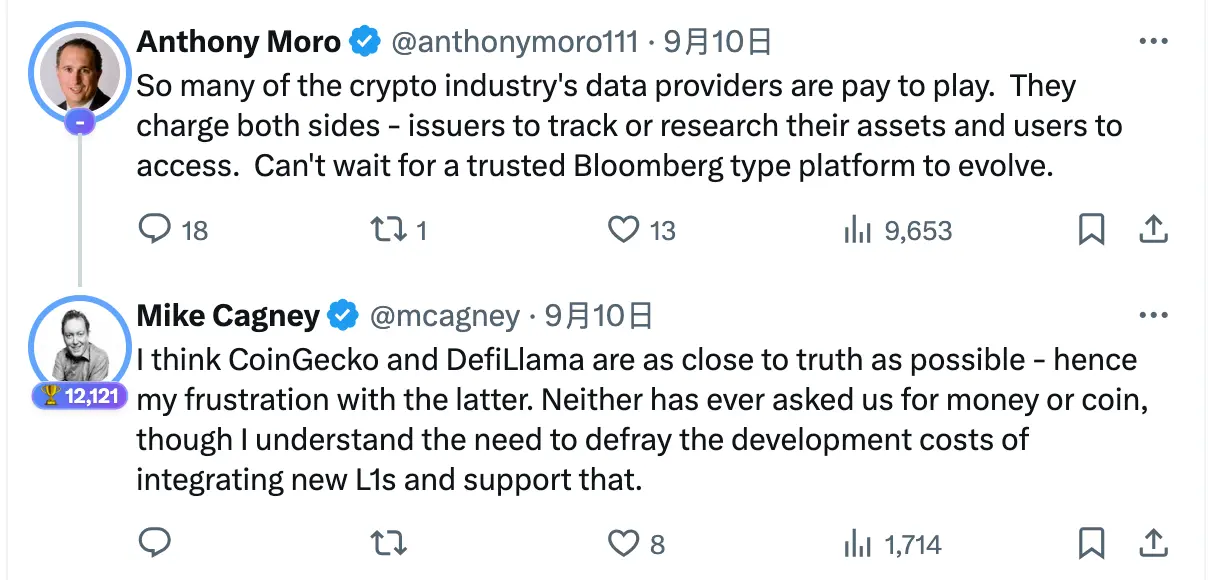
此言一出,约一小时后,Provenance Blockchain CEO Anthony Moro(从语境看疑似未掌握全部背景就介入)在同帖下发言,表达对行业数据平台DefiLlama的强烈不信任:
 RWA

随后,Figure 联合创始人 Mike Cagney补充称他理解集成新 L 1 的开发成本,但亦表示CoinGecko 和 DefiLlama 从未向 Figure 索要过费用或代币,以澄清其“付费上榜”的暗示。

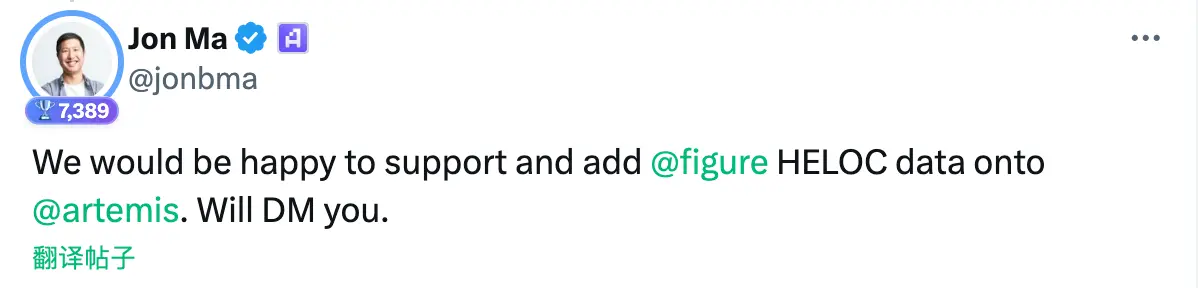
9 月 12 日,L1 数据仪表板Artemis 联合创始人兼 CEO Jon Ma(同样看起来在未充分了解争议细节的情况下)公开抛出橄榄枝。
 RWA

在这一时段里,舆情一度明显倾向 Figure——不少围观者将矛头指向 DefiLlama 的“可信度与中立性”。

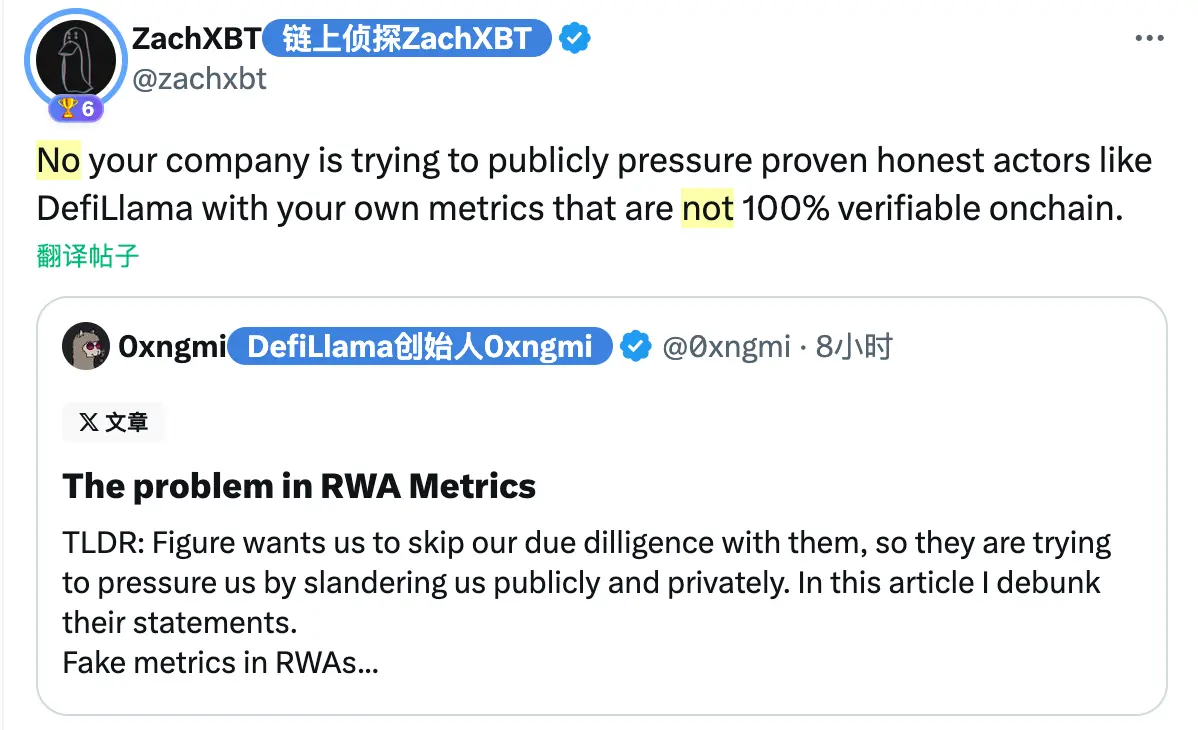
直到 9 月 13 日,DefiLlama 联合创始人0xngmi发布长文《The Problem in RWA Metrics》,系统披露其尽调发现与四点质疑,叙事风向才开始反转;紧接着ZachXBT等意见领袖转发声援,强调“这些指标并非 100% 可在链上验证”,DefiLlama 的立场获得更广泛支持。
 RWA

DefiLlama 的调查结果:数据对不上

在 长文《The Problem in RWA Metrics》 中,0xngmi 公布了 DefiLlama 团队针对 Figure 的尽职调查结果,逐条列出了多个异常点:

链上资产规模与宣称规模严重不符

Figure 声称其链上发行的 RWA 规模达到120 亿美元,但实际可在链上验证的资产只有约500 万美元的 BTC和400 万美元的 ETH。其中 BTC 的 24 小时成交量甚至只有2000 美元。

稳定币供给不足

Figure 自己发行的稳定币YLDS总供应量仅2000 万,理论上所有 RWA 交易都应以此为基础,但供给量远不足以支撑 120 亿美元的交易规模。

可疑的资产转账模式

大部分 RWA 资产的转账交易并非由资产实际持有者发起,而是通过其他账户操作。很多地址本身几乎没有任何链上交互,疑似只是数据库镜像。

缺乏链上支付痕迹

Figure 的绝大多数贷款流程仍然通过法币完成,链上几乎找不到对应的支付和还款记录。

0xngmi 补充称:“我们不确定 Figure 的 120 亿美元资产规模究竟是如何形成交易的。大多数持有人似乎并没有用自己的密钥转移这些资产——他们是不是只是把自己的内部数据库映射到链上?”


社区表态:DefiLlama 获压倒性支持

随着风波扩散,社区舆论几乎一边倒地支持 DefiLlama,但在此过程中,也出现了一些不同角度的声音。

ZachXBT(链上侦探):

直言 Figure 的操作属于“公然施压”,并明确指出:“不,你们公司正试图用那些并非 100%可在链上验证的指标,公开向像 DefiLlama 这样被证实是诚信的参与者施压。”

Conor Grogan(Coinbase 董事成员):

则把 矛头指向那些在争议未明之时,就被 Figure 游说、并私下质问 DefiLlama 的机构人士。他写道:“我收到了很多来自大型加密货币机构和风险投资公司的人私下联系 defillama 和我们的合作伙伴。这些人中的每一个都需要被当面点名,问问他们如果连自己都无法核实事情,怎么能在这个行业工作。”

Conor 的发言道出了许多人心声:如果连基本的链上验证都无法独立完成,那么这些机构在 RWA 和 DeFi 赛道的可信度也将大打折扣。

Ian Kane(Midnight Network 伙伴关系负责人):

则提出了一个 更偏技术性的建议,认为 DefiLlama 可以在现有的 TVL 追踪之外,增加“活跃 TVL(active TVL)”的新指标,用来显示 RWA 在一定时间内的实际转移速度。他举例:“示例:两个 DApp 各自铸造了 1000 亿美元的 TVL(总计 2000 亿美元)。DApp 1 有 1000 亿美元只是闲置在那里,可能只有 2%的资金流动,产生 20 亿美元的活跃锁仓价值,而 DApp 2 有 30%的资金流动,产生 300 亿美元的活跃锁仓价值(是 DApp 1 的 15 倍)。”

在他看来,这样的维度既能显示总规模,也能避免“停滞或作秀式的 TVL”。

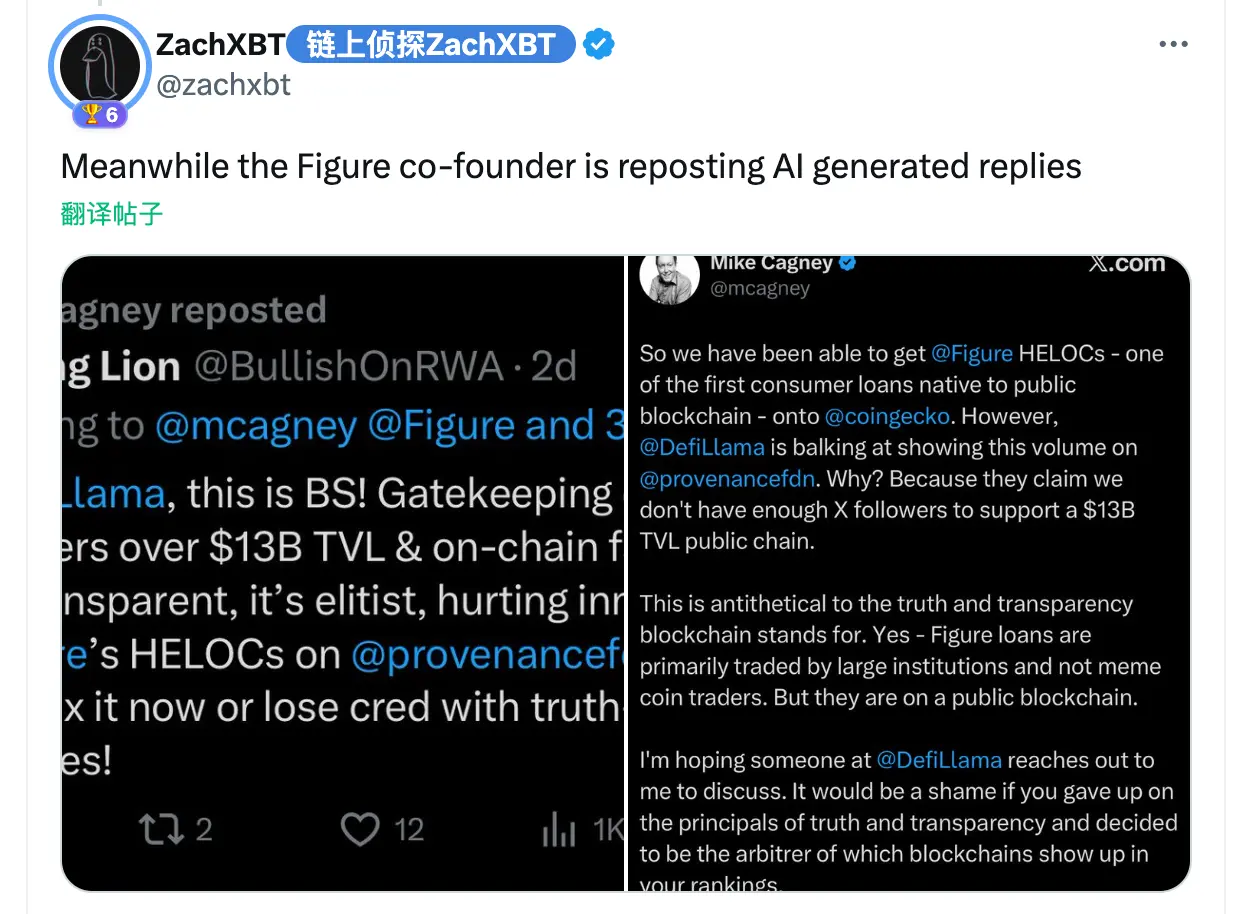
与此同时,ZachXBT 还注意到 Figure 联合创始人 Mike Cagney 不断转发一些疑似 AI 自动生成的“声援评论”,并公开点出这一点,进一步引发对 Figure 舆论操作的反感。
 RWA

结语:信任的代价,才刚刚开始显露

Figure 与 DefiLlama 的争端,看似是一场榜单风波,实则击中了 RWA 赛道的核心软肋——到底什么才算“链上资产”。

这场风波的核心矛盾,其实是链上原教旨主义 vs 链下映射逻辑。

  • DefiLlama 的坚持:只统计能够链上验证的 TVL,坚持开源适配器逻辑,拒绝接受未能满足透明度的资产数据。
  • Figure 的模式:资产可能真实存在,但业务逻辑更多依赖传统金融系统,链上部分只是数据库回显。换言之,用户无法用链上交易去证明资产的流转,这与 DeFi 原住民的“可验证性”标准相冲突。

所谓的 120 亿美元,如果无法链上验证,就等于 0。

在一个以透明与可验证为底线的行业里,任何绕过链上验证、用数据库数字冒充链上 TVL 的尝试,最终都会反噬用户与市场信任。

这场争议可能只是开始。未来,随着更多 RWA 协议涌入,类似的问题还会不断出现。行业亟需明确统一的验证标准,否则“虚拟 TVL”就会不断膨胀,成为击穿信任的下一颗雷。
İlgili Okumalar

NeoCloud Three Giants: NBIS, IREN, CRWV – Which One Has More Investment Value?

This conversation analyzes the three leading "Neocloud" companies—NBIS (Nebius), IREN, and CRWV (CoreWeave)—in the context of the AI compute boom. The core thesis is that a severe GPU shortage will persist for 3-5 years, creating a massive, durable opportunity for specialized GPU cloud providers to supplement hyperscalers like AWS and Azure. Key differentiators are highlighted: CoreWeave is the early leader with the highest activated power and revenue, focusing on high-value AI training. IREN possesses the largest locked-in power capacity (4.5 GW) but has only secured Microsoft as a major customer so far. Nebius is positioned as the long-term pick due to its unique focus on building an inference-focused software stack ("token factory") and its exceptional engineering-centric team, led by a mathematician CEO with a proven track record. The discussion debunks bearish narratives, noting that Nebius recently raised prices for H100/B200 GPUs by 30-70%, indicating strong pricing power and contradicting fears of rapid GPU depreciation. A simple revenue model is presented: 1 MW of power equates to ~$10M in annual revenue. Nebius's guidance of 5 GW by 2030 implies $50B in revenue, vastly exceeding current consensus. All three companies are expected to succeed in the near-to-medium term due to overwhelming demand. However, for long-term (5+ year) investment, the preference is for Nebius due to its team, software strategy, and valuable stakes in subsidiaries like ClickHouse. The conversation also identifies the networking layer (e.g., Arista Networks) as a critical, underappreciated adjacent opportunity in the AI infrastructure build-out.

marsbit6 dk önce

NeoCloud Three Giants: NBIS, IREN, CRWV – Which One Has More Investment Value?

marsbit6 dk önce

Google Cracks Down on 'AI Poisoning'

Google has taken a strong stance against "AI poisoning," a new form of manipulation where advertisers subtly feed information to influence AI-generated answers like those in Google's AI Overview. Unlike traditional SEO, which aims for higher website rankings, Generative Engine Optimization (GEO) seeks to have a brand or product recommended within the AI's response itself. This is particularly valuable as AI summaries, often perceived as neutral and comprehensive, can shorten the consumer decision path and directly influence purchases. The article illustrates the issue with a "hot dog experiment," where fabricated content was quickly picked up and presented as fact by AI. GEO exploitation is potent because AI models aggregate information from various sources—reviews, articles, forums—and can mistake coordinated marketing campaigns for genuine consensus. This threatens the core credibility of search engines. While Google's updated spam policy now explicitly covers attempts to manipulate AI-generated content, enforcement faces challenges. Google can leverage its long experience fighting SEO spam, using penalties like ranking demotion. However, sophisticated "gray area" tactics, such as sponsored third-party reviews or industry reports, are harder to distinguish from legitimate promotion. Other AI players, like Microsoft, have taken a more open approach to GEO, viewing it as a new channel for brands. Ultimately, as AI becomes a primary information source, maintaining the trustworthiness of its answers is a critical challenge for all platforms.

marsbit29 dk önce

Google Cracks Down on 'AI Poisoning'

marsbit29 dk önce

When Futu Turns into a Matchmaking Corner: Overseas Identity Becomes the Hard Currency for the Middle Class

When Futu Becomes a Matchmaking Corner: Overseas Status as the New Hard Currency for China's Middle Class Following a severe penalty announcement from Chinese regulators on May 22nd targeting offshore brokerages like Futu, its app community unexpectedly transformed into an impromptu matchmaking platform. Users posted相亲 (matchmaking) requests, explicitly seeking partners with overseas residency or citizenship, revealing a stark new reality: for China's middle class, an overseas identity has become a crucial asset. The regulatory crackdown, which restricts mainland Chinese residents from opening new accounts to buy overseas securities like US stocks, has sharply escalated the value of a foreign passport or permanent residency. This status now acts as a gateway to global asset allocation—including US equities, offshore property, and foreign currency deposits—effectively becoming a new form of "hard currency." Its scarcity, non-transferability (except through marriage, inheritance, etc.), and role as a hedge against domestic uncertainty have driven its premium. The article traces the evolution of how China's middle class views overseas resources: from an investment for opportunity (2000s), to risk diversification (2010s), and now to a mandatory "insurance policy" for financial access. With the regulatory window closing for many, the demand is shifting towards securing such status for the next generation through international education. The surreal scene of high-performing investors posting dating resumes underscores a 2026 where financial talent can be secondary to the right passport.

marsbit1 saat önce

When Futu Turns into a Matchmaking Corner: Overseas Identity Becomes the Hard Currency for the Middle Class

marsbit1 saat önce

Understanding Bound in One Article: The "Multi-signature + Timelock" Escape Mechanism and the Off-Chain Matching Black Box

**Title**: Understanding Bound: The Escape Mechanism of "Multi-Sig + Time Lock" and the Off-Chain Matching Black Box **Summary**: Bound Exchange, evolved from the earlier radFi platform, introduces a novel approach to Bitcoin trading by combining self-custody security with exchange-like speed. Its core mechanism relies on a 2-of-2 multi-signature (multi-sig) address for user deposits. One private key is held by the user via a passkey, and the other is held by Bound. This setup requires both keys to sign any transaction, preventing Bound from unilaterally accessing user funds (non-custodial). To address the risk of Bound becoming unavailable, a 3-month timelock is integrated into the Bitcoin script. After this period, users can withdraw their assets with just their single signature, ensuring an escape hatch. For trading, Bound operates a concentrated liquidity AMM. However, as Bitcoin L1 lacks smart contracts, the AMM curve, liquidity management, and trade price calculations occur off-chain in Bound's backend database. On-chain Bitcoin transactions serve only as final settlement receipts for pre-determined amounts. This creates a centralization point: the critical sequence of trade execution—which determines the exact price along the curve for each order—is managed off-chain by Bound in a non-transparent "black box." While the 2-of-2 setup protects user本金 (principal), the pricing and ordering of trades introduce potential operational MEV risks, as the order processing is invisible and unverifiable on-chain. In practice, users can also connect external wallets (like Unisat) for fully self-custodied trading, but this requires manually signing every transaction. The platform currently supports deposits of BTC and Runes only.

marsbit1 saat önce

Understanding Bound in One Article: The "Multi-signature + Timelock" Escape Mechanism and the Off-Chain Matching Black Box

marsbit1 saat önce

İşlemler

Spot
Futures
活动图片