BTC 悬在 10 万生死线、ETH 蹲 4000 等爆发、SHIB 捏紧 “弹簧” 要蹦极?

金色财经Pubblicato 2025-09-03Pubblicato ultima volta 2025-09-03

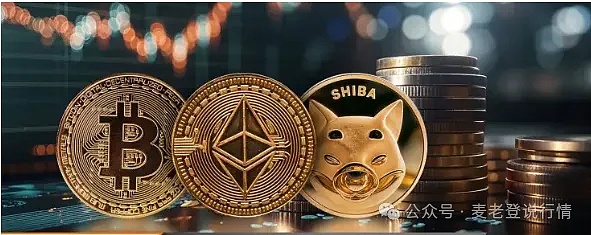
最近加密圈跟开盲盒似的,比特币天天在 “保 10 万” 边缘蹦迪,以太坊飙到 5000 美元后躺平歇脚,连柴犬都把 K 线捏成 “三角形弹簧”—— 就等一个动静要么飞上天,要么再添一个零。今天咱用唠嗑的方式拆解:这三兄弟现在是该抄底、跑路,还是蹲旁边看大戏?
图片

BTC:10 万关口是 “承重墙”,破了可能带崩全市场

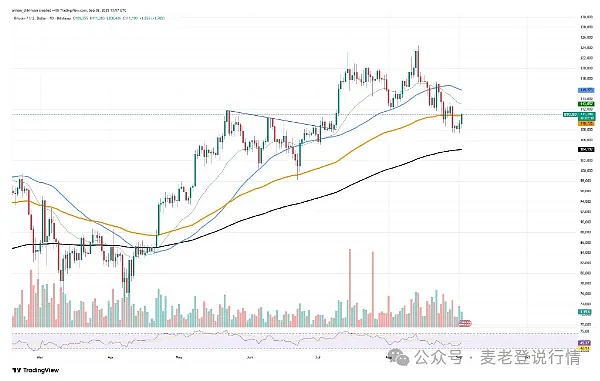
比特币最近的画风,像极了中年男人扛房贷 —— 从 12 万跌下来后,现在卡在 10.8 万,连 50 日均线都跌破了,活脱脱 “从优等生变吊车尾”。
图片

最吓人的是,10 万大关现在跟 “老房子承重墙” 似的,一旦塌了,不仅心理上打击所有人,技术面也直接玩崩。

先划重点:

救命线:10.4 万美金(200 日均线),这是最后一道防线,再跌破就等着看 10 万以下的风景;

翻身线:11.4 万美金,得站稳这个数才算 “缓过来”,不然还是继续跌的命。

现在的问题是,买家跟 “躲债似的”—— 最近成交量越来越低,RSI 指标快摸到 “超卖区” 了,却没出现 “该涨的信号”。机构也在偷偷撤资,加上美联储降息还没落地,宏观环境跟 “阴天晒被子” 似的不给力。

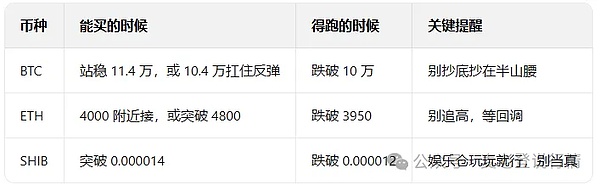
给普通玩家的建议:别瞎冲!要么等它站稳 11.4 万再动手,要么看 10.4 万能不能扛住,真跌破 10 万就赶紧跑 —— 这时候硬扛,跟用手接掉下来的冰箱似的,纯属找罪受。

ETH:5000 美元后 “中场休息”,4000 是 “补给站”

以太坊比比特币会来事 —— 之前飙到 5000 美元后,现在在 4300 歇脚,跟跑马拉松中途喝水似的。它现在的关键是 “别把体力耗光”:

安全区:4000-4050 美金,20 日均线和 50 日均线都在这,跌穿了就可能往 3950 奔;

冲刺线:4800 美金,站稳这个数,就能再冲一次 5000 美元的高点。

有意思的是,现在成交量低不是坏事 —— 业内常说 “成交量低的时候,是大机构偷偷吸筹”,就像超市关门前员工囤打折菜似的,等吸够了就该拉涨了。RSI 指标还在 “中性区”,没涨疯也没跌透,相当于 “体力还够,就等发令枪”。

建议:想抄 ETH 的,要么等跌到 4000 附近小买,要么等突破 4800 再追;要是真跌破 3950,就别硬扛了 —— 这时候离场,比等它跌穿地板再跑强。近裙+V:zyg2000412

SHIB:三角形 “弹簧” 捏紧了,要么飞要么添零

柴犬最近把 K 线玩出了新花样 —— 画成 “对称三角形”,跟捏紧的弹簧似的,现在价格 0.0000123 美元,就等一个动静 “弹出去”。这币的特点是 “要么惊喜要么惊吓”:

起飞线:0.000013-0.000014 美元,得突破这个区间,还得站稳 200 日均线,不然都是瞎蹦;

崩盘线:0.000012 美元,跌穿了就可能再添一个零,变成 0.000011 甚至更低。

现在的情况是,多空双方跟 “掰手腕似的”——RSI 在 40 左右,没超买也没超卖,成交量低得像 “菜市场收摊前”。但三角形越收窄,越容易 “一触即发”,可能早上还在 0.000012,下午就冲到 0.000014,也可能直接跌到 0.000011,跟坐过山车似的。

建议:玩 SHIB 的都是敢赌的,但别梭哈!要么等突破 0.000014 再小买,要么跌穿 0.000012 就赶紧跑 —— 这币的波动能让你早上笑中午哭,心脏不好的别碰。

总结:三兄弟操作指南
图片

最后说句实在的:现在市场跟 “暴风雨前的平静” 似的,成交量低、波动小,但越这样越要小心 —— 别被 “看似安全” 骗了,保住本金比啥都强。毕竟投资不是赌大小,别把买菜钱都梭哈进去,不然月底可能连泡面都吃不起~


Crypto di tendenza

Letture associate

U.S. Market Trend (August 20): U.S. Treasury Intervention Halts Stock Decline; Moderna's Cancer Vaccine Breakthrough Sparks 180% Surge

U.S. Stocks Rebound on Treasury Intervention; Moderna Soars 180% on Cancer Vaccine Breakthrough Key Points: • U.S. stocks ended a three-day decline, with the rebound driven primarily by the U.S. Treasury Department's move to significantly increase its long-term bond repurchase ceiling. This action briefly pushed the 30-year Treasury yield down by about 10 basis points, easing long-term interest rate pressures. • Despite this, the market faced a countervailing force from the hawkish July FOMC meeting minutes, which revealed broader support for potential rate hikes among officials due to lingering inflation concerns. • Moderna shares skyrocketed nearly 180% after announcing positive Phase 3 trial results for its personalized mRNA cancer vaccine in partnership with Merck, which also rose nearly 13%. This fueled a major rally in the healthcare sector. • Contrary to the broader market, the Philadelphia Semiconductor Index fell over 2%, highlighting persistent pressure on the AI hardware chain. Concerns include AI's potential inflationary impact and questions about application-side cash flows supporting high capital expenditures. • Commodities and cryptocurrencies rallied alongside the equity rebound, supported by a weaker dollar and lower long-term yields. Geopolitical risks continued to underpin oil prices. Outlook: Market focus shifts to whether long-term bond yields stabilize post-intervention, upcoming U.S. economic data (jobless claims, Philly Fed index), and the impact of SK Hynix's massive share buyback plan on the memory chip sector. The tech sector's full recovery remains contingent on the semiconductor index's performance.

marsbit6 min fa

U.S. Market Trend (August 20): U.S. Treasury Intervention Halts Stock Decline; Moderna's Cancer Vaccine Breakthrough Sparks 180% Surge

marsbit6 min fa

The 19 Must-Know Top Chinese and American Entrepreneurs Born After 2000 • The 21st-Century Successors Have Arrived

The 21st century's first generation of entrepreneurs, born in the 2000s, are already taking center stage. This analysis of publicly prominent founders reveals distinct trends between China and the U.S., shaped by their respective ecosystems. In China, young founders are heavily focused on giving AI a physical presence, tackling challenges in robotics and hardware. Examples include Huang Yi (RoboParty, humanoid robots), Qin Shentao (Yuanchen Taichu, embodied AI data infrastructure), and founders working on robotic hands, home cleaning robots, and computing power networks. Their paths often emerge from university labs and robotics competitions, prioritizing prototype demonstration, cost control, and manufacturing delivery. In contrast, their U.S. counterparts frequently leverage software, AI, and capital networks to rapidly reorganize digital services and information flows. Startups like Mercor (AI talent/data, reaching $10B revenue), Etched (AI chips), and various AI-powered SaaS tools for consumers and SMBs demonstrate a focus on user growth, subscription models, and global scalability. However, this velocity has also led to high-profile cases questioning business practices and credibility. The key differentiator for this generation is not merely youth, but the compressed early stage of venture creation. Access to open-source tools, AI models, mature supply chains, and willing venture capital allows them to bypass traditional career ladders. Yet, while technology lowers the barrier to product creation, it does not reduce the challenges of building a sustainable company—managing teams, ensuring reliable delivery, and establishing trust remain hard-earned skills. The article concludes that the true test for these founders will be the "second growth": evolving from product creators into responsible company leaders capable of sustained execution and organizational building. For established businesses, the rise of these fast-moving, technologically adept teams necessitates new strategies for collaboration, competition, and investment.

marsbit10 min fa

The 19 Must-Know Top Chinese and American Entrepreneurs Born After 2000 • The 21st-Century Successors Have Arrived

marsbit10 min fa

A Trillion-Dollar Consumer Credit Market Lacks Key Players

The trillion-dollar global consumer credit market remains largely untapped by blockchain technology. While projects like Pharos have rapidly attracted millions in stablecoin deposits for short-term consumer loans in emerging markets, they represent early attempts to bring this massive asset class on-chain. The core challenge isn't technical tokenization, but the "repackaging" of countless small, heterogeneous loans into standardized, investable products that digital asset funds can understand and price. Current approaches primarily change the *distribution* of capital—using stablecoins for settlement and smart contracts for transparency—but do not eliminate underlying credit risk. Several models are emerging: Pharos and Huma Finance/Tala focus on connecting high-yield emerging market loans to global crypto capital. Figure stands out by building full-stack, regulated infrastructure, securing AAA ratings for its securitizations and proving blockchain assets can meet traditional institutional standards. Conversely, Goldfinch's difficulties highlight that on-chain transparency cannot replace offline credit underwriting and collection capabilities. The article identifies a four-layer value chain: 1) loan origination, 2) credit structuring & securitization, 3) on-chain infrastructure, and 4) capital. The current gap is in the second layer—the mature capital markets expertise for structuring, rating, credit enhancement, and institutional distribution. This is the critical link needed to transform scattered loans into large-scale, trustworthy on-chain credit assets, bridging traditional finance's rigor with blockchain's new capital pools.

marsbit46 min fa

A Trillion-Dollar Consumer Credit Market Lacks Key Players

marsbit46 min fa

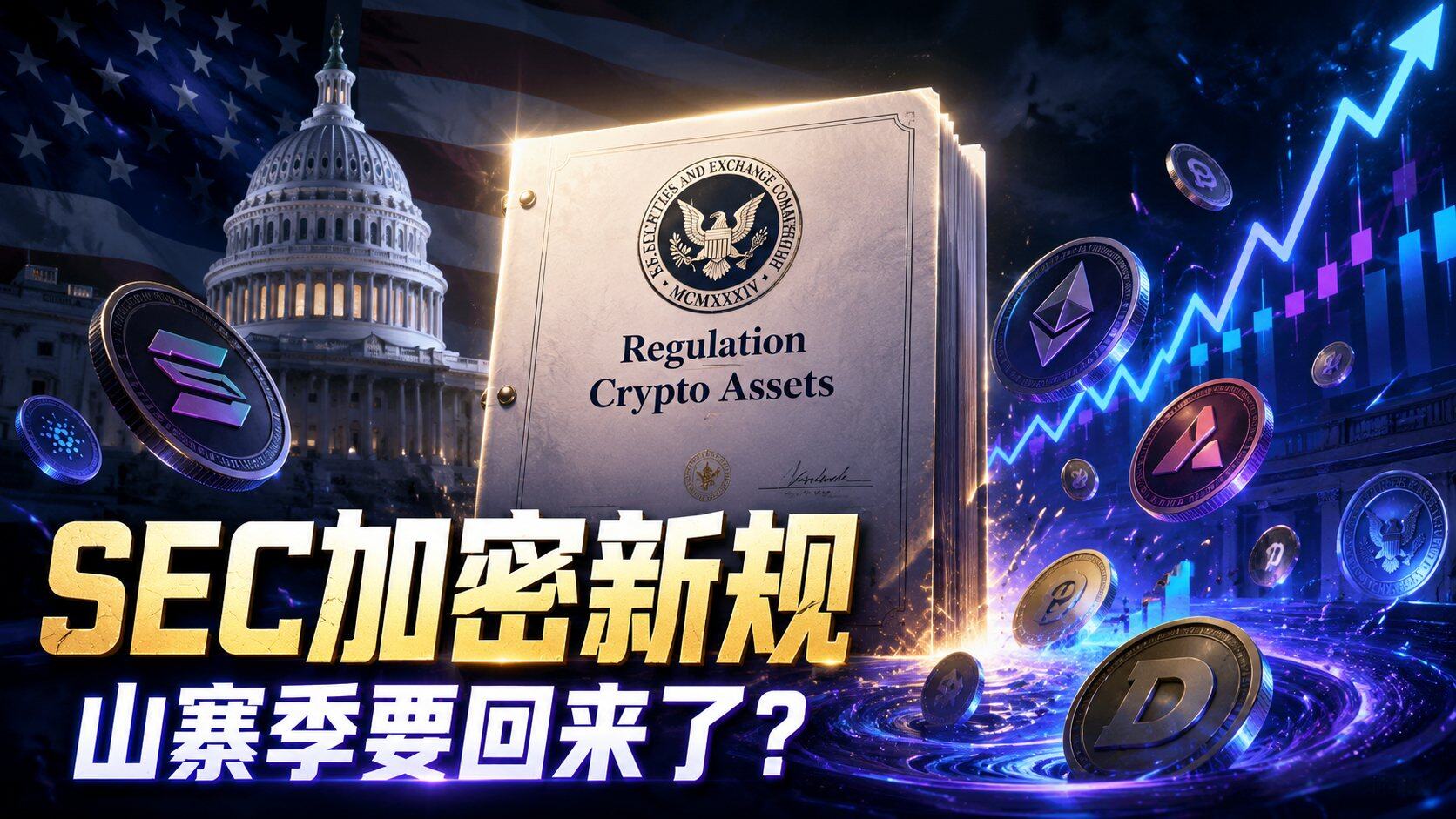
Interpretation of SEC's New Crypto Regulatory Rules: Fundraising Below $5 Million Exempt from Registration, Is Altcoin Season Making a Comeback?

The U.S. Securities and Exchange Commission (SEC) has proposed a new regulatory framework titled "Regulation Crypto Assets." This proposal aims to establish tailored exemptions for crypto asset fundraising and a pathway for tokens to transition out of being classified as securities. The core provisions include two exemptions from standard securities registration: 1. **Startup Exemption**: Allows early-stage projects to raise up to $5 million over four years with simplified, narrative-based disclosures, avoiding full registration. 2. **Fundraising Exemption**: Permits raising up to $75 million within any 12-month period. It requires audited financial statements and imposes ongoing reporting obligations, similar to the Regulation A+ framework. A key component is the **Investment Contract Safe Harbor**. This rule allows a token initially sold as an investment contract (a security) to lose that designation once the issuer has completed or permanently ceased the "essential managerial efforts" promised to investors. This theoretically clears regulatory hurdles for tokens where development is finished or abandoned. The proposal defines a narrow scope, applying only to crypto assets that are not securities themselves and are part of an investment contract involving no other assets. This SEC initiative is seen as a response to the stalled progress of the comprehensive *CLARITY Act* in Congress. It represents a shift from relying solely on the historical Howey test, which the SEC admits is ill-suited for dynamic crypto assets. The proposal is currently in a 60-day public comment period, with a final rule likely months away, leaving the U.S. regulatory landscape for crypto in a transitional state.

Odaily星球日报1 h fa

Interpretation of SEC's New Crypto Regulatory Rules: Fundraising Below $5 Million Exempt from Registration, Is Altcoin Season Making a Comeback?

Odaily星球日报1 h fa

Trading

Spot

Articoli Popolari

Come comprare SHIB

Benvenuto in HTX.com! Abbiamo reso l'acquisto di SHIBA INU (SHIB) semplice e conveniente. Segui la nostra guida passo passo per intraprendere il tuo viaggio nel mondo delle criptovalute.Step 1: Crea il tuo Account HTXUsa la tua email o numero di telefono per registrarti il tuo account gratuito su HTX. Vivi un'esperienza facile e sblocca tutte le funzionalità,Crea il mio accountStep 2: Vai in Acquista crypto e seleziona il tuo metodo di pagamentoCarta di credito/debito: utilizza la tua Visa o Mastercard per acquistare immediatamente SHIBA INUSHIB.Bilancio: Usa i fondi dal bilancio del tuo account HTX per fare trading senza problemi.Terze parti: abbiamo aggiunto metodi di pagamento molto utilizzati come Google Pay e Apple Pay per maggiore comodità.P2P: Fai trading direttamente con altri utenti HTX.Over-the-Counter (OTC): Offriamo servizi su misura e tassi di cambio competitivi per i trader.Step 3: Conserva SHIBA INU (SHIB)Dopo aver acquistato SHIBA INU (SHIB), conserva nel tuo account HTX. In alternativa, puoi inviare tramite trasferimento blockchain o scambiare per altre criptovalute.Step 4: Scambia SHIBA INU (SHIB)Scambia facilmente SHIBA INU (SHIB) nel mercato spot di HTX. Accedi al tuo account, seleziona la tua coppia di trading, esegui le tue operazioni e monitora in tempo reale. Offriamo un'esperienza user-friendly sia per chi ha appena iniziato che per i trader più esperti.

641 Totale visualizzazioniPubblicato il 2024.12.11Aggiornato il 2026.06.02

Come comprare SHIB

Discussioni

Benvenuto nella Community HTX. Qui puoi rimanere informato sugli ultimi sviluppi della piattaforma e accedere ad approfondimenti esperti sul mercato. Le opinioni degli utenti sul prezzo di SHIB SHIB sono presentate come di seguito.

活动图片