纽森欲发「特朗普腐败币」,新任美国总统上任后有多少「骚操作」?

深潮Pubblicato 2025-09-02Pubblicato ultima volta 2025-09-03

一个看似对 Crypto 敞开怀抱的联邦国家私下实则暗流涌动。

撰文:Eric,Foresight News

现任加州州长加文·纽森(Gavin Newsom)与现任美国总统特朗普近年来冲突不断。

近日,纽森在由科技记者 Kara Swisher 与纽约大学教授 Scott Galloway 主持的播客节目 Pivot 中表示计划发行「特朗普腐败币(Trump Corruption Coin)」以讽刺特朗普利用加密货币济私的行为。

在播客中,纽森对特朗普的批评非常犀利,而这份「深仇大恨」并非一日之寒,双方持续数月的剑拔弩张是部分对于特朗普以权谋私深恶痛绝的美国民众的呐喊,亦是美国驴象之争的一个缩影。

特朗普的「腐败」争议由来已久,据《华盛顿邮报》调查,特朗普国际酒店在 2017 至 2020 年间接待了至少 47 个国家的官方代表团,其中沙特阿拉伯政府在酒店消费超过 27 万美元,而同期美国政府对沙特的军售协议高达 1100 亿美元。这种以优惠政策交换商业回报的行为令人大跌眼镜。

在 2025 年开始的任期内,特朗普家族最被 Web3 行业熟知的就是发行 Meme 代币 TRUMP 以及推出了 World Liberty Financial。据《纽约时报》报道,截至今年 7 月 1 日,特朗普及其合伙人持有价值 69 亿美元的 TRUMP,并通过 World Liberty Financial 持有 150 亿枚 WIFI。在 WIFI 的预售中,包括孙宇晨、DWF Labs、Aqua 1 基金会在内的个人或机构纷纷慷慨解囊。

今年 5 月下旬,特朗普在华盛顿郊外的私人乡村俱乐部设宴款待 TRUMP 代币持有量前 220 名的用户,希望借此机会「攀高枝」的群体纷纷出动,在宴会开始前疯狂购入 TRUMP 代币。但结果让很多人大跌眼镜,不仅特朗普本人只是短暂出席并发表了无关痛痒的演讲,并且也没有提前宣传的与特朗普「亲密接触」的机会,宴会的餐食更是普通到让人无力吐槽。一国总统的如此行径也引发了民众的抗议活动。

白宫发言人坚称特朗普家族在加密货币上的动作是由家族信托主导,与特朗普本人并无关系,而事实上,TRUMP 和 WIFI 两种代币在特朗普本任期内涉及的「腐败」行为中只是冰山一角。

年初至今,特朗普争议最大的事件莫过于美国国防部于 5 月 21 日宣布接受卡塔尔赠送的价值 4 亿美元的专机。新华社报道称,批评者指出,总统接受外国政府高价值礼物涉嫌违反美国宪法中的「外来酬金条款」,该条款禁止联邦官员在未经国会同意的情况下接受外国政府的馈赠,旨在防止政府官员因贵重礼物而对送礼的国家产生好感,从而导致其外交决策背离国家利益。

特朗普本人、美国政府相关方面以及卡塔尔官方都辩称这架飞机是捐给美国国家而非特朗普个人。民主党也趁机发难,美国国会众议院司法委员会的民主党籍议员表示已对此事展开调查,要求特朗普政府提交法律文件,解释接受这架飞机的合法性。

类似的例子在短短数月内已经数不胜数。特朗普上任后废除沿用 50 年的政府道德规范、裁撤监督机构人员,并放宽对游说者和外国贿赂的限制;以「国家安全」为由限制《反海外腐败法》执行,实质保护美国企业及关联政客的海外贿赂行为。

此外,对于助其胜选的「金主」,特朗普也给足了支持。美国造车新势力 Nikola 的创始人 Trevor Milton 因欺骗投资者罪名被判入狱,但因其夫妻二人向特朗普竞选活动捐款 180 万美元被赦免。马斯克旗下公司 SpaceX 的重要投资者 Jared Isaacman 也在马斯克与特朗普的支持下成为最年轻的美国国家航空航天局(NASA)局长。马斯克本人被赋予「特殊政府雇员」身份,规避了资产披露和利益冲突审查。当然,二人的撕破脸皮就是后话了。

纽约时报在《特朗普利用职权「捞钱」,美国人为什么不生气?》中评论称,美国可能对于总统以权谋私的行为已经麻木,这在某种程度上已经成为了一种「潜规则」,借用特朗普儿子的话说,其在特朗普第一任期内低调行事尚且广受诟病,不如正大光明行事。对于特朗普家族明目张胆的行为科尔盖特大学荣休教授、著有多本关于美国腐败的书籍的 Michael Johnston 称:「我关注和撰写腐败问题已经 50 年了,但我仍然感到震惊。」即使特朗普已经如此高调,除非民主党有意以此为借口试图扳倒特朗普,否则共和党及其背后的利益集团是任何个人和组织都难以轻易撼动的冰山。

现任加州州长纽森似乎是目前看来最有可能与特朗普斗上一斗的「拳手」。

于 2019 年走马上任的纽森始终是民主党的坚定支持者,其在上任后立即签署了 SB 54 法案,禁止州警配合美国移民与海关执法局(ICE)抓捕非法移民。之后,特朗普政府起诉加州「庇护州」违宪,扬言切断联邦拨款,纽森强硬回怼称「有种就到加州抓人」。联邦法院在二审后各大五十大板:白宫必须照给钱,但加州也必须交出部分数据。二人的梁子就此结下。

之后双方频繁你来我往,而让纽森彻底破防的事件发生在今年 6 月。

两个多月前,ICE 突袭移民社区引发骚乱,特朗普未经纽森同意,直接下令向洛杉矶投入 4000 名国民警卫队以及 700 名海军陆战队队员。纽森见此情景立即起诉特朗普及国防部长违宪,并联合 22 位民主党州长谴责「联邦滥用军队」。自此之后,二人从相互看不顺眼升级为了赛博骂战。文初提及的播客中,纽森就毫不吝啬得对特朗普疯狂输出。
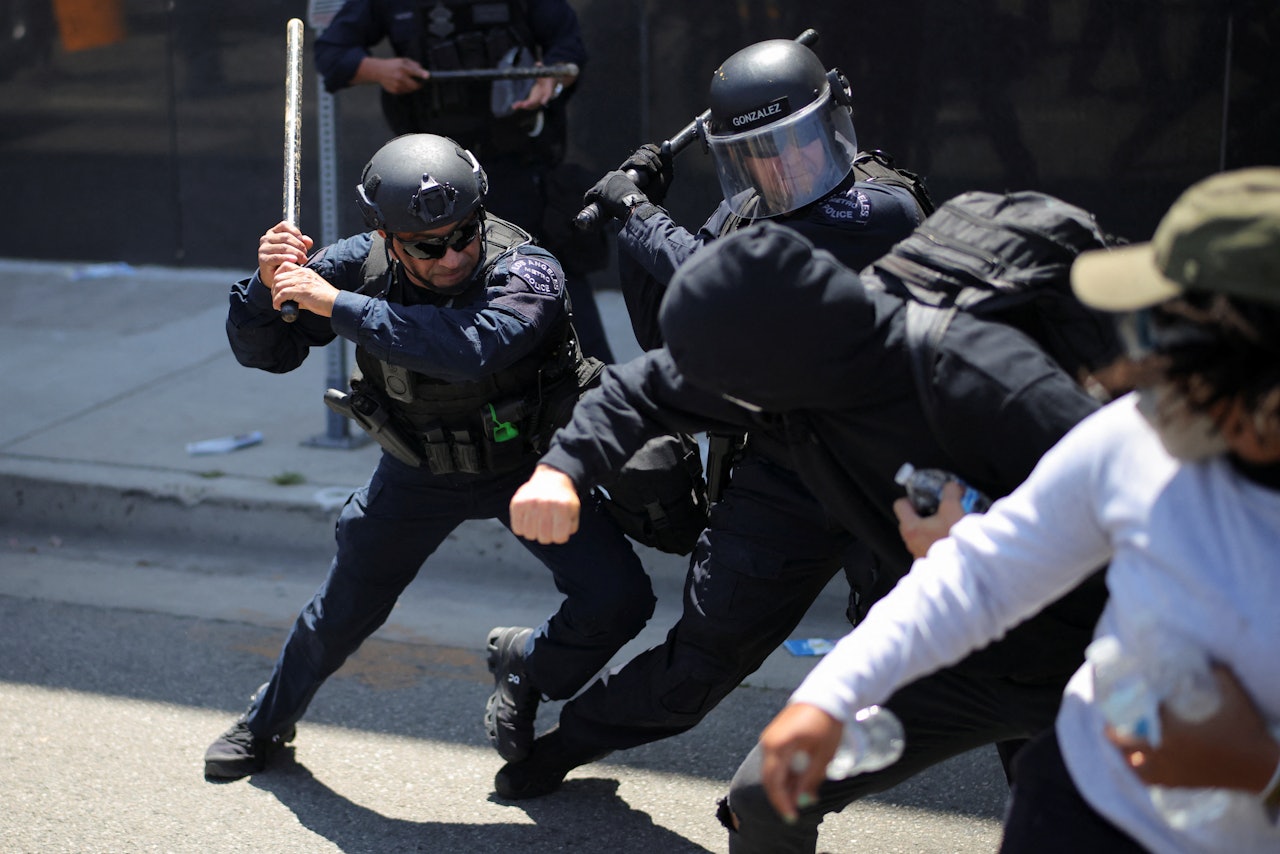
从移民到军队部署,纽森与特朗普的矛盾早已不只是政策分歧,而是联邦集权 vs 州自治、红美国 vs 蓝美国的制度性对抗。曾多次表示对总统职位没有兴趣的纽森,在今年首次提出「存在展开竞选的可能性」,而两人在 2028 年总统大选的潜在对决,让这场「加州 vs 白宫」的连续剧越来越像总统前哨战。

最近有观点认为,特朗普政府入股英特尔这一震惊朝野的动作是计划实行「国家资本主义」来拯救美国,但长期奉行自由市场的文化与该政策存在重大冲突。特朗普的奇招频出一方面确实产生了一定的效果,另一方面又将贪腐摆在了明面上,而加密货币误打误撞成为了政治斗争的受益者。

尽管如此,在美国国会大力对加密货币的大力支持之下,依然有诸多州的加密货币储备法案没有成功闯过州长的办公桌。Web3 行业的游说是不小的献金来源,美国当前对 Web3 的支持必然有利于行业发展但也并不一定出于「好意」,一个看似对 Crypto 敞开怀抱的联邦国家私下实则暗流涌动。
Letture associate

Retail Investors' 'Lead Brother' Serenity vs. Newly Minted Stock God Leopold: How Are the Two Top Hunters Mining AI's 'Physical Limits'?

The article profiles two prominent figures, Serenity and Leopold Aschenbrenner, who are gaining attention for their unconventional investment strategies focused on the physical constraints of the AI boom, moving beyond mainstream software narratives. Serenity, an anonymous online trader, advocates a "shiso leaf" theory. He targets small-cap companies with monopolies on critical, overlooked components in the AI hardware supply chain, such as specific semiconductor materials. His deep, technical analysis of bottlenecks in areas like co-packaged optics (CPO) has reportedly yielded massive returns, though his anonymity and focus on illiquid micro-cap stocks pose significant risks for followers. Leopold Aschenbrenner, a former OpenAI researcher, founded a multi-billion dollar hedge fund. His macro thesis argues that physical infrastructure—power grids, land, data centers—is the true bottleneck for AI growth, lagging far behind chip production. Consequently, his fund employs an infrastructure arbitrage strategy: heavily investing in storage and compute infrastructure companies while placing massive bearish bets (put options) against major semiconductor stocks, betting their valuations will correct as physical constraints become apparent. While their methods differ—Serenity drills into microscopic supply chain details, while Leopold takes a macroscopic, infrastructure-focused view—both share a core belief: the real power and investment alpha in the AI era lie in controlling scarce physical resources, not just software. The article concludes by noting the inherent risks in both approaches, such as liquidity issues for micro-caps and timing risks for macro bets, but suggests they signal a broader market re-evaluation of AI's foundational assets.

marsbit1 h fa

Retail Investors' 'Lead Brother' Serenity vs. Newly Minted Stock God Leopold: How Are the Two Top Hunters Mining AI's 'Physical Limits'?

marsbit1 h fa

Who Will Make Money in the Age of Agents?

In the Agents era of blockchain, traditional value capture theories face challenges. The "Fat Protocol" theory, dominant since 2016, suggested protocols capture most value as their tokens are essential for network use. However, the proliferation of interchangeable L1s, L2s, and modular layers has eroded protocol scarcity and pricing power. Conversely, the "Fat App" theory posits that applications capturing user relationships (like wallets and exchanges) become the primary value layer by controlling distribution and transaction flows. This aligns with the current "Great Repricing" cycle. Agents disrupt this logic. As software users, they lack brand loyalty, prioritize cost and efficiency, and switch between platforms seamlessly. This undermines the front-end UX moats that "Fat Apps" rely on. The article explores several potential futures: 1. **Headless Applications:** Current leading apps could strip their front-ends and become backend API infrastructure for Agents, preserving their role. 2. **Protocol Resurgence:** If integration becomes trivial, Agents might bypass aggregators and interact directly with protocols, reviving "Fat Protocol" dynamics. 3. **Pricing Power Collapse:** Agents' rational, frictionless routing could commoditize the entire stack, compressing margins toward cost and leaving little profit for intermediaries. 4. **Unprecedented Activity:** Agents may enable new, high-frequency, machine-to-machine economic activities, expanding the total value pie even if margins are thin. 5. **A New, Unnamed Model:** Historically, major tech shifts (like the internet's attention economy) create unforeseen business models. The Agents era may spawn entirely new ways to capture value. The most likely outcome is a coexistence where "Fat Apps" continue to serve human users valuing UX, while a separate, Agent-driven economy emerges governed by different rules—where loyalty is based on factors like liquidity, latency, and settlement guarantees rather than brand.

marsbit2 h fa

Who Will Make Money in the Age of Agents?

marsbit2 h fa

Trading

Spot
Futures
活动图片