Три альткоина из США, за которыми стоит следить в этом сентябре

cryptonews.ruPublished on 2025-01-31Last updated on 2025-09-01

Общая капитализация крипторынка составляет около $3,87 трлн — совсем немного ниже психологически значимого порога в $4 трлн. Ожидаемое в сентябре снижение процентных ставок в США может повысить привлекательность рисковых активов, таких как альткоины

Редакция BeInCrypto проанализировала три крупных альткоина — Stellar (XLM), Story (IP) и Pi Coin (PI) — и выяснила, чего ждать от них в наступившем сентябре.

Stellar (XLM)

Stellar (XLM) закрыла август в минусе, снизившись на 8,7% за месяц и на 12,7% за последнюю неделю. Тем не менее криптовалюта может вырасти благодаря нескольким драйверам. Один из них — рост реальных активов (RWA). За последние 30 дней сектор вырос на 12,9% до $511,42 млн.
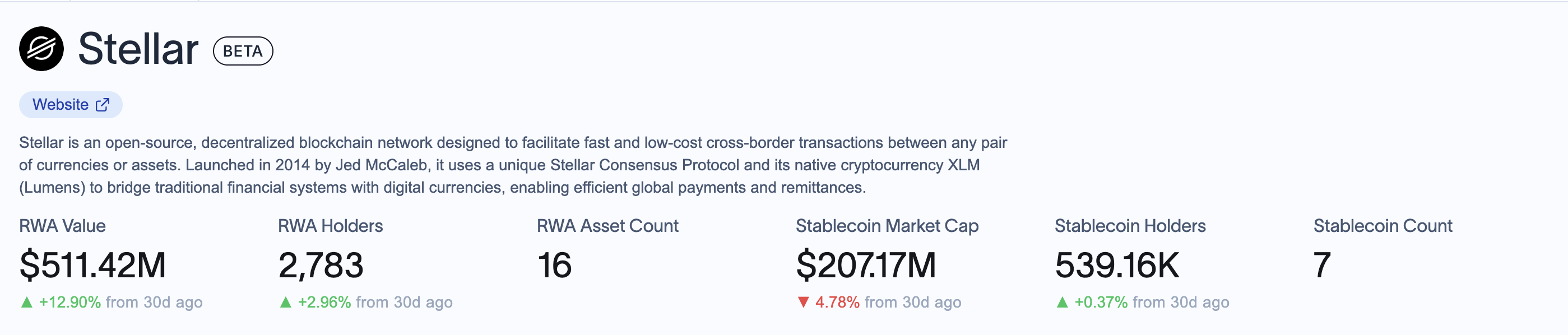
Рост RWA Stellar: RWA.xyz

Для поддержания этого роста необходимо увеличить объемы транзакций — цель, на которую нацелена Stellar Development Foundation. В эксклюзивном комментарии для BeInCrypto аналитик Stellar из Messari, Мэтт Кайзер, отметил:

«К концу 2025 года Stellar Development Foundation планирует достичь $3 млрд доходных RWA на блокчейне и войти в топ-10 цепочек по DeFi TVL. Это может создать эффект маховика: больше институционального капитала привлекает пользователей, что увеличивает объемы транзакций и активность в экосистеме».

С технической стороны, Stellar может подавать краткосрочный бычий сигнал. На 4-часовом графике видна скрытая бычья дивергенция: цена опустилась ниже, но RSI (Индекс относительной силы) показал повыщающийся минимум.
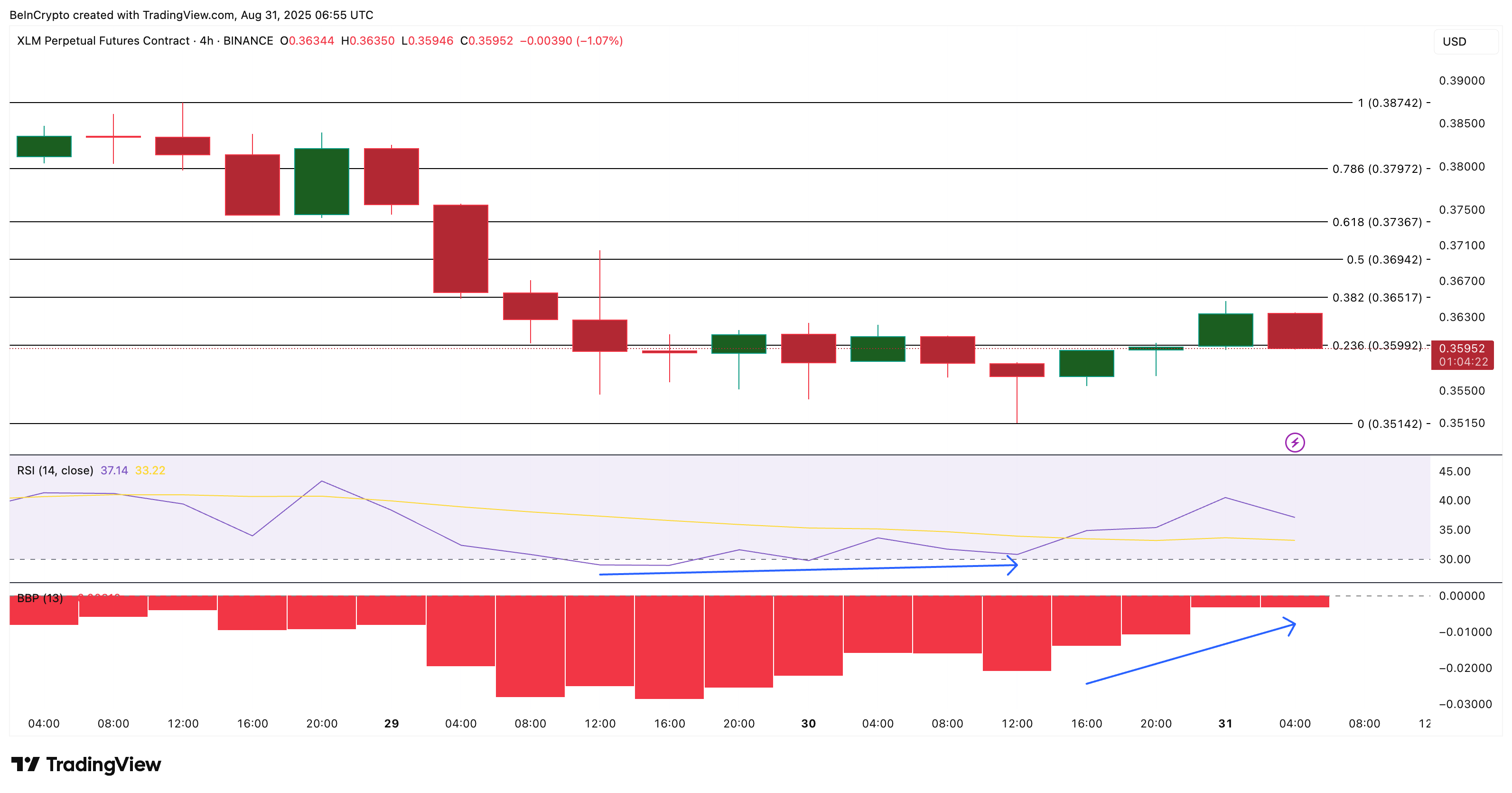
Анализ цены Stellar: TradingView

Индикатор Bull-Bear Power (BBP), который сравнивает давление покупателей и продавцов, стал менее отрицательным, что подтверждает ослабление продавцов. Если эта редкая бычья установка сохранится, XLM получит шанс подняться к сопротивлению на уровне $0,36 и $0,37. Преодоление уровня $0,38 обеспечит бычью установку даже на дневном графике.

Story (IP)

Story (IP) — блокчейн первого уровня, созданный для защиты интеллектуальной собственности в ончейне, — стал одним из лидеров этого года. Токен вырос более чем на 30% за последние 24 часа, увеличив свои достижения за три месяца до 91%. В годовом исчислении Story (IP) поднялся более чем на 300%.

Рост токена связан с продолжающимися слухами о возможной программе обратного выкупа и недавним объявлением о Grayscale Story IP Trust, что усилило оптимизм вокруг токена и привело его к новому историческому максимуму.
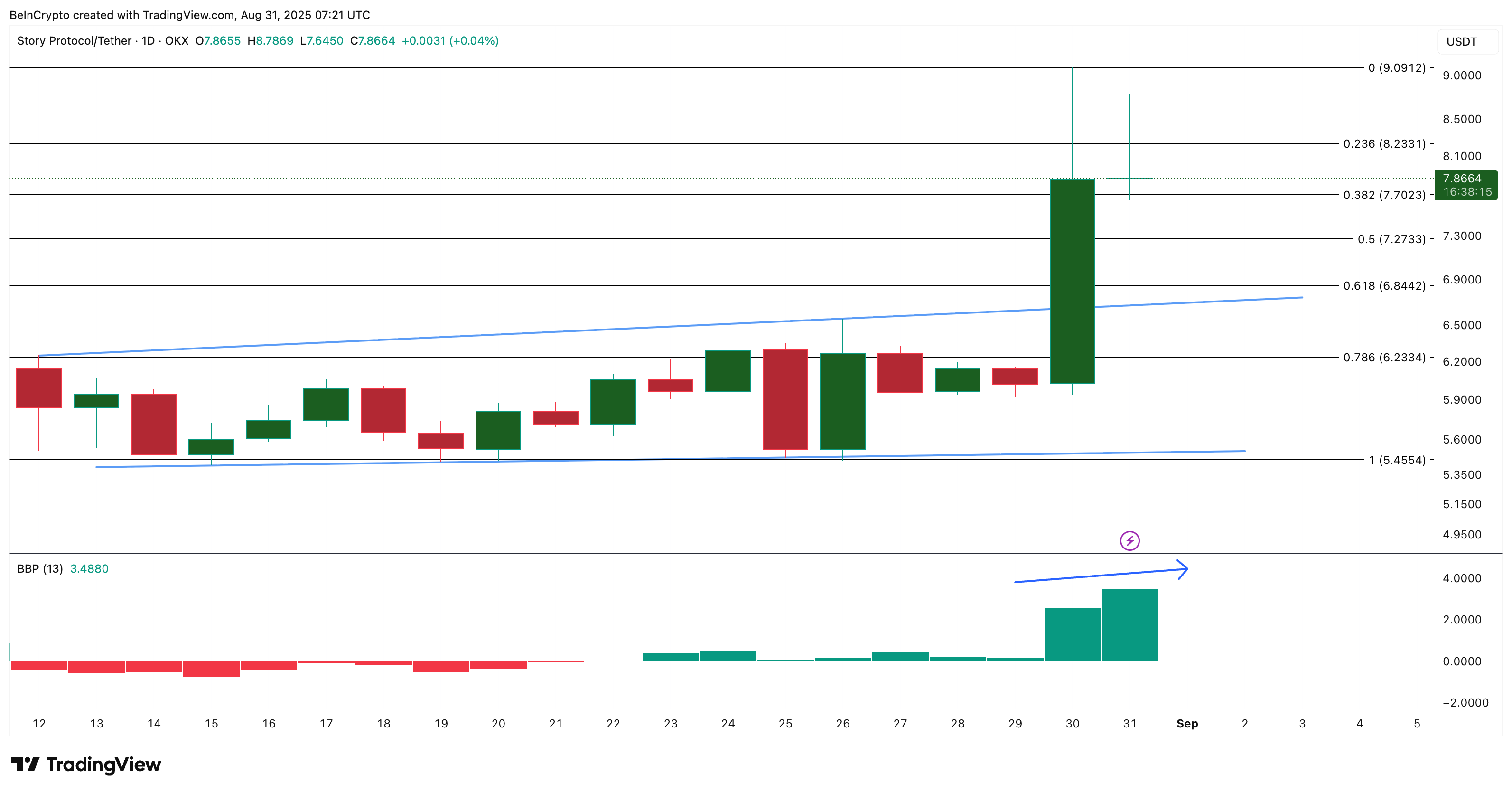
Анализ цены Story: TradingView

С технической точки зрения, Story (IP) вышел из расширяющегося восходящего клина, который обычно предвещает медвежьи развороты. Так токен опроверг медвежий прогноз и подтвердил, что быки продолжают доминировать. Этот тезис подтверждает индикатор Bull Bear Power (BBP), который указывает на силу быков.

На момент публикации Story торгуется по $7,86, с ближайшим сопротивлением на уровне $8,23 и историческим максимумом около $9,09. Прорыв этих уровней откроет путь для новых максимумов в сентябре.

Pi Coin (PI)

Pi Coin (PI) в 2025 году оказался в числе отстающих. За последний месяц токен упал на 4,7%, за неделю поднялся на 8%, но в годовом исчислении снизился более чем на 55%. При цене $0,38 общая тенденция остается медвежьей, но в сентябре возможны краткосрочные всплески, которые могут заинтересовать трейдеров.

Два события вновь привлекли внимание к PI как к ключевой монете из США: недавнее обновление протокола с добавлением узла Linux и запуск Valour Pi Network ETP среди восьми новых продуктов.
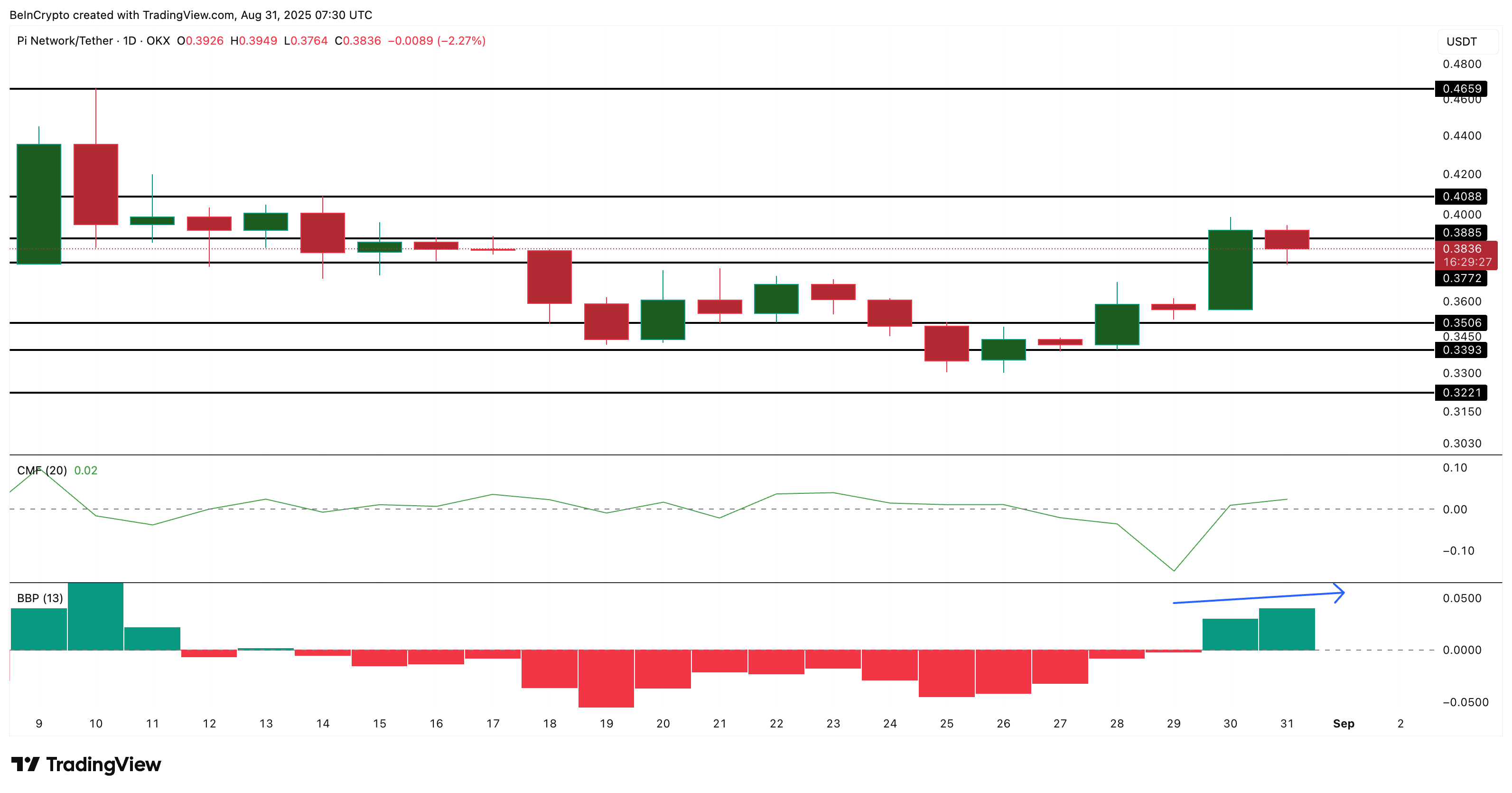
Анализ цены Pi Coin: TradingView

Индикатор Chaikin Money Flow (CMF) впервые за долгое время поднялся выше нуля, сигнализируя о притоках средств. Если CMF поднимется выше 0,05, это подтвердит усиление покупательского давления. Индикатор BBP также стал положительным, что указывает на растущий бычий импульс.

Если импульс сохранится, PI может подняться до $0,46, что составит более 20% роста от текущих уровней. Однако, если токен опустится ниже $0,33, возможны новые минимумы ниже $0,32.


Related Reads

Why Do We Need an AI Content Perspective Today?

The article "Why Do We Need an AI Content Perspective Today?" explores the complex and often contentious integration of AI into the cultural and creative industries, particularly film and television. It begins with the cancellation of Amazon's AI-generated animation "Punky Duck," highlighting the ethical debates surrounding AI content. AI's rapid advancement is transforming video production, enabling cost-effective, full-length AI films (e.g., "RAPHAEL," "Dreams of Violets") while sparking industry resistance over issues like "synthetic actors." The core debate has shifted from whether to use AI to how to use it responsibly. The article analyzes why AI's entry into film is uniquely unsettling. It distinguishes between "cultural fast food" (short-form, fast-paced content like micro-dramas) and "cultural main courses" (traditional, long-form film/TV). AI currently excels at the former, matching its fragmented narratives, shallow emotional needs, and free-to-consumer models. However, venturing into the latter challenges the human-centric essence of storytelling—creativity, emotional depth, and the unique value of human labor and experience. While AI can generate massive volumes of content and lower costs, it risks devaluing human creativity, leading to homogenized output, and creating unfair competition through potential intellectual property infringement. Its efficiency also amplifies content safety risks, making preemptive governance crucial. To counter these risks, the article proposes establishing clear boundaries guided by a human-centered AI content perspective. It outlines four principles: 1) Amplify, rather than displace, human creative space; 2) Respect and protect human creative output; 3) Ensure human creative control and responsibility remain paramount; and 4) Guarantee transparency and traceability in AI creation. The conclusion emphasizes that humans must act as the "helmsmen" of technology, steering AI development to enhance, not replace, the core human values at the heart of cultural expression.

marsbit19m ago

Why Do We Need an AI Content Perspective Today?

marsbit19m ago

Planck Retracted? The Father of Quantum Tripped by an Algorithm

The recent discovery that two articles (published in 1940 and 1942) by Max Planck, the Nobel laureate and founder of quantum theory, are marked as "retracted" on Springer's digital platform highlights a curious clash between historical publishing practices and modern automated systems. An investigation suggests these retractions are algorithmic errors, not due to fraud or misconduct. The papers, philosophical reflections on science published in *Die Naturwissenschaften*, were likely flagged by the platform's systems. One article, a republished lecture, may have been mistaken for duplicate publication. Another, sharing a title with a prior article by a different author (a common practice for continuing debates at the time), may have triggered a similar automated check. The digital versions have even been replaced with blank pages, contrary to normal practice of preserving retracted texts. This incident underscores how contemporary digital infrastructure, built around concepts like "self-plagiarism" and strict copyright, can misclassify and obscure legitimate historical scholarly communication. It serves as a warning that digital archives are not neutral mirrors of the past but are filtered by platform rules, potentially distorting the scientific record. As AI systems increasingly rely on such databases, such erroneous metadata could propagate, affecting how future tools interpret and access historical knowledge.

marsbit23m ago

Planck Retracted? The Father of Quantum Tripped by an Algorithm

marsbit23m ago

Refunds! Claude 4.8 Sees Overnight Major 'Dumb-Down', GPT-5.6's Computational Power Reportedly 'Halved'

The AI community is currently alarmed by widespread reports of significant performance degradation in two leading models. This article details a "mass self-testing frenzy" triggered by a mysterious prompt designed to detect a hidden "Juice" value, representing a model's reasoning compute budget. On OpenAI's side, users suspect a covert, limited test of a "GPT-5.6-sol" model is underway. When using a specific XML prompt on the Codex platform, a normal "gpt-5.5 xhigh" model reportedly returns a Juice value of 768. However, some users routed to the suspected GPT-5.6 test receive a drastically reduced value of 128—a six-fold decrease. This has sparked debate on whether it signifies a major efficiency leap or a "watered-down, low-cost version" achieved by slashing reasoning depth to save computational expenses. Simultaneously, Anthropic's Claude models, particularly the flagship Opus 4.8 Max, are facing intense user backlash for a perceived "physical brain cut." Users on platforms like Reddit report a dramatic decline in the model's once-impressive reasoning, with complaints of it becoming "absurdly" weakened, performing worse than older, lighter models like Haiku. Specific criticisms include: losing long-context memory, refusing to think deeply even in high-reasoning modes, providing instant incorrect answers, and engaging in unhelpful, argumentative, or "gaslighting" behavior where it contradicts users unnecessarily. The article speculates these "stealth downgrades" might be a calculated corporate strategy. Companies could initially release models with temporarily boosted compute to create an illusion of a major breakthrough, then silently scale back parameters later to manage unsustainable inference costs. A proposed underlying cause is a tightened funding environment, potentially exacerbated by SpaceX's massive IPO soaking up market liquidity, which could delay AI company IPOs and force cost-cutting measures like model "nerfing." The core issue highlighted is the asymmetry of information: subscribers pay for a service that can be silently and fundamentally altered without notification or explanation. The viral "Juice test" resonates because it represents users' desire for transparency about what they are actually paying for.

marsbit59m ago

Refunds! Claude 4.8 Sees Overnight Major 'Dumb-Down', GPT-5.6's Computational Power Reportedly 'Halved'

marsbit59m ago

Trading

Spot
活动图片